
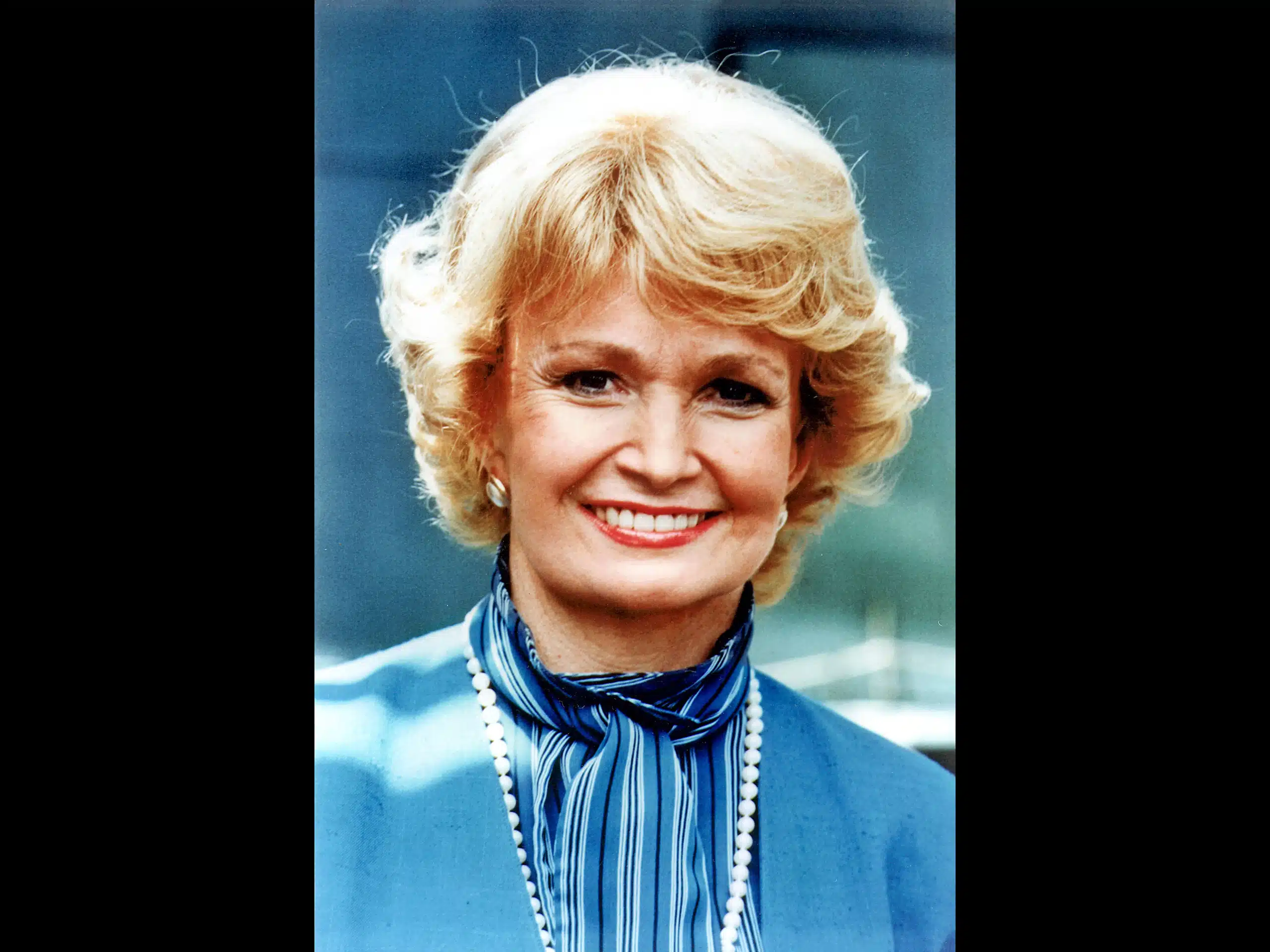
When Margaret Heckler left politics in 1989, she was the only woman in American history to achieve the “triple-crown.” No woman has ever duplicated her accomplishments by serving in the U.S. House of Representatives, as a cabinet secretary and as an ambassador.
One of the most memorable moments of her career came in 1984 when she was U.S. Secretary of Health and Human Services. Heckler’s goal to create the first hospice program fully funded by Medicare was in political trouble, and she needed a creative plan to save the bill.
So the Irish Catholic Heckler, who lived in Arlington, called in the nuns. She gathered the Sisters, Servants of the Immaculate Heart of Mary from the Cathedral of St. Thomas More and the Sisters of Notre Dame de Namur from St. Agnes Church on a mission to lobby members of Congress, according to Kimberly Heckler, Margaret’s daughter-in-law and author of the just-released book, “A Woman of Firsts: Margaret Heckler, Political Trailblazer.”
“Dressed in habits, the nuns’ first stop was to see Speaker of the House Tip O’Neill,” wrote Kimberly, in the book.
“After O’Neill’s assistant greeted the nuns, she walked into his office, announcing, ‘I have half a dozen nuns who want to see you.’ ‘What do they want?’ O’Neill asked. ‘They want to speak with you.’ Taking seats in the speaker’s office, the nuns told him they were there on behalf of Secretary Heckler, who was very upset. ‘So you’re ambassadors for Margaret Heckler?’ O’Neill said with a laugh. ‘That’s my girl.’ ”
As a fellow Irish Catholic from Massachusetts, O’Neill quickly got on board and the bill passed.
Born Margaret Mary O’Shaughnessy in 1931 in Queens, N.Y., her parents were Irish immigrants who gave her away during the Great Depression to a recently widowed Catholic woman. “Three-day-old Margaret would never again fully belong to her parents,” wrote Kimberly. “Margaret’s journey begins at the crossroads of her father’s rejection, her mother’s powerlessness, and the extraordinary compassion of an elderly stranger.”
That child would go on to become one of the first women to graduate from Boston College Law School. At a time when many women entered public office by succeeding their deceased husbands, Margaret was the first woman from Massachusetts to be elected to the House of Representatives in her own right. She served eight terms, becoming the first congresswoman to enter a war zone in Vietnam and the first to visit communist China.
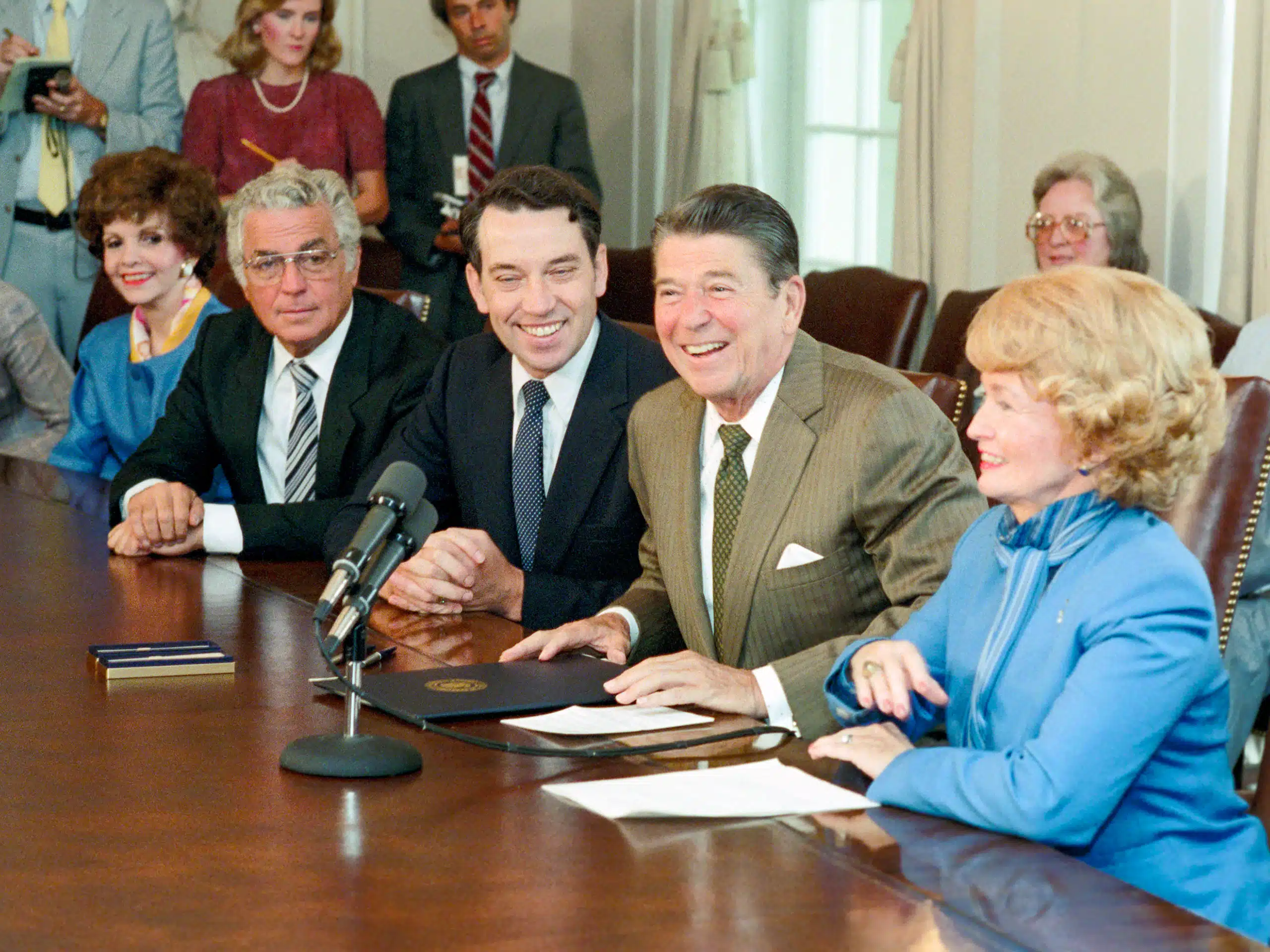
In the final act of her public life, she was appointed by President Ronald Reagan as the first woman to serve as ambassador to Ireland in 1986. “Her Irish mother had been a maid in New York City for a wealthy family,” Kimberly told the Catholic Herald. “Then as ambassador to Ireland, Margaret had her own maid and servants in the ambassador’s residence in Dublin. She would say that God was with her every step of the way because she didn’t really have a father, but she had a heavenly father.”
In “A Woman of Firsts,” Margaret is remembered as a politician who wasn’t afraid to take on controversial issues. She co-sponsored Title IX in 1972, which gave women equal access in education programs that receive federal funds, and in 1974, she authored the Equal Credit Opportunity Act giving women credit in their own names for the first time in American history.
The political tables turned in 1982, when Heckler’s pro-life stance contributed to her losing her U.S. House seat. Months later, she was leading the federal health department.
Bishop Emeritus Paul S. Loverde remembered some lively meetings with Margaret to discuss abortion policy. “Sometimes she could be in your face,” he said. “But it didn’t come from any kind of animosity. It came from a deep concern for life. I think especially our Catholic politicians have to witness to the truth of life even if it means losing an election. You can’t soft pedal the truth. We don’t have the common good realized when we ignore life. I think she understood that so well.”
Margaret’s reflections on abortion in “A Woman of Firsts” are deeply personal: “If the prevailing view on abortion had been accepted at the time of my birth, I might not have had the opportunity to be on this planet,” wrote Margaret. “I was an unexpected child, and when I arrived, my father was not very pleased to have a child, and especially a daughter. While we have freedom of religion, we should not have freedom from God and his role in this world. I am acutely aware of it because of my own life, and that role has to be respected. I leave the issue there.”
When her public career ended in 1989, Margaret retired to her life in Arlington where she attended Mass at St. Agnes and the Cathedral of St. Thomas More. Kimberly said that she especially loved praying the Divine Mercy Chaplet and going to adoration. She died Aug. 6, 2018, at age 87.
“Margaret recognized that there was a divine order and purpose to her life,” wrote Kimberly. “She converted her feelings of fragility from being an unwanted child into a burning drive to help the vulnerable. Her fierce passion for justice and equality changed the lives of millions of Americans. Margaret Heckler was led to have an extraordinary destiny.”
Find out more
“A Woman of Firsts: Margaret Heckler, Political Trailblazer” was published Feb. 18 by Lyons Press and is now available on Amazon or Barnes and Noble.