





Puerto Rico:
A quick 3.5-hour flight
No passport needed
Stay in or close to Old San Juan, very walkable; Uber or taxi everywhere else
Take day excursions to rainforest, beaches, night kayak tours to bioluminescent bays
Some beaches are rustic with the occasional rooster running around; rent a chair and umbrella
Churches are abundant and full of character; find the jubilee year churches
If you are looking for a quick getaway, consider Puerto Rico. The island has been hit hard by repeated storms, but tourism still thrives, including a steady stream of cruise ships to the Caribbean destination with a rich Catholic history.
There’s plenty to do if you are into:
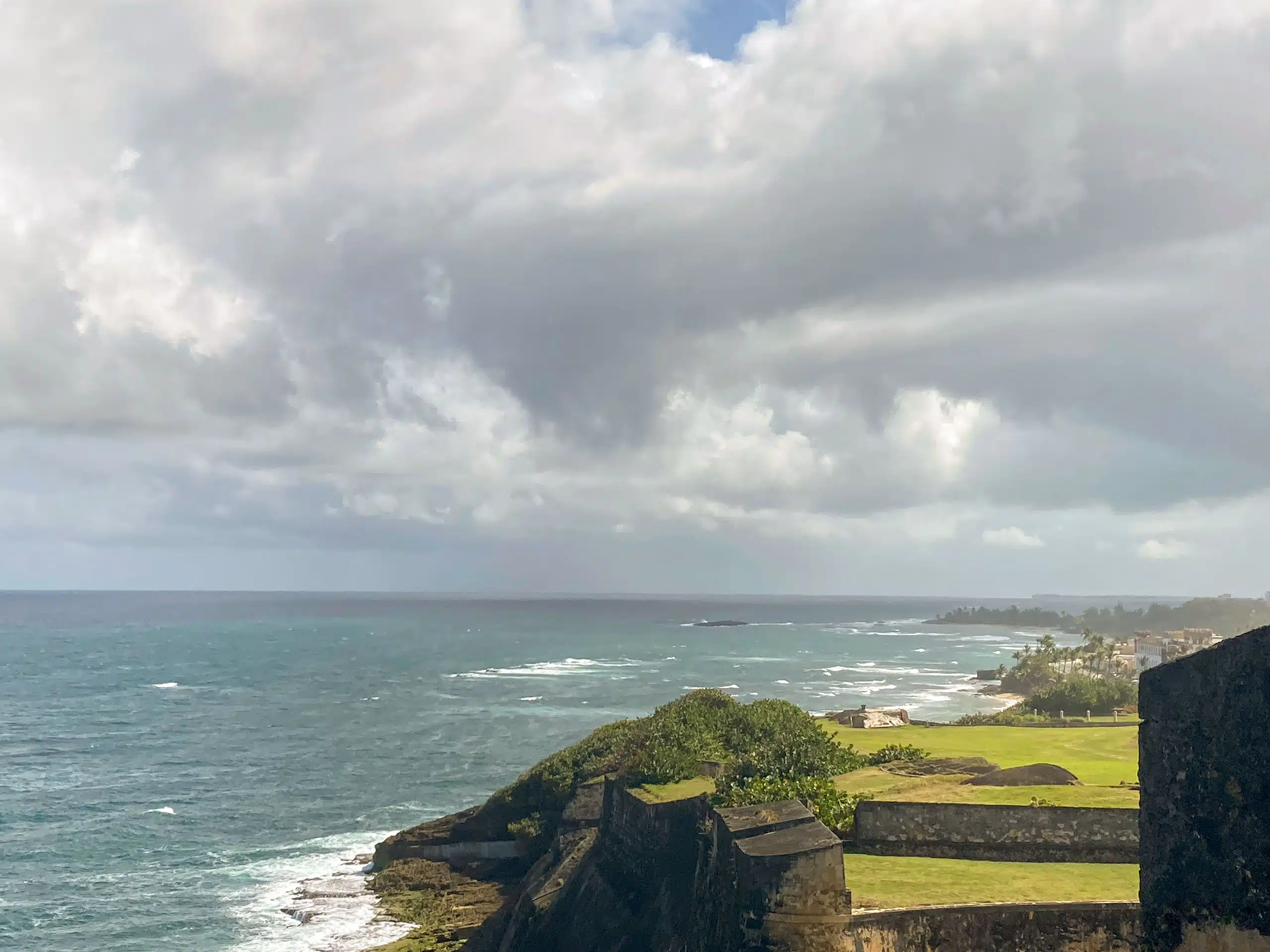
History — tour Old San Juan inside the walls from the Castillo San Cristobal, built to protect the city from a land attack (a 10-minute walk from the cruise port) to Castillo San Felipe del Morro (a half-hour walk from Cristobal), built to protect the island from a sea attack. It’s a U.S. National Park so bring your annual or lifetime pass and your National Parks Passport and get it stamped. You’ll pass the Cemeterio Santa Maria between the two forts. It’s a unique clustering of headstones on the edge of the sea. Both forts feature prominent chapels, illustrating that church and state were indelibly linked on the island.
Most guidebooks and locals will tell you to avoid walking through the adjacent neighborhood, La Perla.
Read up on the numerous groups who tried to take over the island — from the early Spanish settlers to the English, the Dutch and the English again. After the Spanish-American War, the island became a U.S. territory in 1899.
Nature — so many places to explore, including rainforests, rustic beaches and groomed hotel beaches complete with drink service. You might have seen the television commercials aimed at saving feral cats from being killed by the National Park Service to address overpopulation. The cats appreciate the tourists, especially when they share their breakfast cream.
Cuisine — try the mofongo (mashed green plantains usually fried and ball-shaped) and mallorca (Puerto Rican sweet bread); visit the place where they say they invented the Piña Colada, better yet, visit one of the rum distilleries on the island for a tour and tasting. There’s even a terrific gelato shop in Old San Juan.
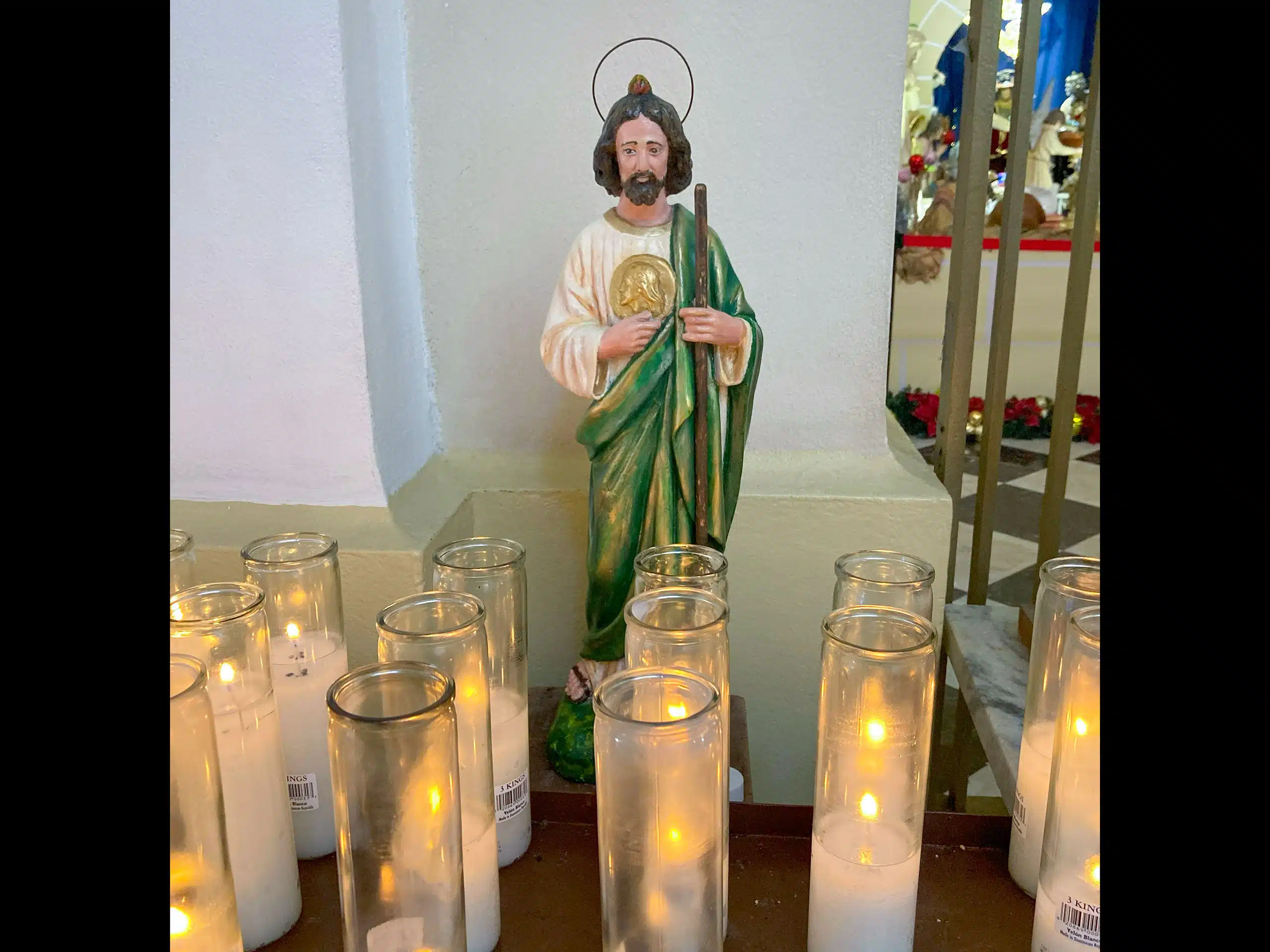
Religion — make a visit to the jubilee year churches; a walk around town will net some tucked-away historic churches and chapels with beautiful stations of the cross, unique crypts, and countless candle-lighting opportunities.
At the end of Calle Cristo is Capilla del Santo Cristo de la Salud, perched on a hill. Legend has it that during a horse race in 1753, rider Baltazar Montanez couldn’t stop his horse in time and they both went over the cliff. A government official was watching and invoked Christ to save the rider, who supposedly survived. A chapel was built on the spot. It has become a place where many seek healing and leave behind “milagros,” small metal pieces shaped like body parts.
The Catedral de San Juan Bautista, the archdiocesan cathedral dubbed the oldest cathedral in the Western Hemisphere, is a jubilee year site. The first church was built there in 1521. The wooden structure was destroyed in a hurricane. Construction of a new church began in 1535, being mostly completed by 1802 with additions a century later. Spanish explorer Juan Ponce de León is entombed there.
If you go to the back left corner, you will see the original stone walls in a small chapel with a modest vaulted ceiling. There is a lovely painting of Mary holding baby Jesus and a huge wooden crucifix. The docents said several miracles have been attributed to prayers at the chapel. A book to write prayer intentions sits right outside the chapel.
Iglesia de San José isn’t far from your walk from Cristobal to El Morro. It was founded by the Dominicans in 1532 and is touted as the second-oldest standing church in the Americas.
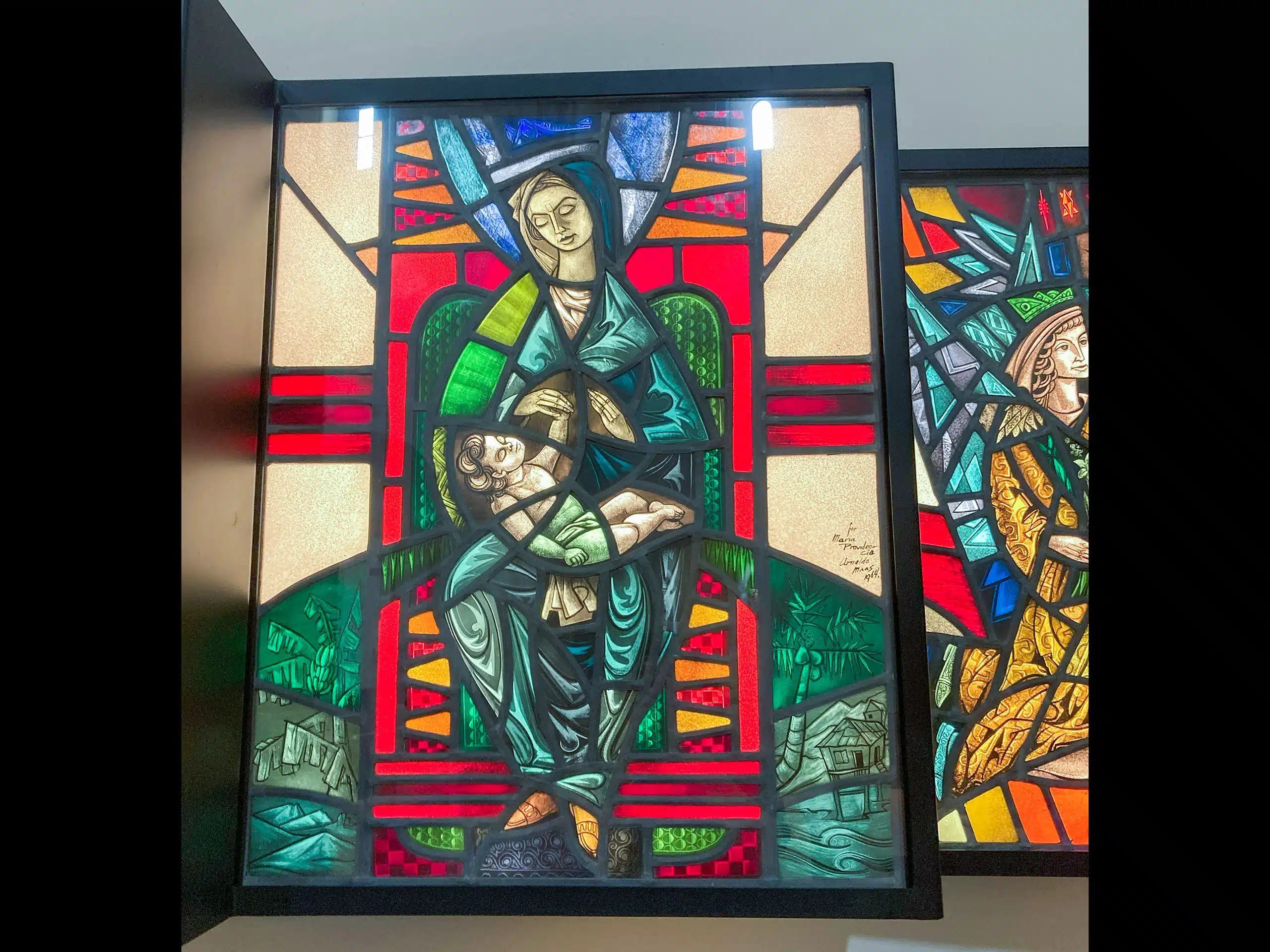
The architecture is impressive, and following renovations, you can see centuries-old murals that include mermaids. Don’t miss the six framed and lit stained-glass window panels in the front left. They were commissioned by the actor José Ferrer in honor of his wife, Rosemary Clooney (George’s aunt) and their five children. Look for the circle on the wall above the choir. It frames the spot where a cannon shot hit the church during the Spanish-American War in 1898.
Several churches feature portraits of Carlos Manuel Cecilio Rodríguez Santiago, also known as “Blessed Charlie.” The catechist and liturgist, beatified by Pope John Paul II in 2001, is the first Puerto Rican and the first Caribbean-born layperson to be beatified.
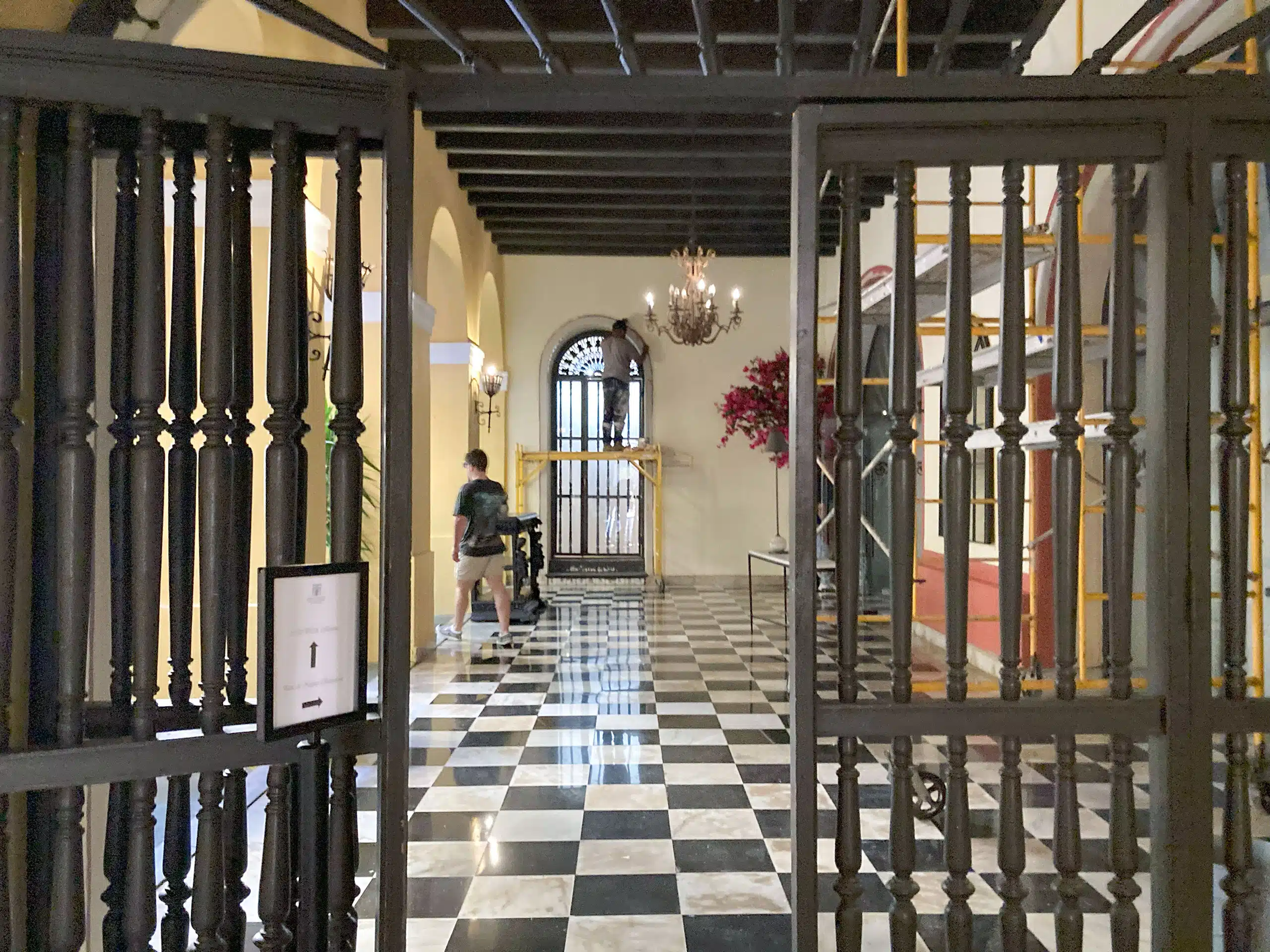
There are a lot of advantages to staying in Old San Juan, especially the convenience of walking everywhere. Hotel El Convento, a AAA four-diamond hotel, is an often-recommended choice, and incorporates some of the features of a centuries-old convent.
Its backstory is fascinating. Doña Ana Lanzós y Menendez de Valdez, a wealthy widow, donated the land. She already had provided for a hospital and a religious school there. In 1646, Spain’s King Phillip IV agreed to allow a Carmelite convent to be built there, the first in the Americas. Just across the street was San Juan Bautista.
Spanish soldiers stationed in San Juan built the three-story convent. The brick walls were 3-feet thick to withstand hurricanes, tropical temps and invaders. The Spanish style was reflected in the interior courtyard, balconies and arched corridors.
The convent opened in 1651 and Lanzos was the first to enter. She brought her sister, Antonia, and four protégés. Lanzos became the mother superior. The nuns’ rooms were very small with straw mattresses. It remained a convent for 252 years. The hotel staff tells stories of an old tunnel that ran from the convent to the church across the street.
The building was abandoned, and according to a history provided by the hotel, it later became a store, a dance hall, a “flophouse,” and a parking lot for garbage trucks. Robert F. Woolworth bought the property from the Archdiocese of San Juan in 1959 and converted it into a luxury hotel. He worked to furnish it with Spanish-style décor: huge chandeliers, wrought iron, and mahogany and walnut wood. A casino was added in 1963, a year after it opened. The chapel became an elegant dining room. The interior courtyard included a swimming pool at one end and a dining room at the other.
That era ended in 1971 when the Woolworth family gave the hotel to the government. Various hotel operators ran the hotel, and in 1982, the government spent $1.4 million to modernize it. It was sold to a group of Puerto Rican businesspeople and closed in 1995 for a redesign. After $15 million in renovations, El Convento reopened in 1997 garnering several awards and status as a national historic landmark.
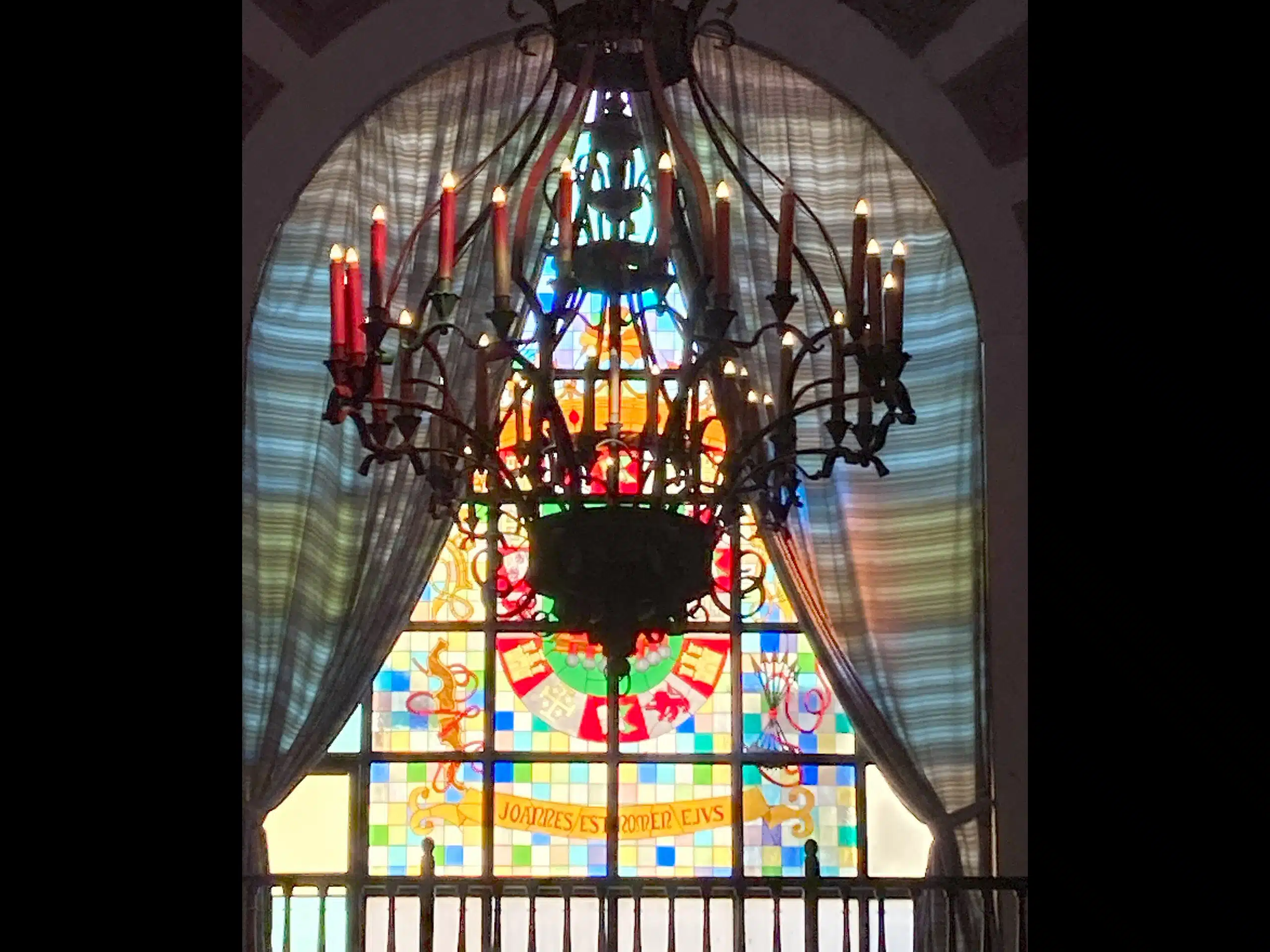
Looking for religious accents, one can spot the wrought-iron gates, the stained-glass windows in the “chapel” dining room and a breezy, tiled path down hallways that open to the interior courtyard. Heavy wooden louvered doors in the guest rooms open to a city or harbor view. Great views of the cathedral are possible from the rooftop pool and patio.
Whether for a quick getaway or a longer visit, Puerto Rico offers so much more. Savor the wonderful mix of history, relaxation and Catholic identity.