
If you type into your search engine, “Italian vacation ideas,” you’ll generate more than 50 million results.
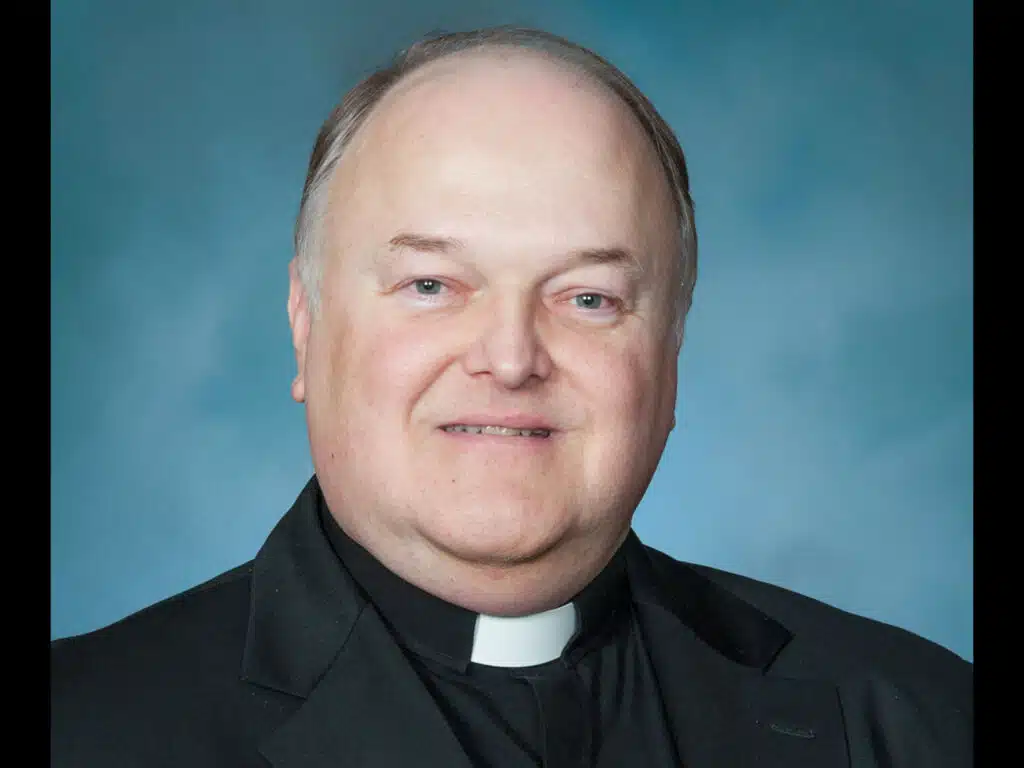
Luckily, with the help of four diocesan priests, you won’t need the internet to plan your next Italian vacation. Father Peter M. McShurley, chaplain of Bishop O’Connell High School in Arlington; Father Michael T. Nugent, parochial vicar of St. Ambrose Church in Annandale; Father Joseph M. Rampino, in residence at Blessed Sacrament Church in Alexandria; and Father Elder Maldonado who all studied for the priesthood in Rome, have travel recommendations that are off the beaten path yet still maintain a sense of quintessential “Italia.”
Lucca, Tuscany — Father McShurley
An hour’s train ride from the bustling city of Florence, the Tuscan city of Lucca rests in the valley of the Serchio River. Not far from Pisa, the picturesque medieval town is surrounded by 500-year-old walls dating back to the Renaissance. Atop these walls, tourists and locals alike enjoy a relaxing bike ride or leisurely stroll. Bike rentals are available throughout the town.
“Entering the town, you are immediately transported back in time,” said Father McShurley.
Adventurous travelers may climb the Torre delle Ore, a medieval tower with a still-functioning bell that rings on the hour. The tower provides stunning views of the town and the surrounding countryside and mountains. But beware — if one stands underneath the bell as it tolls, the deafening sound is quite startling.
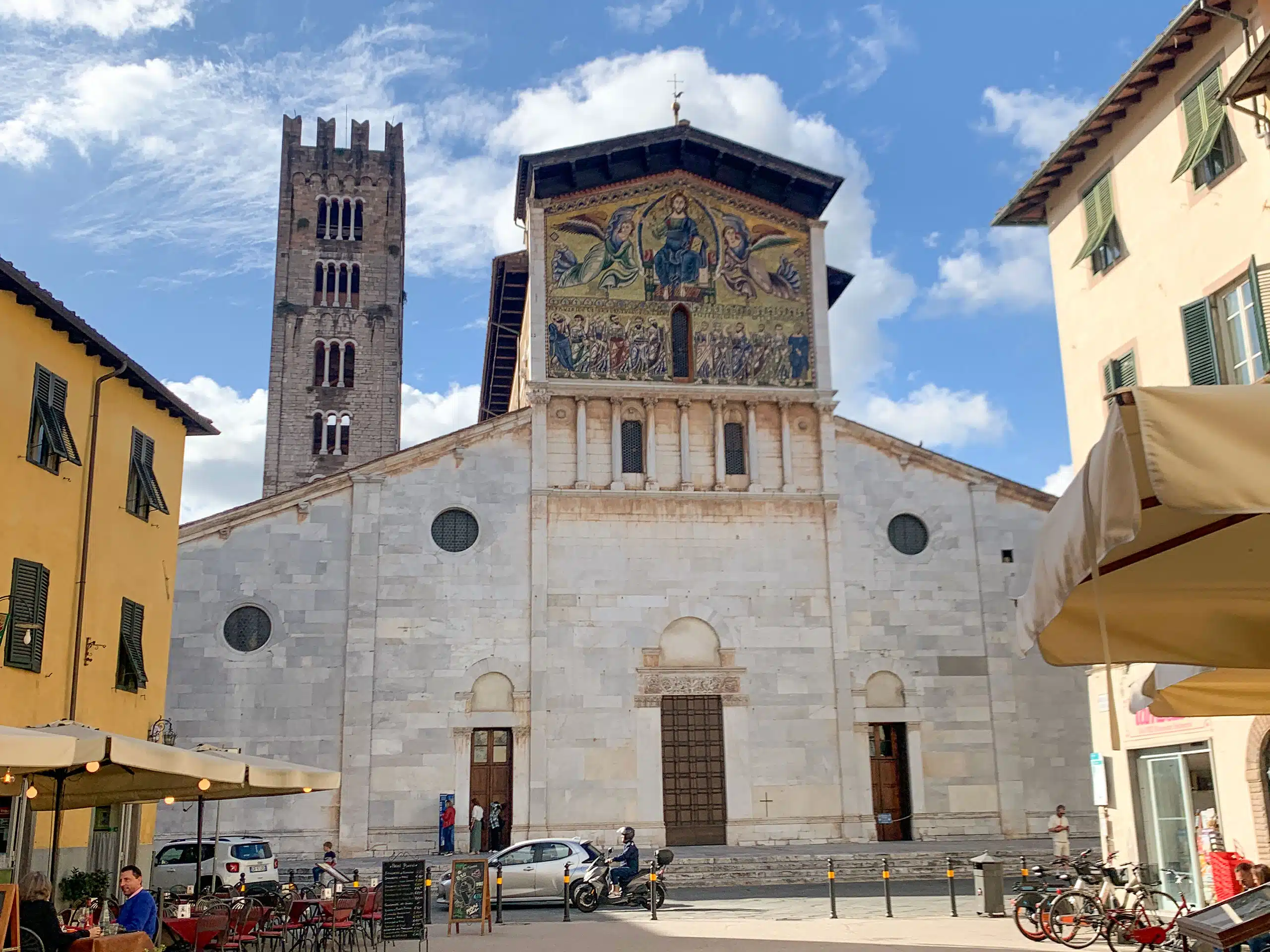
“What I found most moving when visiting Lucca was entering into the Church of St. Frediano and discovering St. Zita. She was a domestic servant who served the same family for almost 50 years. Her body is incorrupt and visible for veneration,” Father McShurley said.
Father McShurley added that St. Gemma Galgani is also buried in Lucca. The apartment where she died, now a memorial, is close to the historic walls.
Norcia, Umbria — Father McShurley
“Norcia, or the older name of Nursia, is a medieval town nestled in the midst of the Umbrian mountains in central Italy,” said Father McShurley. “While sadly it was hit hard by an earthquake in 2016, they continue to rebuild much of the old city. This is the birthplace of Sts. Benedict the father of Western Monasticism and his sister Scholastica, the patron saint of weather.”
In addition to the saints’ baptismal church, Father McShurley recommends travelers visit the active Abbey of St. Benedict, where foodies and cicerones alike will be satisfied. “They craft a delicious beer as part of their work — the sales of which help sustain the monastery,” Father McShurley said. “Umbria and Norcia in particular are known for many delicious foods, from the famous truffles, to norcina pasta, to delicious porchetta. In Norcia much of their local cuisine revolves around the cinghiale or wild boar native to the area.”
For the active traveler, “Hiking in the mountains surrounding Norcia offers some of the most fantastic views and beautifully dramatic landscapes. Reaching the summit of these mountains is a full day’s experience which will tire out even the most stalwart of hikers,” Father McShurley said.
The scenic area has even helped foster vocations, at least Father McShurley’s. “The first time I visited Norcia was when I was a college student on study-abroad. Myself and another of my classmates were invited by a group of seminarians from the (Pontifical) North American College to join their camping and hiking adventure,” he said. “They were hiking for 12 days or so along the way of St. Benedict beginning in Norcia. My friend and I joined for two nights and one day of hiking. On the hike from Norcia to Cascia hearing the vocation stories of the seminarians helped inspire my vocation to the priesthood.”
Padua, Veneto — Father McShurley
Home of the famous St. Anthony of Padua, Padua is often underappreciated by tourists, Father McShurley said: “Since it is so near Venice, many people pass through without stopping.”
Art appreciators will relish in the frescoes at the Scrovegni Chapel, “which houses some of the most beautiful frescoes by Giotto,” said Father McShurley. “The luminosity and color that emanate from these walls is something to behold and well worth the visit.”
Yet, more than the art, the faith of the city inspired Father McShurley. “One of the things that struck me while I was there was the living faith present especially in the Basilica of St. Anthony of Padua. I knew that St. Anthony of Padua was a very popularly venerated saint in Italy, but visiting the basilica in Padua made me realize a whole new dimension. From the number of pilgrims constantly in line waiting to venerate the tomb of St. Anthony, to the number of confessionals and constant confessions being heard in the basilica to the Masses celebrated, I was overwhelmed by the living faith present here.”
Siena, Tuscany — Father Rampino and Father Nugent
Father Rampino and Father Nugent are in agreement; the Tuscan town of Siena is a must-see for those exploring the Italian countryside.
“Just over an hour south of Florence offers a beautiful medieval experience without the incredible tourist crowds found in its more famous neighbor. Unlike most of Italy’s larger cities, which were redone in a Renaissance, Baroque, and then neo-Classical style, Siena retains its medieval architecture and feel, with a broad town square used to this day for horse races, a cathedral filled with incredibly inventive and ornate carvings and stonework, and the beautiful but ascetic and austere church of San Domenico,” said Father Rampino.
Home of St. Catherine of Siena, Siena gives Catholic pilgrims a rare opportunity to visit a unique relic — St. Catherine’s head. The relic may be venerated at the Basilica of San Domenico, and pilgrims can visit her childhood home nearby.
For cuisine, Father Nugent and Father Rampino recommend a local favorite. “They’re very famous in Siena for this type of pasta called pici,” Father Nugent said. Father Rampino added that the pasta, which can be likened to “a thick and substantial spaghetti,” is usually accompanied by “sugo diginhiale,” a wild boar sauce.
Ravenna, Emilia-Romagna — Father Rampino
History buff in your traveling group? Visit Ravenna, along the northeast coast of Italy.
According to Father Rampino, the town “served for centuries as the center of Roman authority on the peninsula. After the emperor Constantine moved his capital to Constantinople, which he called New Rome, Old Rome fell into disuse and relative obscurity. The imperial family began to stay in the north of Italy, closer to the major east-west trade routes, meaning that Milan and Ravenna grew in importance. After the fall and then reconquest of the Western Roman Empire, Ravenna became the center of Byzantine power until well into the early Middle Ages.”
Roman and Byzantine art fill Ravenna’s churches. Worth visiting are San Apollinare Nuovo, San Apollinare in Classe, San Vitale, San Giovanni and the mausoleum of Gallia Placidia, said Father Rampino. The churches “are filled with famous Roman and Byzantine mosaics, perhaps the highest concentration of such art in all the world,” he said, adding that the mosaics provide a historic window into how Catholics perceived their faith.
Ravenna will also intrigue literature lovers. “Ravenna also houses the tomb of Dante Aleghieri, the poet who wrote the ‘Divine Comedy,’ one of the finest examples of authentic Catholic culture,” Father Rampino said.
For cuisine, “Ravennese cuisine favors egg noodles, and stuffed pastas like cappelletti al ragù or passattelli in brodo would be most common,” he said.
Bologna, Emilia-Romagna — Father Rampino
The capital city of Emilia-Romagna, Bologna is “famous for its cuisine, its university, and its medieval towers,” according to Father Rampino. “Here, a traveler can find the original bolognese sauce with a number of different pastas, though I would suggest trying the cotoletta petroniana (a fried veal cutlet covered with prosciutto and melted parmigiano, served on top of beef broth with potatoes).”
“For sacred sites, the city boasts not only an incredibly large central basilica (San Petronio), but also the ancient complex of Santo Stefano, built originally as an alternative pilgrimage site for those who couldn’t get to the Holy Land, and San Domenico, which to this day hosts the tomb of St. Dominic,” Father Rampino added.
Montepulciano, Tuscany — Father Maldonado
The small city of Montepulciano, “tucked right in the heart of Tuscany, surrounded by farms,” is “incredibly underrated,” according to Father Maldonado.
For Father Maldonado, Montepulciano’s virtues are endless. “It’s built on a hill (or rather, a rock), and the views from every angle are just breathtaking. Sunrises and sunsets? Simply gorgeous. The wine here is excellent, especially the Montepulciano wine (yes, that’s its name!).”
For food, try some of the city’s many meat dishes and pici, which “is a standout.”
Father Maldonado suggests pilgrims visit Santa Maria Assunta, the cathedral of Montepulciano. “Don’t miss the cathedral and the old churches, though be prepared for their unpredictable opening hours,” he advises.
L’Aquila, Abruzzo — Father Maldonado
L’Aquila is the perfect hidden gem, “if you’re into cities in the middle of nowhere,” according to Father Maldonado.
His descriptions of the city match that of a winter wonderland. “When I visited, it was blanketed in snow, and the towering green and stone mountains around it were stunning,” he said.
Like many small cities in Italy, L’Aquila’s history is rich. “This city is tied to Frederick II, the Holy Roman Emperor,” said Father Maldonado. “A must-see is the Church of Santa Maria di Collemaggio. The interior is simple, but the façade is stunning.”
And while Rome is a destination city during the Holy Year 2025, pilgrims might consider visiting L’Aquila, since “the first Jubilee in 1300 happened here, and Pope Celestine V is buried there,” said Father Maldonado.
For adventurous eaters, “You can’t go wrong with ‘cinghiale’ (wild boar) — a real treat.”
Leonessa, Lazio— Father Maldonado
In the province of Rieti, Leonessa gives the perfect snapshot of Italian culture, minus the tourism. “Perched in the mountains, it’s the perfect spot to experience Italians just being Italians,” said Father Maldonado. “The pasta is incredible, and the cheese and coffee are top-notch.”
After tourists savor their cheese and coffee, they can visit the Chiesa di San Francesco, a 15th century convent. In the crypt of the convent are Giotto frescoes, discovered in 1993.
Active travelers may enjoy the many hiking trails surrounding the city, which give beautiful views of the mountains.
Travel Tips
When planning your trip to Italy, the first step is accepting the inevitable, according to Father Rampino. “Accept that you will not be able to see everything, and it is better to take in what you can as well as you are able,” he said. “Travelling in Italy always benefits from good research ahead of time. Every town has had some role to play in the life of our faith, and many are the unexpected homes of famous art or even of saints we might never have heard of.”
While it may be tempting to bring an American mentality of fitting every major city and attraction into your vacation, fully appreciating Italy means downsizing your plans. “If you can, avoid overcrowding your schedule,” Father Rampino said. “Italian towns reward wandering. All too often, I would see tourists harried and exhausted, running between the essential museums, churches, and experiences, hardly able to take anything in.”
Prepare to walk. “You should be ready to walk a great deal if at all possible. These towns were laid out and built centuries before cars, and do not follow the same sorts of regulations we do in the States that lead to our comfort,” Father Rampino said. “Try as you might to do otherwise, Italy will make you take your steps. If you are not used to this, getting in practice might serve you well.”
When traveling to Italy, Father Nugent invites travelers to approach their destinations from the perspective of a pilgrim. “Go to these places as a pilgrim and not as a tourist,” he said. “I’m not just there to see the beauty of the architecture … but also, I’m here to pray for people back home.”