It can be as simple as a trip to the grocery store, or the major step of starting school or seeking employment. Successfully making transitions of any kind can be one of the most challenging things that parents, and their children with disabilities, confront.
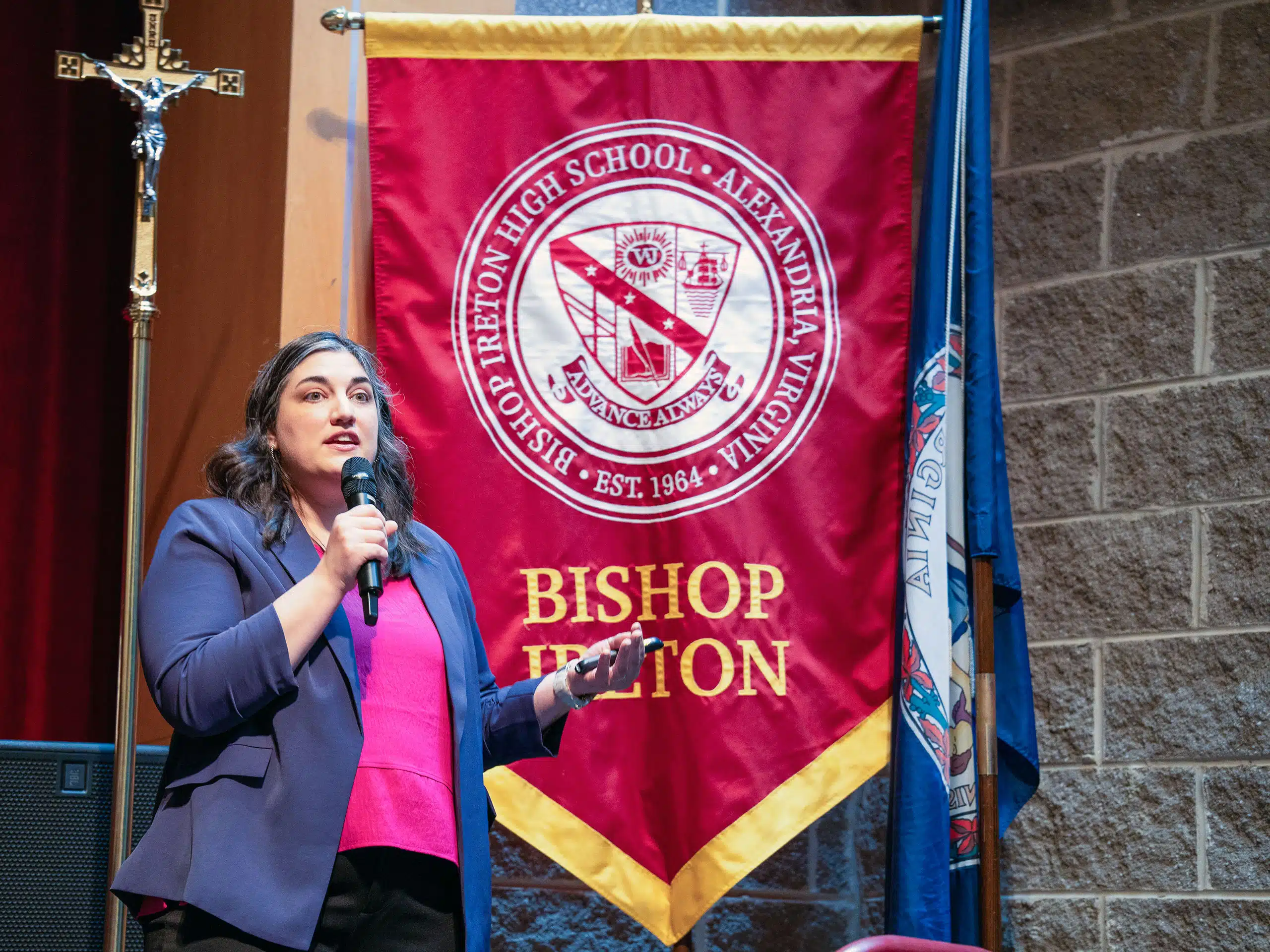
Equipping parents to navigate the obstacles of transitions was the topic of the diocesan conference on disability, “From Inclusion to Belonging — Transitions: Planning for the Future,” at Bishop Ireton High School in Alexandria March 15. The event was sponsored by Porto Charities, the diocese and the four diocesan high schools.
“Everyone struggles with this,” said keynote speaker Anna Hall, who specializes in helping parents of children with disabilities to plan for the future. “It’s best to focus on one practical skill at a time to build confidence before moving on to something else.”
Hall’s career as a disability educator was inspired by a lifelong friendship with a girl who was born with microcephaly, a rare neurological condition resulting in a small head size. Her friend went on to become Hall’s maid of honor. Their relationship gave Hall a lesson in the value of repetition in learning life skills.
“I taught home economics classes, so first kids would learn how to fold laundry and that’s a very specific thing,” said Hall. “Then they would learn how to follow a very simple recipe made in the microwave. We would do one task for weeks to learn and build confidence skills.”
Employment for children and adults with disabilities is one of the most difficult transitions and the breakout session with Therese Fimian, who has worked in disability employment for 20 years, was filled to capacity.
“We have to build off of what’s working, to build off of their strengths and to identify where they are at their best,” said Fimian. “Follow the intrinsic interests they have, let that lead to possibilities for employment, and don’t overlook seemingly small things because we can take those and translate them to true possibilities for meaningful employment.”
Topics covered in 20 other breakout sessions included navigating housing after high school, hobbies and skills in adulthood, and welcoming adults with disabilities into the life of the church.
Parents and educators had ample time to mingle over coffee and bagels during the vendor exhibit. The opportunity to encourage one another in a community is one of the highlights of the event.
“A lot of times parents feel like they’re in this alone and there’s so much support out here, so many people going through the same trials and tribulations,” said Gregory Henderson, a special services teacher at Ireton. “Coming to these events allows you to network, to get information, to be with like-minded folks and to build support.”
“(For) a parent who has less experience with special education and disability awareness, the isolation they can feel about their children’s future is incredibly strong,” said Charles Thull, who has a daughter with cerebral palsy and works for Fairfax County Public Schools assisting students with disabilities. “The parents I interact with feel lost a lot of times. These transition events are empowering.”
A new Special Education Advisory Committee has just been formed in response to the diocesan strategic plan initiative No. 18, calling for “an advisory group for those with intellectual and developmental disabilities to provide perspectives on life in our church.”
“The inspiration for this initiative comes from the grace of charity,” said Father Christopher F. Tipton, who works with the committee and is chaplain at John Paul the Great High School in Potomac Shores. “Bishop (Michael F.) Burbidge has long been a promoter of greater inclusion in our schools and parishes.”
“Its mission is to represent special needs families by advising the bishop on the resources required to provide successful academic opportunities for students who require special education intervention, as well as meaningful inclusion in all aspects of parish life,” said Kristen Federmeier, committee chair. “We want to affirm special needs families in their desire to be connected to rich, spiritual communities within their parishes and send the message that your children are welcome here.”
“All four high schools in the diocese offer the Options Program providing inclusive education services to our students with disabilities,” said Nancy Emanuel, diocesan coordinator for special needs ministries. “The Special Religious Development program as well as other specialized instructional programs support students who attend public schools.”
Bishop Burbidge led a morning prayer service, acknowledging the importance of mutual encouragement.
“We’re together, lifting up each other,” he said. “We celebrate the sacredness of all human life and the dignity and respect that’s owed to every human person as a child of God to make sure that our church, our diocese, parishes, and our schools embrace all of God’s children.”
Find out more
SEAC is conducting a survey to better understand the needs of special needs families in the diocese. To respond to the survey, go to bit.ly/4kKEXPF.