It was Mother Maria Lucia’s mother who urged her and her younger sister to go to Fatima, Portugal, in 1980.
“We were two young women on our first pilgrimage to Fatima,” said Mother Maria, who was working as a nurse at the National Institutes of Health in Bethesda, Md. “Prayer was at the center of it all and by the end of the week, I realized within me a great desire to pray — to pray always.”
That desire was the seed of a religious vocation, leading to a life as a cloistered nun in Fatima with the Dominican Nuns of the Perpetual Rosary.
The rosary was already a staple of family life for Mother Lucia, whose family of 14 were parishioners at Blessed Sacrament Church in Alexandria. “My family was and is very dedicated to the prayer of the rosary,” she said. “We prayed the family rosary daily and continue to pray together once a month at the same hour, adjusted to time zones, wherever we are.”
Though the call to religious life was strong, Mother Maria said that the process of discernment was gradual. “I returned to Fatima the following year and met the sisters of our monastery,” she said. “I was allowed to ‘come and see,’ as we say, and those few days inside the cloister confirmed that it was in Fatima that the Lord was calling me to serve him. The Dominican charism to preach the truth of the Gospel for the salvation of souls joined to the Perpetual Rosary fit perfectly.”
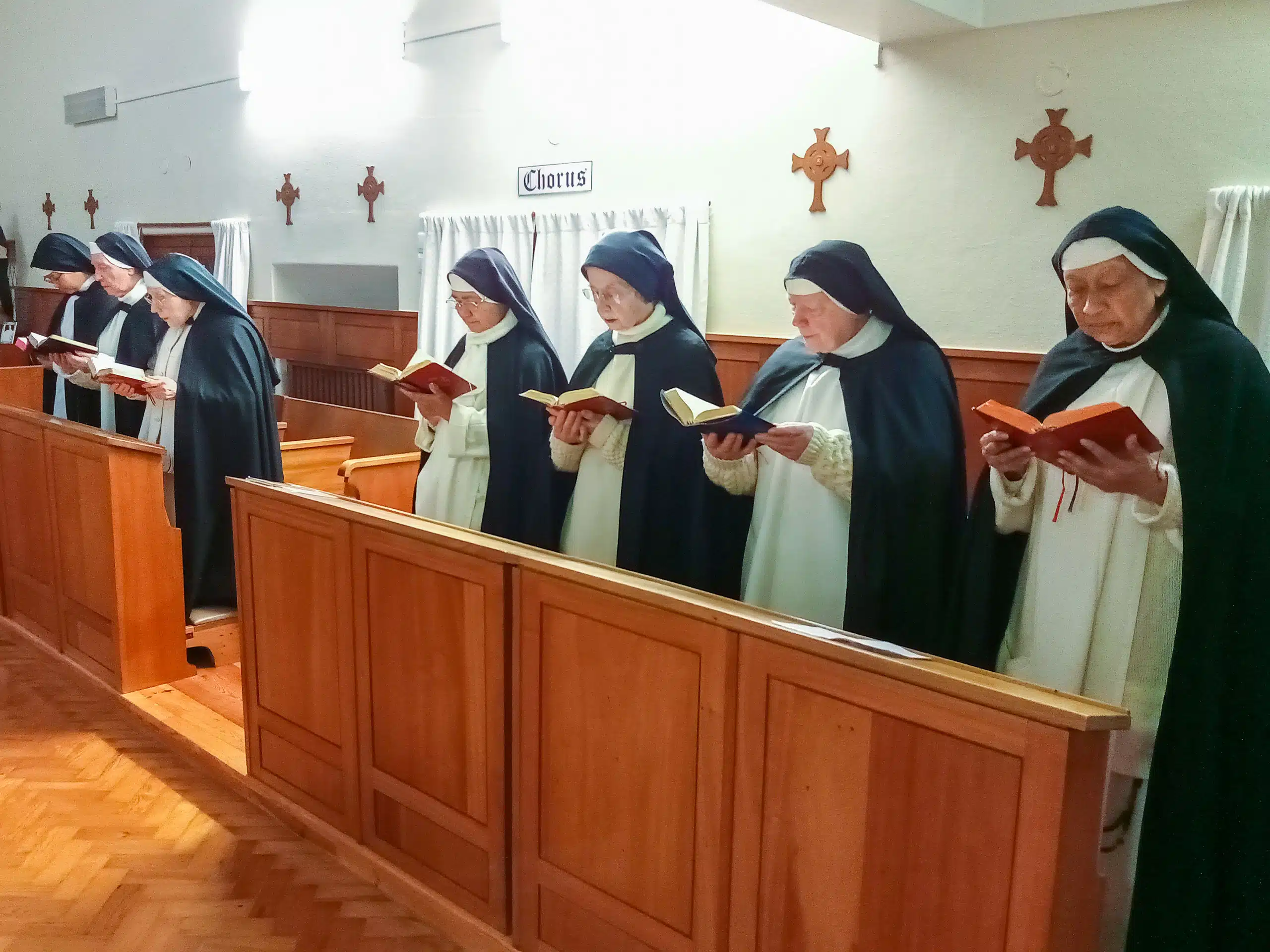
The sisters assemble seven times a day for the prayers of the Liturgy of the Hours, and each sister spends an hour individually in adoration, praying the rosary. Prayer requests pour in from all over the world. “The overall request for prayers that we receive is generally from parents or grandparents begging for prayers for a family member to come back to the church, to come back to the faith,” she said. “Sometimes there’s only one member of the family left.”
Only ten sisters remain at the monastery, but the prioress is hopeful that the excitement generated by Pope Leo XIV, who is an Augustinian, will spark renewed interest in religious life. “That was quite a moment, wasn’t it?” she said. “Someone said to me, ‘Oh, you like him because he’s American,’ and I said, ‘No, not because he’s American, but because he’s humble.’ We’ve read that young people are really responding to him.”
Mother Maria said that the world will always need cloistered nuns at Fatima, where thousands of pilgrims flock every year to see the place where Mary first appeared to the three Portuguese children in 1917. Visitors can talk to the sisters at the cloister, but the nuns remain behind the “grill” that separates them from the world.
“We share with them who we are and our place at the heart of the church,” she said. “It’s important for the pilgrims to understand the present relevance and even urgency of doing what Our Lady asked. We hope that God’s grace accompanies what we share, and that hearts and minds will be moved to follow the Gospel more closely in their lives.”
And of course, as a Dominican Sister of the Perpetual Rosary, Mother Maria believes that the rosary is an essential aspect of following the Gospel. “The Gospel is our roadmap to heaven and the rosary is our compass, guiding and directing our life to Jesus our Savior through Mary,” she said.
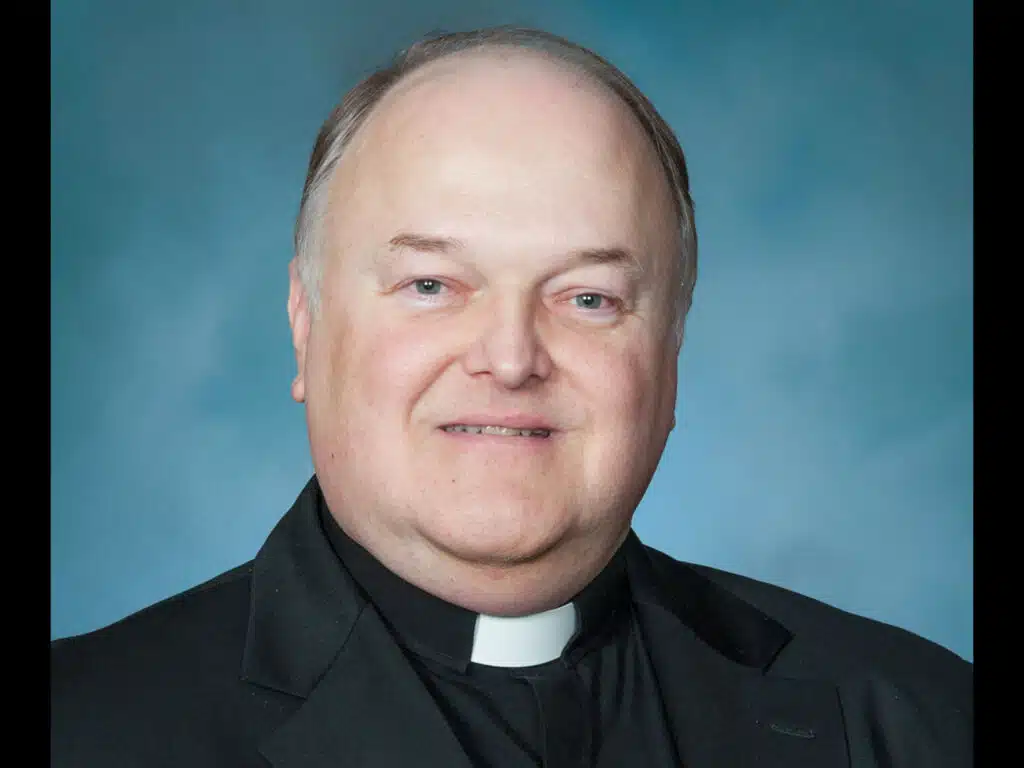
Father Edward C. Hathaway, rector of the Basilica of St. Mary in Alexandria, has visited the sisters several times. “They live a quiet, hidden life in Fatima, dedicated to prayer and reparation for sin and for sinners,” he said. “Out of the spotlight of modern society, they radiate the eternal light of Jesus Christ. Through devotion to the Immaculate Heart of Mary and a deep interior life of prayer and study, lived in community, they help transform the world from the inside.”
After 42 years in the cloister, Mother Maria admits that she experienced homesickness and loneliness in the early days, but she said the cloistered life is “a beautiful calling, beyond any explanation,” and encouraged young women to be open to it. “A priest told me when I first came here that if young girls knew about this way of life, there would be there would be a long line at the front door,” she said. “The founder of our order said, ‘If you are going to work for Our Lady, you better be prepared to suffer.’ But for Jesus and Mary, we’ll do anything.”