“How’s your summer unfolding?” I asked.
“Great!” she replied brightly. “Super busy. So much to do. Coming and going — trips and camps, swim lessons and the gym. Trying to keep up!”
I nodded in recognition and smiled in return. We exchanged a vague promise to get together soon for an afternoon of catching up. And I went my merry way.
But I kept hearing her words. Great! Super busy. As if they were the same thing.
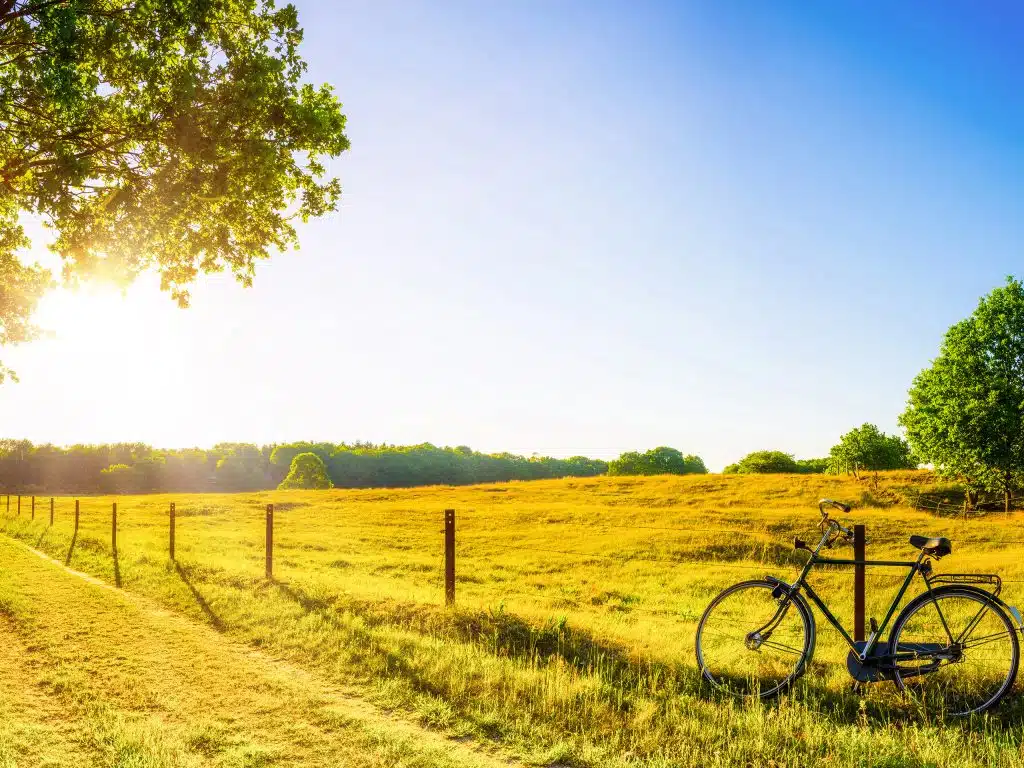
I remember summers spent under a huge oak tree, binge reading — my only care not to drip juice from a perfectly ripe peach onto the pages of my book. I rode my bike to my friend’s house, spent long days on a nearby beach, marked time by regular library visits.
Life moved at a slower pace. I think we all moved at a slower pace. If we had a question, we wondered longer. Not because we were more patient, necessarily, but because we had to wait. The answer was not at our fingertips — it was in the encyclopedia, at the library, or in a conversation that would unfold over time. We could write a letter, drop it in the mail, and wait days or weeks for a reply. Making a phone call? Someone’s dad answered and then there was a long, awkward pause before the intended person came to the phone. In nearly every interaction, there was a kind of built-in space, a necessary quiet, in which thoughts could deepen and emotions could and did settle.
Even commerce moved more slowly. We waited for catalogs and saved for purchases. We planned trips to the store. No one expected things to arrive in 24 hours or be returned just as fast. We learned to live in the in-between.
And still — still — when people reached the ends of their lives, they said, “It all went so fast.”
What, then, will we say now?
Now, we live in the blur. We are swept up in our own busyness, pulled forward by a culture that values speed and productivity above all. Communication is instant. Information is endless. Choices are overwhelming. And in the blur, we begin to wonder: Is it even possible to fully develop — intellectually, emotionally, spiritually — at this pace?
We can consume knowledge faster than ever before. But do we digest it? Understand it? Let it form us? Or do we snack constantly on data, rarely sitting down to a nourishing, thoughtful meal?
Emotional maturity requires time, too — time to reflect, to repair, to listen, to sit with discomfort. But time is the very thing we seem to have lost. We scroll past people in person and online, pulling down to see what novelty appears, abandoning the work of relationships before it has begun.
Spiritual growth, perhaps most of all, resists rush. God’s work in us is often slow, hidden, patient. Like seeds under snow. But in a culture of perpetual motion, even faith can feel like another box to check, another achievement to optimize, another little celebration on the app.
Speaking of apps, even our bodies are drafted into this relentless forward march. The current culture of physical fitness, while rooted in good intentions, has become another expression of urgency. We chase performance metrics and track calories burned and steps taken, as if our bodies are machines to be driven rather than temples to be tended. Even our sleep can be evaluated and scored. We call it “health,” but we often ignore how the chronic stress of the pursuit erodes the very wellbeing we’re chasing.
What happens to a people who never pause? Who never wonder long and slow? Who never wait, never listen, never linger?
Maybe the better question is: what might happen if we did?
What if we reintroduced wonder into our days this summer — not just as a brief pause, but as a practice? What if we moved more slowly on purpose — not because we have to, but because we can choose to? What if we stopped measuring our worth by how much we can do or how fast we can go?
Maybe then, even in a world that won’t stop spinning, we can live lives of deep presence and abundant awe. Maybe we can begin, again, to grow in the summer sun.
Foss, whose website is takeupandread.org, writes from Connecticut.