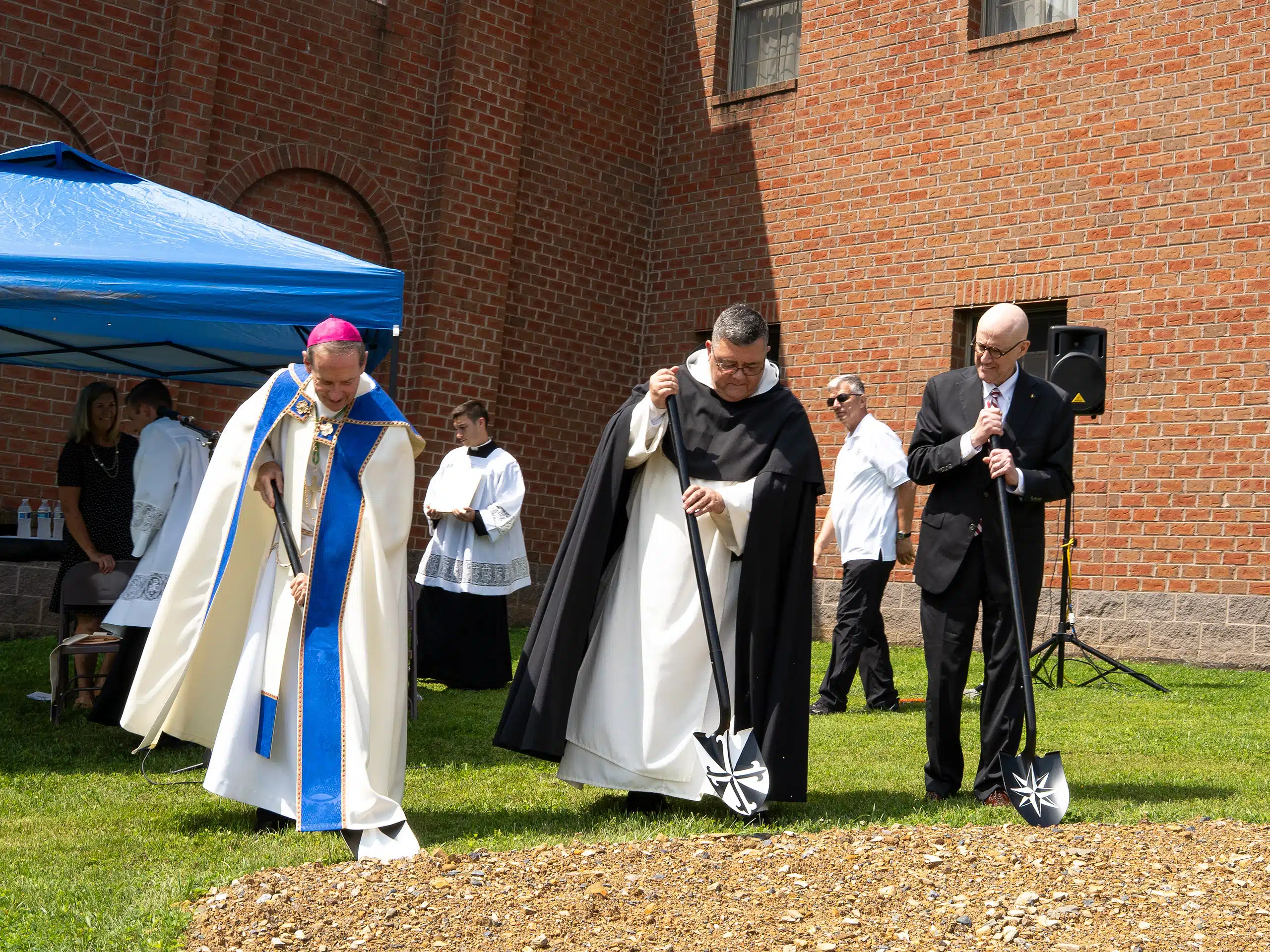
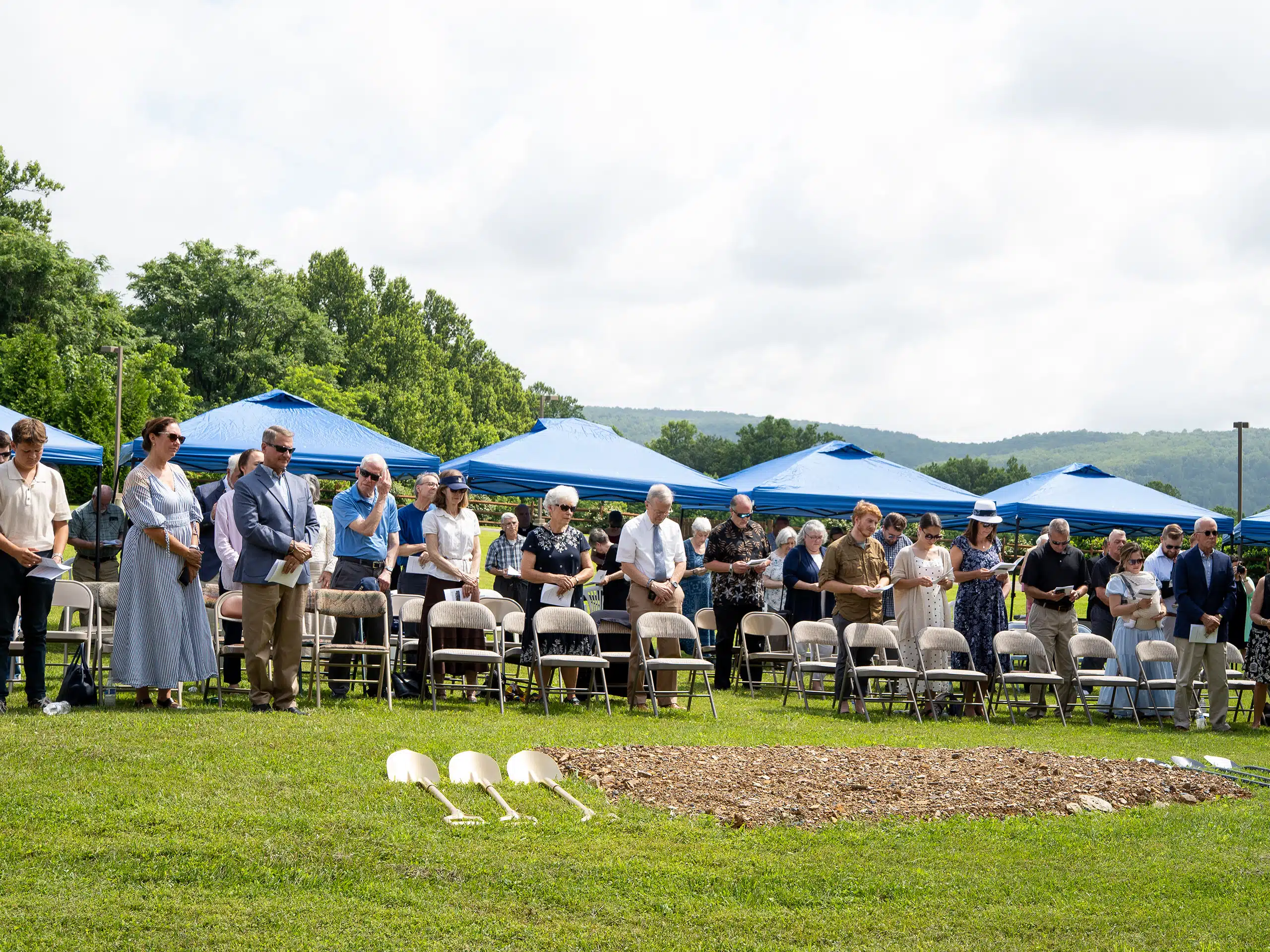
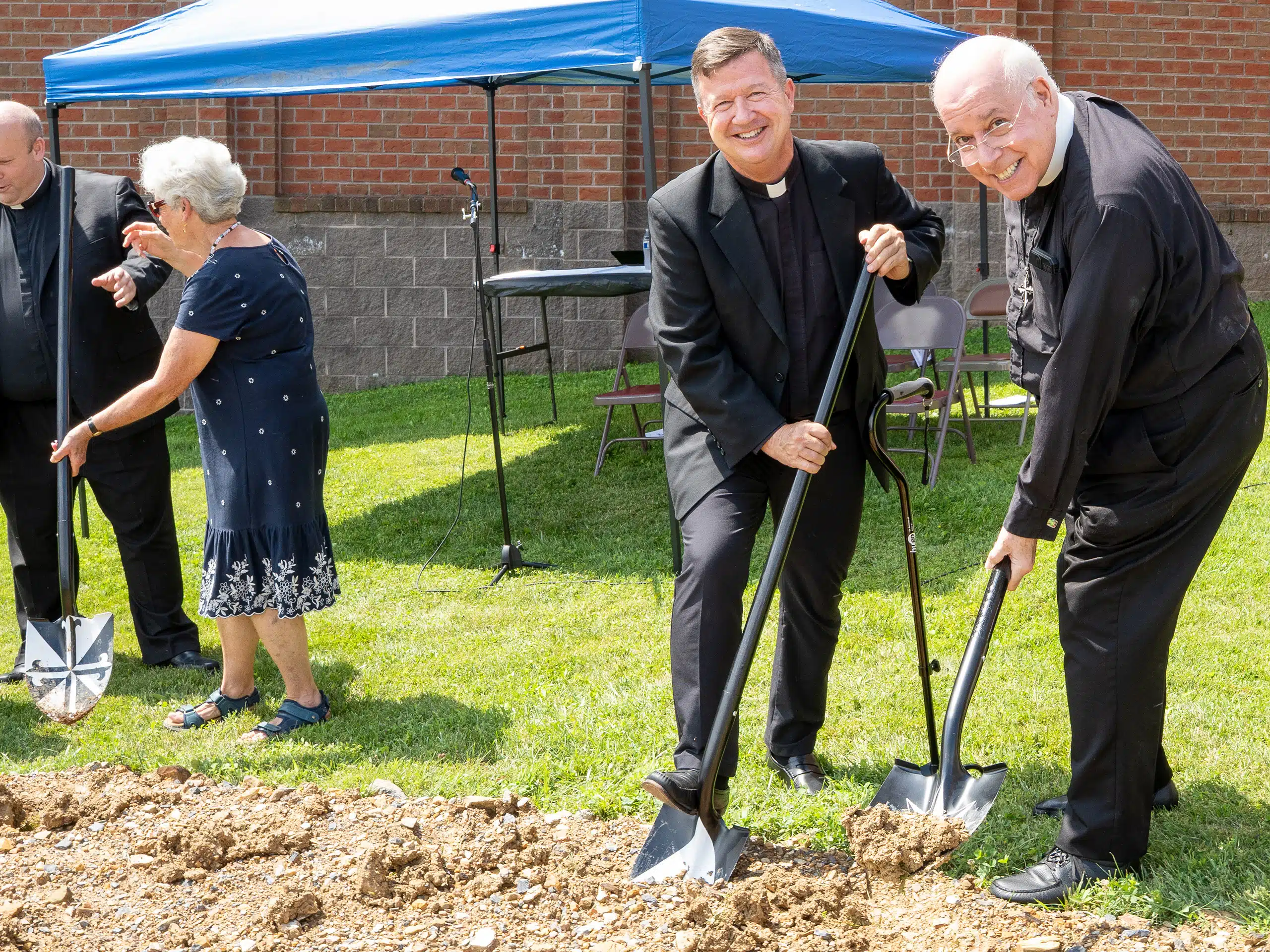
Outside the walls, a crowd of 60 supporters gathered to celebrate the long-awaited groundbreaking for a new chapel July 19. But high atop Blue Mountain in Linden, the 13 cloistered nuns of St. Dominic’s Monastery remained inside, peering out from the windows.
“It’s not just about completing a monastic building,” said Sister Mary Magdalene, prioress. “It’s for fostering the life of hiddenness and withdrawal from the world so that God can be glorified not only in the temple of this chapel but in the temple of our souls.”
The contemplative sisters have been patiently using their library as a makeshift chapel since relocating from Washington in 2008. But with two postulants in house and a steady stream of new inquiries, a dedicated chapel has been a priority.
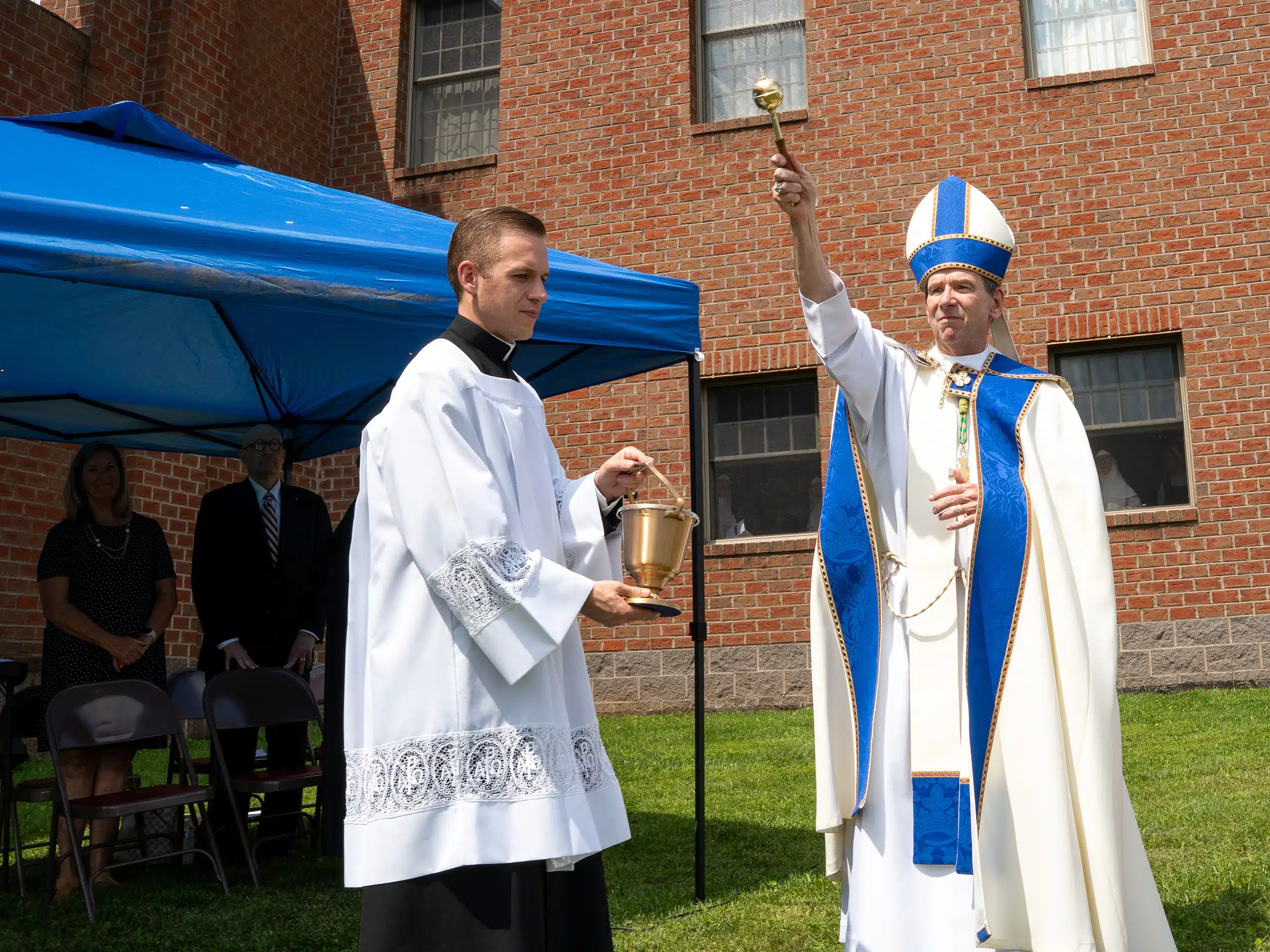
“The fact that we’re building a new chapel reflects the growth this community is seeing and the growth they’re anticipating,” said Bishop Michael F. Burbidge, who presided over the groundbreaking ceremony and blessed the ground with holy water. “It’s going to be here for generations to come. How blessed we are to see so many women throughout the diocese and throughout the country being called to monastic life, a life of solitude, a life of prayer. And God willing, this growth will continue and the chapel will be able to accommodate all those who want to pursue this beautiful way of living.”
Hidden itself, the only indication that you are entering sacred space is the small “Monastery Road” sign on the meandering drive up the mountain. Architect Jim O’Brien, who also designed the renovation of the Cathedral of St. Thomas More in Arlington, considered what it meant that the new chapel would stand for centuries on the 198-acre monastery grounds.
“I can’t even take it all in,” said O’Brien. “It’s beyond imagining, but it’s something to consider as we work on a design that needs to be durable and elastic. This is the incredible culmination of a dream that began 20 years ago.”
Other than having a beautiful new chapel to glorify God, Sister Mary Magdalene said their lives of prayer and penance will remain the same. “We were actually founded by St. Dominic in order to pray for the success of the holy preaching of the friars,” she said. “We do that here for the friars throughout the diocese and the order, but also for the diocesan priests. We pray for their success — that their preaching will be able to move souls.”
The nuns aren’t seen by the public, but their prayers are felt, said Victoria Hughes, a parishioner of St. Bridget of Ireland in Berryville, who spearheaded the capital campaign. “Why do we need cloistered nuns?” she asked. “Because we need prayer, and we need their presence to remind us of God’s presence here in the diocese, here on this mountaintop. They are a wonderful refuge for all of us, too.”