Amid a culture that cannot comprehend mortality, the Catholic Church embodies “memento mori,” Latin for “remember your death.”
“One of Mother Teresa’s closest collaborators once explained their work to a friend of mine: ‘Father, we prepare people for death,’ ” said Father Paul D. Scalia, diocesan episcopal vicar for clergy and pastor of St. James Church in Falls Church. “But that’s actually a good way of understanding the church’s mission … We’re preparing people to enter into eternity.”
While not always pleasant to contemplate, diocesan priests urge Catholics to spiritually prepare themselves for those final moments on earth — and beyond. “Preparing for death is not something that people want to think about, but it’s something that we should,” Father Scalia said. Of all the seven sacraments, Catholics spend the least time thinking about one of them — anointing of the sick, also called “last rites,” Father Scalia said.
Anointing of the sick is not just for those on their deathbeds. People who are about to undergo major surgery or who are gravely ill should reach out to their parish priest to schedule a time to receive the sacrament. “If someone’s gotten a diagnosis of cancer, for example, and they know that death is a possibility, then they should receive the anointing,” Father Scalia said. “It strengthens the soul to be united with Christ on the cross, and so we’re not just suffering but really offering sacrifice.”
If you haven’t already, have a conversation with family members and inform them of your desire to receive anointing of the sick when in crisis. “Don’t wait until the last minute, and don’t be afraid,” Father Scalia said. “There will come a point at which the doctors say, ‘There’s nothing more that we can do,’ and at that point, the priest can say, ‘There’s an eternity of what I can do.’ ”
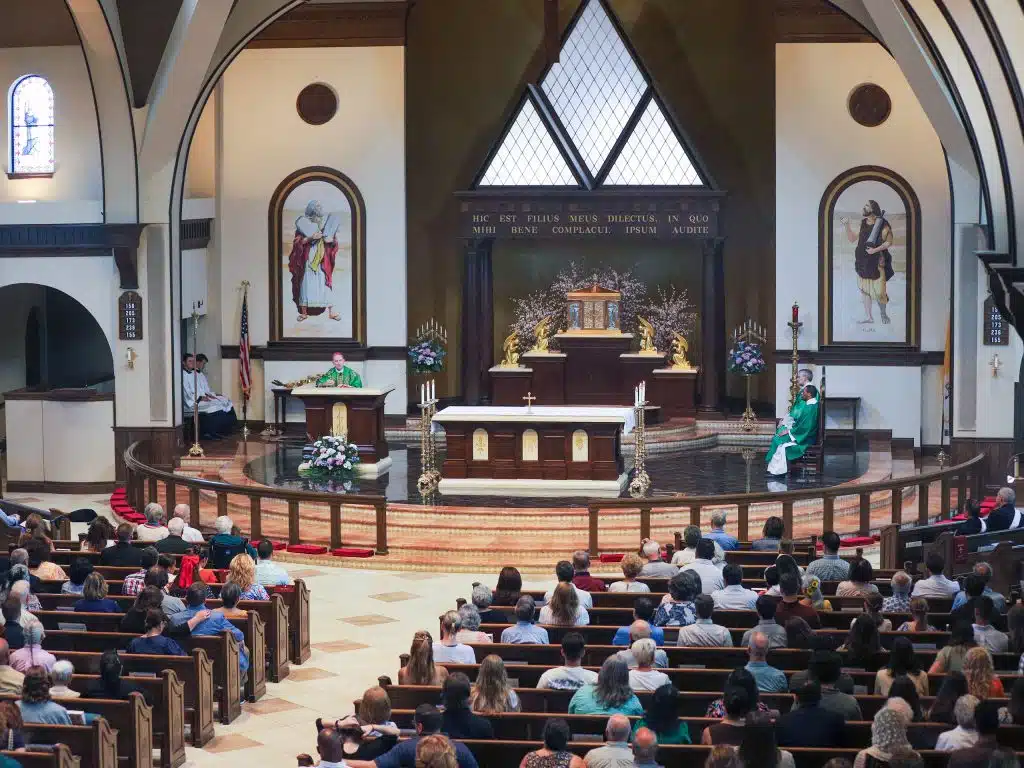
While it might feel macabre, it is vital to communicate to family members your desire for a Catholic funeral Mass and burial, priests add. Similar to planning a wedding Mass, planning your funeral Mass means choosing the readings, the psalm and the hymns, among other details.
“Plan while things are calm, so that it’s been taken care of before the storm hits,” said Father John J. Riley, spiritual director at the San Damiano Retreat Center in White Post. “It’s very important that the last wishes of somebody are honored and respected.”
Planning in advance protects grieving family members from having to make last-minute decisions, and also ensures that the deceased is laid to rest in accord with their preferences even if their survivors or estate executors are not practicing Catholics. During a funeral Mass, the priest commends the soul of the deceased to God and blesses the casket with holy water and even incense.
“We don’t want to deprive people of those prayers of the church,” Father Scalia added. “In our (modern) culture, we like to get death over with, which is because we are uncomfortable with it. But the funeral Mass — it is to pray for the dead, but it’s also to bring consolation and strength to those who are mourning.”
A Catholic burial after Mass is also vital. The priest prays the Rite of Committal and blesses the ground, mausoleum or other resting place as “a formal way of the church entrusting these remains to the Lord,” Father Scalia said.
For those who don’t know where to start planning, the diocesan Office of Development is hosting a series of parish seminars, “A Catholic Guide to Estate and Funeral Mass Planning,” through May 8, 2026. Participants learn how to arrange an advance health care directive, an estate plan and their funeral Mass. They also receive a form on funeral and burial preferences to fill out and send to family.
While mainstream culture treats death as the end, Father Riley sees it as a source of eternal joy. “For me, death is really more (about) hope. The sorrow is there, but the hope eclipses the sorrow,” he said.
Find out more
To register for a funeral and estate planning seminar, go to bit.ly/4nRNdhI.