A dramatic mood shift occurs each November. The festivities of All Saints’ Day Nov. 1 give way to the somber prayers and remembrances of All Souls’ Day Nov. 2. As Catholics prepare to enter All Souls’ Month in November, diocesan priests and parishioners suggest ways to pray for the dead both in November and throughout the year.
“Praying for the dead is not just a Catholic tradition but can be found as well in the Old Testament,” said Father Michael D. Weston, diocesan director of divine worship. “We believe that, though someone has died, life is changed, not ended, and the individual’s soul lives on.”
For those who have died in a state of grace but still have attachment to sin on their souls, they undergo a “purification” in purgatory before entering heaven, according to Father Weston. Prayers give consolation to the suffering souls and assist them on their journey to heaven.
Praying for the dead, particularly the poor souls in purgatory, can take different forms. One simple way is to pray the Eternal Rest prayer following grace before meals: “May the souls of all the faithful and departed, through the mercy of God, rest in peace.” Bishop Michael F. Burbidge often prays the Eternal Rest prayer and makes the sign of the cross while passing a cemetery. Father Paul D. Scalia, diocesan episcopal vicar for clergy, even encourages Catholics to visit cemeteries during November and offer prayers for the dearly departed.
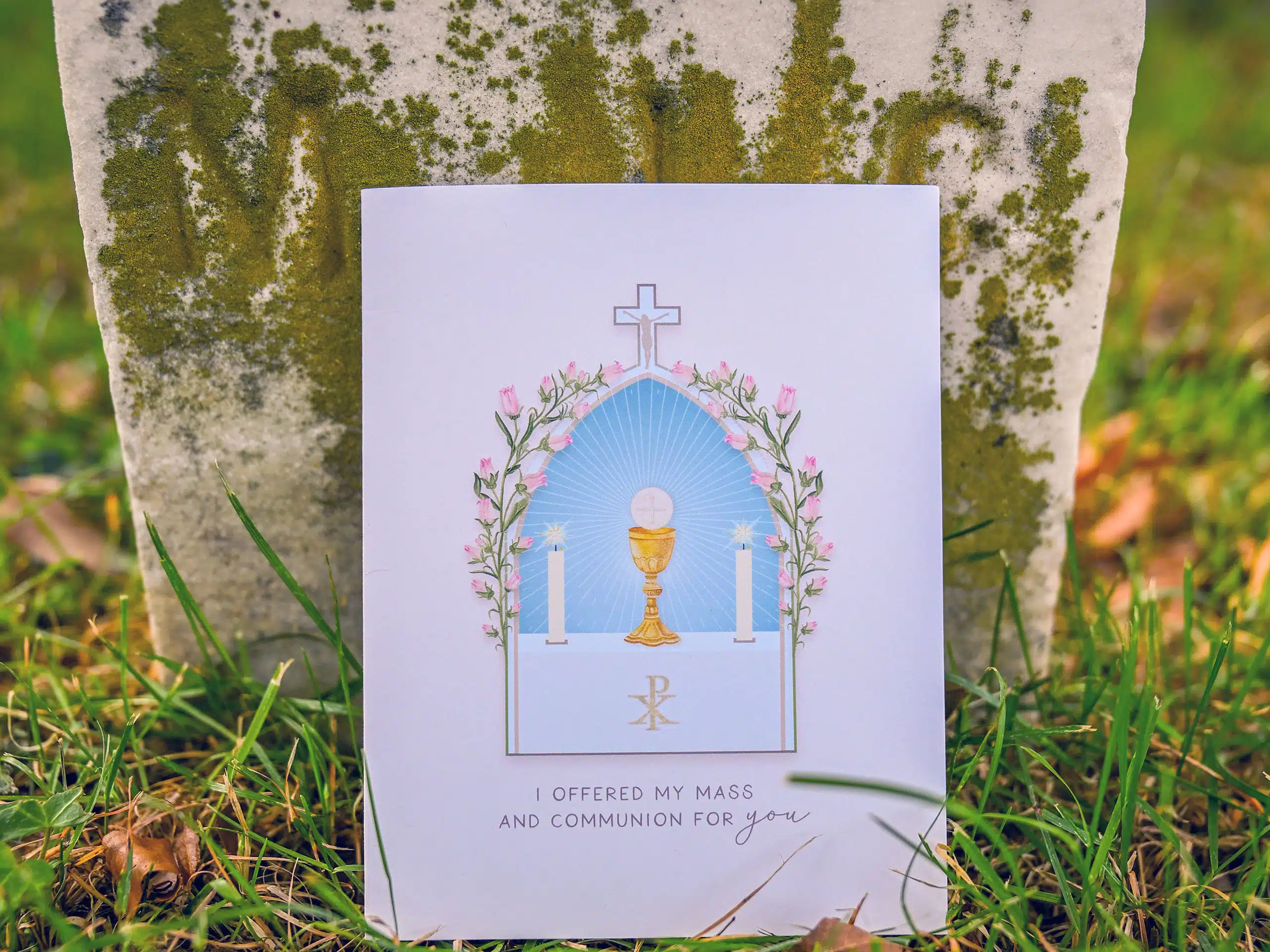
Another way to pray for the dead is by offering a Mass for them and mailing the family a Mass card, much like a sympathy card. “Most, if not all, parishes provide Mass cards for those who ask for the intention of Mass to be for their deceased loved one or friend,” Father Weston said.
After filling out the card with the date of the Mass, the parishioner then mails the card to the deceased’s family. At some parishes, such as the Cathedral of St. Thomas More in Arlington, Mass cards may be filled out online.
A particularly powerful form of prayer is offering your holy Communion for the deceased, according to Father John J. Riley, spiritual director of the San Damiano Retreat Center in White Post. “You go to Mass, you receive holy Communion, you offer the Son to the Father from the altar of your heart specifically for a person who’s passed,” he said. “That is one privilege they don’t have in purgatory.”
Parish ministries provide a tangible way to both pray for the dead and comfort their families. Alice Curtin, a parishioner of Our Lady, Queen of Peace Church in Arlington, leads the parish’s funeral ministry and has developed a system to help grieving families move step-by-step through the funeral planning process.
Once a family schedules the funeral date with the parish office, Alice reaches out with an introductory email. “We have a set of five emails that we send,” she said, which provide instructions for selecting the readings, music, prayers of the faithful, program format and family members who will serve as pallbearers and lectors. “I’m there the day of the funeral so things run smoothly,” she added.
Her husband, Kevin, serves as one of the parish’s choir directors. “We have what we call a ‘show-up choir,’ and we have 45 people who have signed up to be notified,” he said. Once Alice makes contact with the family, Kevin provides them with a list of psalm and hymn options. Among the 45 hymns are classics such as “On Eagle’s Wings,” “Take My Hand, Precious Lord,” “Amazing Grace” and “How Great Thou Art.”
When a family has to plan a funeral on their own, “it’s so overwhelming,” Alice said. “It’s easier when they have one topic at a time.”
Nicki Coss, who leads the bereavement group at St. Ambrose Church in Annandale, said that its work embodies the seventh spiritual work of mercy, “praying for the living and the dead.” When notified of an upcoming funeral, she researches the deceased’s obituary and sends a prayer request out to 40 members of the ministry’s prayer team. “I’ll ask the family how we can help and express to them that we are praying for them,” she said. “We walk them through the process and tell them what we can do.” The ministry has 10 core members who attend the deceased’s viewing, assist in the funeral preparations, and set up the parish hall for a reception.
“We’re just trying to put the Gospel into action,” she said. “We’re trying to be present to those who are grieving and pray for them.”
Coss and the Curtins said the ministries even act as evangelization opportunities. Occasionally, family members who have fallen away from the faith are so touched by the funeral liturgies and parish efforts, that they begin coming back to church, the ministry leaders say.
“We’re dealing with people who are experiencing real trauma in their lives, and this is an opportunity to be present to them,” Kevin said.
No matter how holy the deceased may have been, they are always in need of the church’s prayers, priests say. “At times, we’re tempted to canonize persons and call them saints,” Father Riley said. “We could be right, but it’s better … to pray that they’re on the way.”