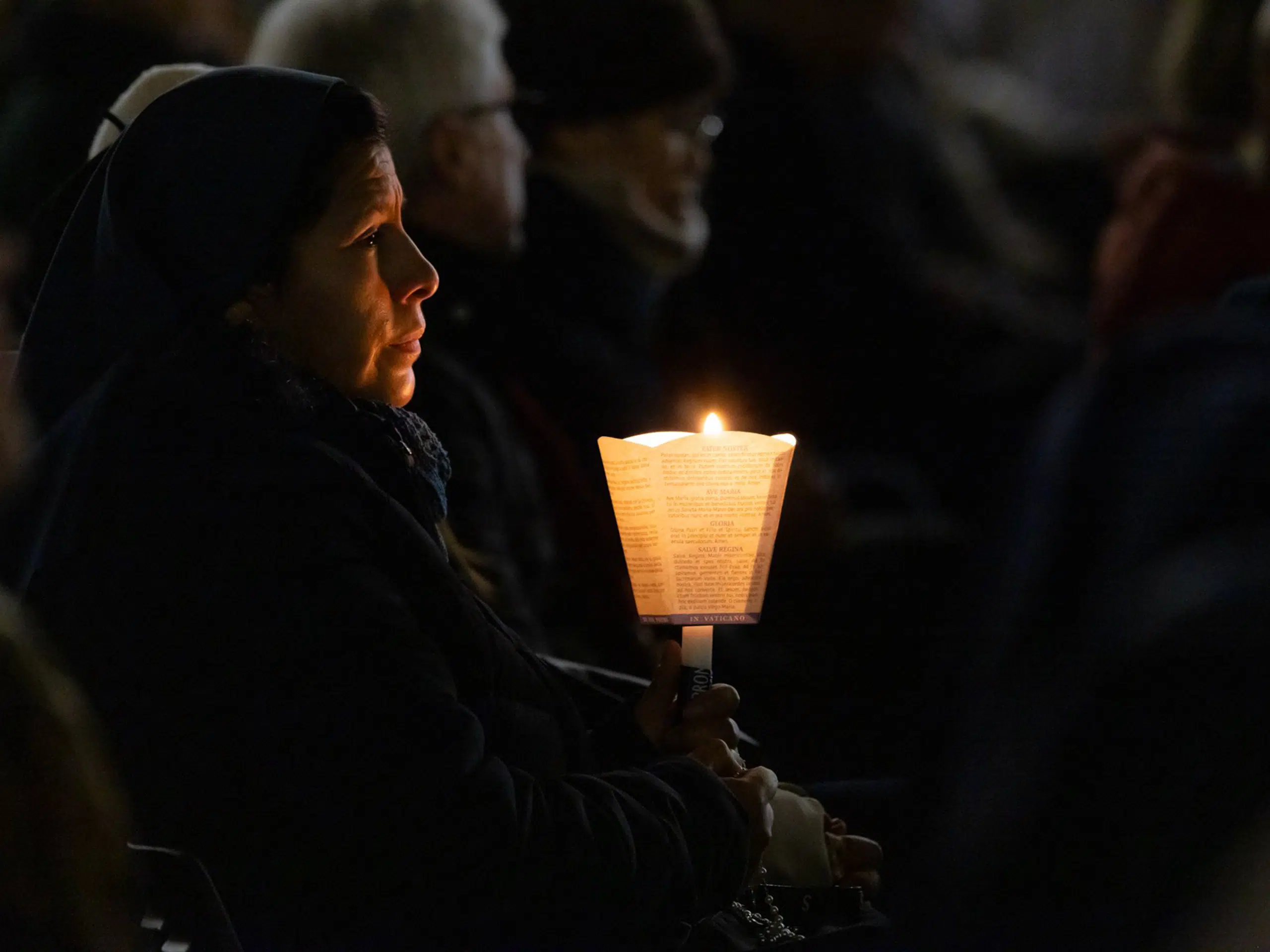
“Light one candle for peace, one bright candle for peace…” So begins our family’s celebration of Advent every year. The voices have matured, but the song and the prayer remain the same. Bring us peace.
And every year, Advent arrives carrying both promise and pressure. The calendar fills quickly. The house grows noisier. Expectations hover in the background — of beauty, of joy, of togetherness. Somewhere between the grocery lists and the lit candles, we begin to feel the ache for peace.
Not the kind that comes from everything going right. The kind that steadies the soul even when nothing is tidy, even when it feels like nothing is going right.
Jesus speaks about that peace directly. On the night before he dies, knowing full well what is coming, he tells his friends, “Peace I leave with you; my peace I give to you. Not as the world gives do I give to you.” (Jn 14:27) This is not the peace of control or comfort, or perfect plans executed perfectly. It is the peace of presence. The peace of God-with-us.
Advent invites us not just to wait for peace, but to become it.
That can feel overwhelming. We cannot calm every storm in our home. We cannot smooth every teenage crisis, prevent every awkward family gathering, or protect our children from heartbreak. We cannot restore the job, right finances, or heal the injury. But peace, as Jesus gives it, does not depend on the storm stopping. It depends on who remains with us inside it.
“Blessed are the peacemakers,” Jesus says, “for they shall be called children of God.” (Mt 5:9) A peacemaker is not someone who forces quiet or avoids conflict. A peacemaker is someone who carries God’s presence into the middle of tension and chooses love anyway.
That work often looks very small.
It looks like lowering your voice when you are tired. It looks like choosing not to relive the old argument when everyone is already raw. It looks like listening without correcting. Apologizing without defending. Letting silence be holy instead of awkward.
It looks like creating little pockets of calm — lighting the candle at dinner, turning off the radio in the car, praying Compline together at night when conversations have gone nowhere productive. It looks like baking cookies, not because everything feels cozy, but because warmth is something you are offering, not waiting to feel.
Peace is not something we manufacture through productivity. It is something we make room for through surrender.
Jesus tells us, “Do not let your hearts be troubled or afraid.” He does not say, “Make sure nothing troubles you.” He knows that hearts will be troubled. He instructs us instead where to place our trust when they are.
Advent peace is not the absence of problems. It is the presence of Christ in the middle of them.
Families carry so many unspoken things into December: grief that resurfaces with familiar songs, estrangements that ache more sharply in winter, mental and emotional fatigue hidden under festive schedules. Peace does not require pretending these things don’t exist. Peace begins when we stop outrunning them and invite Christ into their center.
Sometimes being peace means holding space for sorrow without trying to fix it. Sometimes it means defending joy without needing it to be perfect. Sometimes it simply means refusing to add one more sharp word to an already burdened room.
The world gives peace as a reward when everything goes well. Jesus gives peace as a gift before anything goes well — before the cross, before the Resurrection, before the disciples understand any of it at all. My peace I give to you.
In the long, ordinary days of waiting, we are learning to carry that gift. Into carpools and kitchens, into tough conversations and quiet evenings, into the places where we feel most inadequate and most needed.
This Advent, we do not have to create magical harmony. We are only asked to receive peace and pass it on.
One softened heart at a time.
One gentle word.
One candle lit against the dark.
Because the Prince of Peace is coming.
And he is already here.
Foss, whose website is takeupandread.org, writes from Connecticut.