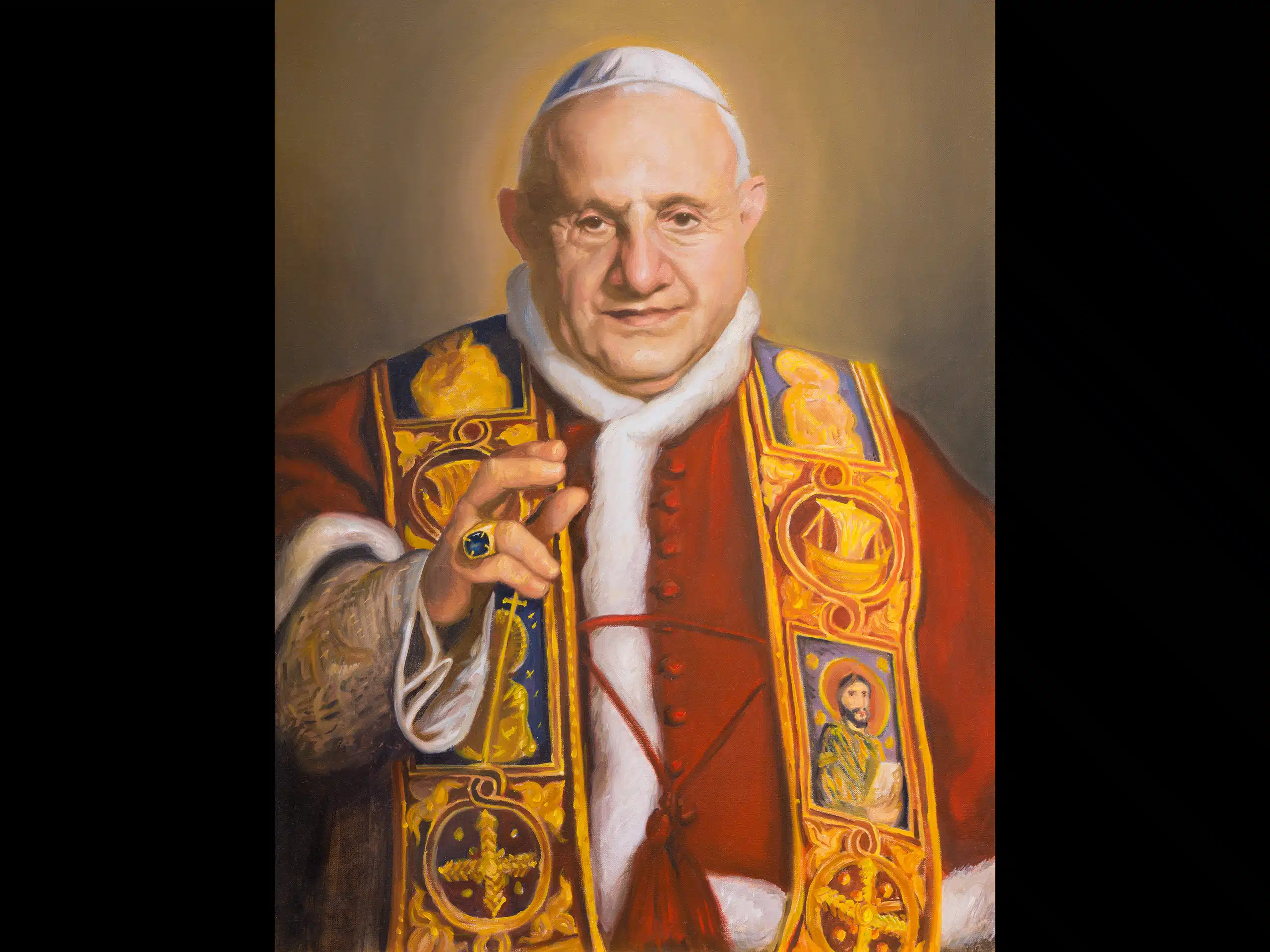
“Pacem in Terris,” Latin for peace on earth, is Pope John XXIII’s landmark 1963 encyclical and a prophetic guidepost for our times.
Written at the height of the Cold War, it speaks with remarkable clarity about the foundation of true peace: living in accord with the God-given moral order. Pope John XXIII addressed it not only to Catholics, but to “all men of good will,” appealing to the whole human family’s conscience.
He begins with an assertion that still resonates today: “Peace on Earth, which man throughout the ages has so longed for and sought after, can never be established, never guaranteed, except by the diligent observance of the divinely established order.” Peace, then, is not primarily a technique. It is an order, and that order is inseparable from truth, justice, charity and liberty.
Here is where the present crisis in Iran becomes a demonstrative example, not as a distant foreign policy story, but as a moral case study. Reuters reports that the United Nations human rights chief condemned Iran’s “brutal repression” of nationwide unrest, and that thousands were killed and large numbers detained, figures the Iranian government disputes. However, the statistics are debated, the moral reality is not: a state that governs by lethal force, intimidation and coercion has severed authority from the moral order.
At the heart of “Pacem in Terris” is the recognition of an objective moral order, knowable by reason and binding upon authority. All human beings’ rights and duties flow from innate human dignity. Pope John XXIII is not vague about what those rights include: “Man has the right to live. He has the right to bodily integrity.” These are not privileges granted by governments; they are moral claims rooted in the nature of man. Where they are denied, peace becomes a falsehood dressed in diplomatic language.
Because human dignity is equal and not graduated, the pope wrote that “on the doctrinal and theoretical level, at least, no form of approval is being given to racial discrimination.” Regimes that brutalize human beings typically begin by redefining who counts, who matters, and who may be crushed for the sake of order or for the supremacy of the state. The church rejects this logic because it is antithetical to the design of God.
Pope John XXIII then turns to authority itself. “Governmental authority, therefore, is a postulate of the moral order and derives from God.” Because authority is moral before it is political, law cannot approve injustice. “Consequently, laws and decrees passed in contravention of the moral order, and hence of the divine will, can have no binding force in conscience.” This is not an invitation to chaos; it is a warning that when the state claims sovereignty over truth, it loses legitimacy and trains consciences to submit to power via force.
He is equally explicit about intimidation as a governing method. A regime that governs “solely or mainly by means of threats and intimidation or promises of reward” is “offensive to the dignity of free and rational human beings.” Fear may preserve a system for a time, but it cannot build a moral order capable of sustaining genuine peace. It produces silence, not consent, compliance, not legitimacy.
“Pacem in Terris” teaches the duty of public authority in plain terms; the chief concern of civil authorities must be to ensure that rights are “recognized, respected, coordinated, defended and promoted,” because “to safeguard the inviolable rights of the human person, and to facilitate the performance of his duties, is the principal duty of every public authority.” Iran’s repression is a visible example of what happens when that duty is inverted, and the machinery of government exists chiefly to crush moral duty and silence human rights.
The encyclical dismantles another modern illusion, that peace is secured by weapons. True peace, Pope John writes, “cannot consist in the possession of an equal supply of armaments but only in mutual trust.” Weapons can deter, but they cannot reconcile, and a society welded together by force is not a stable society. It becomes an obstacle to man’s freedom.
Finally, Pope John XXIII gathers his argument into a sentence that reads like a Catholic constitution for public life: “It is an order that is founded on truth, built up on justice, nurtured and animated by charity and brought into effect under the auspices of freedom.” Where truth is suppressed, justice decays; where justice decays, charity becomes impossible; where charity is absent, freedom becomes license or coercion; and where freedom is distorted, peace becomes an empty word.
In the face of violence in Iran, Catholics should not respond with partisan reductionism or detached indifference. We must examine our hearts and refuse to excuse oppression because it is distant. We must pray for the suffering, demand justice without vengeance, and insist that authority, whether local, provincial, or global, remains accountable to the moral order, because only that order can sustain peace on earth.
Harden is a parishioner of St. Ambrose Church in Annandale.