

Virtue formation has always been a part of the curriculum at The Catholic University of America in Washington. By graduation, all undergraduate students have taken a minimum of 12 hours each of philosophy and theology.
That isn’t the only place virtue formation happens. Students encounter virtue-based exercises in business, psychology, social work, nursing and other courses. A social work student may write reflections on a clinical care experience. Students in other courses will be assigned to write a character reflection.
Catholic U. is taking virtue development to a new level this year by tapping into a $1 million institutional impact grant from the Educating Character Initiative of the Program for Leadership and Character at Wake Forest University in Winston-Salem, N.C.
Gregory LaNave, a theology professor for 20 years and a parishioner at the Church of the Nativity in Burke, is leading the implementation of a campus-wide initiative that will expand virtue-based exercises into coursework and undertake surveys to track student experience.
The 11 focus virtues are foresight, honesty, hope, humility, magnanimity, teachability, gratitude, friendliness, diligence, understanding/science and resilience.
LaNave said the enthusiasm from students and faculty who are participating is palpable.
Faculty from across campus submitted course proposals, and the program rolled out last fall with 90 approved courses that integrate virtue learning into high quality academic content.
“Virtue and character formation are central to our identity as the nation’s and the bishops’ Catholic university,” said University President Peter Kilpatrick when the grant was first announced. “This grant provides the university with a unique opportunity to more deeply integrate the learning — and living — of virtue across campus, providing all undergraduates knowledge and practices that will benefit them throughout their lives.”
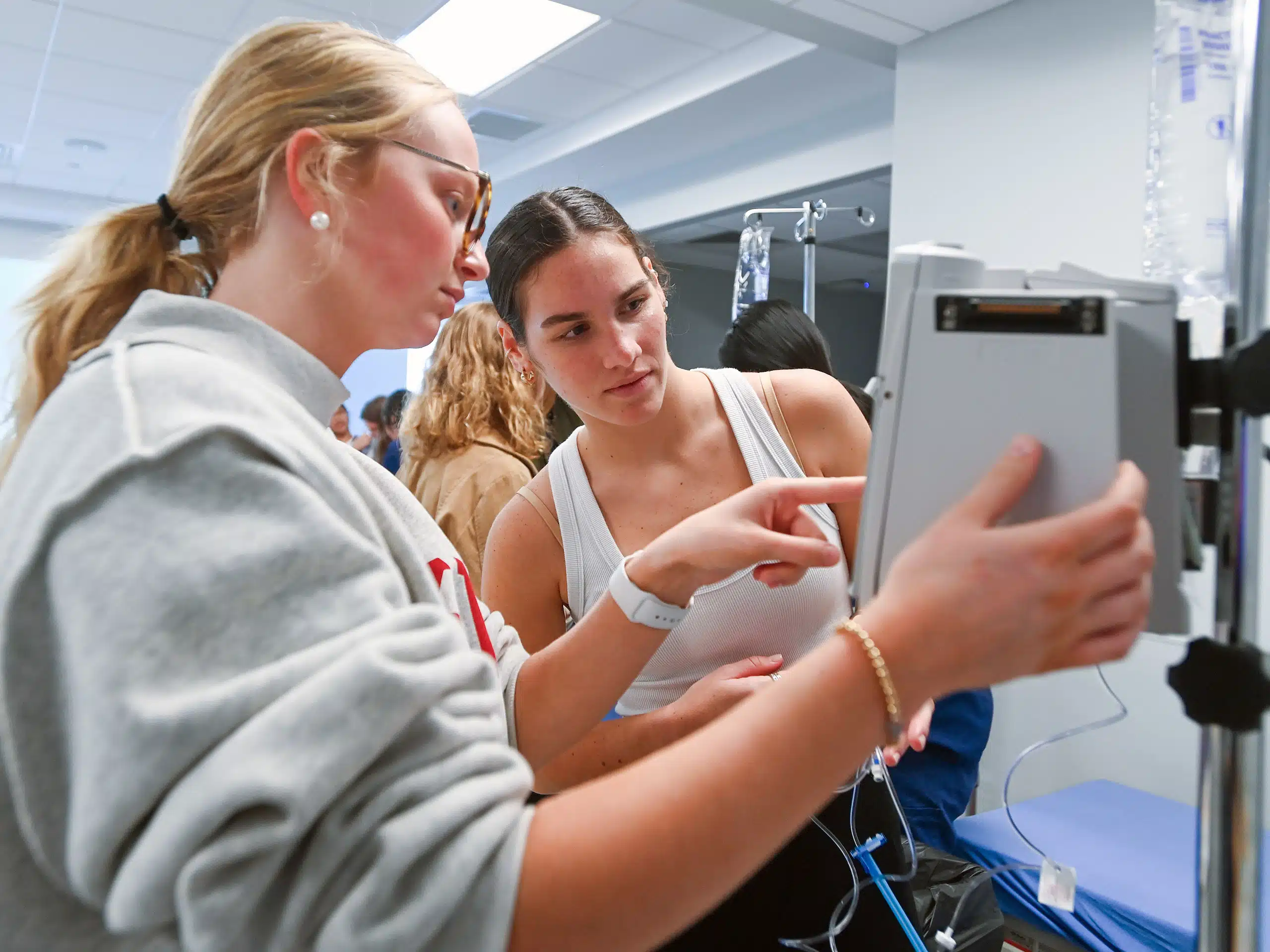
Activities vary by class and professor. Students in a business course may practice resilience by being challenged with an almost impossible task, while nursing students explore finding hope by giving patients a fighting chance to live.
LaNave said one outcome will be “a catalog of tried and true practices for the cultivation of virtue that will be a permanent possession of this university. That will be a marvelous basis for us to reach out to other organizations — educational or other — and help them accomplish the same.”