

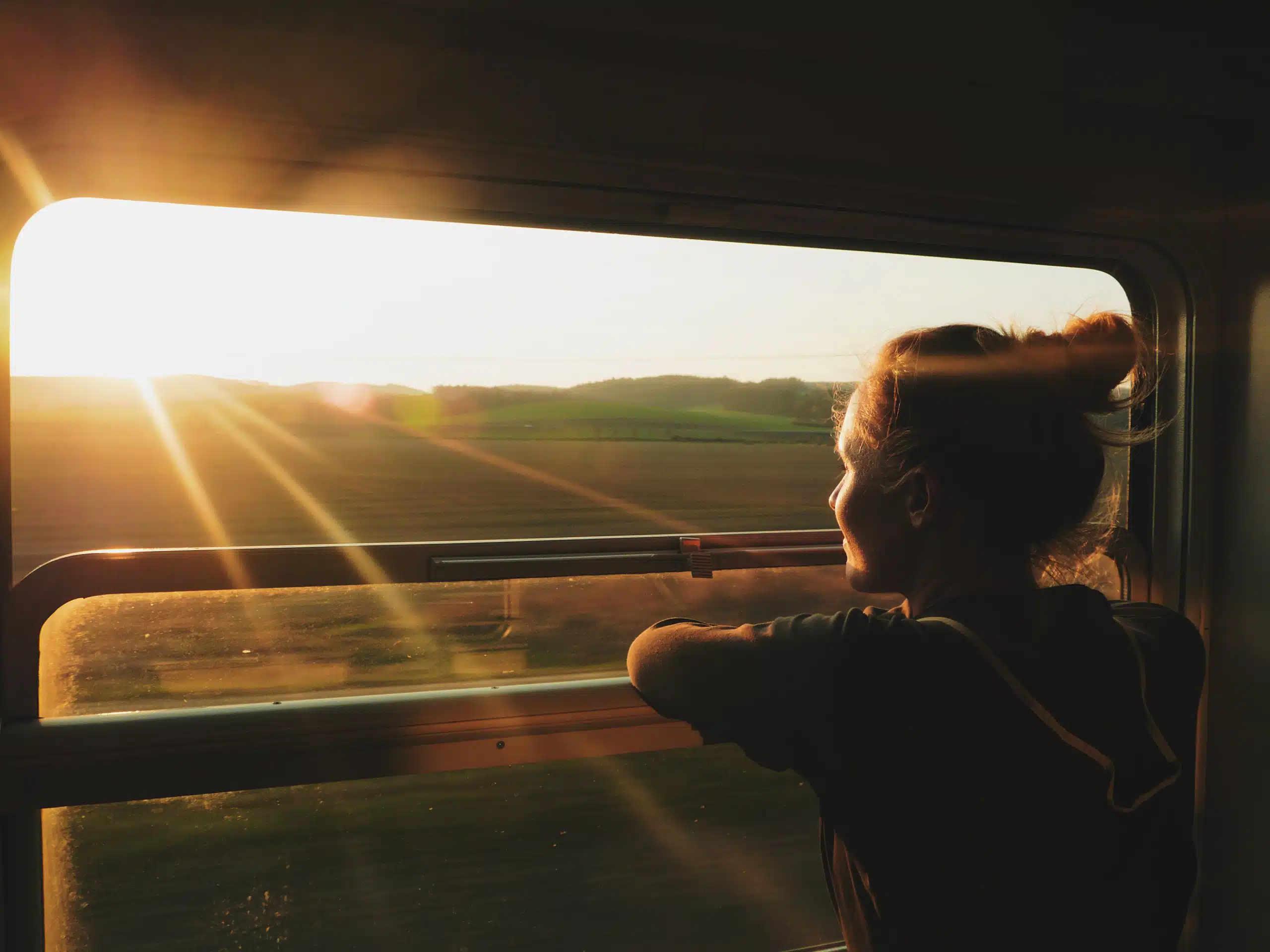
Due to a happy confluence of events, I recently found myself in Rome for both work and pleasure — along with thousands of other visitors who, as always, filled the lively streets of this ancient city.
My fellow visitors and I seemed to share two goals as we wandered through the charming alleys and grand piazzas and as we visited the breathtaking basilicas and grand landmarks. First, we all wanted to experience them deeply, take in their beauty, be inspired by their significance and make memories to take home with us. Second, though, it seemed as though we wanted to capture all that we saw and experienced through our photographs. Armed with cell “phones” — that are now far less phones than they are full-service portable computers — we wanted to record what we saw to save or share.
Yet, I also noticed that when we — myself included — took these photos, we did not always aim to capture everything exactly as it was. Instead, we would wait for that split second when no one else was standing near the Pieta or hope that no one would walk past when we took a video of ourselves throwing our coins into the Trevi Fountain. In a city as crowded and lively as Rome, we wanted to be the only ones in our photos and take the perfect picture that captured what we thought was the best view of our subject. Often, I found myself waiting patiently, or not so patiently, while others blocked passersby so that they could take the beautiful family picture in front of a favorite landmark.
In pursuit of this, however, we came away with photographs that did not quite capture what it really was, but what we wished it would be. Our pictures did not reflect the realism of the crowded chaos but the perfection of calm curation.
This might be fine in the low-stakes world of travel photos. But it may be a temptation in the higher-stakes world of life.
How often can it be tempting to wait for the perfect opportunity or the perfect time without realizing that what lies right before us, in its sloppy messiness is that which is real and, in its own way, beautiful? How often might we want to favor the way we think things should be rather than the way they actually are? How might we overlook the people, places and things that are not, by our standards, perfect?
Yes, there is something beautiful about a photograph of a fountain, an obelisk or a cathedral with no one, or perhaps only us, in the picture. But there is also something beautiful about seeing that same site surrounded by the people, cars, cats, street venders and motor scooters that are a very real part of the scene.
It may be worth asking, in matters both spiritual and worldly, whether we are like the cautious photographer who holds off on acting until everything looks the way we plan it. Are we waiting to invite people to our homes until our houses are perfectly clean?
Are we waiting to volunteer until our schedules are free and clear?
Are we waiting to give of our treasure until we have a certain amount saved away, or waiting to give of our talent until we have perfected the skills we wish to share?
Are we waiting to pursue a dream until all aspects of our lives are in order?
Are we waiting to return to God until we believe ourselves to be “good enough” or fully ready?
A photographer who waits long enough may indeed get that perfect, uninterrupted snapshot that paints a digital picture of a beautiful scene. But in day-to-day life, it might be that the reality that lies before us is the greater beauty. It may not be ideally ordered, composed or ready according to our plans. But sometimes it is the beautiful reality of ordinary time.
Silecchia is professor of law and associate dean for faculty research at Catholic University’s Columbus School of Law.

Why Jesus uses parables