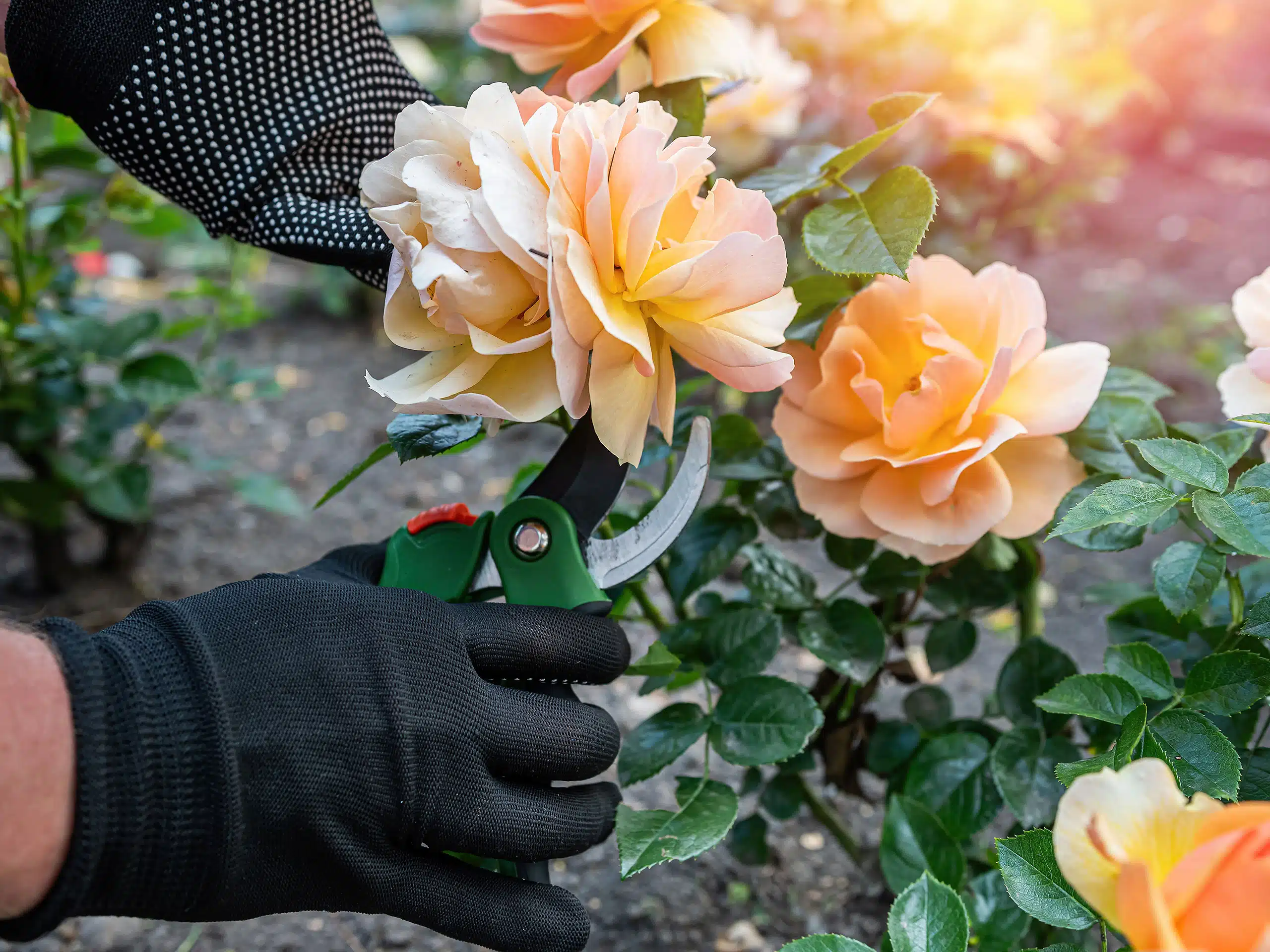
Last night, we had a hard freeze. It happens sometimes in late April in New England, when the calendar insists on spring, but the air still remembers winter. A quick look around tells me the damage isn’t too terrible. We’ll have to see how the old wood hydrangeas did. The sun shone this afternoon, though, and it was time to face the task I tend to put off too long. It was pruning day.
I started with the roses. Most years, I text someone and ask where I should cut. Sometimes, I send him a picture, he draws a line and sends it back. And then I do it. It’s always much more cutting than I would have done alone. This year, I decided to just take a deep breath and do it on my own. I could hear him insisting I wasn’t cutting enough. I probably wasn’t.
There is something in us that resists the shears. Even when we know, in theory, that pruning is necessary, we hesitate at the moment of decision. Every branch still looks alive. Every bud feels like a possibility. To cut is to choose, and to choose is to relinquish something we might have kept.
But gardens do not flourish on sentiment.
The gardener who cannot bear to cut will eventually preside over a tangled, airless thicket, where blooms grow smaller and disease finds easy shelter. Deadwood does not remain neutral. It invites decay. It siphons strength. It crowds out what might otherwise grow strong and generous.
Christ does not shy away from this image. In the Gospel of John, he says, “Every branch that does bear fruit he prunes, that it may bear more fruit” (Jn 15:2). The pruning is not punishment. It is not even correction in the way we often imagine correction. It is cultivation. It is the careful, sometimes severe mercy of a gardener who sees not only what is, but what could be.
We tend to imagine growth as addition. More opportunities. More relationships. More open doors. But the logic of the kingdom often runs in the opposite direction. Growth comes through subtraction. Through the closing of doors we were certain we wanted to walk through. Through relationships that fade or fracture or simply do not endure. Through circumstances that narrow rather than expand.
And we resist it, because it feels like loss.
It is loss, in a way. Pruning always is. The rosebush does not understand why the gardener removes what appears green and promising. It only feels the cut. Yet, the cut is not the end of the story. It is the beginning of a different kind of flourishing — one that requires space, light and the reordering of energy toward what will actually bear fruit.
There are seasons when God allows — or even initiates — the closing of doors that seemed essential to us. A friendship that once felt like shelter becomes strained beyond repair. A path we assumed would open simply does not. A role we inhabited with competence and even love is quietly taken from our hands. We stand there, holding what feels like absence, wondering what we have done wrong.
Sometimes, the answer is nothing.
Sometimes, it is simply that the branch has served its purpose, and the cutting, though it may feel like exposure, is also protection. Relationships that remain when they have become corrosive do not simply sit quietly; they shape us, often in ways that diminish our capacity for charity and truth. Doors that remain open long after they should have closed can drain energy meant for other, more fruitful work. Pruning, then, is not only about making room for growth. It is about guarding the integrity of the whole.
This is difficult to trust when we are in the midst of it. Standing in the garden with clippers in hand, I second-guessed nearly every cut. Had I gone too far? Had I not gone far enough? The bushes, newly shorn, looked smaller, barer, almost diminished. They did not look like abundance.
But I have seen what happens in June.
I have seen the way a well-pruned rosebush gathers itself and answers the cut with a kind of abundant life. Not despite the pruning, but because of it.
Foss, whose website is takeupandread.org, writes from Connecticut.