As they prepared to launch the largest seaborne invasion in history, the Allied Forces had to contend with the most unpredictable enemy of all — the weather. Originally a play by David Haig, “Pressure” tells the story of the meteorological team who forecasted whether the weather would spell success or failure for the thousands of soldiers set to attack on D-Day. Pressure from the military brass rises as the weathermen monitor the barometric pressure. Though the ending of this historical drama is no surprise, the stormy journey to victory is worth the watch.
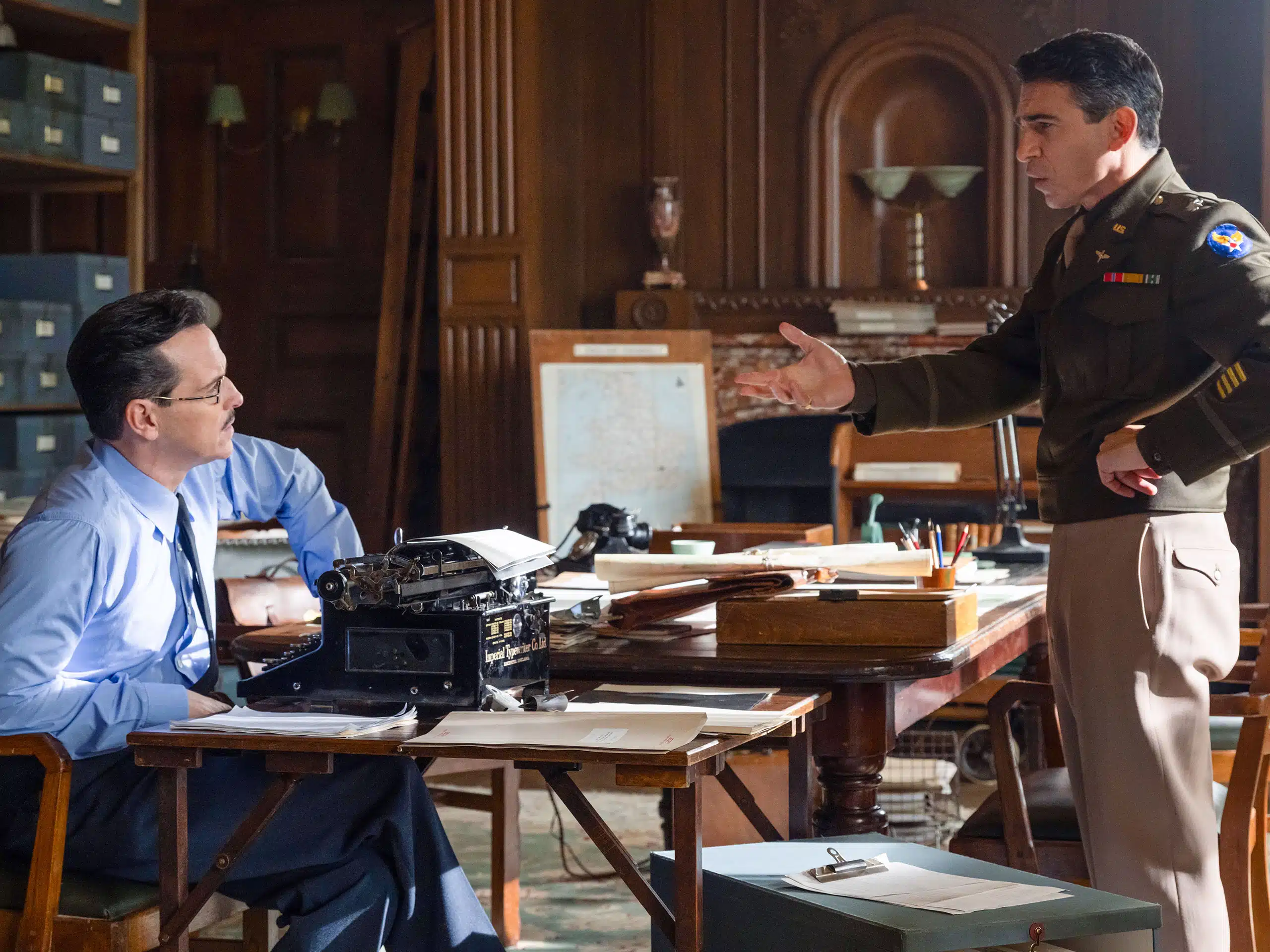
“Pressure” centers around mustachioed meteorologist Captain James Stagg (played by Andrew Scott), who is brought in as a special adviser days before the invasion. The prickly Brit soon clashes with his second-in-command, the charming American Colonel Irving Krick (played by Chris Messina). While Stagg uses real-time meteorological data, Krick relies on the weather records of years past to make his predictions, which are far sunnier. The gruff, folksy, chain-smoking General Dwight D. Eisenhower (played by Brendan Fraser) has to gauge who is right. The foursome is rounded out by Eisenhower’s secretary, Kay Summersby (played by Kerry Condon), who offers maternal support to the men as they wrestle with life and death dilemmas.
As data from weather balloons around the world arrive on his desk, Stagg strives to remain objective in the face of hawkish superiors and doubtful peers. Despite Stagg’s meteorological prowess, his manner and seemingly pessimistic outlook fails to win over the Allied leaders. While he works, he anxiously waits for news of his pregnant wife. Though much of the drama takes place in offices and conference rooms, viewers are treated to shots of cloudy skies, English castles and seaside cliffs, too. As the strain wears down Stagg’s edges, he learns to communicate his forecasts in a way that others listen.
Though not overly graphic, the film, directed by Anthony Maras, does show the violence of war. The film, an hour and 40 minutes, is rated PG-13 for war violence, bloody images, some strong language and smoking. The scenes showing the aftermath of a training exercise gone wrong as well as the storming of the Normandy beaches are a sobering memorial to those who made the ultimate sacrifice. But even the characters who remain far from harm’s way honor the everyday men and women who had to perform ordinary jobs with extraordinary consequences. The best of them committed to working together, doing their jobs well and owning the outcomes, whatever they were. Watching that inspiring true story play out on the silver screen is as welcome as clear skies.