

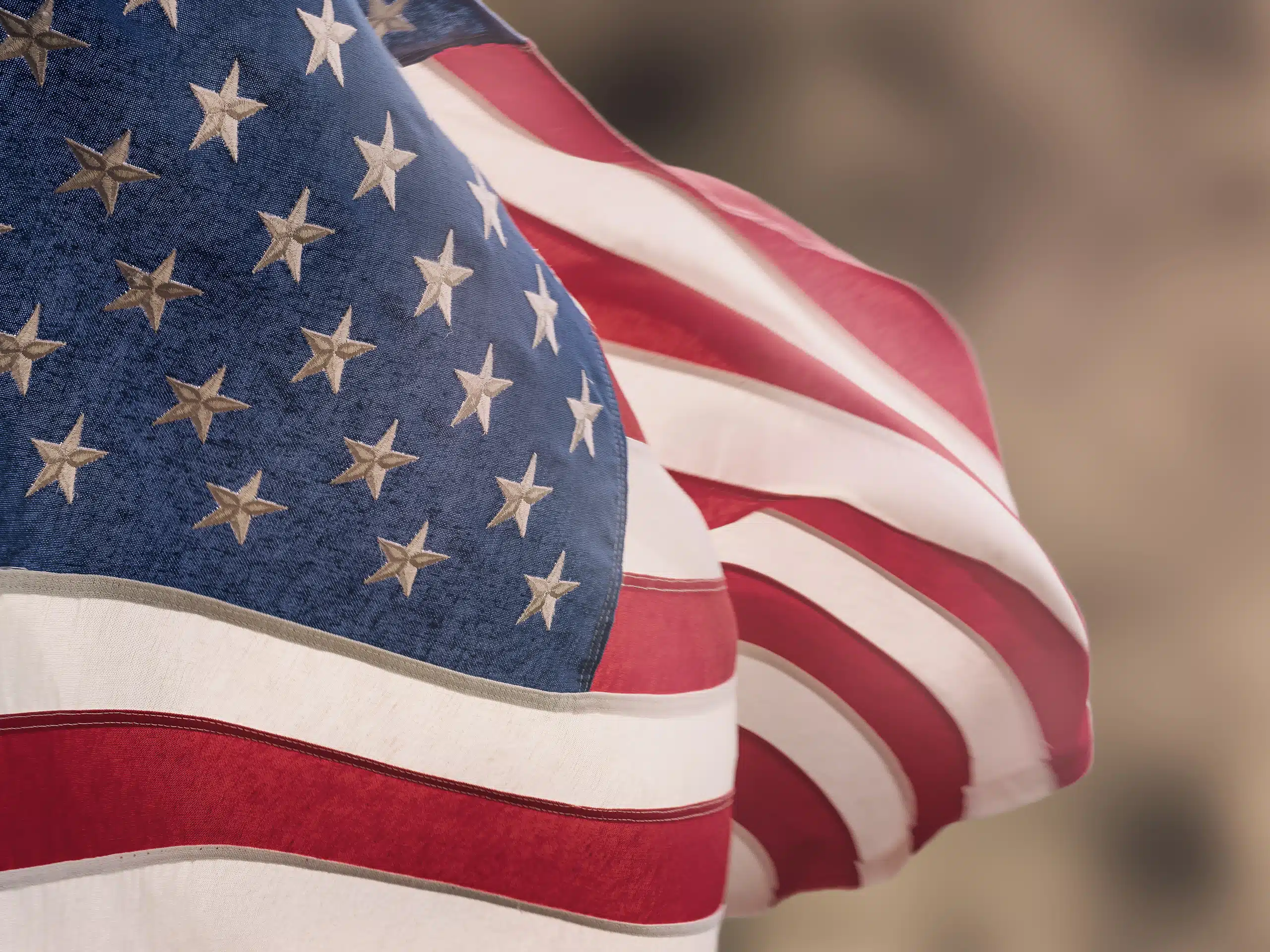
As July 4th rapidly approaches, the 2026 celebrations take on a special significance as they mark the nation’s “semiquincentennial” year: a quarter of a millennium since the Declaration of Independence declared that “these United Colonies are, and of Right ought to be Free and Independent.” Fifty-six men signed this declaration, saying as they did so, “for the support of this Declaration, with a firm reliance on the protection of divine Providence, we mutually pledge to each other our Lives, our Fortunes and our sacred Honor.”
During the days and weeks to come, many prayers will be said for our nation in gratitude for the past, in hope for the future, with sorrow for past errors, and with pleas for blessings to come.
As we gather at various times and in many places to pray for our nation on this landmark birthday, the 1791 “Prayer for Our Government” penned by Archbishop John Carroll is a beautiful reminder of how very much our leaders need the aid of our prayers. As we think back to our founding, borrowing this prayer from yesteryear might be a welcome part of our celebrations.
Archbishop Carroll was the United States’ very first Catholic bishop, at the time when the entire nation was part of the “Premiere See” of Baltimore. A cousin to Charles Carroll of Carrollton, the only Catholic signer of the Declaration of Independence, Archbishop Carroll came from a wealthy Maryland family of Irish heritage. He became bishop of Baltimore in 1789. Among other things, he was instrumental in the founding of Georgetown University in Washington and St. Mary’s College and Seminary in Baltimore; he supported St. Elizabeth Ann Seton in the founding of American Catholic education; and begun construction of the first Catholic cathedral in the new nation. This Basilica of the Assumption of the Blessed Virgin Mary in downtown Baltimore, begun in 1806, was both the spiritual heart of the Catholic faithful in the new nation and a uniquely American spiritual home. He selected Benjamin Latrobe as the architect for the cathedral — the very architect who supervised the building of the U.S. Capitol.
Archbishop Carroll’s prayer for his new country is a less tangible yet significant bequest. He begins the prayer by praying for the pope and all bishops and pastors. After that, however, he turned his attention to public officials, offering prayers for each depending upon the specific demands of particular public offices.
He prayed first for the president, asking that “his administration may be conducted in righteousness” and that it “encourag(e) due respect for virtue and religion; by a faithful execution of the laws in justice and mercy; and by restraining vice and immorality.” This is a prayer as relevant today as it was in 1791. If we are blessed with many centuries more, I am certain that every president who ever leads will need this prayer said on his or her behalf.
Next, Archbishop Carroll turned to Congress, asking that its deliberations be directed by “divine wisdom.” He went on to pray that all the laws that Congress passes “may tend to the preservation of peace, the promotion of national happiness, the increase of industry, sobriety and useful knowledge,” and that all Congress does “may perpetuate to us the blessing of equal liberty.” Again, the prayers of this ancestor in faith seem well worth repeating centuries later, particularly when Congress consistently polls as the least popular branch of government.
After praying for the president and Congress, Archbishop Carroll then prays for governors and the judiciary, asking that they “discharge the duties of their respective stations with honesty and ability.” For those who have grown cynical, honesty and ability may seem in short supply. This makes praying for these blessings ever more urgent.
Finally, before a closing prayer for those departed from this life, Archbishop Carroll prayed for “all our brethren and fellow citizens.” This prayer may be the most important and yet hardest part of his prayer. It is the one that recognizes that duties to the nation are not just to be borne by our leaders, but by all who hold the nation dear. He prayed that we all “may be blessed in the knowledge and sanctified in the observance of your most holy law; that they may be preserved in union, and in that peace which the world cannot give; and after enjoying the blessings of this life, be admitted to those which are eternal.” In this part of his prayer, Archbishop Carroll ties our duties as citizens to our duties to God — a challenge difficult, in many ways, yet one that promises eternal joy.
In the days that lie ahead, there will be much reflection on our past and our future as a nation that is both old and young. In the words of Archbishop Carroll lies a prayer from our past, but for our future. May God bless America through all that lies ahead in her extraordinary and ordinary times to come.
Silecchia is professor of law and associate dean for faculty research at Catholic University’s Columbus School of Law.


Why not you?