He couldn’t help but notice the beauty of the Catholic church that rose above the war-torn land of Quang Tri province in South Vietnam in 1967.
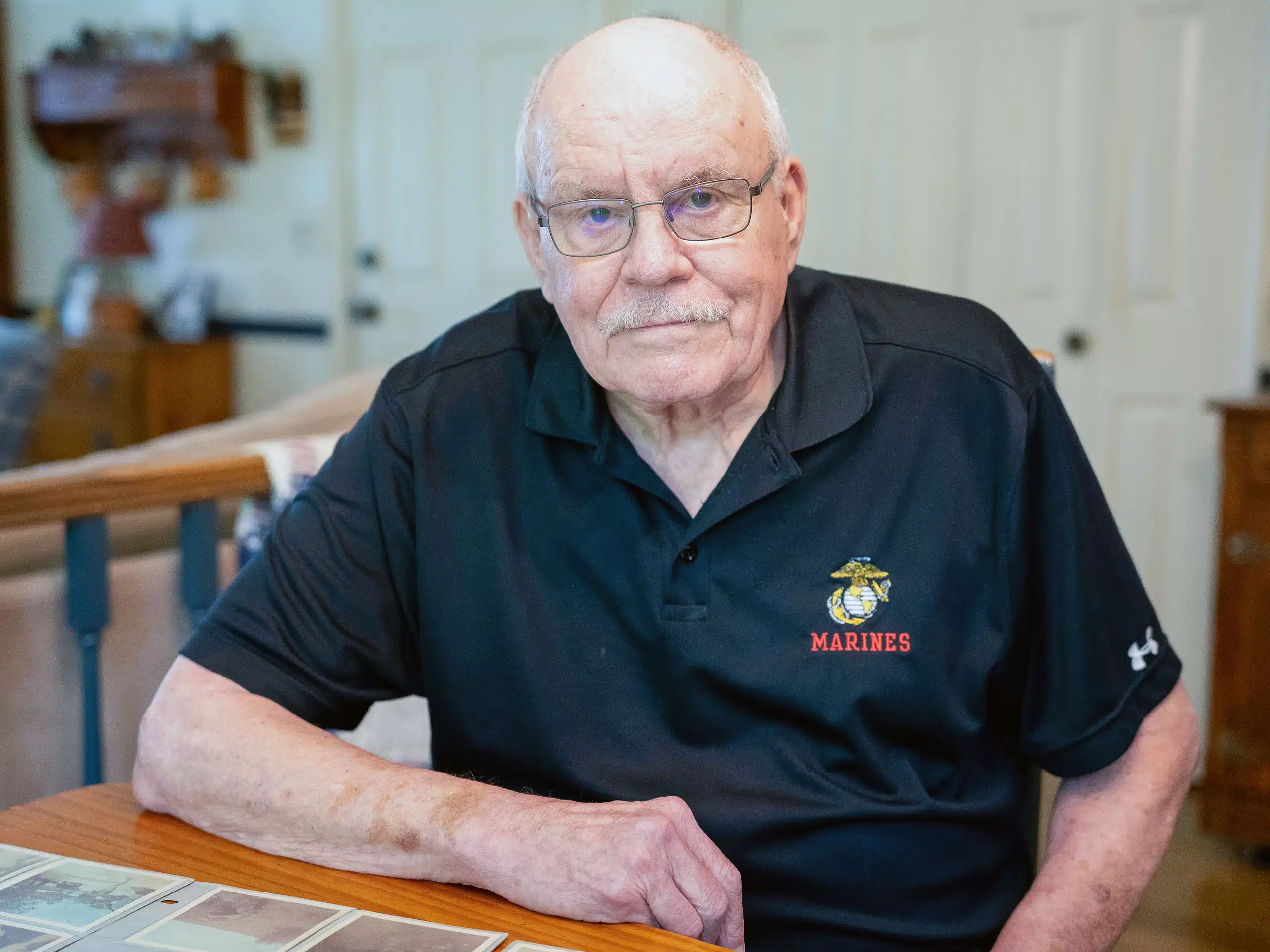
“It was kind of incongruous because of all the lesser structures and buildings and everything else in that area,” said Dirck Praeger, 87, recalling his days as a U.S. Marine captain during the Vietnam War. “It just didn’t fit in.”
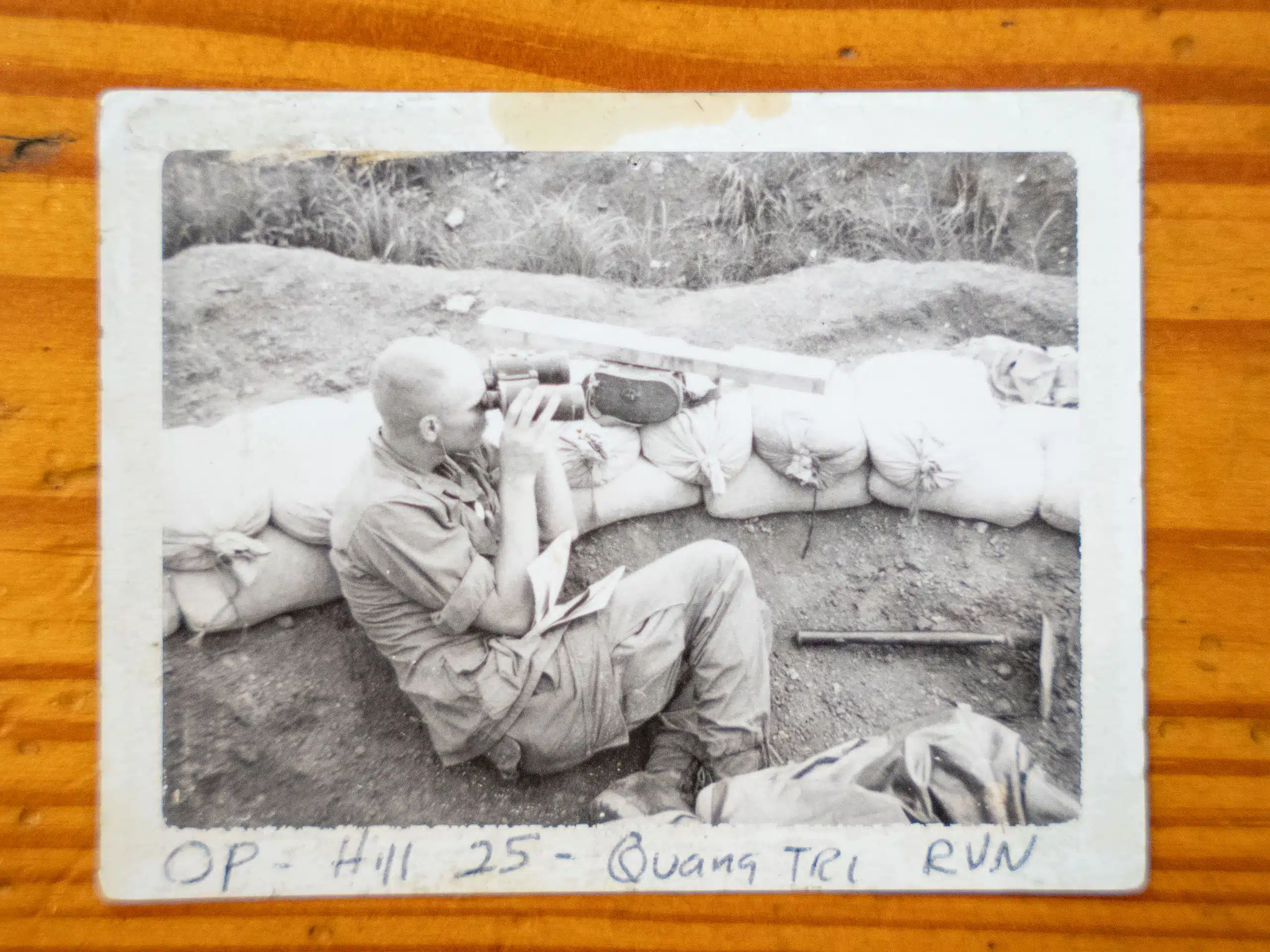
Praeger commanded a rifle company and witnessed 10 of his men killed in 13 months. He was more concerned about the survival of his unit than the region’s Catholic history and had no idea that he was fighting on sacred ground.
“Our battalion headquarters was established about two kilometers northwest of the beautiful church (basilica) of Our Lady of La Vang,” he said. “We patrolled in and around it on a daily basis with the primary mission of preventing North Vietnamese army units from infiltrating to the east and southeast. I wasn’t Catholic back then, so I wasn’t aware of the significance of the story of Our Lady of La Vang.”
Praeger, who retired from the Marines as a major and entered the church in 2001, knew little about Our Lady’s appearance to persecuted Catholics in Vietnam in 1798. He was inspired to research the topic after reading a 2017 article in the Catholic Herald about Our Lady of La Vang Mission.
After reading another Herald article in June 2025 about the diocese purchasing property for a future Our Lady of La Vang Church in Chantilly, Praeger met with Father Vicent Dinh, who was parochial vicar of Holy Martyrs of Vietnam Church in Arlington and parochial administrator of Our Lady of La Vang.
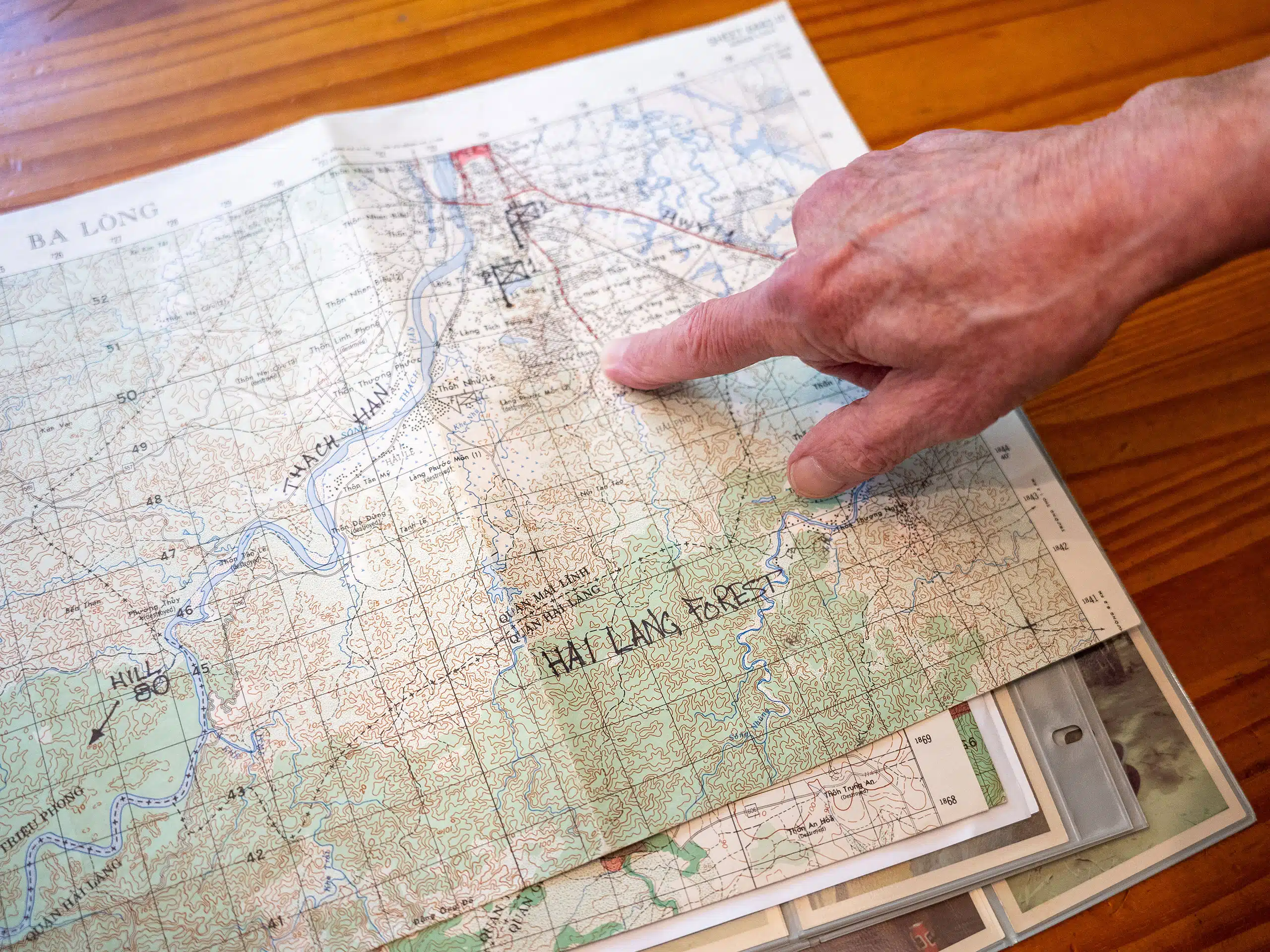
“I went up there and knocked on the door of the rectory,” said Praeger, a parishioner of Nativity Catholic Church in Burke. “He opened the door and I told him my story. I showed him my maps from the war and explained that I had served in the church’s shadow. He was very interested and pleased that I made the effort.”
After the French were defeated in North Vietnam in 1954, an estimated 800,000 Catholics fled persecution from the communist government of Ho Chi Minh to safety in South Vietnam. In 1967, Catholics in the south were under assault again. The basilica was destroyed by the North Vietnamese army during the 1972 Tet Offensive.
Praeger still gets frustrated with those who promote a narrative maligning all Americans who fought in Vietnam. “When I became a company commander, I gathered up the whole company and said, ‘We will never do any purposeful harm to any civilians,’ ” he said. “I told them that we’re Americans. I said, ‘We don’t do that’ and we didn’t. In Quang Tri province, we were fighting the North Vietnamese Army and you knew the enemy. But further south in Da Nang, it was guerilla warfare with the Viet Cong and people have no idea what that was like.”
For many Vietnam veterans, returning home was even harder. The moment that stands out to Praeger took place in Des Moines, Iowa, where he was working as a Marine recruiter in 1969.
“People were demonstrating outside the federal building where our recruiting station was and it was bitterly cold,” he said. “My sergeant major and I were walking into the building and there was a couple there with a very young child. It was so cold and we told them that we would be glad to take their son up to the recruiting station where he could stay warm until they left. They told us to go to h – – – .”
Praeger would rather talk about the miracle of Our Lady of La Vang and the gift of recognizing that he was under Our Lady’s protection for three terrifying months in 1967. “The reaction that I had when I found out that I had walked that ground was a revelation and I had no clue at the time,” he said. “I look back on it now and all I can say is that I’m astounded.”