Patrick Mullins had been teaching history at Marymount
University in Arlington for three years when he heard there
was an abandoned cemetery on the northeastern edge of the
campus.
“Turns out it’s always been something of a campus enigma,”
Mullins said. “No one was really sure who was there, why it
was there or who even owned the land.”
After the school’s president issued a call for student
research on the overgrown site, Mullins and Robert Meden, a
longtime professor of interior design, thought it would make
a good topic for a seminar they taught introducing freshmen
to Marymount and a different type of learning.
“Instead of a class with professors lecturing, this was an
opportunity to really run with the idea of students learning
through inquiry,” Meden said. “It also enabled us to combine
our interests in public memory and historic preservation.”
Marymount President Matthew D. Shank had heard various
stories about the cemetery when he arrived on campus in 2011
and wanted to learn more.
“I thought it would be a wonderful service project for
students to find out the history of the spot and share it,”
Shank said.
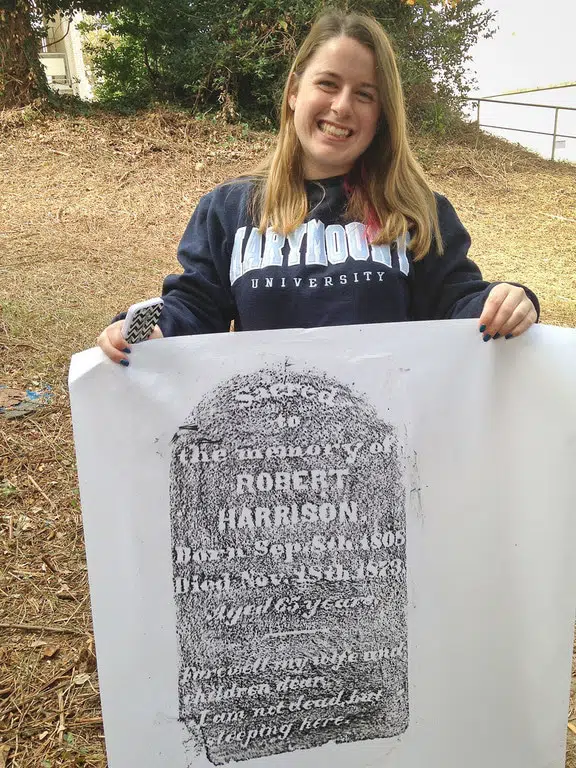
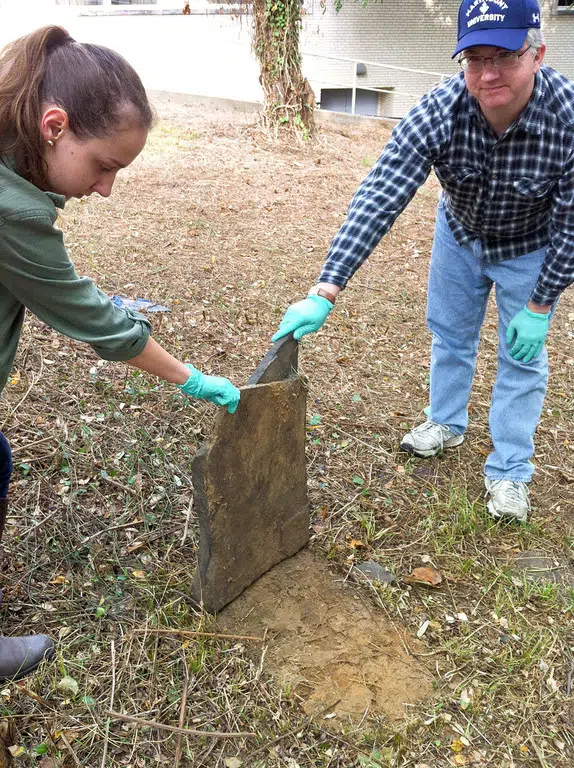
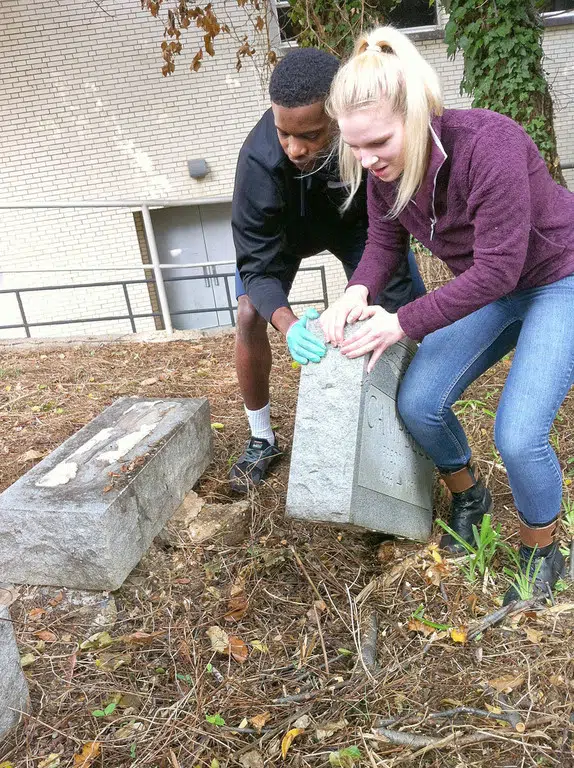
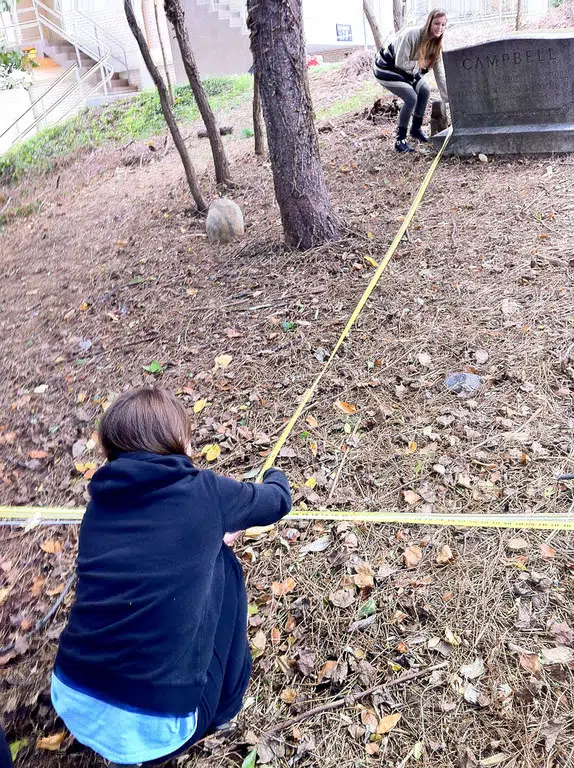
After grounds crews cleared the overgrowth last semester, 16
students did field research on the gravestones, and Meden
used his background as an architect to lead a site survey.
Students also conducted archival research with original
historical documents and even took a walking tour through Old
Town Alexandria to get a sense of what the Arlington area
would have been like during the 18th century.
They learned that the death dates for those interred in the
Birch-Campbell Cemetery ranged from 1841 to 1959. All but one
were buried before Marymount became a college in 1950. Most
were middle class farmers and landowners.
“But they weren’t wealthy Southern aristocrats, which was
true of the majority of people who lived in Arlington during
the Civil War – the notable exception being the family of
Robert E. Lee,” Mullins said. “Most people here opposed
succession. They were fairly humble agricultural people who,
bit by bit, sold off their land.”
Nursing student Jen Carter of Denver, said her first few
trips to the cemetery – with the wind rustling fallen leaves
– was a little nerve-wracking.
“The more time we spent there, we realized it was just like
any other cemetery,” she said. “It just needed a little more
love.”
Many headstones were engraved with the phrase, “Gone but not
forgotten.”
“That was pretty ironic because the people there had been
pretty much forgotten,” Carter said. “It was very special for
us to bring the memory of this family back to the forefront
of the university mind.”
The course also exposed students to some unexpected
historical surprises, said Emily Findley of Williamsburg.
While it’s common knowledge that Marymount’s Main House once
belonged to Admiral Presley Rixey, personal friend and
physician to President Theodore Roosevelt, Findley said he
lost a good deal of his land in a bad hand of poker.
“That land is where the Washington Golf and Country Club is
now,” she said.
And the land where Rixey Mansion stands? It once belonged to
Mary Ann Hall, who ran an upscale brothel near the U.S.
Capitol. On the same site where Marymount’s Main House stands
today, she built a farmhouse called Maple Grove on land
bought from the Birch family. Mary Hall was the sister-in-law
of Frances Harrison Hall, whose father, sister, uncle and
brother-in-law were buried in the Birch-Campbell Cemetery.
Mary Hall retired to Maple Grove. After her death in 1886,
she was buried in Congressional Cemetery.
The class also included small groups of students taking trips
to the memorials for presidents Jefferson, Lincoln, Grant,
Garfield and Franklin Roosevelt.
“Some of the big questions we discussed – and we need to ask
as a society – is who do we remember and what do we
preserve?” Mullins said. “We learned a great deal about the
site and how it ties into local and regional history. We
didn’t answer all the questions we were trying to answer, but
it’s an ongoing project. We’re not even positive who actually
owns that plot of land. That’s part of the research that we’d
like to complete.”