

The solemnity of St. Joseph often is overshadowed by the
feast of the famous Emerald Isle bishop, which falls in the
same week. But at St. Andrew the Apostle Church and School
March 19, the foster father of Jesus had center stage – or
rather, center table.
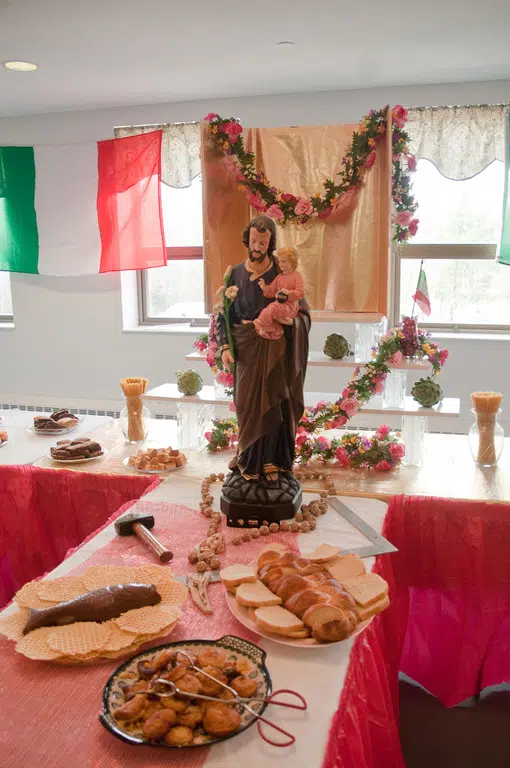
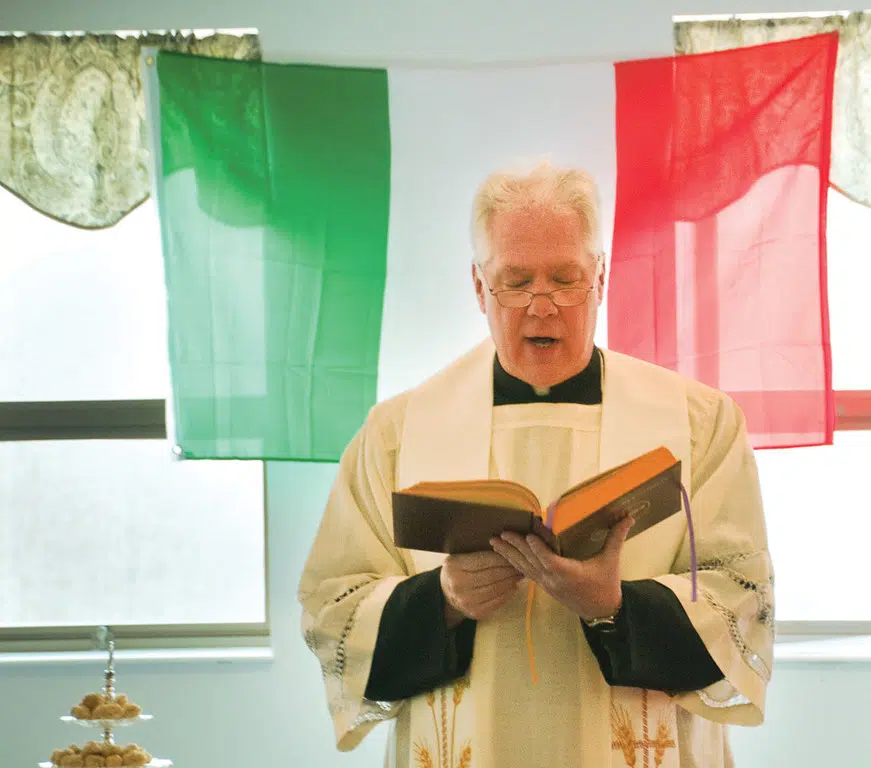
In his honor, the Clifton school and parish hosted their
annual St. Joseph Table, an elaborate display of food with a
statue of the saint in the middle.
The custom was brought to the United States from Sicily,
where, according to tradition, prayers to St. Joseph ended a
severe famine. In thanksgiving, Sicilians held a feast and
invited the poor and homeless to attend. The tables, or
altars, continue to be set up each year by Italians around
the world.
The temporary shrines to St. Joseph consist of at least three
tiers to symbolize the Trinity, and all food is meatless
since the feast is held during Lent.
The tradition came to St. Andrew in 1996, when Italians Joayn
Bahr, now parish secretary, and then-teacher Karen Truman
placed a small St. Joseph Table outside the school office.
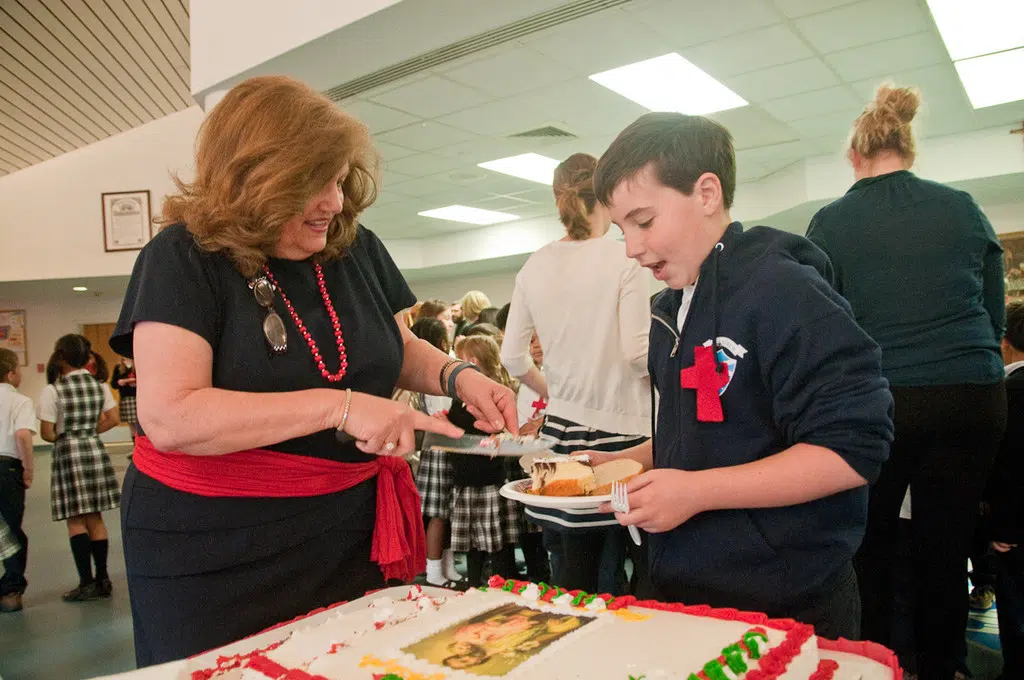
The table has grown into a celebration that welcomes students
and parishioners.
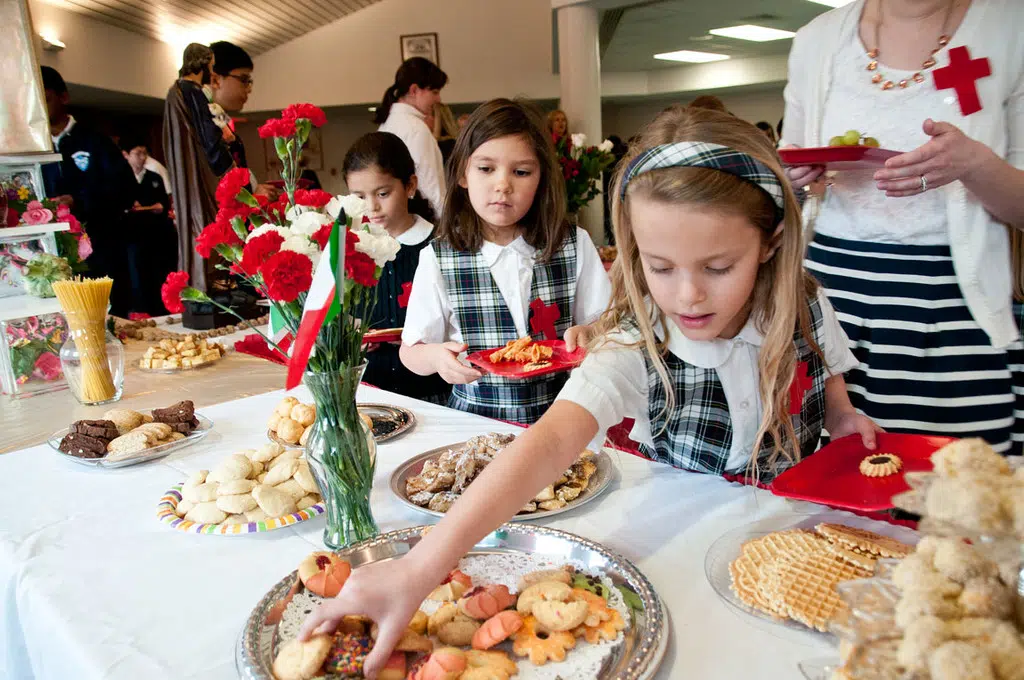
Arranged in the parish hall, last week’s spread included
Italian foods such as pignolata, or honey balls; sfinges, or
small cream puffs; and pasta with “sawdust” (breadcrumbs and
sugar) to recognize Joseph’s profession as a carpenter.
Not-so-traditional fare, like brownies, also was in the mix.
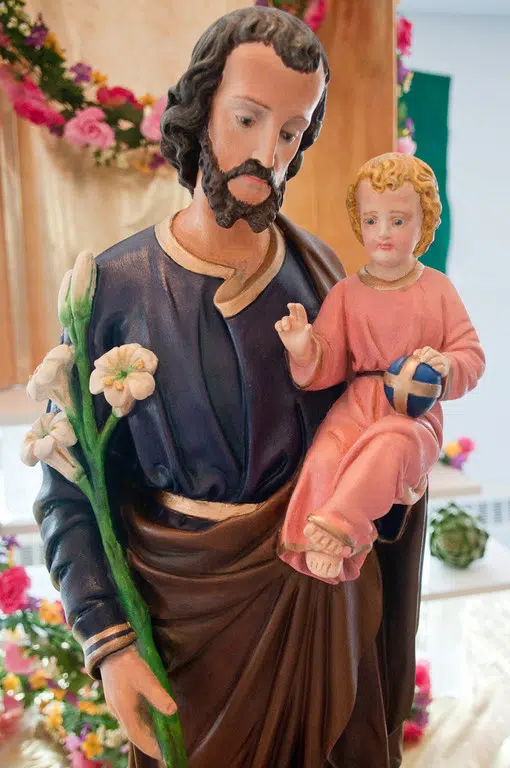
The focal point, though, was a statue of St. Joseph holding
the Christ Child. The statue
recently was repainted for the occasion by Father Joseph D.
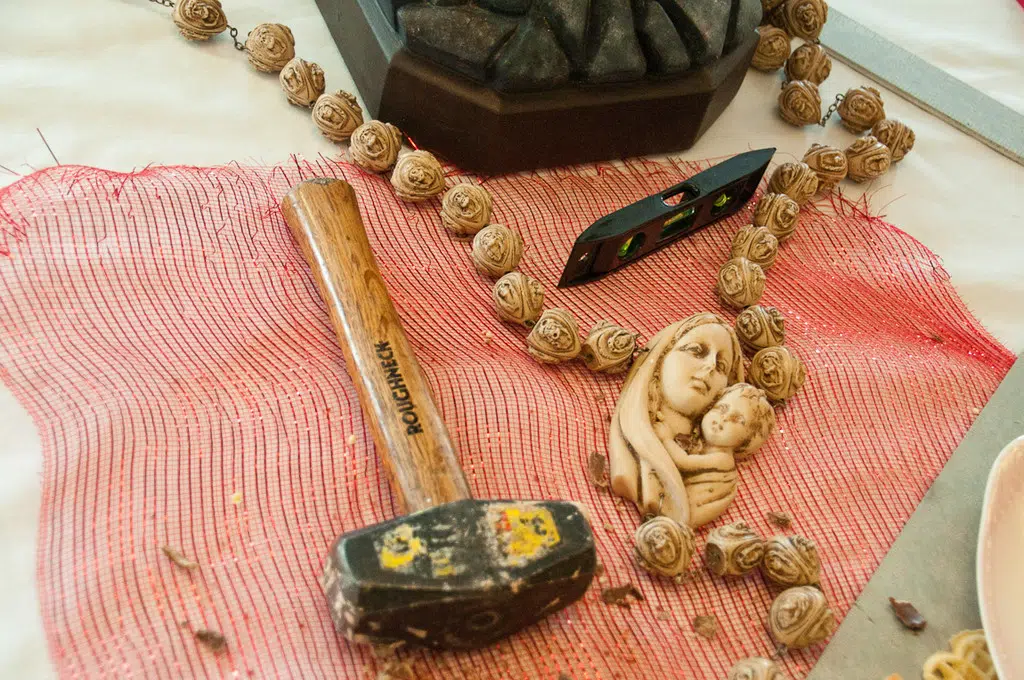
Bergida, parochial vicar of St. Andrew. At the foot of
the statue, framed by flower garlands, were carpenter tools,
including a mallet and small level.
Click here to read how the 20-year-old statue was given new
life.
Bahr, who remembers going with her grandmother to visit St.
Joseph Tables when she was young, has a special love for the
gentle carpenter and hopes the table increases devotion to
the patron saint of fathers and the universal church.
Next to the Blessed Mother, Joseph is the most important
saint, said Father Bergida, as he twisted his fork around
“sawdust” pasta.
“I recently told the eighth-grade class that because he’s
often neglected, he has more time to listen to our prayers,”
he said.
After piling their plates with the tasty treats, several
students shared why they believe St. Joseph is special.
“I think St. Joseph is important because he was such a hard
worker,” said second-grader Andrew Matteson.
Fifth-grader Kathleen Murphy said she thought it was
impressive that Joseph was willing to marry Mary even though
she was pregnant.
Her classmate Alyssa An agreed, adding, “It was probably hard
to live with Mary and Jesus, since they were perfect.”
The St. Joseph Table is an example of the “rich tapestry of
traditions and devotions to saints in the Catholic faith,”
said Father John D. Kelly, pastor.
He said St. Joseph exemplifies much-needed qualities in our
culture. As a model caregiver, he challenges us to be kinder
and gentler in our interactions with others. “If there were
more caregivers,” said Father Kelly, “the world would be a
better place.”