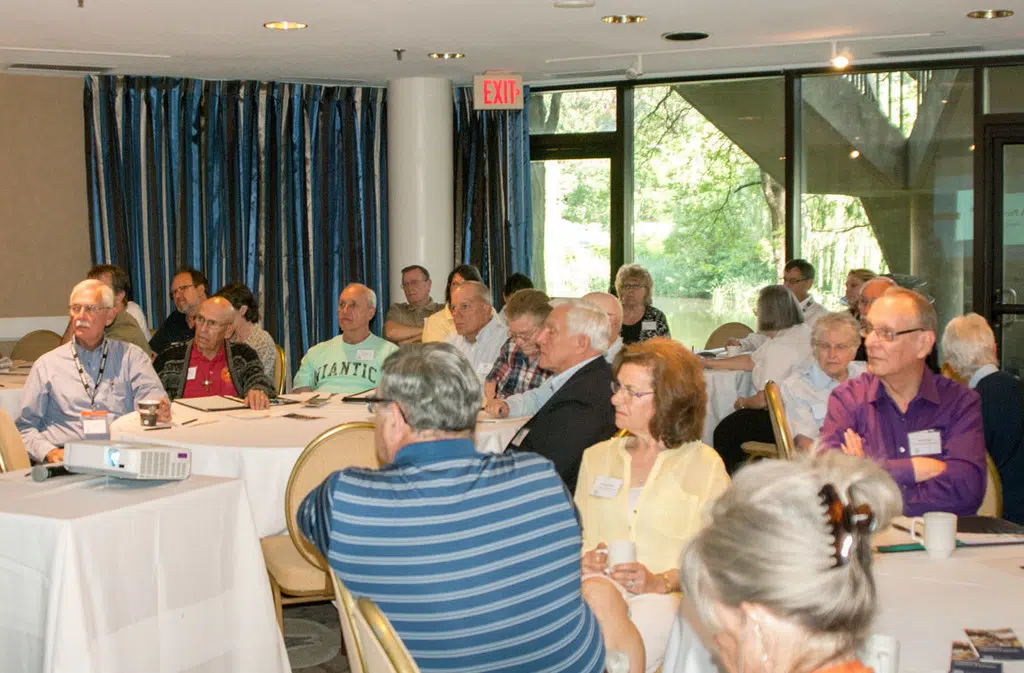
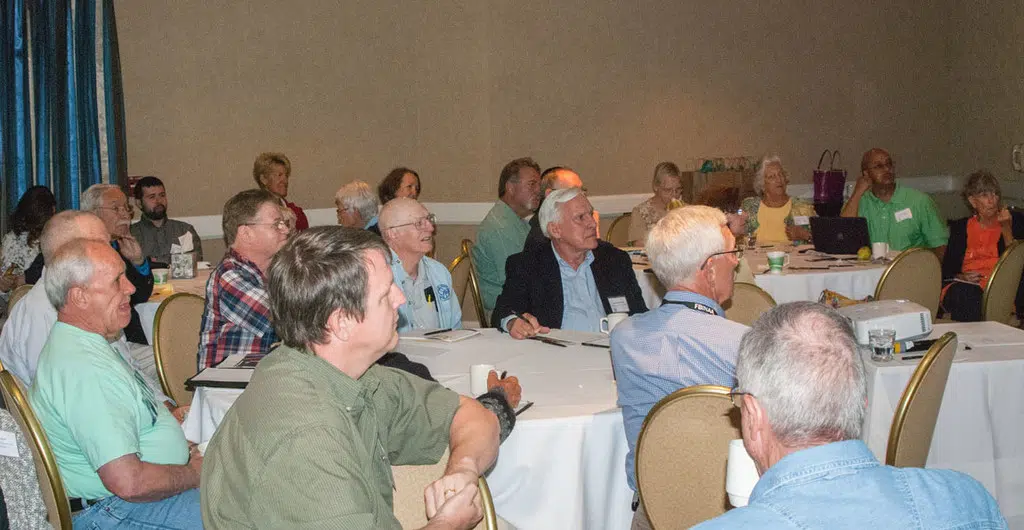
More than 50 people from across the country attended the
three-day conference hosted by the Society of St. Vincent de
Paul’s (SVDP) Disaster Services Division at the Hilton Mark
Center in Alexandria. Several community and government
organizations were represented at the conference, with
speakers from the Federal Emergency Management Agency, the
American Red Cross, Virginia Department of Emergency
Management, the Knights of Malta and the Archdiocese of
Washington, among others.
The SVDP Disaster Services Division (DSD) focuses on the
long-term redevelopment of people and communities impacted by
disasters. In 2015, the division reportedly helped 11,500
disaster victims and provided $4 million in services. Judy
Helein, president of the SVDP Arlington Council, said the
division mobilizes after first response agencies have
departed, “when the glory is over but the work still needs to
be done and families still need to be supported.”
Irma Colabrese, SVDP DSD Eastern Region Representative, said
the annual conference serves to strengthen communication and
collaboration among individuals and organizations involved
with disaster relief. “We’ve invited people who do our work
or are interested in doing our work, and what we’re here to
do is answer their questions and build capacity in the sense
of getting more people to help us. Building capacity in each
region makes us better prepared when something hits,” she
said.
Speakers at the conference touched on volunteer management,
understanding local and federal emergency services and
assessing the needs of disaster zones. St. Vincent de Paul
members also offered information on getting involved with
their relief programs, including “House in a Box.” This
program provides a set of new household items for families
facing situational poverty as a result of a disaster. It was
started by the Austin and Dallas councils of SVDP in 2005 in
the wake of Hurricane Katrina, and provided 15,000 household
setups after the storm. The program has since been brought to
other disaster sites across the country, including areas hit
by Hurricane Sandy in 2012.
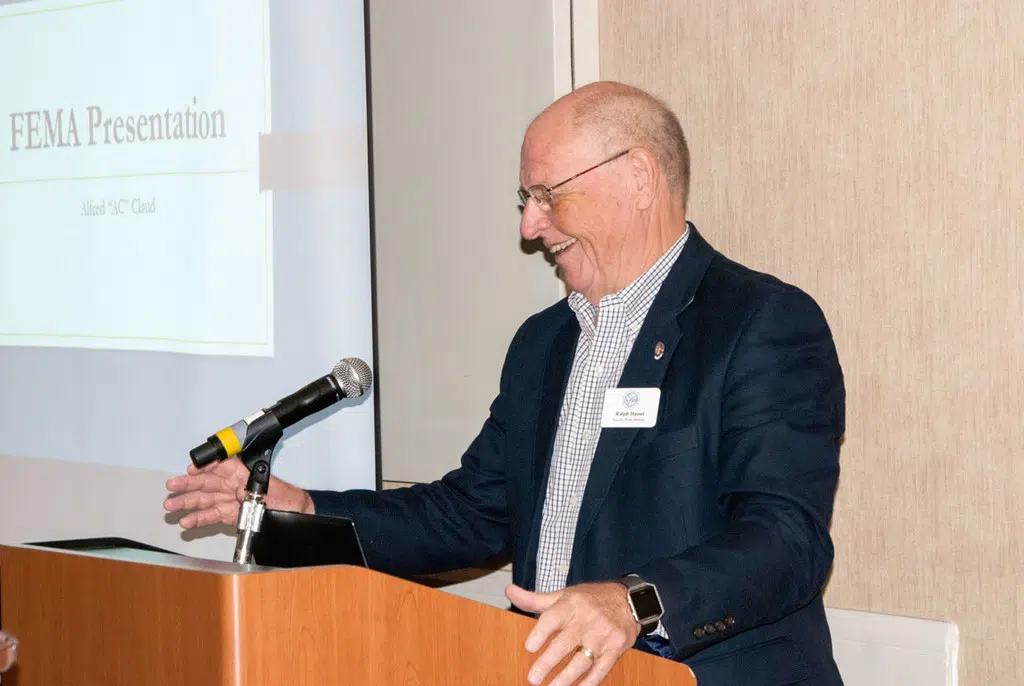
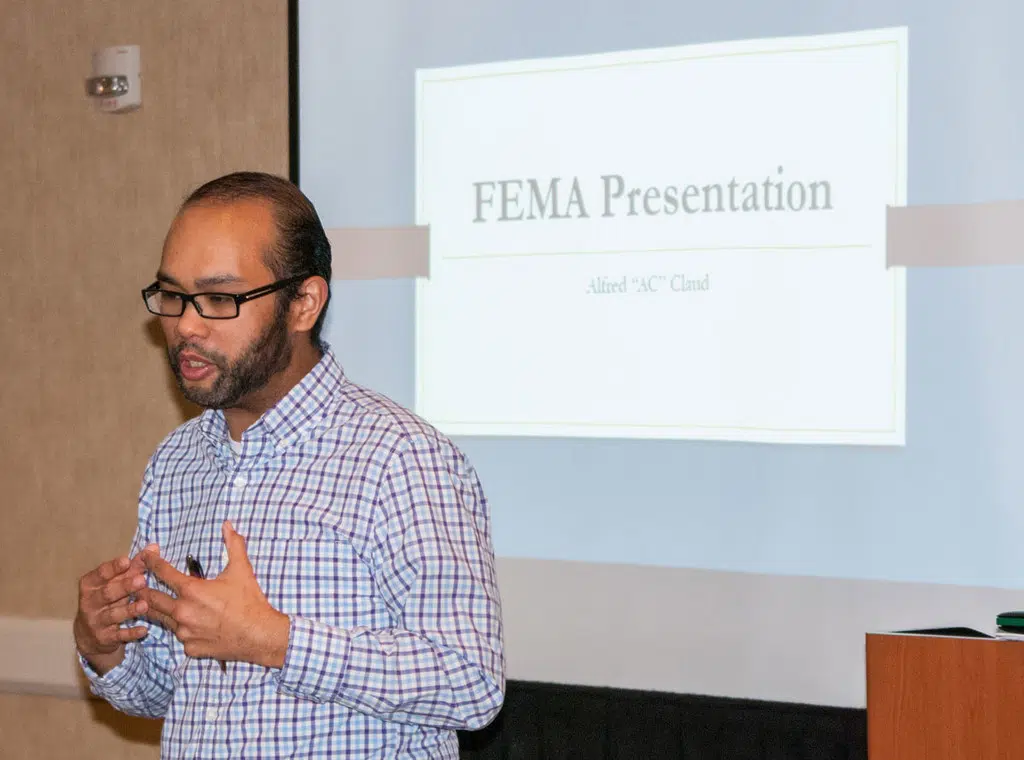
Alfred “AC” Claud, FEMA Voluntary Agency Liaison, said
organizations like St. Vincent de Paul are the “critical
link” to helping government agencies provide effective
disaster relief through relaying information and advocating
for their communities. He said FEMA “acknowledges that the
government cannot do disaster response and relief alone,” and
it relies on its community and faith-based partners.
Claud said being proactive by focusing efforts toward
preparedness will allow everyone to provide better assistance
when the next disaster hits. “We want to build partnerships
during blue skies, not gray skies,” he said.
Ralph Hassel, SVDP national board member, said building these
collaborative partnerships is a way for St. Vincent de Paul
to reach its maximum impact in providing disaster relief.
“We’re talking about an entire industry, and we’re trying to
build relationships across all those pieces of the industry,”
he said. “As a huge organization, we can do massive good if
we just get organized, and that’s what we’re trying to do.”
The Society of St. Vincent de Paul was founded in 1833 as an
international lay ministry of Catholic men and women seeking
spiritual fulfillment through assisting those in need –
specifically the poor. The society recognizes that often the
people most severely affected by natural and man-made
disasters are those living at or below the poverty line. “If
they get hit by a disaster, they get pushed into a place
where they can’t get out,” Hassel said. “We hope to keep
people from going into a generational poverty situation.”
Today, the society has a membership surpassing 800,000, with
more than 150,000 in the United States. The Arlington council
includes more than 600 members.
Helein said the diocese has been blessed to have not
experienced a major disaster in recent years. While it has
aided in local relief efforts for house fires and structural
damage from last winter’s blizzard, she said the Arlington
council is able to help most through providing financial
assistance to other SVDP conferences around the globe, such
as in Haiti.
Husar can be reached at [email protected]