
In the 30 years that Arlington diocesan priests served the rural countryside of the Dominican Republic, they have built countless roads, constructed dozens of chapels and established a K-eight parochial school.
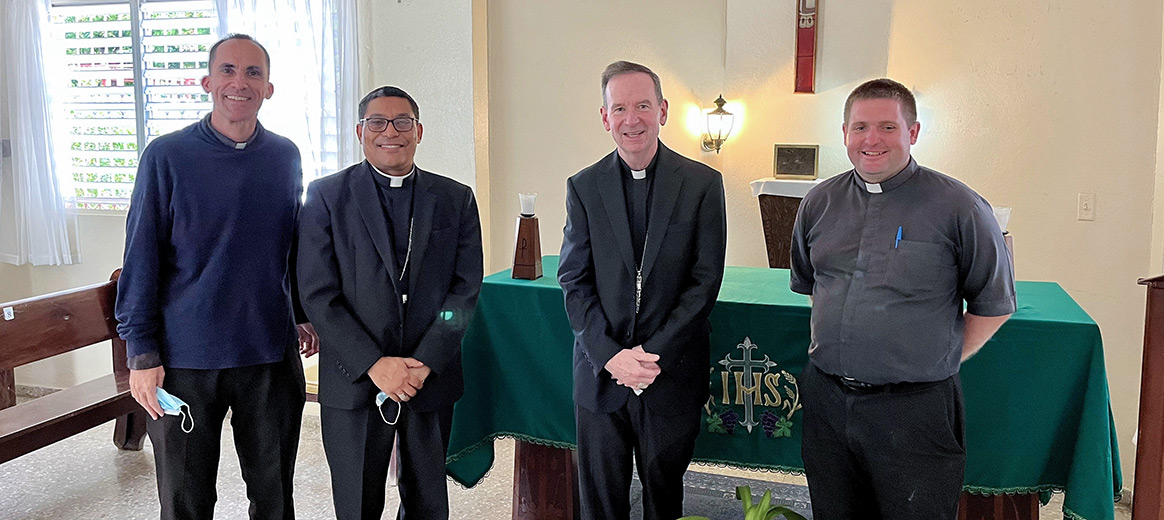
Yet it was the intangible — and indelible — mark they left on many of the nation’s Catholics that most struck Bishop Michael F. Burbidge during his first visit to the Bánica and Pedro Santana mission, a partnership between the Arlington and San Juan de la Maguana dioceses.
“The comment that I heard the most from the parishioners were the names of the priests who have served there since 1991,” he said. The Dominicans asked for updates on them by name and noted how each had positively touched their lives. “As bishop, it just made me so proud of our priests who went with missionary zeal to serve and to know with affection and gratitude they’re remembered.”
One of those priests was Father Patrick L. Posey, who served at the mission from 1995 to 2003. As director of the Arlington Mission Office, he usually travels to the Dominican Republic every other year, but the Jan. 24-28 trip was his first in three years because of COVID-19.
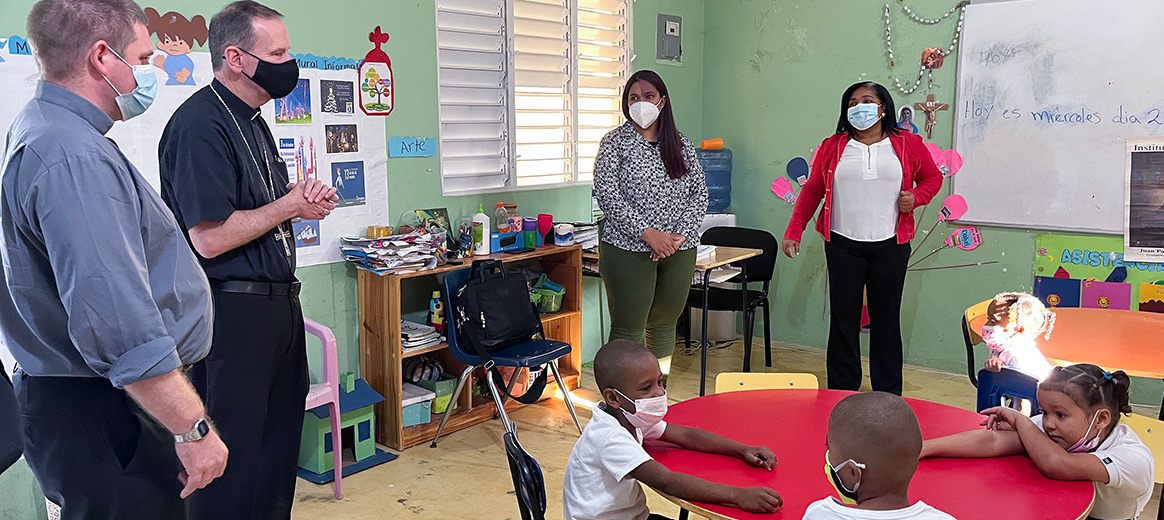
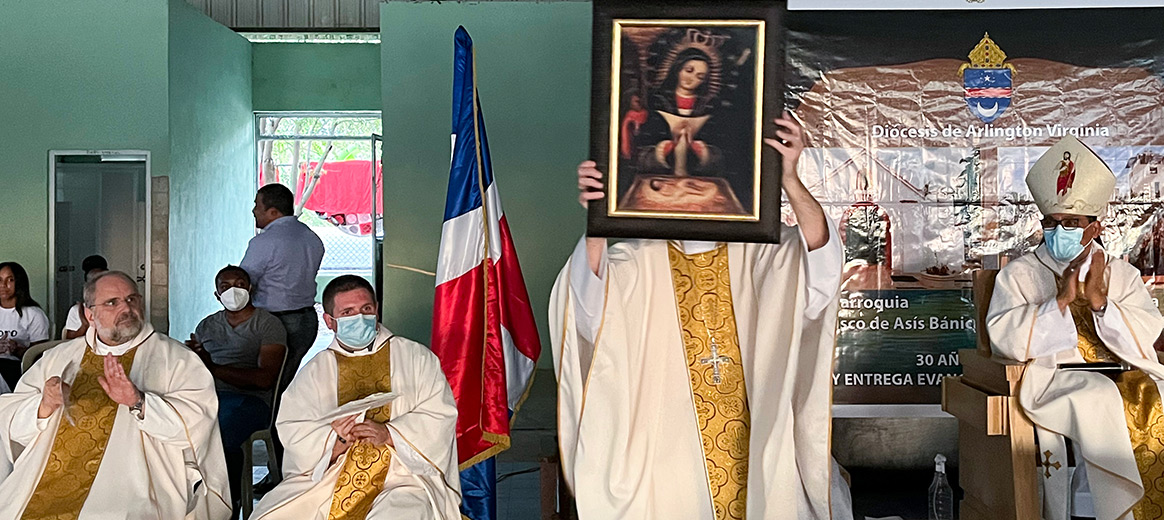
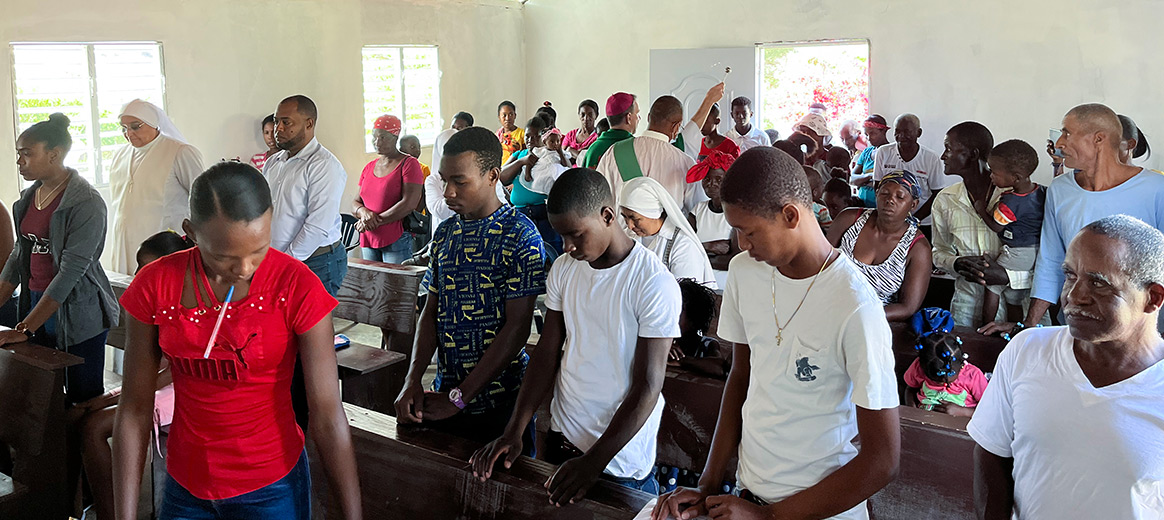
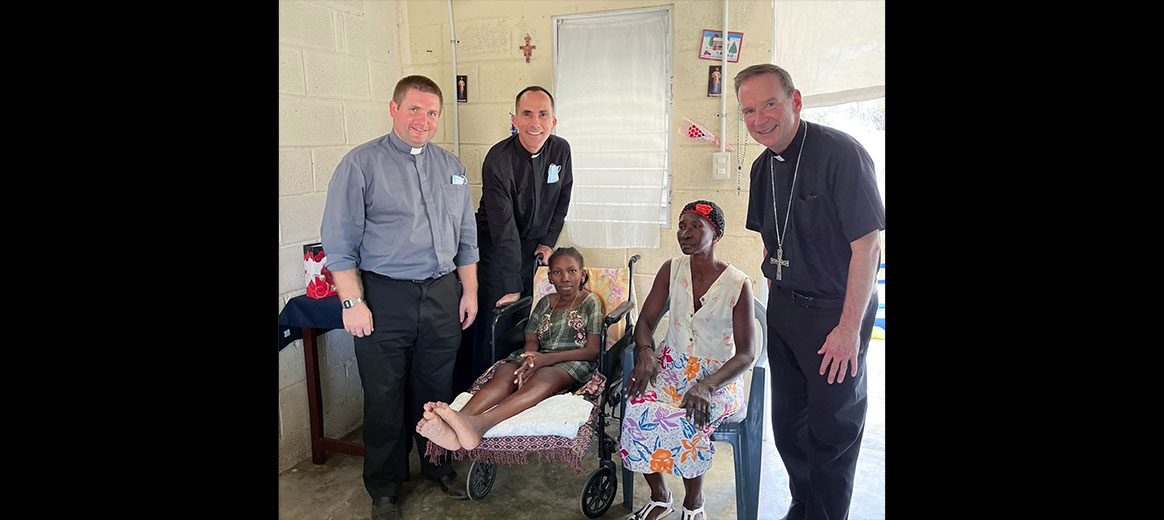
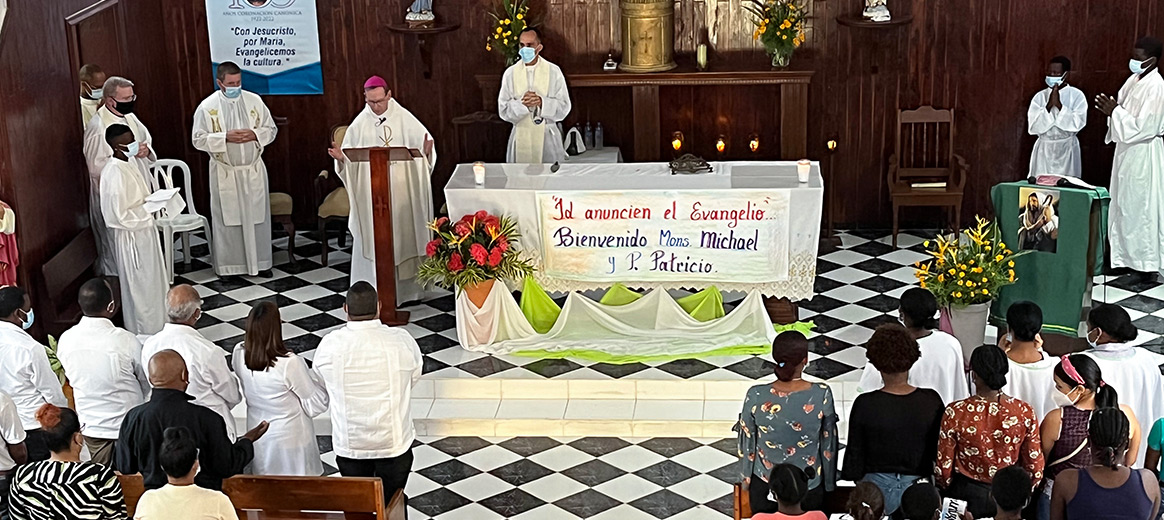
The whirlwind trip included a 30th Anniversary Mass at an open-air basketball arena in Bánica celebrated by Bishop Tomás Alejo Concepción of the Diocese of San Juan de la Maguana and concelebrated by Bishop Emeritus José Estrella Grullón and Bishop Burbidge. Several diocesan priests also participated, including Father Pedro Mateo, a local vocation in Bánica who was sponsored by the Arlington diocese. At St. Joseph Church in Pedro Santana, Mayor Hipólito Valenzuela, presented Bishop Burbidge with a plaque in recognition of the diocese’s support to the town over the years. After stopping at the diocesan grade school in Bánica, the visitors went to Sabana Cruz, where they met the Poor Sisters of St. Joseph and a young lady named Miguelina who is confined to a wheelchair and spends her time making rosaries and praying.
Father Stephen F. McGraw, pastor of St. Joseph, said there was an enthusiastic response to the visit. “The excitement was palpable, especially for the Masses,” he said. “The communication of mutual love and esteem lost nothing in the translation.”
While Bishop Burbidge had wanted to visit much sooner, he noted the delay due to the pandemic allowed them to celebrate the milestone. It was his first experience touring a diocesan-sponsored mission on the scale of Bánica. The mission serves more than 13,000 people dispersed among 60 small villages, or campos, that are part of the parishes in Bánica and Pedro Santana and stretch high into the surrounding hills and mountains. The mission was established in 1991 by Bishop John R. Keating, in coordination with the local bishop, to meet the pastoral needs and alleviate a shortage of priests.
During his time living on the island 20 years ago, reaching the isolated campos to celebrate Mass often meant long hikes accompanied by a donkey, Father Posey said. He said he has seen many improvements to the quality of life as a result of the church’s work. There are far more roads — albeit rough and unpaved — which have facilitated a proliferation of cars and scooters. In the largely agrarian society, trucks can more easily reach farmers and expedite commerce. The mud floors of many homes have been fortified with concrete, making them more resistant to storm damage. Clean water and electricity are easier to access. Yet, it remains challenging terrain.
“Our mission is to go to the peripheries as Pope Francis repeatedly has said. And literally we’re doing that,” Father Posey said.
The mission’s spiritual fruit includes the ordination of Father Mateo and Deacon Roberto Alcántara. A postulant is two years away from professing her vows.
Both Father Posey and Bishop Burbidge noted that in Bánica, the role of a Catholic parish and its physical makeup differ greatly from the United States.
In the U.S., parishes are places to participate in the Mass and receive the sacraments. In the mission, according to Father Posey, who is also rector of the Cathedral of St. Thomas More in Arlington, the parish takes a very holistic approach to care for the person — mind, body and soul. Building roads and ensuring access to potable water and latrines are more than Christian ministries to meet physical needs.
“If they’re starving, they’re not going to be really receptive to the word of God,” Father Posey said. “The people are extremely appreciative of the fact that the church is very integral to their life.”
“When we think of a parish we think of a structure,” Bishop Burbidge said. At the mission, however, the campos and chapels in the hills and mountains are considered part of the mission parishes. “For them, the extension of a parish goes far and wide beyond anything that I have seen.”
With so much progress made over the years on infrastructure, the mission’s focus has shifted to address two new challenges familiar to Americans: bringing Catholics back to the sacraments after COVID-forced isolation and mitigating the secularization of the culture.
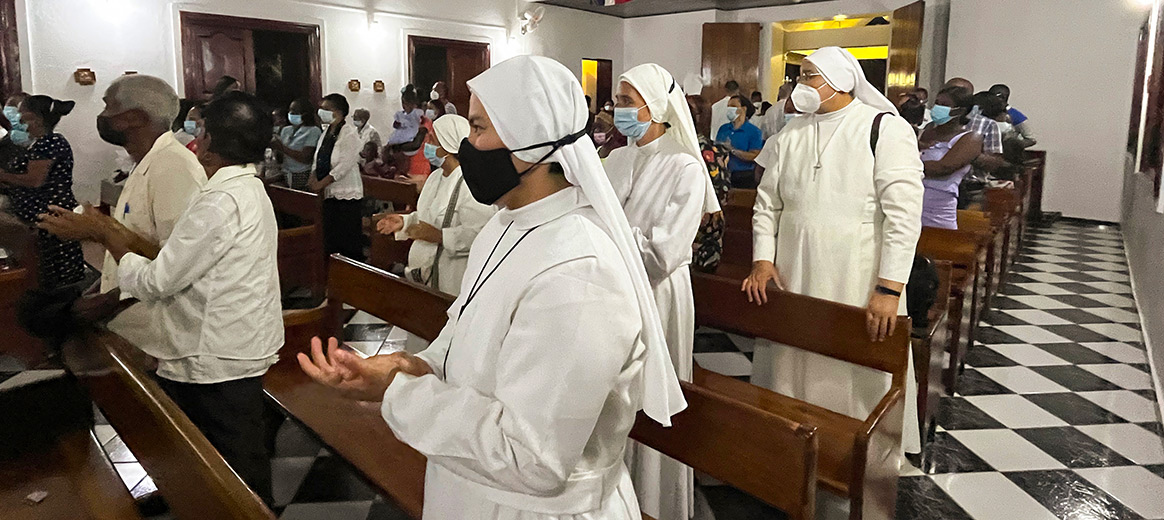
During the pandemic’s peak, lockdowns and curfews kept people at home and the mission played a key role in getting food to the neediest families, said Father McGraw. Although restrictions have eased, the participation of the faithful has been slow to bounce back and this is the third year that volunteer groups are largely unable to visit from abroad.
The country is more than 90 percent Catholic, but as more Dominicans migrate to the U.S., Germany and other places, the secularization of those nations has filtered back, according to Father Posey.
“There is material advancement while Christian faith and life seem stagnant,” Father McGraw added. “A culture of life and family retains some vitality but is in decline.”
Bishop Burbidge said that, like Father McGraw and Father Jeb Donelan, who are assigned to the mission, all Catholics who support it through voluntary work there or financial contributions are engaging in the call to be missionary disciples. And he agreed that Catholics on the island face many of the same spiritual challenges as their brothers and sisters in his home diocese.
“They’re not spared from the obstacles and trappings that we see in our own country — whether it be work or material things or other forms of escape that creep in. At the heart of what we do is to be countercultural and lead people to embracing Christ and deepening their relationship with him.”
Schweers can be reached at [email protected].
Find out more
To learn more about the Arlington diocese’s mission in Bánica and other missions, visit arlingtonmissions.org.