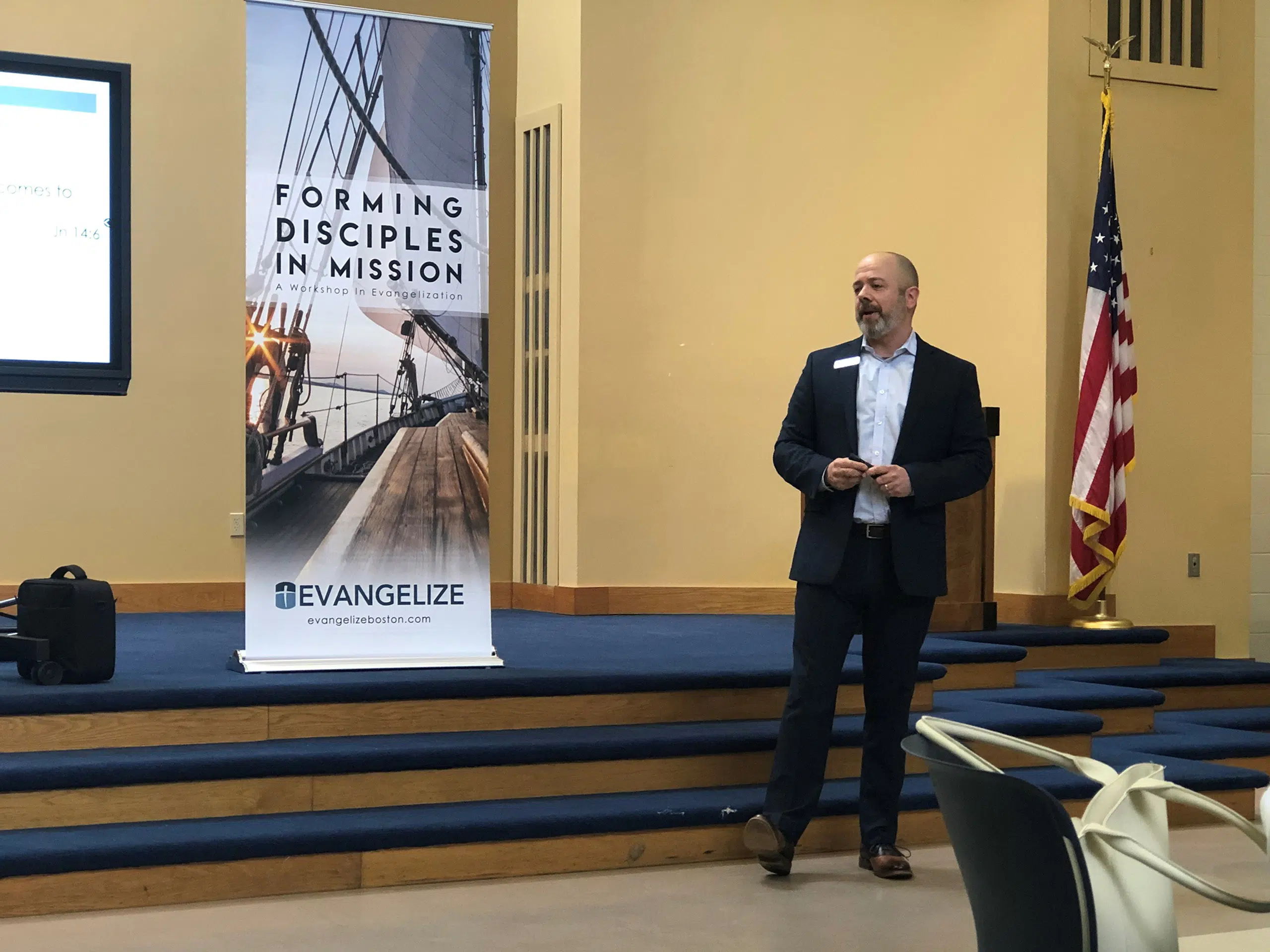
Chris Donoghue was a cradle Catholic who went to church every Sunday, but the word “discipleship” was not part of his vocabulary growing up. “Disciples were the people in the Bible. We were Catholics,” he said.
Now he knows what it means to be an intentional disciple — a joyful Christian who has a living and life-giving relationship with Jesus Christ through his church, and can’t help but reach out to share that joy with others.
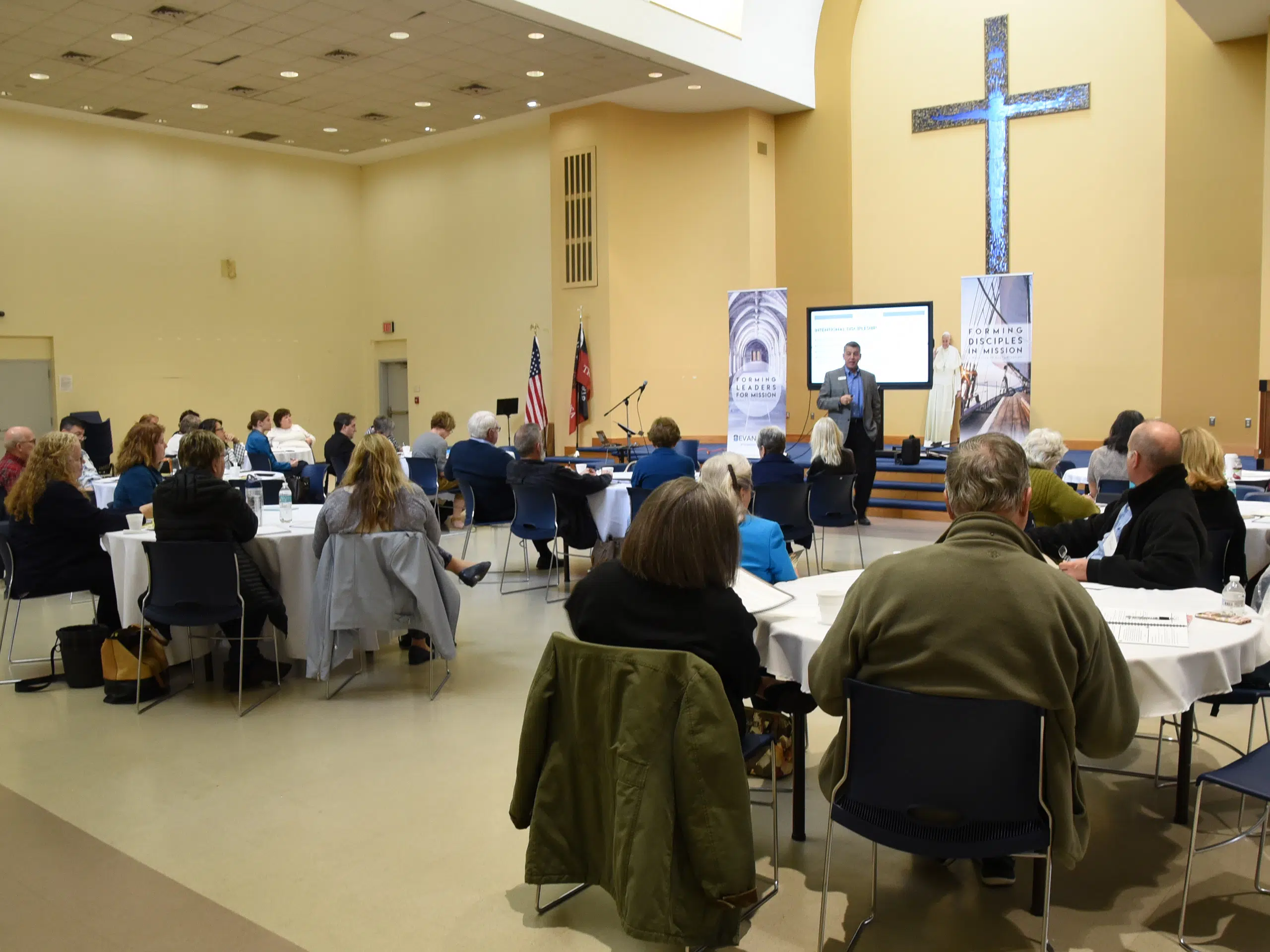
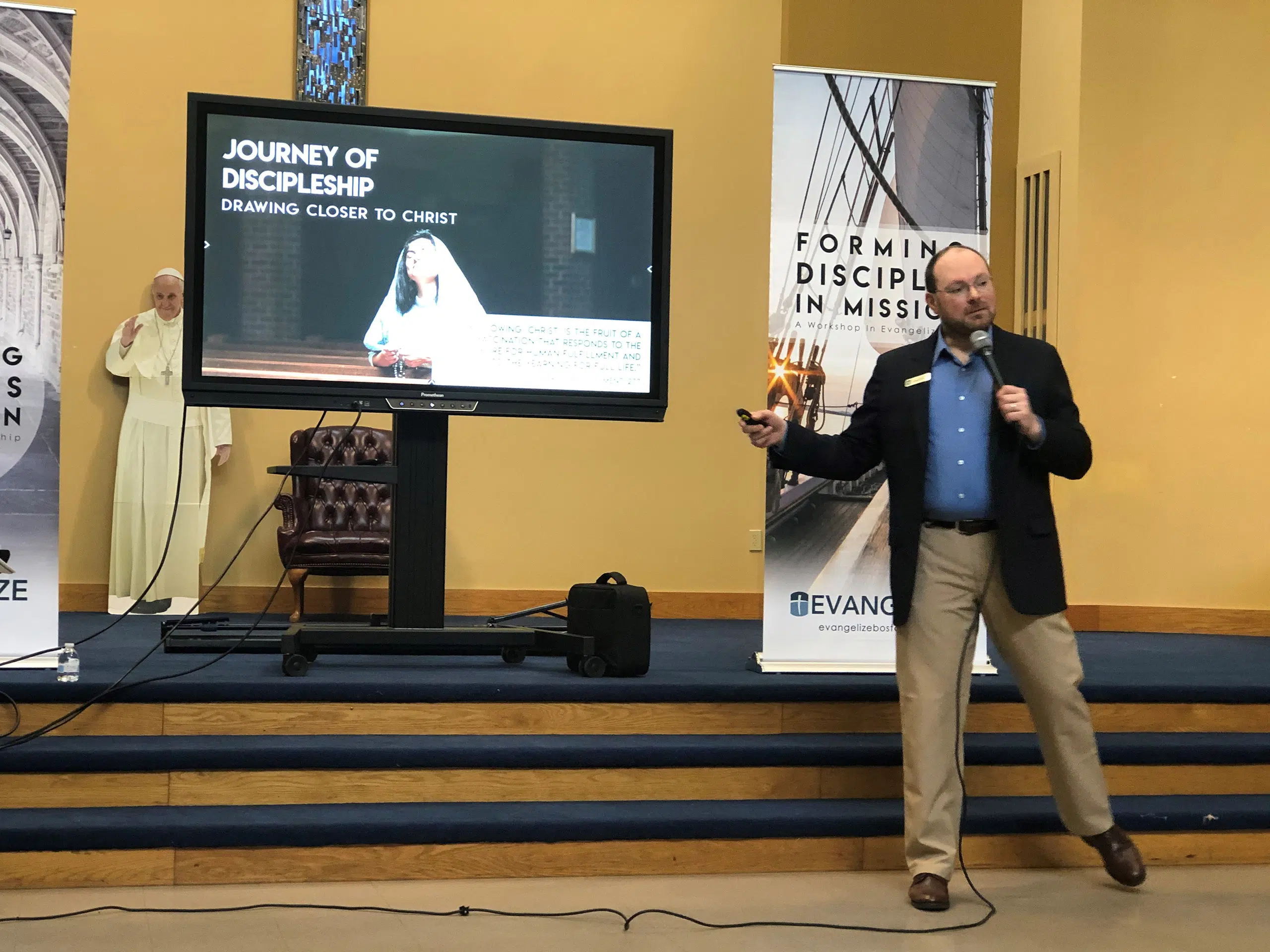
“Joy is infectious — people want to be part of that,” said Donoghue, an evangelization consultant from the Archdiocese of Boston. He is part of a team that brought a short course on discipleship and evangelization to St. John the Apostle Church in Leesburg March 25 and St. Mark Church in Vienna March 26.
Sponsored by the diocesan Office of Faith Formation, the all-day workshop, titled “Forming Disciples in Mission,” focused on building skills for evangelization within parishes. About 85 parish leaders, teachers and catechists from around the diocese attended.
Ana Lisa Piñon, diocesan program director of faith formation and evangelization, said the workshop is among offerings planned in the coming months to help Catholics in the diocese cultivate authentic discipleship in Christ — one of the six “pillars” of the new strategic plan announced last fall by Bishop Michael F. Burbidge.
“As Catholics, we have an understanding that we’re supposed to receive the sacraments and grow in personal holiness, but when it comes to evangelizing, not enough people have heard they’re supposed to do it,” said team member Patrick Krisak, director of faith formation and missionary discipleship for the Archdiocese of Boston, and a former director of religious education at St. Louis Church in Alexandria.
“As Catholics, we have an understanding that we’re supposed to receive the sacraments and grow in personal holiness, but when it comes to evangelizing, not enough people have heard they’re supposed to do it.”
— Patrick Krisak, director of faith formation and missionary discipleship for the Archdiocese of Boston
Presenters said only a small percentage of baptized Catholics fit the definition of intentional disciples — they cited estimates ranging from 2 to 7 percent. They said about 10 percent of baptized Catholics attend Mass, but are not disciples, and that 83 percent of baptized Catholics are not even in the pews.
“We have Catholics who know a lot about Jesus, but they don’t have a relationship with him. Their prayer is not an intimate kind of opening up,” said Father Brian G. Bashista, pastor of St. Elizabeth Ann Seton Church in Lake Ridge. He attended the workshop with his parish business manager and director of evangelization, who was hired a couple of years ago to help bring a discipleship mindset to the parish.
People may spend a lot of time volunteering around their parish, but “rather than doing, it’s about the being,” Father Bashista said. “If I believe I am called to share the good news of the Lord, then the doing will follow from that.”
Many adult Catholics have never developed a mature relationship with God, and still picture him as either the angry old man “hurling lightning bolts from the sky” or as Santa Claus, said Michael Lavigne, assistant cabinet secretary for evangelization and discipleship with the Archdiocese of Boston. “We should not presume that Catholics have been evangelized.”
The team spoke about the New Evangelization described by Pope St. John Paul II, Pope Benedict XVI and Pope Francis, and the role of intentional disciples in this work, which they said includes a commitment to anchoring themselves in the sacraments, daily prayer and ongoing spiritual formation. They also must be ready to present the Gospel message to others, and to personally witness to their faith. Disciples must welcome others into friendship — first into a personal relationship, and then into a relationship with Christ and the church.
Workshop participants had a chance to practice sharing their personal stories of what led them to Christ, how they have come to know him more deeply and how their life has changed since encountering him.
Father Bashista noted that many Catholics are not comfortable with the idea of evangelization, or see it as pushing their faith on others. But that’s not what evangelization is, he said. “It’s just revealing what the Lord has done for me.”
“Nobody can argue about your own experience or your personal story,” Krisak said. “Conversion is a gift of grace and the work of the Holy Spirit, but hopefully (your story) rouses curiosity.”
Brad Broemmel of Holy Trinity Church in Gainesville said he signed up for the workshop “to become a more effective evangelist — more effective in sharing the love, the joy and the peace of Christ.” After retiring from a career in the U.S. Air Force, he said he started “saying yes all the time” to volunteer opportunities in his parish, and is now teaching religious education again, even though his kids are grown. “I need this. These children are the future of our church.”
David Campbell of St. Bernadette Church in Springfield is a former Presbyterian minister who is a Catholic convert, a grandfather, and a teacher at St. Paul VI Catholic High School in Chantilly. He said he signed up for the workshop because “evangelism is necessary” to keep young people in the church, and current numbers “are unsustainable.”
“Don’t get me wrong, God loves old people,” he said. “But old people need to begin witnessing about their faith, and it takes practice for people of a certain vintage.”