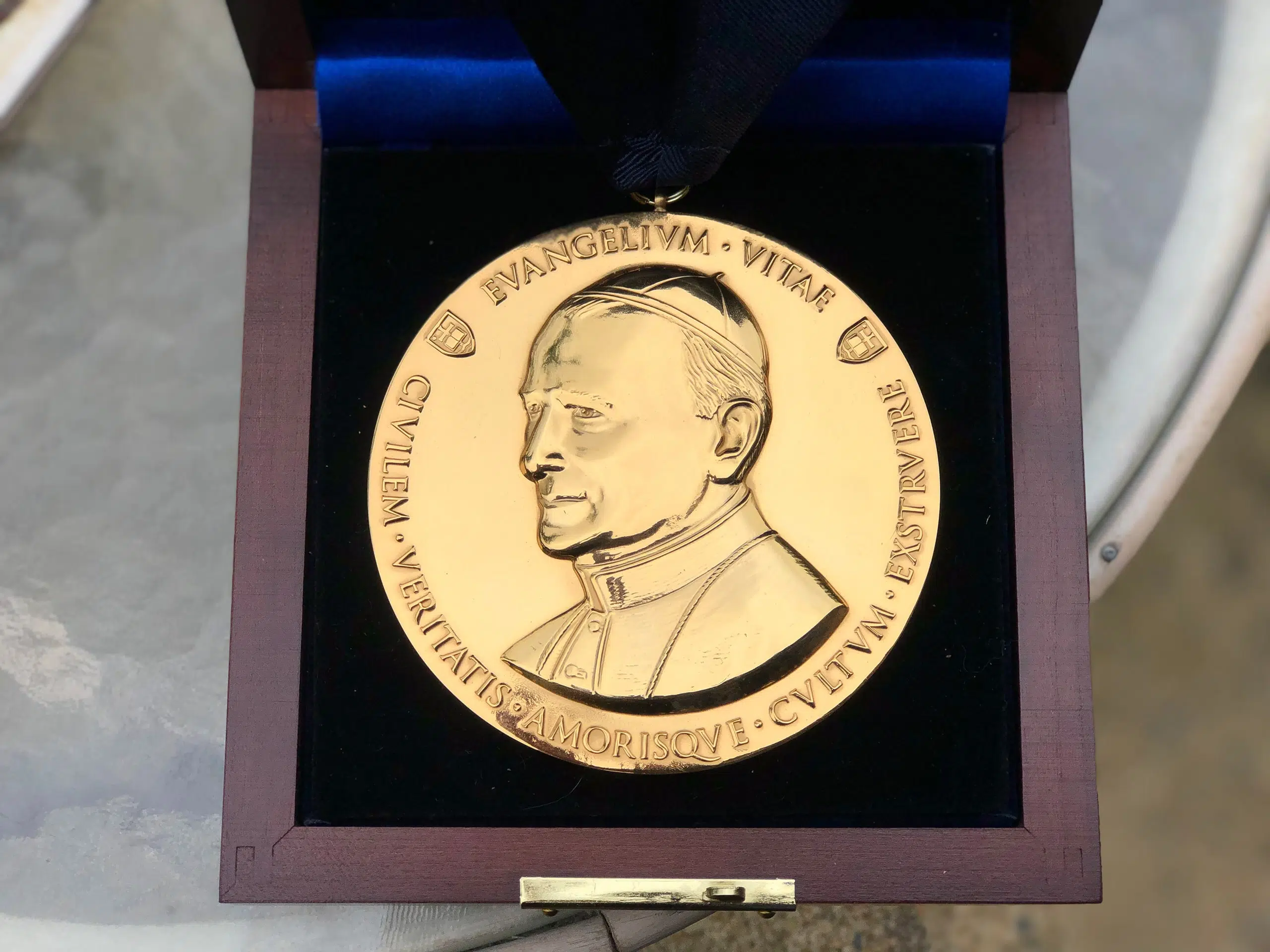
For Dr. John Bruchalski, founder of one of the largest pro-life women’s clinics in the nation, a new chapter is beginning.
Almost 30 years after opening Tepeyac OB/GYN in Fairfax, and then its fundraising and education arm, Divine Mercy Care, Bruchalski received one of the nation’s most prestigious pro-life awards April 23 at the University of Notre Dame in Indiana.
Receiving the 2022 Evangelium Vitae medal from the de Nicola Center for Ethics and Culture is a great honor, he said — it’s an honor “to even be thought of” alongside past recipients, pro-life luminaries such as Helen Alvaré, Richard Doerflinger and Vicki Thorn, founder of the post-abortion healing ministry Project Rachel, who died this spring.
Bruchalski, 61, who performed abortions until a dramatic conversion experience led him to open Tepeyac, said he finds it incongruous that “people give me awards for not murdering babies — but that’s a reality of the world today.”
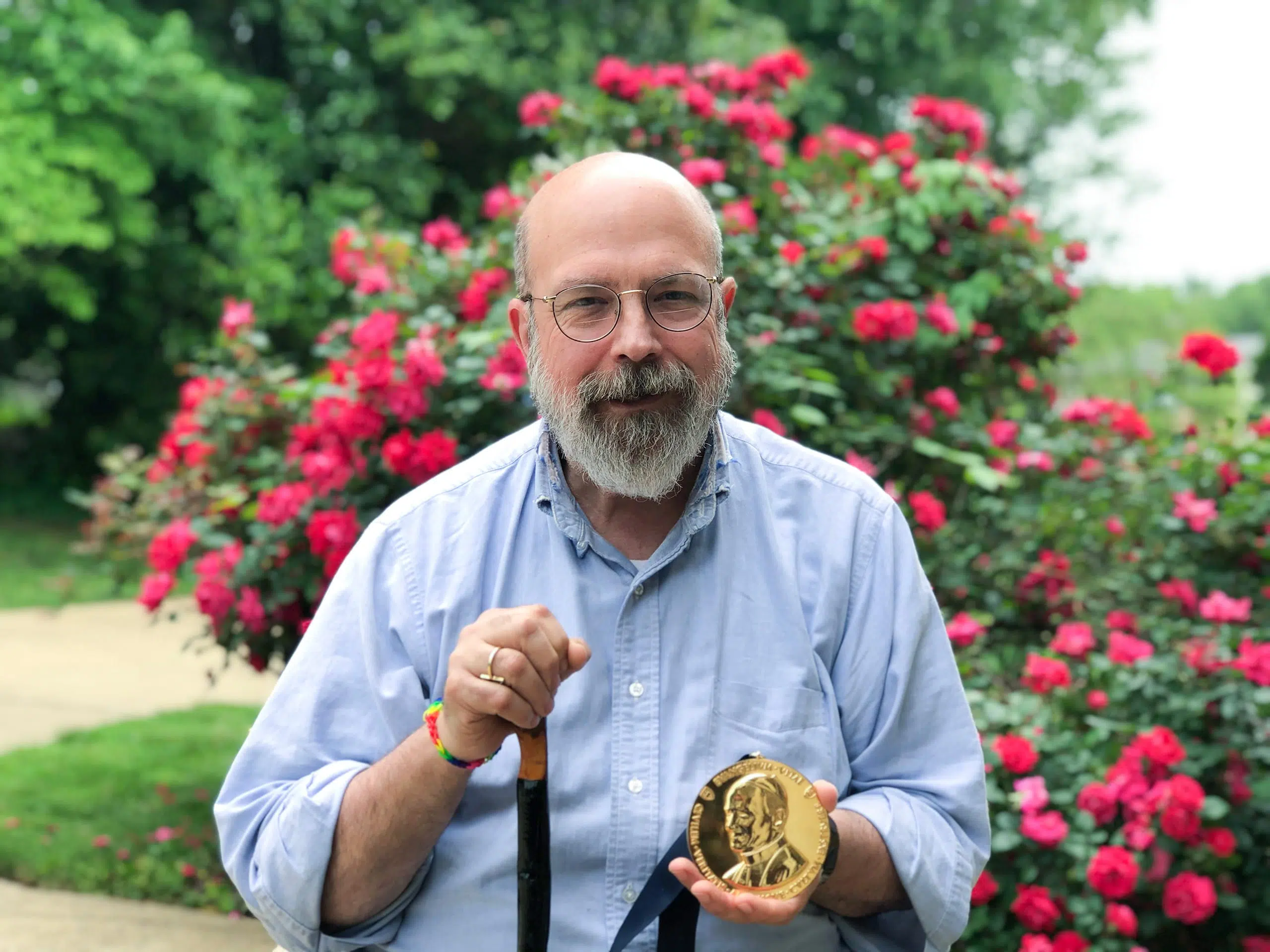
Sitting outside his home in Herndon one recent morning, holding the heavy gold medal in one hand and a blackthorn walking stick in the other, he said he sees the award as “a tremendous responsibility” at this pivotal moment in the national debate over abortion, as pro-lifers look to a possible reversal of Roe v. Wade.
It also comes as he steps into a new phase of his career. A few months before the presentation, he learned that pain in his upper back and right arm, which had prevented him from operating or seeing patients since November, was due to an auto-immune disease in a nerve bundle in his right arm and spine — a disability that may lead to his retirement from medicine.
Whatever happens, “I will always be a part of Tepeyac. In a world that’s gone crazy, I’m not bailing,” he said.
He’s told supporters he’s trying to “let go and trust” God’s plan as he discerns his future role with the clinic. For the moment, he will focus on outreach and education with Divine Mercy Care. He’s also poised to become a more prominent voice in the national conversation about abortion in what he calls “a post-Roe society,” with a new book due this fall from Ignatius Press.
Titled “Two Patients,” it’s about the conversion experience 30 years ago that led him to abandon his work in abortion and artificial fertility and return to the Catholic faith of his childhood, with a renewed devotion to Mary.
He has spoken before about the life-changing experience, on a trip to Medjugorje, a Marian pilgrimage site in Bosnia and Herzegovina, where a stranger came up to him and said she had a message from the Blessed Mother that he should write in his diary. Stunned, he took down the words: “Practice excellent medicine, see the poor daily, and follow the teachings of my Son’s church. If you can do those three things, you will help my Son renew the face of the earth.”
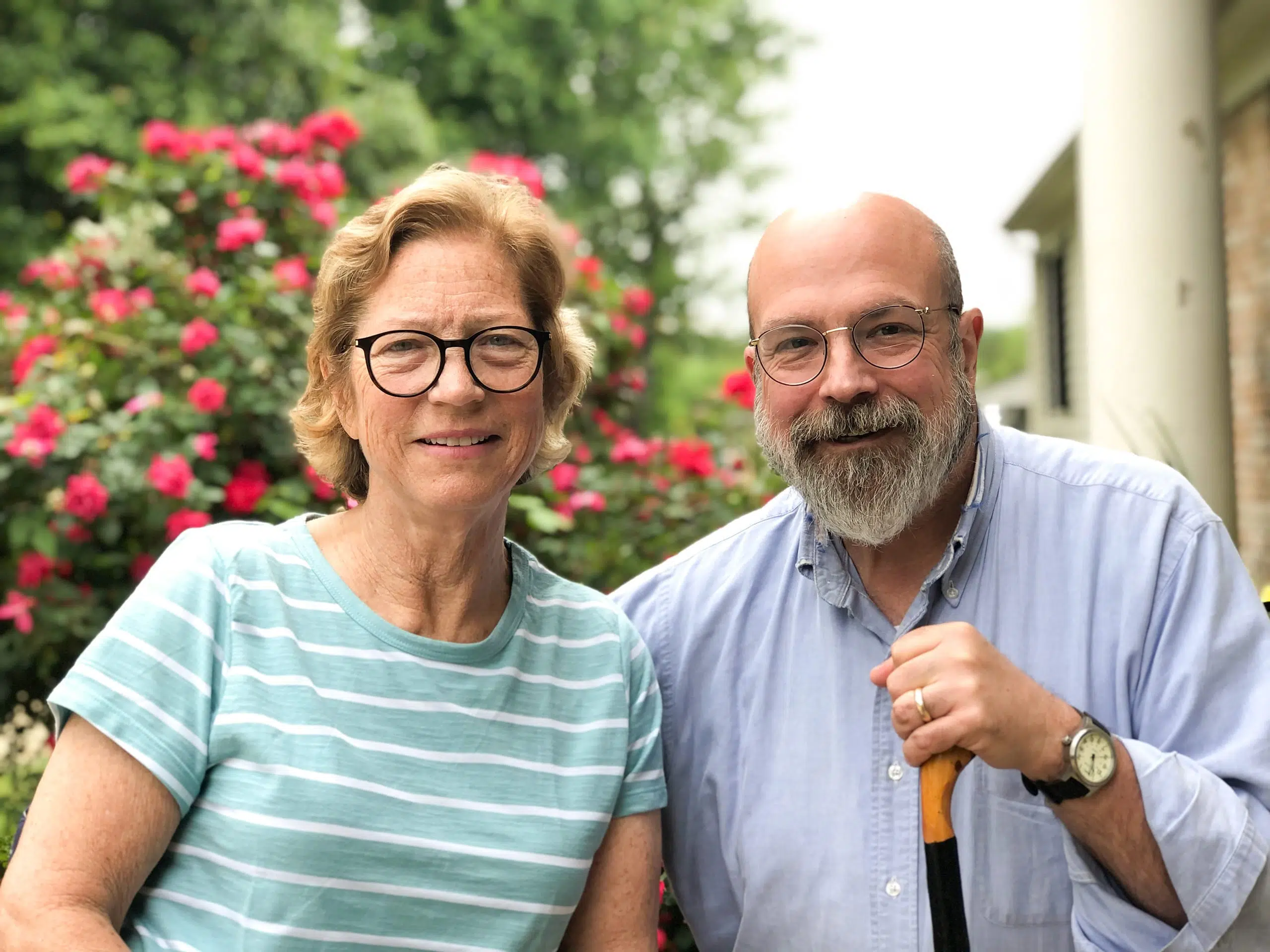
He said in that moment, “the scales came off my eyes.” He and his wife, Carolyn, founded Tepeyac in their basement, challenging the medical status quo by practicing what he calls “medicine as mercy.”
“When mercy touches you, it’s real, and it’s here for all of us.”
— Dr. John Bruchalski
“When mercy touches you, it’s real, and it’s here for all of us. It’s not legalism, it’s love,” he said. The book title refers to his awakening to the fact that when he treats a pregnant woman, he has two patients: both mother and child.
“My heart breaks for people with unwanted pregnancies, but we’re supposed to be promoters of healing,” Bruchalski said. “The elite in our society are trying to tell us abortion is good medicine, but it’s not good medicine. It’s not addressing the real issues.
“I’ve done abortion and it’s hard to do. As a doctor, you have to steel your heart to convince yourself you’re helping this woman,” when you know otherwise. Mothers are not to blame, he added: “They’re suffering because we’re not giving them truth and love. God wants it done out of love. It’s about transforming our hearts.”
Tepeyac partners with pregnancy resource centers and serves women of all backgrounds (close to 3,000 last year), offering financial aid for those who can’t pay. It has a perinatal hospice program for babies not expected to live long, and works with children with Down syndrome, who he said “know the language of love in their hearts.”
He sees the clinic as a model for care that is patient-centered, holistic and pro-life, and sees Divine Mercy Care as his instrument to inspire and teach a new generation of doctors a better way forward.
“This is a time for unity. We are part of a genetic family of human beings, and we are one body — even those who disagree with us,” he said. “The answer to the post-Roe world is love. Love is what conquers.”
Embryos also need love, of course. “They are just little, but they’re genetically part of the human family too,” he said.