
Even before the first athletes take the field for the new school year, the athletic training department at Bishop O’Connell High School in Arlington has been a flurry of activity. Over the summer, they have given the athletic training facility a facelift, hired a third athletic trainer and acquired a new 55-gallon hydration station.
Joining head athletic trainer Alicia Haas and assistant athletic trainer Steve Arguenta is the newest assistant athletic trainer, Betty Jachym.
“Having three certified athletic trainers this year will allow us to evaluate and treat more athletes and have a better presence at practices and games, which ultimately decreases emergency response time and directly increases the quality of care to all athletes,” said Haas. “Out of 1,150 students, we have more than 800 students participating in athletics, so it gets quite busy.”
Jachym’s background includes a bachelor’s in athletic training from Lewis University in Romeoville, Ill., along with internship experience working with the men’s football and basketball teams at the University of Tennessee in Knoxville. For the past five years, she has served as the head athletic trainer at Rich Township High School in Matteson Ill.
For the start of this school year, a second-year master’s student from George Mason University in Fairfax will also join the athletic trainers, thanks to the recent establishment of O’Connell as an official athletic training clinical site.
Students in a university athletic training program are required to complete clinic hours in order to sit for the national certification exam and ultimately become an athletic trainer. Clinical rotations include a variety of settings to allow students to gain experience and ultimately help them determine what setting fits best for their career path.
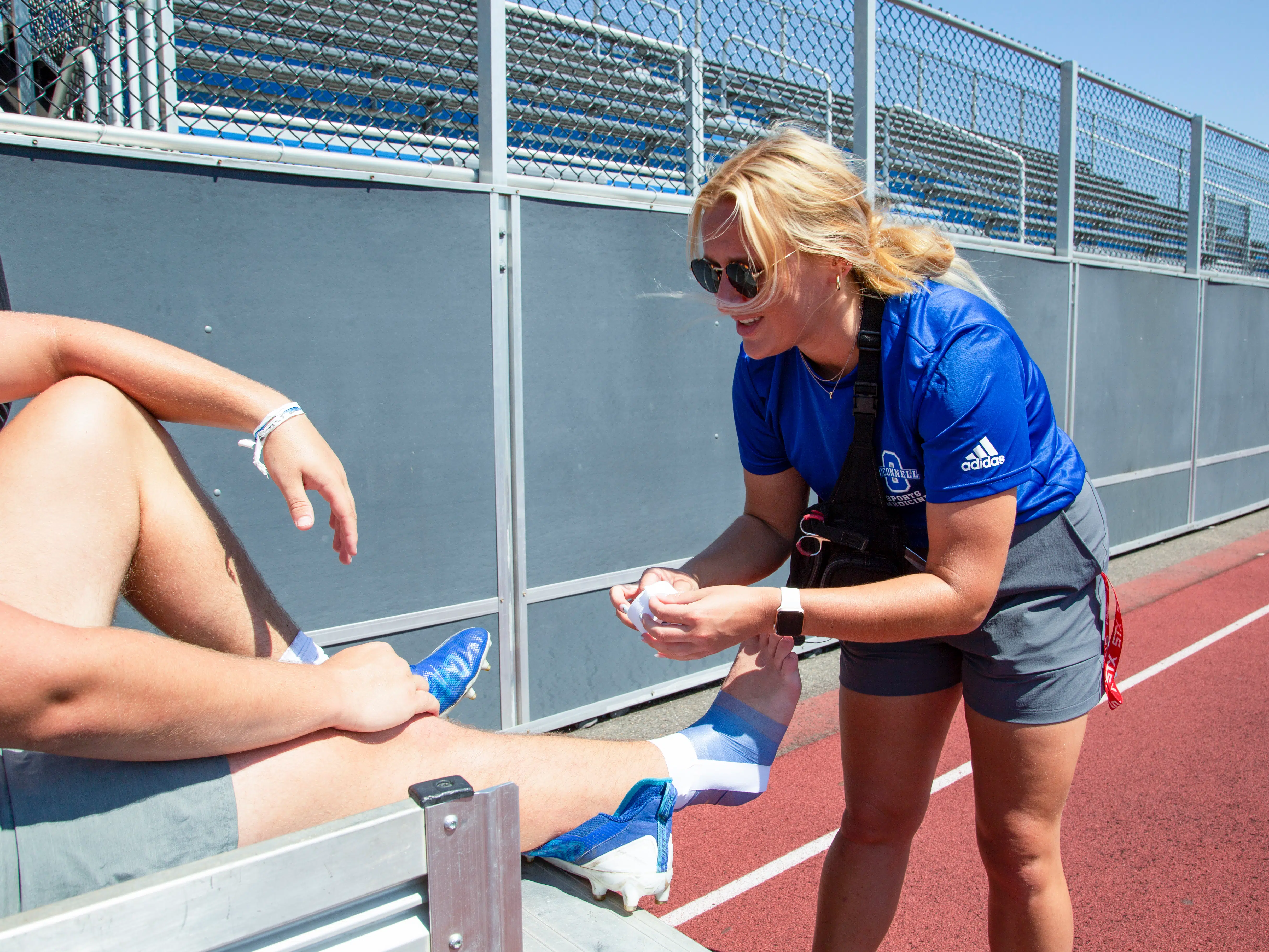
“The most common misconception of the athletic training profession is that people think we are personal trainers (who) train athletes,” said Haas. “In reality, we are essentially mini-EMTs on the sidelines ready to care for any injury that may occur during sports. We are trained medical professionals, certified and licensed by the Virginia Board of Medicine to prevent, evaluate and treat injuries.”
“It’s truly a unique profession in that we can take an athlete through the entire injury process, from seeing the sprained ankle on the soccer field, taking them through rehabilitation, and seeing them play after they are healed — that’s the best part” added Haas.