


Nancy Emanuel was teaching a catechetics class to children with intellectual disabilities. She practiced the Sign of the Cross with them and receiving Communion with unconsecrated hosts. When the big day came, their first Communion, one little girl accepted the Eucharist and went to place it in her mouth. She stopped, pulled it out and looked at it. Later Emanuel asked her why she did that. “I wanted to see what Jesus looks like up close,” she said.
Emanuel, diocesan coordinator for special needs ministries, shared this anecdote with attendees at a Nov. 5 conference on “From Inclusion to Belonging; Embracing Disability as Part of the Church.” The conference drew 140, including parents and teachers, catechists and youth ministers, principals and clergy, to learn more about helping people with disabilities become more involved in parish life.
The half-day program featured sessions led by experts, conversations with parents, and information on how the diocese is emphasizing building an accessible and welcoming community for those with intellectual disabilities and their families.
Organizers included Emanuel; Diane Elliott and Susan Rinaldi from the diocesan schools’ office; Carmen Chiappetta and Guadalupe Williamson from Special Blessings, a local Catholic support group for moms of children with intellectual disabilities; and Larry Rzepka from Porto Charities.
The conversation
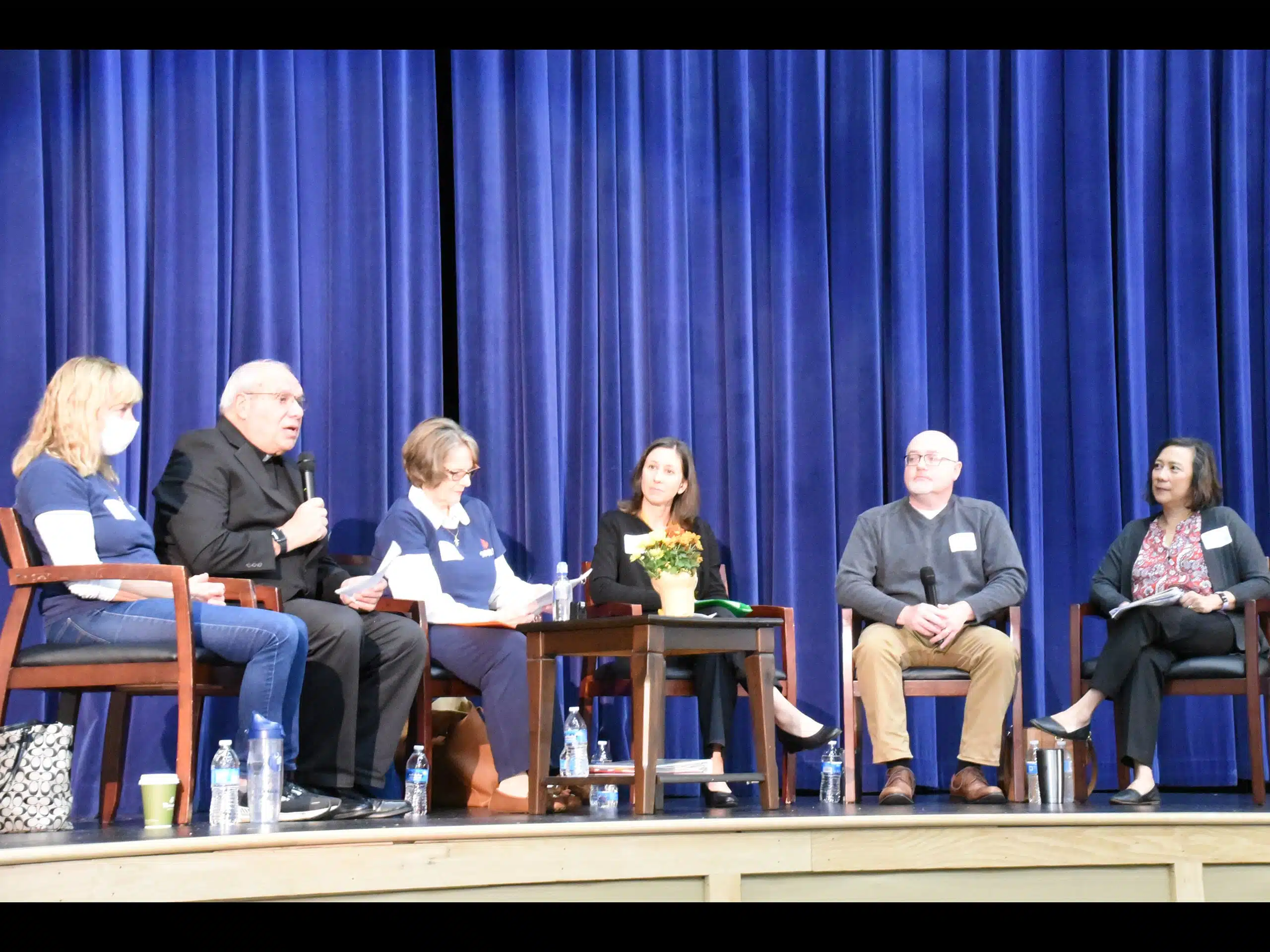
A keynote conversation on religious education kicked things off with Father Robert C. Cilinski, Joyce Kelly, and several parents with children with intellectual disabilities — Maureen Finnegan, Stephanie Hanley, and Charlie and Jeannette Puritano.
Father Cilinski, pastor of Church of the Nativity in Burke, is episcopal vicar for charitable works and president of the board of directors of Gabriel Homes, which serves adults with disabilities.
“Every child is a unique and unrepeatable gift of God,” Father Cilinski said in his opening prayer. He urged participants to commit to being “a church of faith and a church to welcome those with different abilities.”
Kelly, a transition specialist who retired from Arlington County Public Schools, helped coordinate the SPRED (special religious ed) program at Nativity, where there are currently 22 students. She offered tips for others hoping to start a similar program in their parish.
The parents agreed that SPRED helps their children make friends, gives them access to the parish clergy and is an opportunity for respite. Hanley said, “When you invite the child, you’re involving the whole family.”
Kelly added that this work is not being done “out of a sense of charity, (these individuals) are full members of the parish with special abilities.”
Father Cilinski agreed, saying, “We are not letting them in; they’re a part of the church already. We are recognizing that.” SPRED or similar programs are in place at 10 diocesan parishes. “There is a need for ongoing formation. We can do better.”
Father Cilinski said recently the diocesan presbyteral council unanimously supported his goal of having a program such as SPRED or something similar in parishes in every deanery soon.
“They teach us more,” Kelly said, referring to the students, “what Jesus would do if he were here with us.”
The sessions
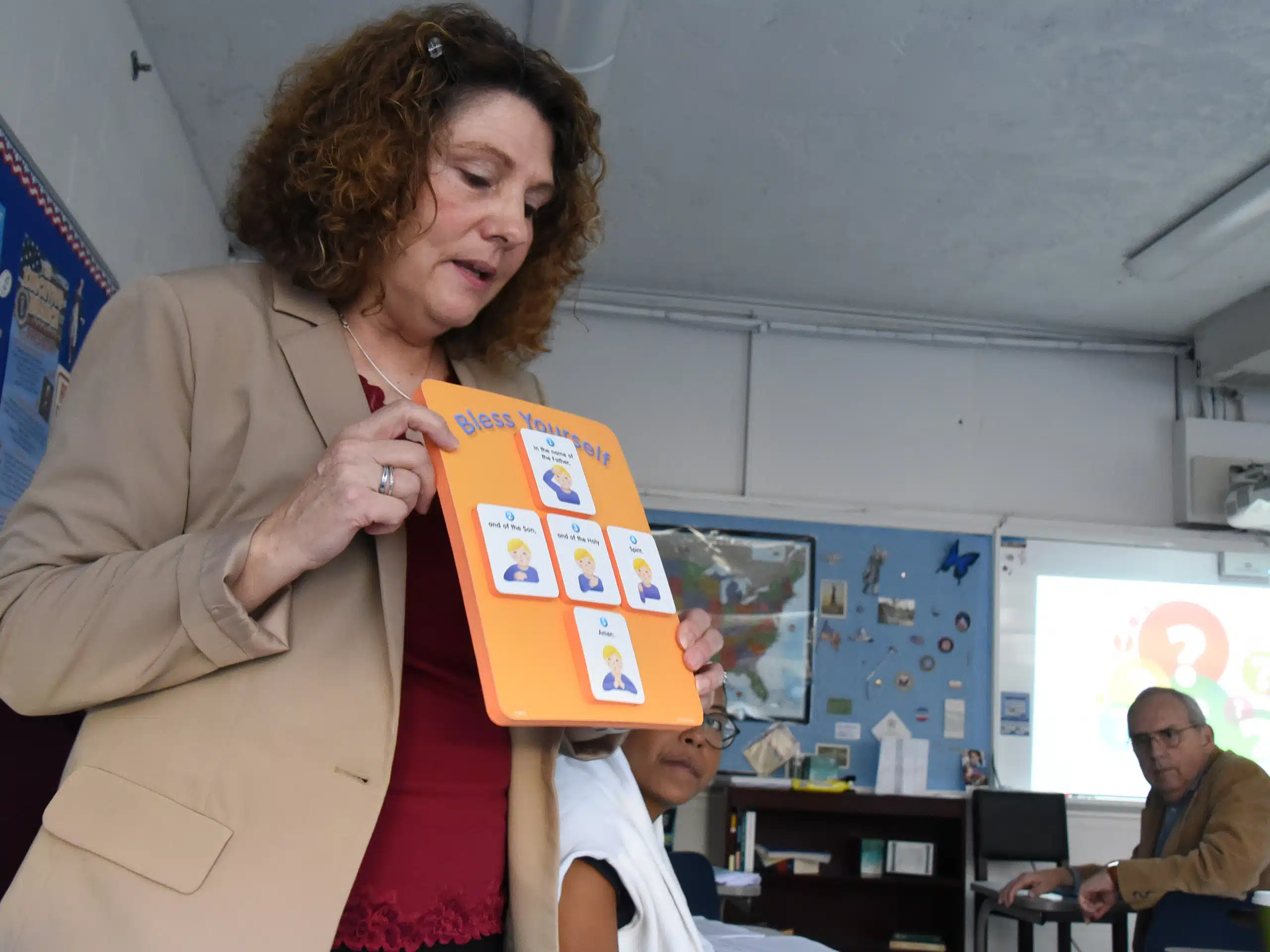
Emmanuel’s session on sacramental preparation was a practical primer.
SPRED is for the population that doesn’t fit into any other program, who don’t function in a typical classroom setting, she said.
She suggests starting with typical instructional materials but providing accommodations to reduce response effort. SPRED students are not required to read, write or hold an instrument. It’s about creating “a relationship between the adult volunteer and the child,” she said. “We remind them: Jesus loves them just the way they are.”
Getting the parents involved is key, and they are asked to bring the children to Mass. Emanuel sends materials home after every session to get everyone engaged.
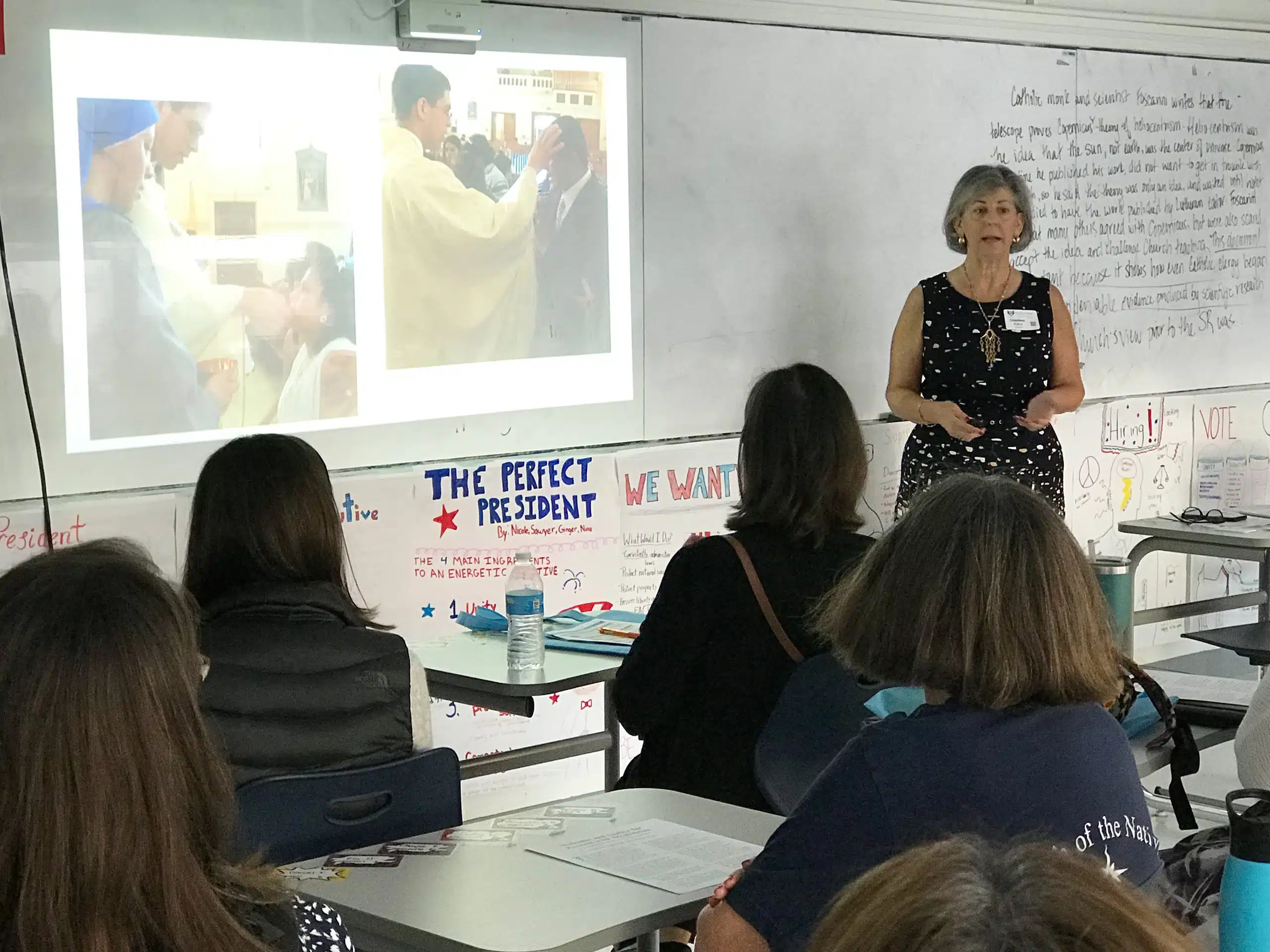
Charlene Katra, executive director of the National Catholic Partnership on Disability, spoke about “Embracing God’s Vision of Love.”
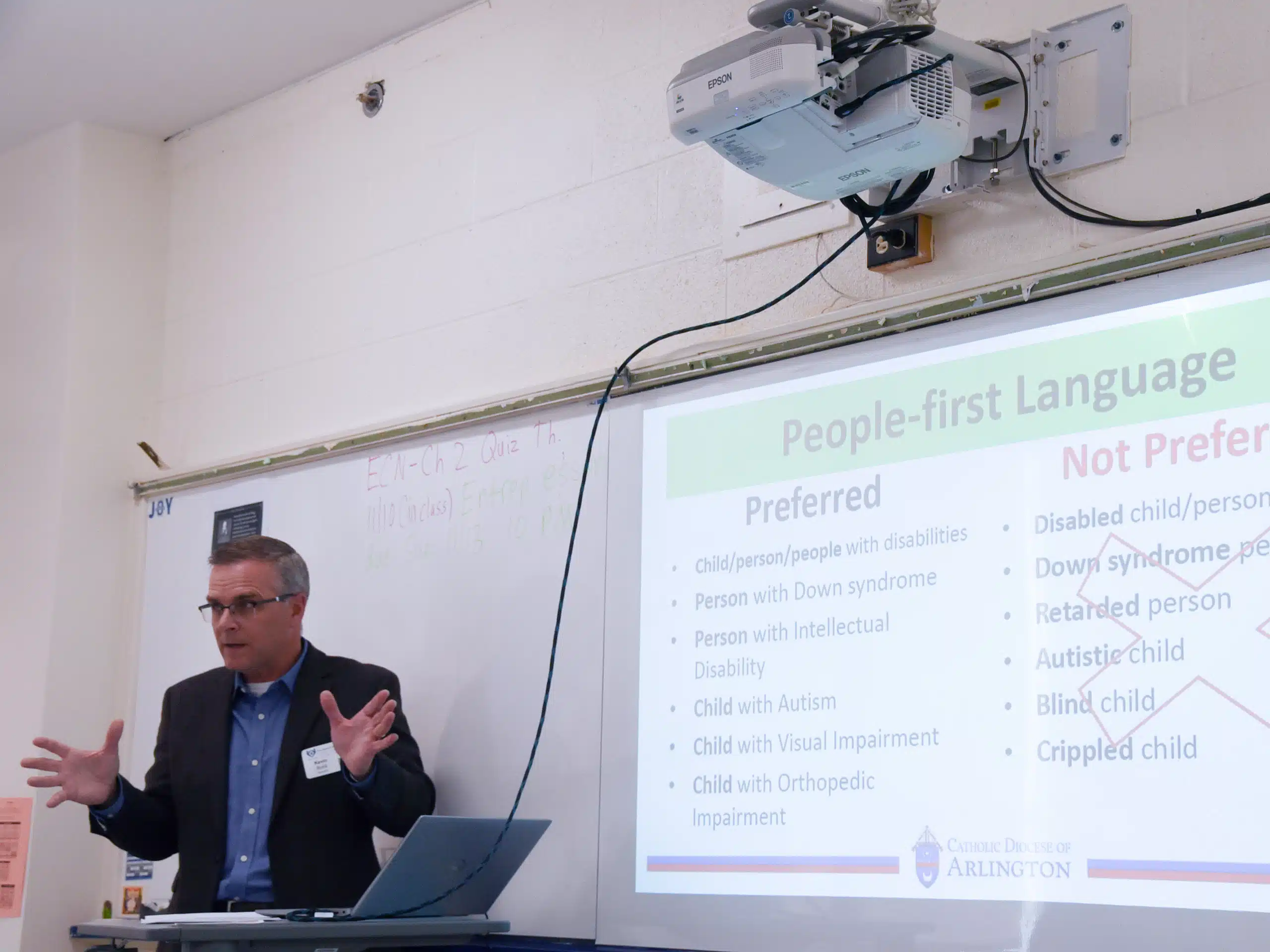
She discussed the shift in language when discussing people with disabilities — the person is first, then the diagnosis, so a boy with autism, a girl who lives with cerebral palsy — and she outlined the three baptismal rights: to be educated in the faith, prepared to celebrate the sacraments and to respond to God’s call.
She asked attendees to consider: “People come to church, I think a lot, seeking hope. What do they get from your community?”
Katra said the 1978 U.S. Conference of Catholic Bishops’ pastoral statement on persons with disabilities will be revised within the next two to three years.
Kevin Bohli, executive director of the diocesan Office of Youth Campus and Young Adult ministries, spoke about youth ministry as a place of belonging for all.
His office coordinates several diocesan-wide events — BASH for middle school, RALLY for high school and WorkCamp — and has adopted a preferential option for kids with disabilities. That means event planning “with belonging in mind right from the beginning.” The goal is that students with disabilities are “heard, befriended, needed and loved,” he said.
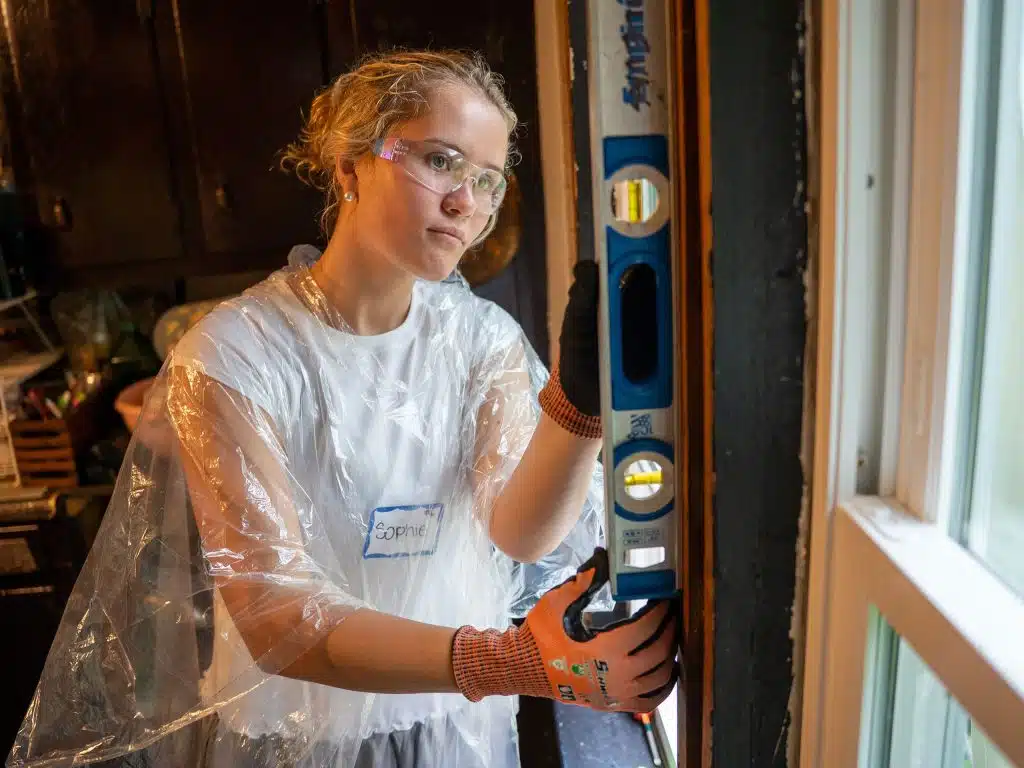
Bohli talked about a boy who was blind and participated fully in WorkCamp in 2019, even helping build a wheelchair ramp for a needy family. “There was a better experience for everyone at WorkCamp because of Gabriel.”
Mary Desmarais, founder of Catholic Inclusion Services, spoke on opening doors to Catholic education, and Ward Jones, diocesan chief operations officer, spoke about the diocesan strategic plan in action.
The liturgy
Bishop Michael F. Burbidge, who also serves as episcopal moderator for NCPD, celebrated what organizers called a sensory Mass at the conference. It included soft harp music, and a shorter and more literal homily.
In his homily, he commended the attendees for their firm resolve that “all people will feel welcome in church and included in our schools, parishes and communities.” The bishop said he is so pleased that the diocesan strategic plan includes a goal of expanding this outreach “that we will strive to implement with a sense of urgency.”
“I am so very proud that all four of our Catholic high schools have inclusion programs and a number of our parochial schools and faith formation programs do as well. I’m so proud of our parishes that go … so far to make sure that all persons are welcome, including our brothers and sisters with disabilities. In doing so, we are simply living the Gospel life, which proclaims that all life is sacred.
“As we strive to be fully immersed in the process of inclusion,” he said, “if we are serious about that, it will be reflected in the use of our finances, personnel and resources. It must be a priority.”
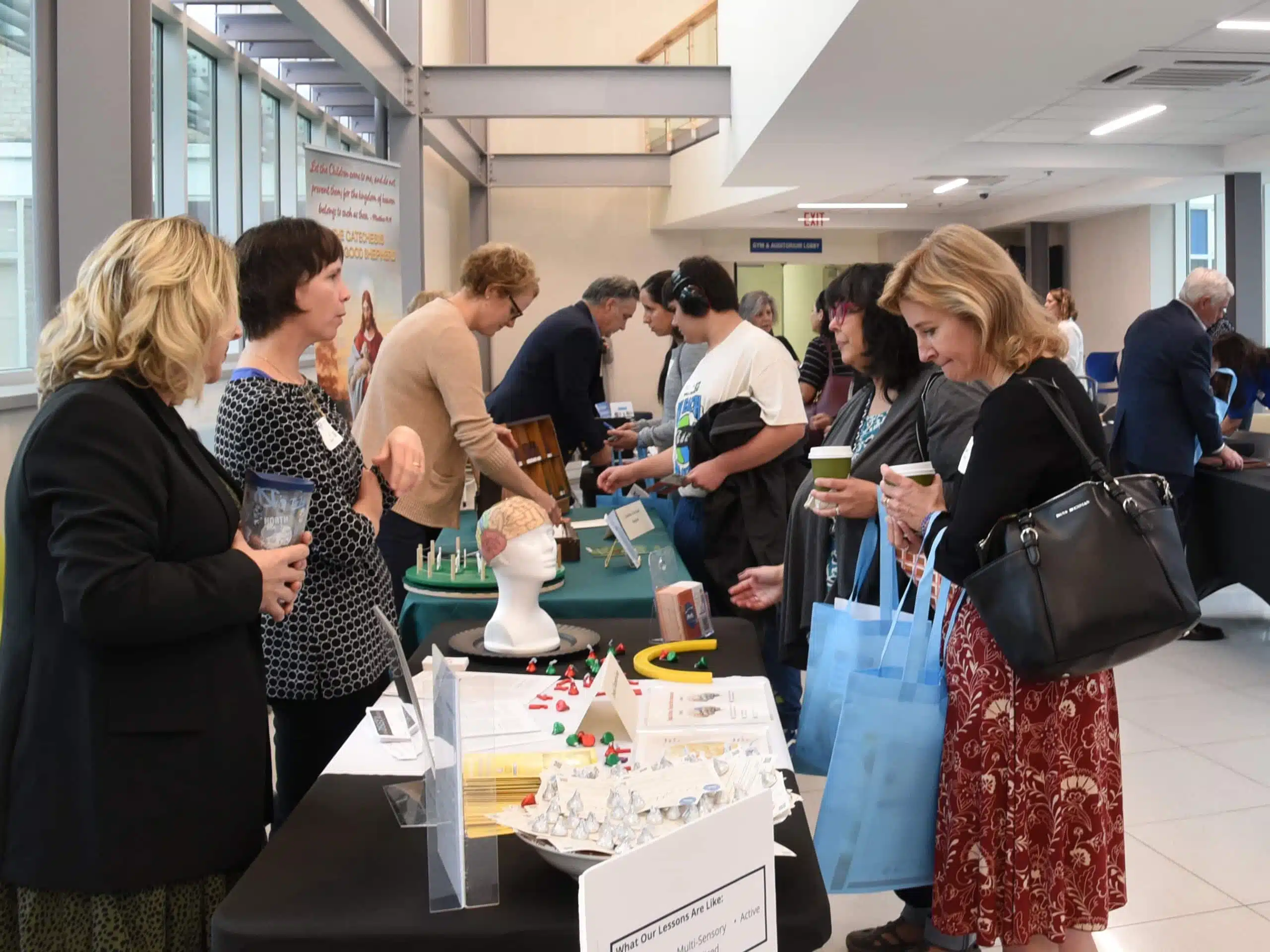
The day also featured exhibits and networking opportunities for participants.
Tamara DeNigris brought her daughter, Brianna Iskenderoglu, 11, who has intellectual disabilities. They are parishioners of All Saints Catholic Church in Manassas.
She talked about the struggle she has had finding a Catholic middle school with services for her daughter, who is in public school. “Everyone deserves a Catholic education if that is what their family chooses,” she said. She and her daughter waited in line to chat with the bishop and have their photo taken.
“I’m very happy with the work Bishop Burbidge is trying to do including everyone,” she said.