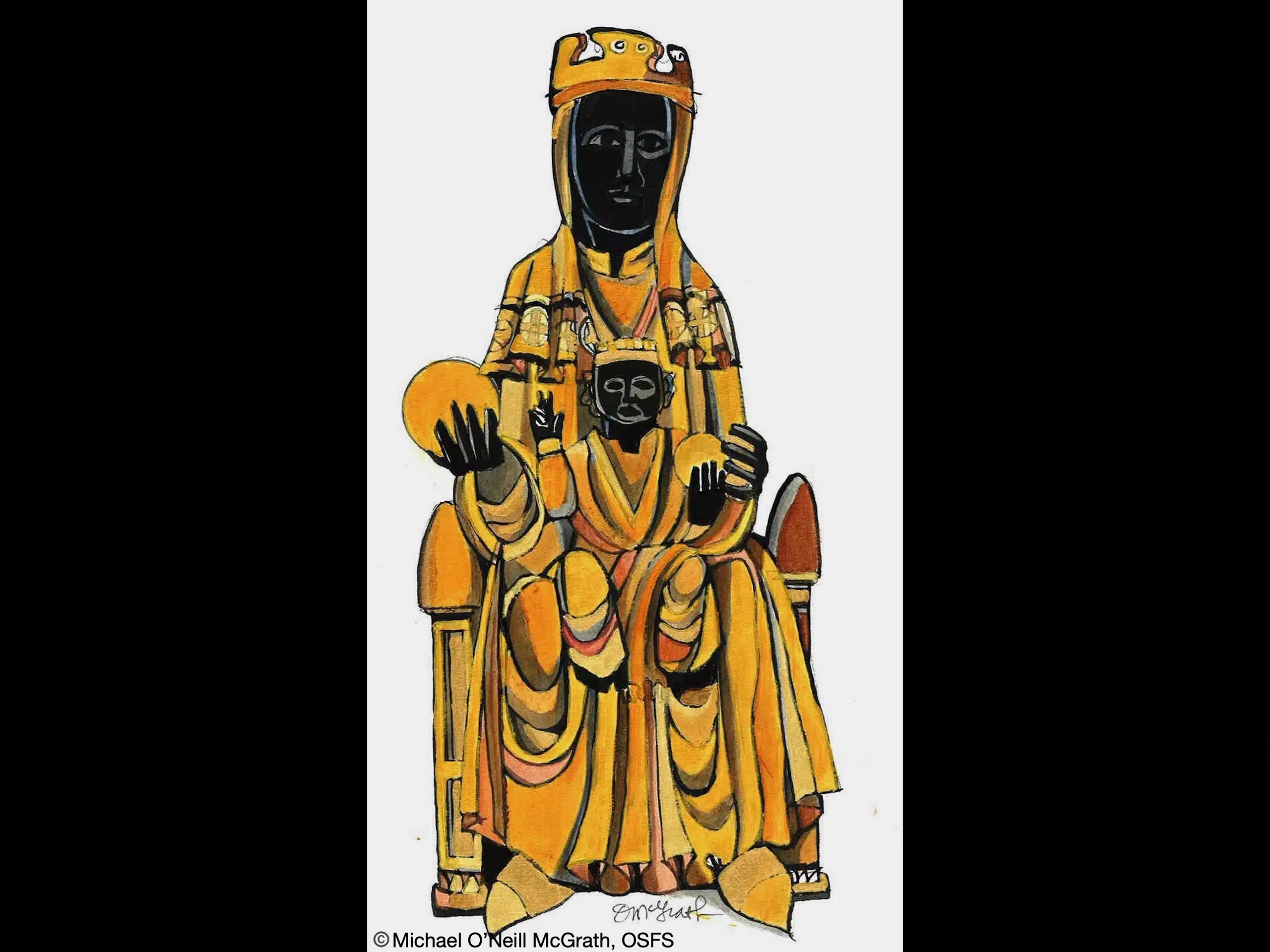
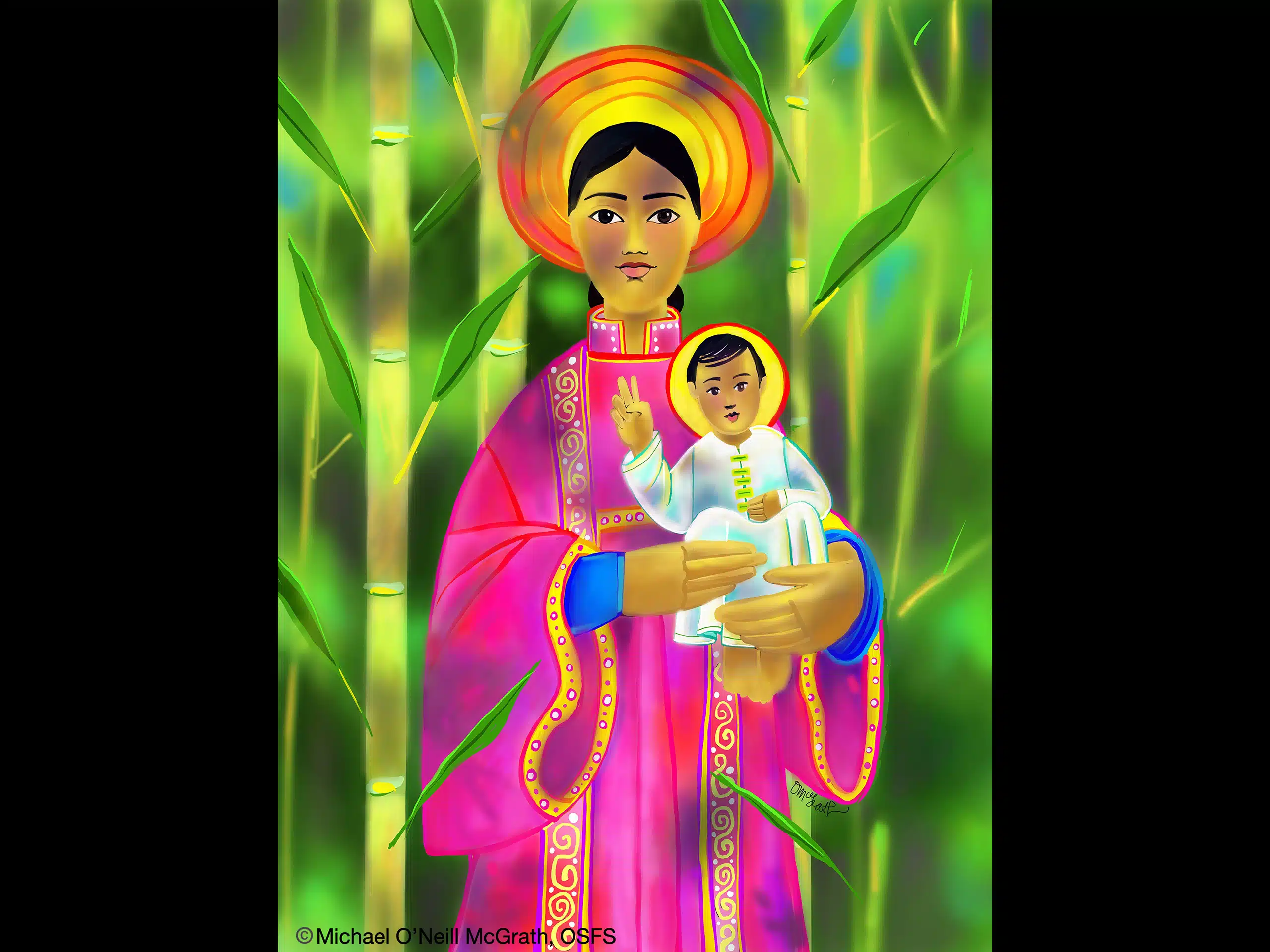


Brother Mickey McGrath first discovered the Catholic Church’s long history of Black Madonnas many years ago on an art pilgrimage to Spain, where he visited Our Lady of Montserrat, near Barcelona. St. Ignatius of Loyola famously prayed before the statue of the Black Madonna in 1522 and had a conversion of heart. He laid his sword at her feet, gave up being a soldier and went on to found the Jesuits.
Brother Mickey, a religious brother in the Oblates of St. Francis de Sales, spoke and showed art from his latest book, “Madonnas of Color,” Jan. 24 at St. John Neumann Church in Reston, served by the Oblates.
He cited many other stories of Black Madonnas, including Our Lady of Good Deliverance in Paris, which St. Francis de Sales visited in 1587 as a college student suffering a crisis of faith. He prayed the Memorare prayer and immediately felt a life-changing sense of peace and consolation in God’s love.
Even though Brother Mickey has included multicultural images in his art for years, he said all the recent headlines about the racial tensions in this country have led him to focus more on seeing Mary with new eyes.
He humorously described mission trips overseas to India, Kenya and other exotic locales where he was initially uncomfortable with all the cultural differences and lack of Western amenities. But he gradually learned to see the beauty of people and places so different from his home. “I had to let go of my need for India to be like Philly,” he said.
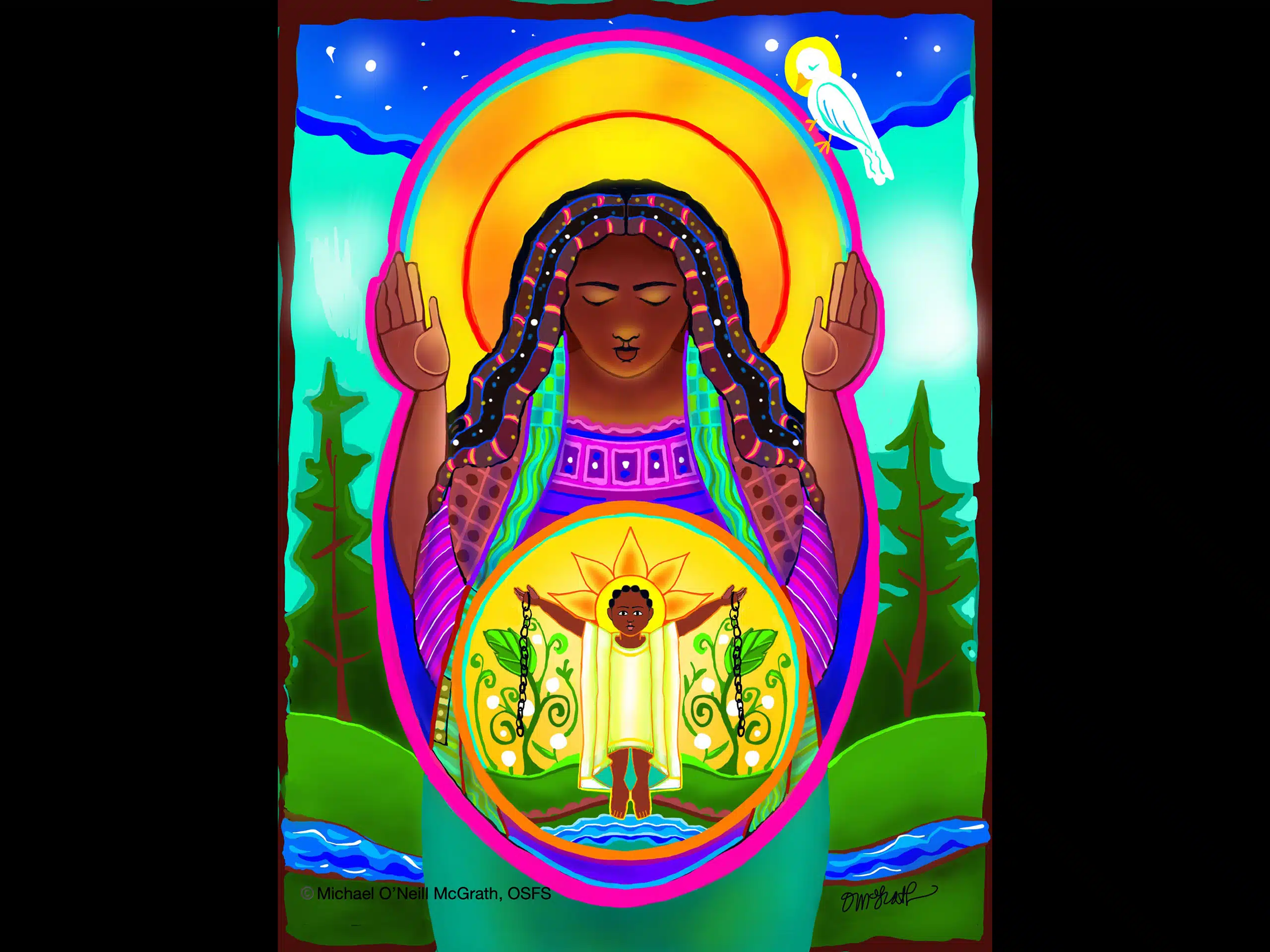
The book’s many striking images include a Kenyan Madonna and Child with the Cosmos; Our Lady of LaVang from Vietnam; a Native American Mary encircled by a rosary; Our Lady of Guadalupe from Mexico; and a Juneteenth Madonna showing Mary with hands raised in praise as Jesus breaks the chains of slavery.
Audience members said they were moved by the presentation. “I’m 61 and I’ve been a Catholic all my life — I never knew Black Madonnas even existed” until recently, said St. John Neumann parishioner Valerie Lister, who is Black. “This is history.”
There are various historical explanations of how Black Madonnas arrived in Europe, Brother Mickey said. “All those young French and German boys who went off to the Holy Land to fight in the Crusades came home with icons of Jesus and Mary with darker, Middle Eastern skin tones.”
He added that the blackness of Black Madonnas goes beyond a literal depiction; it is a symbol of creativity and newness. “Mary’s blackness reminds us of the rich, fertile soil of new beginnings,” and the darkness of the womb.
“Madonnas of color are towering figures of hope,” he writes in the book. They can help us see ourselves “as one human family connected beneath the skin.”
Find out more
Brother Mickey will speak and show art from “Madonnas of Color” Feb. 15 at 6 p.m. in Reinsch Auditorium at Marymount University, 2807 N. Glebe Rd., Arlington.
For more Black History Month events sponsored by the St. John Neumann Racial Justice Ministry, go to bit.ly/SJN-Racial-Justice