What is a blessing?
A blessing asks God to protect or sanctify a person, an object, a place or an undertaking, said Owen Vyner, chair of the theology department at Christendom College in Front Royal. According to the Catechism of the Catholic Church, blessings come under the category of sacramentals — signs instituted by the church that prepare the faithful to receive grace and cooperate with it. Blessings are imparted by invoking the name of Jesus, usually while making the sign of the cross. “We receive these spiritual benefits through the intercession of the church and insofar as we are open to these graces,” said Vyner.
Who can perform a blessing?
Both laypeople and clergy can perform blessings. Catholics are encouraged to bless their food before meals, and parents are encouraged to bless their children. “Because parents have a spiritual authority over their children they can, and should, bless their children every day,” said Vyner. “Parents can do this by tracing the sign of the cross with their thumb on the child’s forehead.”
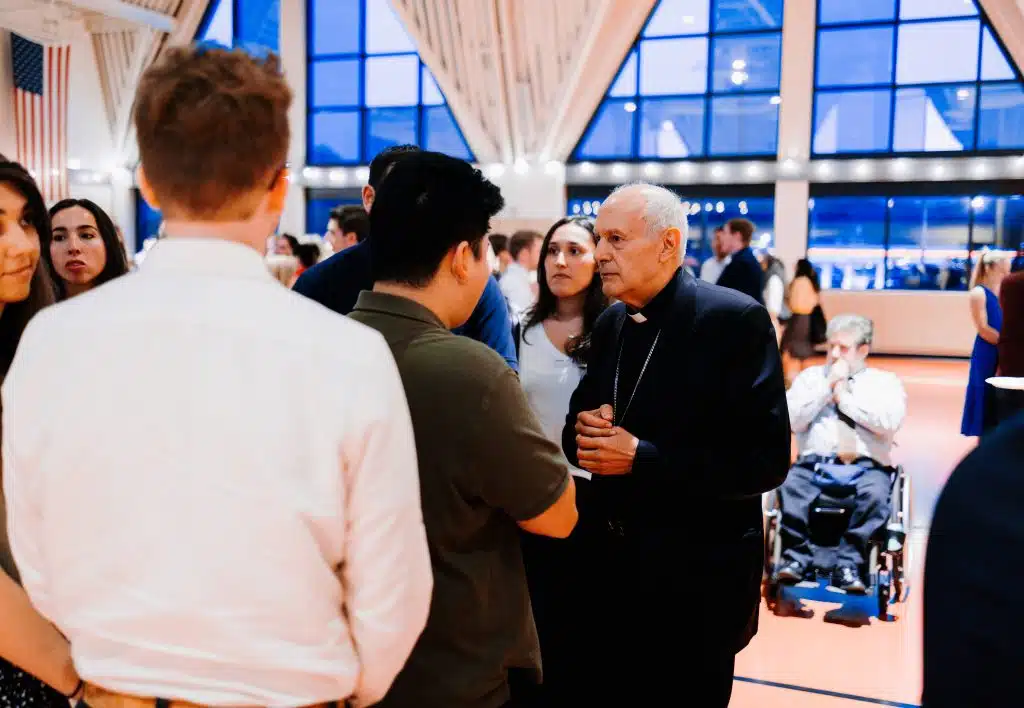
However, according to the catechism, “the more a blessing concerns ecclesial and sacramental life, the more is its administration reserved to the ordained ministry — bishops, priests or deacons.”
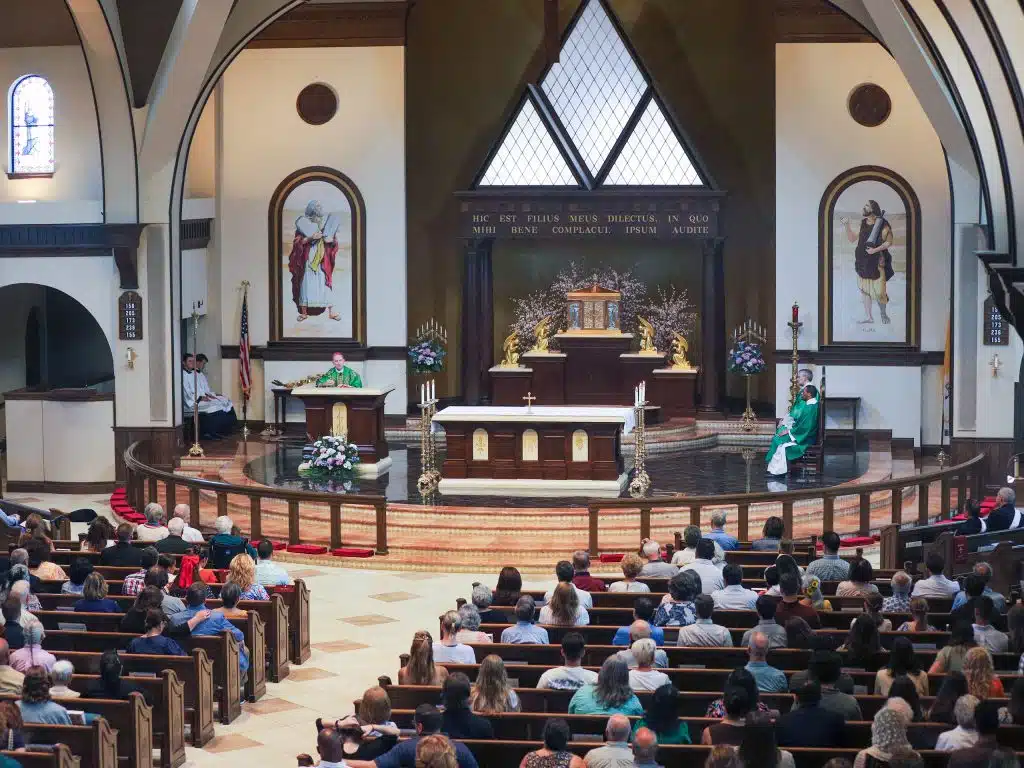
“Because bishops and priests act in the person of Christ, they are the ordinary ministers of a blessing. In a liturgical setting, they alone should give a blessing,” said Vyner. “Deacons can also bless — for example in the Latin Church, they can impart the nuptial blessing in the celebration of matrimony.”
According to the catechism, certain blessings have a lasting importance because they consecrate persons to God, or reserve objects and places for liturgical use. Among those blessings that are intended for persons — not to be confused with sacramental ordination — are the blessing of the abbot or abbess of a monastery, the consecration of virgins and widows, the rite of religious profession, and the blessing of certain ministries including readers and catechists. Churches, altars, holy oil, vestments and bells are all blessed.
Where are blessings found in the Bible?
There are blessings all throughout the Bible – from the first chapter in Genesis in which Adam and Eve are blessed as a married couple to the last chapter in Revelation in which blessings are promised to those who keep the Word of God, said Vyner. In the New Testament, Mary is called the most blessed among all women. Jesus declares Peter blessed; he blesses children, and bread before the miraculous multiplication of loaves.
Why do we bless objects and how should they be treated?
Catholics believe that physical objects, such as rosaries or crucifixes, can help bring believers closer to God. Once an object is blessed, it should be treated reverently. However, it is important not to become superstitious regarding objects, said Vyner.
“It is not the object itself but rather the power of Christ’s death and resurrection which we participate in through baptism,” he said. “A blessed object thus reminds us of our baptism (which is often why we use holy water in the blessing of objects) and our call to holiness.”
Should a blessed object become unusable, it can be buried or burned, and the ashes themselves buried.” By being placed in the earth, they are ‘returned’ to God who created the earth,” said Vyner.
What is the Book of Blessings?
The Book of Blessings contains the blessings of persons, places and objects that appear in the liturgical book called the Roman Ritual.
The book includes blessings for homes, factories, libraries, boats and fishing gear, seeds at planting time, holy water, cemeteries, Christmas trees and Easter food.
How does a blessing differ from an exorcism?
Exorcisms are a type of blessing, said Vyner. “When we hear the word ‘exorcism,’ we often think of supernatural, and quite frankly, terrifying manifestations of demonic activity. However, if you have been to a Catholic baptism, you have seen an exorcism. The priest prays that the child is freed from the power of Satan and original sin,” he said. “A solemn or major exorcism is the proper name for the church’s asking, in the name of Jesus Christ, to free an individual from the dominion of the Evil One. This can be performed only by a priest authorized by the bishop.”
Maraist can be reached at [email protected] or Twitter @zoeymaraistACH.