While student athletes return to the classrooms soon, they have already taken to the practice fields, where they need to be protected from a unique opponent: heat stroke.
The majority of deaths due to heat stroke occur in July and August. As student athletes prepared to return in August, athletic trainers, directors and nurses in the Arlington diocese wanted to be prepared.
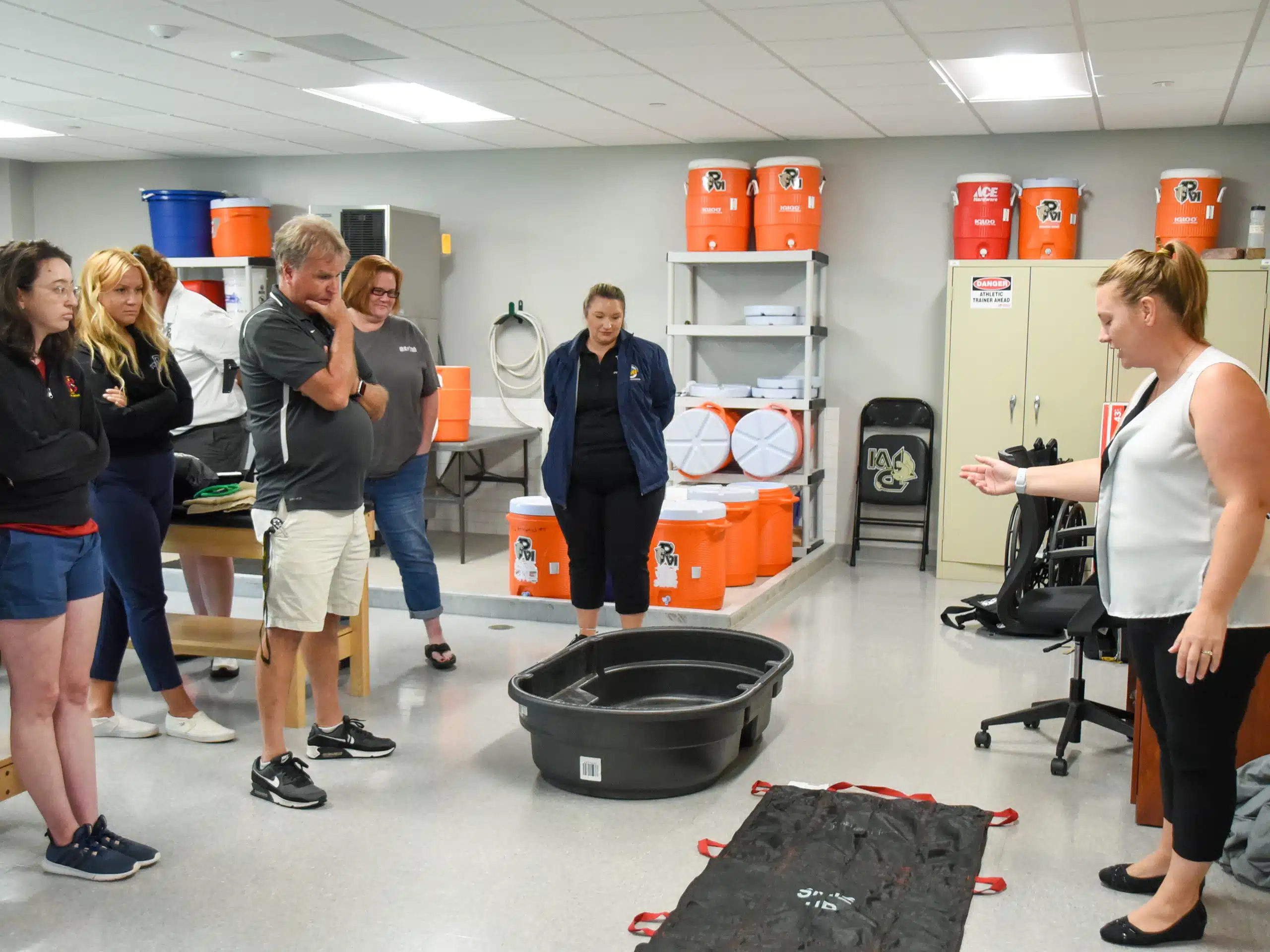
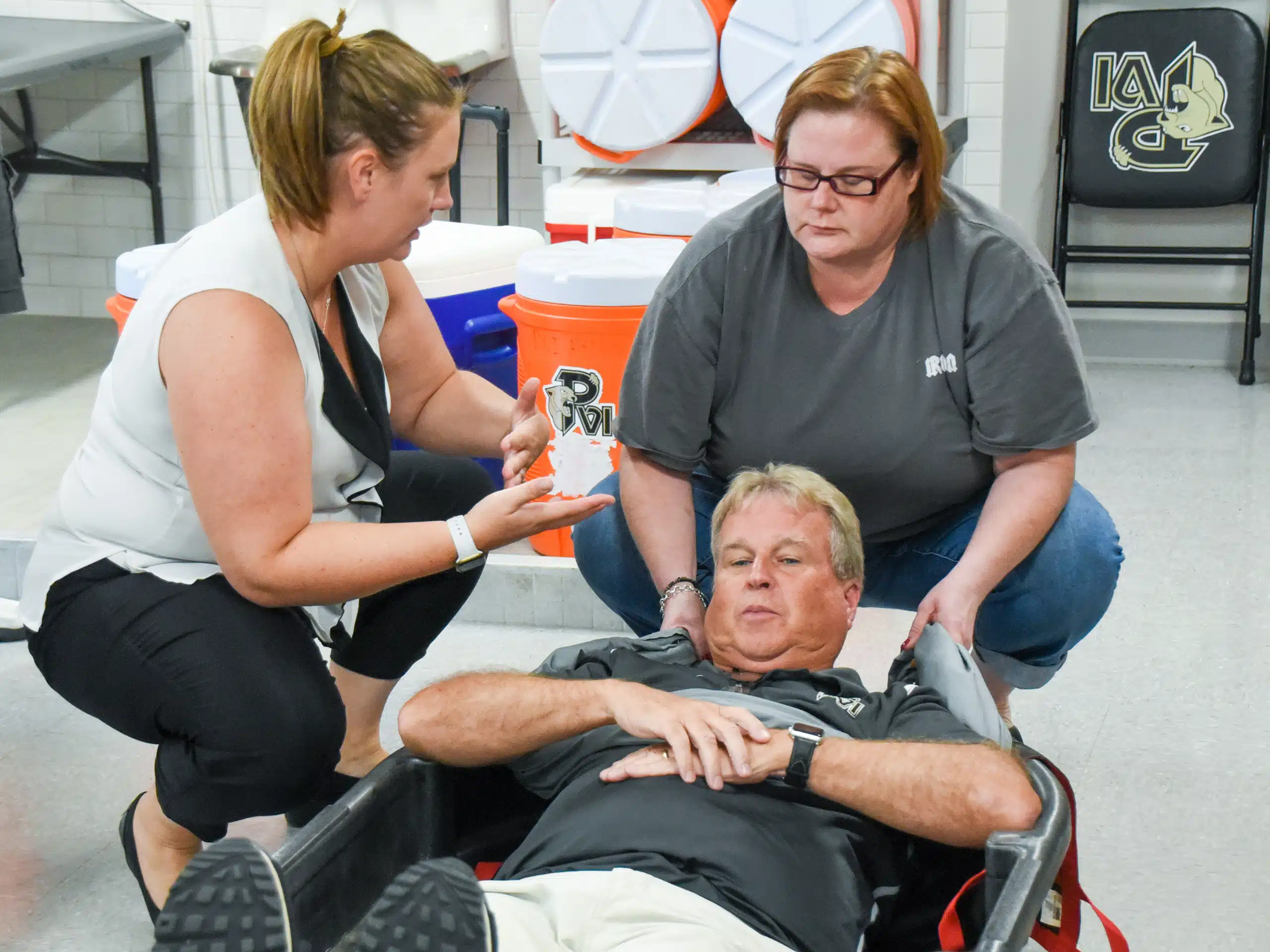
More than 10 athletic directors and nurses from diocesan and local high schools attended a training at St. Paul VI Catholic High School in Chantilly last month. Some dozen additional nurses and school staff attended via Zoom.
Annemarie Francis, an athletic trainer at Saint John Paul the Great Catholic High School in Potomac Shores, and Beth Bostwick, diocesan Office of Catholic Schools’ School Health and Wellness Coordinator, have worked for more than two years on adoption of best practices to prevent and treat exertional heat illness, or EHI.
“Youths and adolescents are vulnerable to the heat, especially if they are not physically fit, and are not acclimated to being and exercising out in the mid-Atlantic heat,” Francis said. “Having appropriate policies, procedures, weather monitoring, educational and prompt medical response efforts in place, mitigates those heat illness related risks.”
Most diocesan high schools are members of the Washington Catholic Athletic Conference (WCAC). To complement WCAC’s best practices, Francis and Bostwick organized a diocesan-wide training session on best practices to prevent, diagnose and treat EHIs.
“It was clear we had an opportunity to enhance and harmonize our practices across the four diocesan high schools,” Bostwick said. “It’s been a lot of months of communication with the high school athletic directors toward the common goal of protecting student athletes from heat illness and the implications of damage to their bodies if they’re found to not be exercising in an appropriate way.”
University of West Virginia Assistant Professor Samantha Scarneo-Miller spoke on best practices to avoid and treat heat stroke. Scarneo-Miller is also a speaker for the Korey Stringer Institute. The nonprofit was founded after Minnesota Vikings football player Korey Stringer died during training camp in August 2001. Today, the institute provides research on preventing heat stroke in sports while maximizing athletic performance.
Scarneo-Miller said she is determined to spread awareness to trainers and parents.
“Exertional heat stroke is 100 percent survivable with proper recognition and care,” Scarneo-Miller said.
She listed the four different types of EHIs: exertional heat cramps; exhaustion; syncope, or fainting; and heat stroke. Of the four, only exertional heat stroke is fatal.
Exertional heat stroke occurs when the body is no longer able to thermoregulate or stabilize its internal temperature. If the patient’s temperature is over 105 degrees Fahrenheit, the health care professional should diagnose exertional heat stroke and immediately immerse the patient in ice water, Scarneo-Miller said. Once the patient’s temperature reaches 102 degrees, he or she may be removed from the tub and transported to the hospital.
Depending on where you live, your body is acclimated to a different level of heat stress, Scarneo-Miller said. The Washington metro area is in heat category three, “which is the hottest portion in the United States,” she said.
Bostwick said that diocesan high schools focus on prevention of heat illness and stroke by consistently taking into consideration athletes’ physical history and hydration status, and by conducting routine temperature checks in environments where athletes are active. School staff use a wet bulb globe thermometer, which measures the heat stress in direct sunlight by taking into account temperature, humidity, wind speed, sun angle and cloud cover. If the specialty thermometer is not available, a heat index reading is taken before athletes practice. A heat index takes into consideration temperature and humidity. These readings are compared to charts that help the athletic trainer and coach determine how best to alter practices, games and activities for the safety of student athletes.
The training reminded attendees to prioritize heat exhaustion prevention at their schools. Paul VI Head Athletic Director Ken Kuberski said that all diocesan schools should standardize these best practices, so all athletes receive the same care.
“When a kid goes down on the field, we don’t see blue and white, we don’t see burgundy and gold,” he said. “We see an athlete who’s injured.”
Harvey can be reached at [email protected].