Next year, 10 million students in the U.S. will be eligible to use public funds to attend Catholic schools. Fueled by favorable court rulings, legislative victories and the increasingly popular parental rights movement, a growing number of states are embracing greater school choice policies. It’s good news for Catholics, said Nicole Stelle Garnett, an associate dean for the University of Notre Dame School of Law, but hurdles still remain.
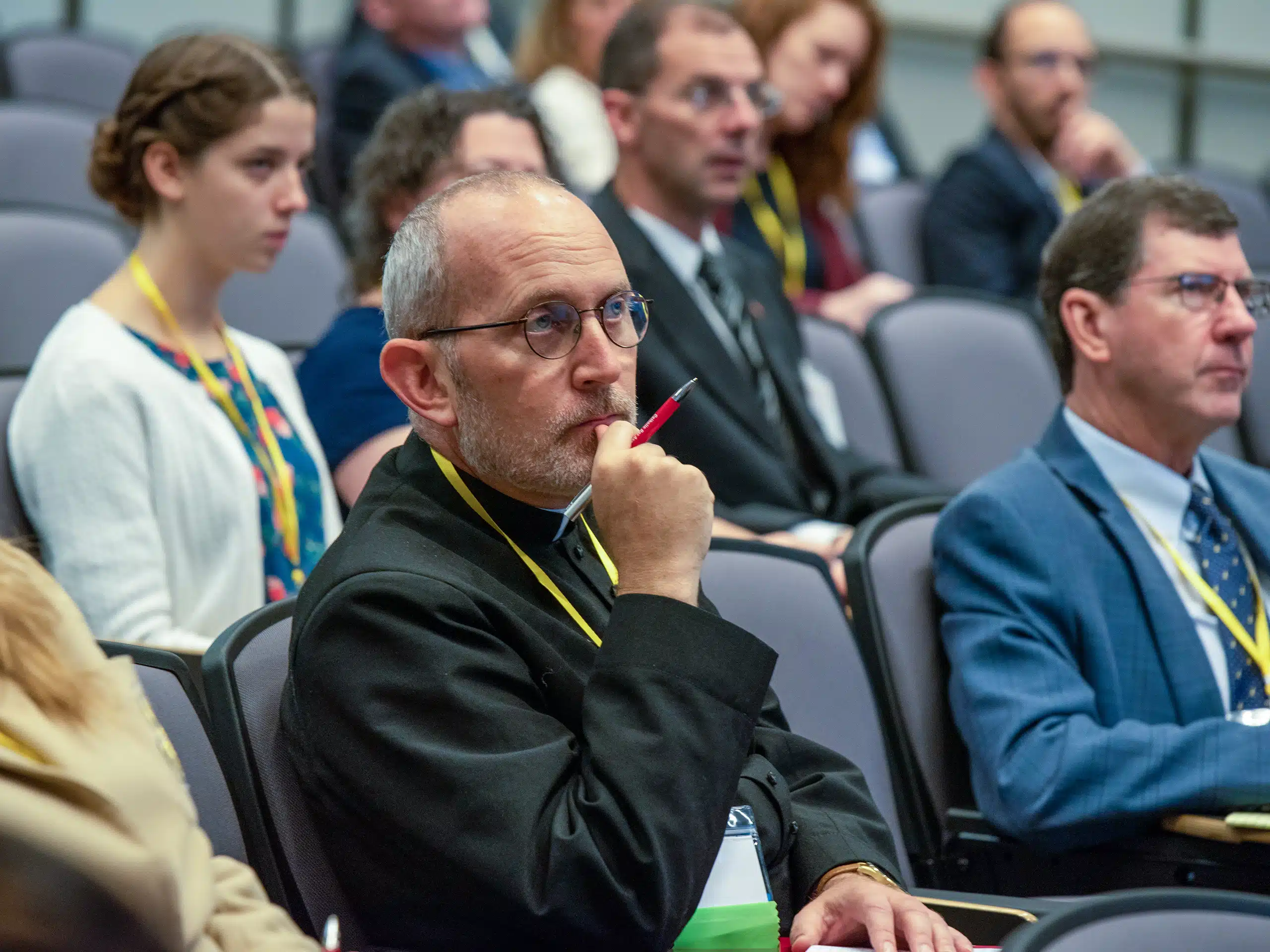
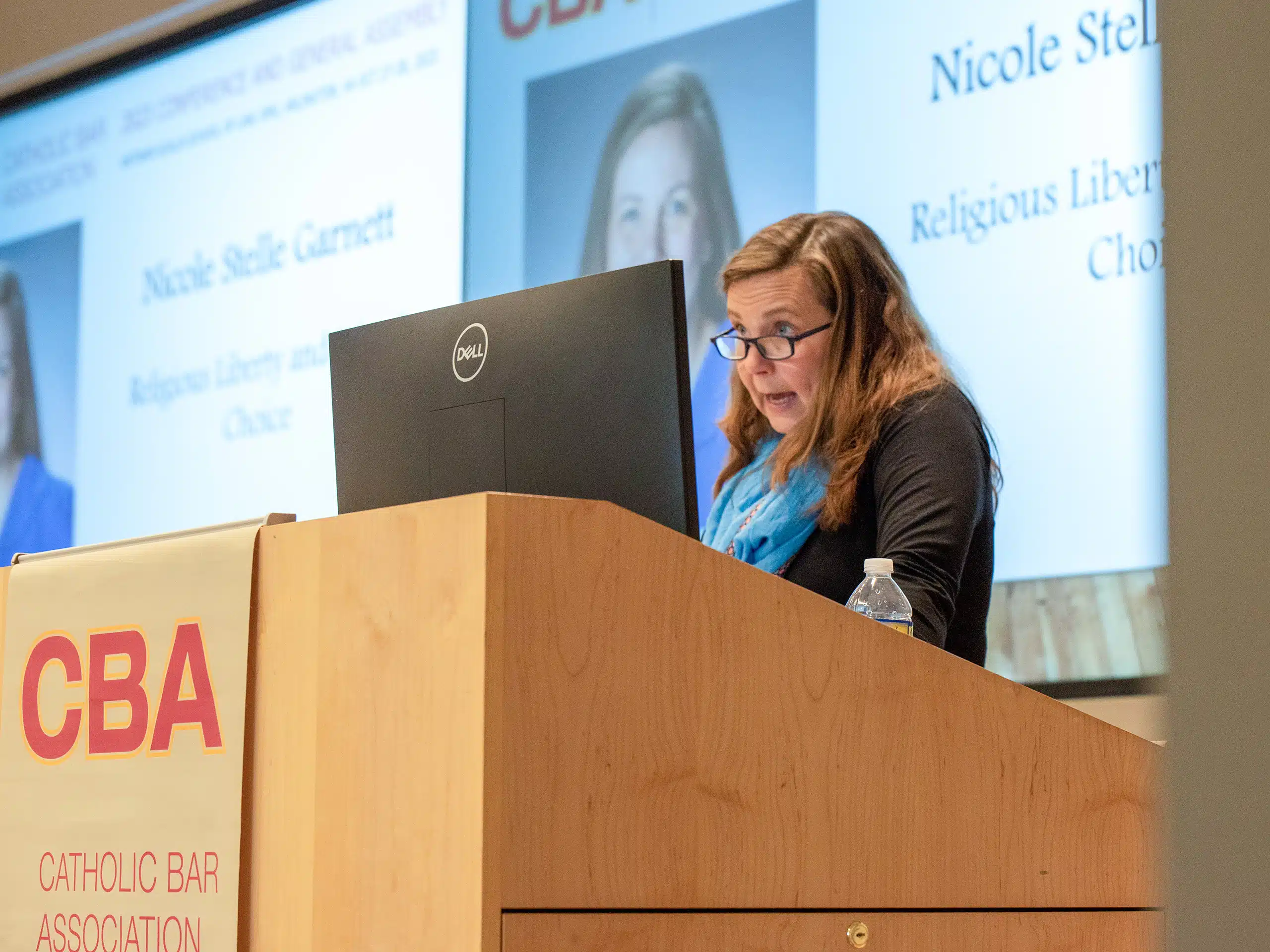
Garnett addressed lawyers gathered for the Eighth Annual Conference and General Assembly of the Catholic Bar Association at the Antonin Scalia Law School in Arlington Oct. 28. The event was co-hosted by the local Arlington diocese chapter, the St. Thomas More Guild for Legal Professionals.
Recent Supreme Court decisions have strengthened protections for religious liberty by making clear that the government may not exclude religious institutions and schools from publicly available benefits or school choice programs, said Garnett. As Chief Justice John Roberts noted in the 2020 Espinoza v. Montana Department of Revenue decision, “A state need not subsidize private education. But once (it does), it cannot disqualify some private schools solely because they are religious.”
Virginia does not have a state-funded voucher program, but it does have the Education Improvement Scholarships Tax Credit, which allows individuals and corporations to receive a 65 percent state income tax credit for donations made to an eligible scholarship foundation, such as the Arlington diocese’s scholarship programs. In fiscal year 2019, EISTC accounted for $10.9 million in tax credits and supported 4,710 scholarships, according to the Virginia Parents Coalition, of which the diocese and the Virginia Catholic Conference are members.
However, nationwide, parental choice programs are growing. Last month, North Carolina became the ninth state in two years to adopt a universal parental choice program, said Garnett. Now, all North Carolina students will be eligible for the program regardless of income, though the scholarship amount will be based on household income, according to the North Carolina State Education Assistance Authority. Students also do not have to be previously enrolled in public school to be eligible for the scholarship.
“Arizona, Arkansas, Florida, Iowa, Utah and West Virginia now have education saving accounts programs open to all,” said Garnett. “Oklahoma has a universal tax credit program, Ohio has a universal voucher program, and in Indiana, the family income ceiling for the voucher is set so high that it’s nearly universal.”
While these developments are encouraging, challenges remain, said Garnett. “It’s important to keep in mind that one reason the court is having to decide religious liberty cases is because the government keeps singling out religious believers for unfavored treatment,” she said.
Garnett noted that Colorado recently prohibited religious preschools from receiving public funds that secular private schools were eligible for as part of a Universal Preschool Program. Religious preschools sued, including two preschools in the Archdiocese of Denver, saying in a press release that, “St. Mary’s and St. Bernadette’s cannot participate in the program because they prioritize the admission of Catholic families and have religious expectations for the teachers who operate their ministries.” Fortunately, just days ago the U.S. District Court in Colorado held that the conditions placed on the religious schools for participation in the program violated the free exercise clause of the First Amendment.
There are many things Catholics should do to support Catholic schools in a culture that is increasingly skeptical of religion, said Garnett. “Pray, of course, and redouble our efforts to strengthen and sustain our Catholic institutions, especially our Catholic schools, which began in a spirit of protest and have always served as an alternative to public schools hostile to faith values,” she said. “We must evangelize and not apologize for our beliefs. And as always, we must not lose hope.”
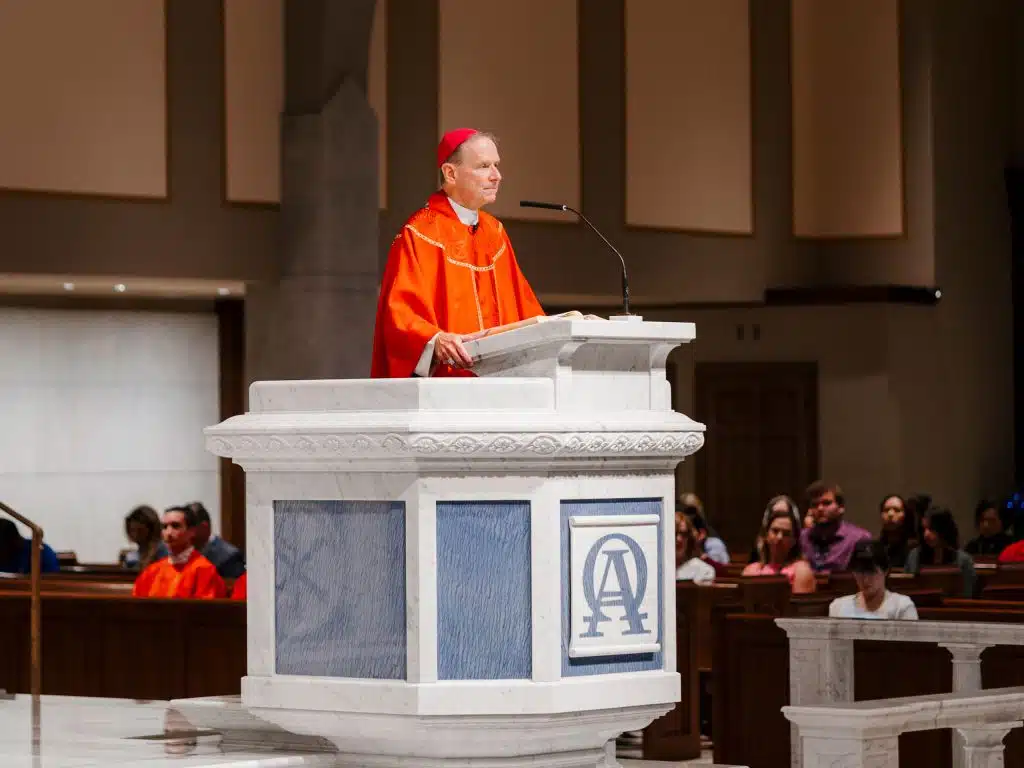
Garnett’s was one of many sessions at the CBA conference, including sessions on religious freedom after the sexual revolution, the rights of women, and the persecuted church in China and Hong Kong. At the conclusion of the conference, Bishop Michael F. Burbidge celebrated a Red Mass for the community at the Basilica of St. Mary in Alexandria. Luke Lafferre, a civil litigator from West Virginia and the outgoing president of the CBA, said he enjoys the mix of education, fellowship and spirituality at the annual conference.
For years he had been looking for a Catholic lawyers organization, and he was glad to find the CBA online. “I thought there ought to be a way for like-minded lawyers to get together, and to pray together, and to talk about spiritual and social issues. That’s something that’s kind of hard to find in West Virginia as the Catholic population is very small,” he said.
“We’ve always had excellent presentations, mainly, but not always, to talk about legal issues,” he said. “Praying with other lawyers at Mass and at other liturgical events has been spiritually enriching for me. It’s also good to know on an interpersonal level that other people share the same concerns and the same interests that I do.”
Amy McInerny, director of the diocesan Office of Respect Life and a member of the St. Thomas More Guild, felt honored that their local organization hosted the conference. “The speakers and the fellowship were amazing. We came away refreshed and recharged to live our vocations as lawyers,” she said. “I hope this conference has made more legal professionals in the Diocese of Arlington aware of our local guild and that they will join us in this great community.”