
America in 1924 was a difficult and often discriminatory environment for Catholic Irish Americans, and there was little enthusiasm to recognize their contributions by erecting monuments honoring them in the nation’s capital.
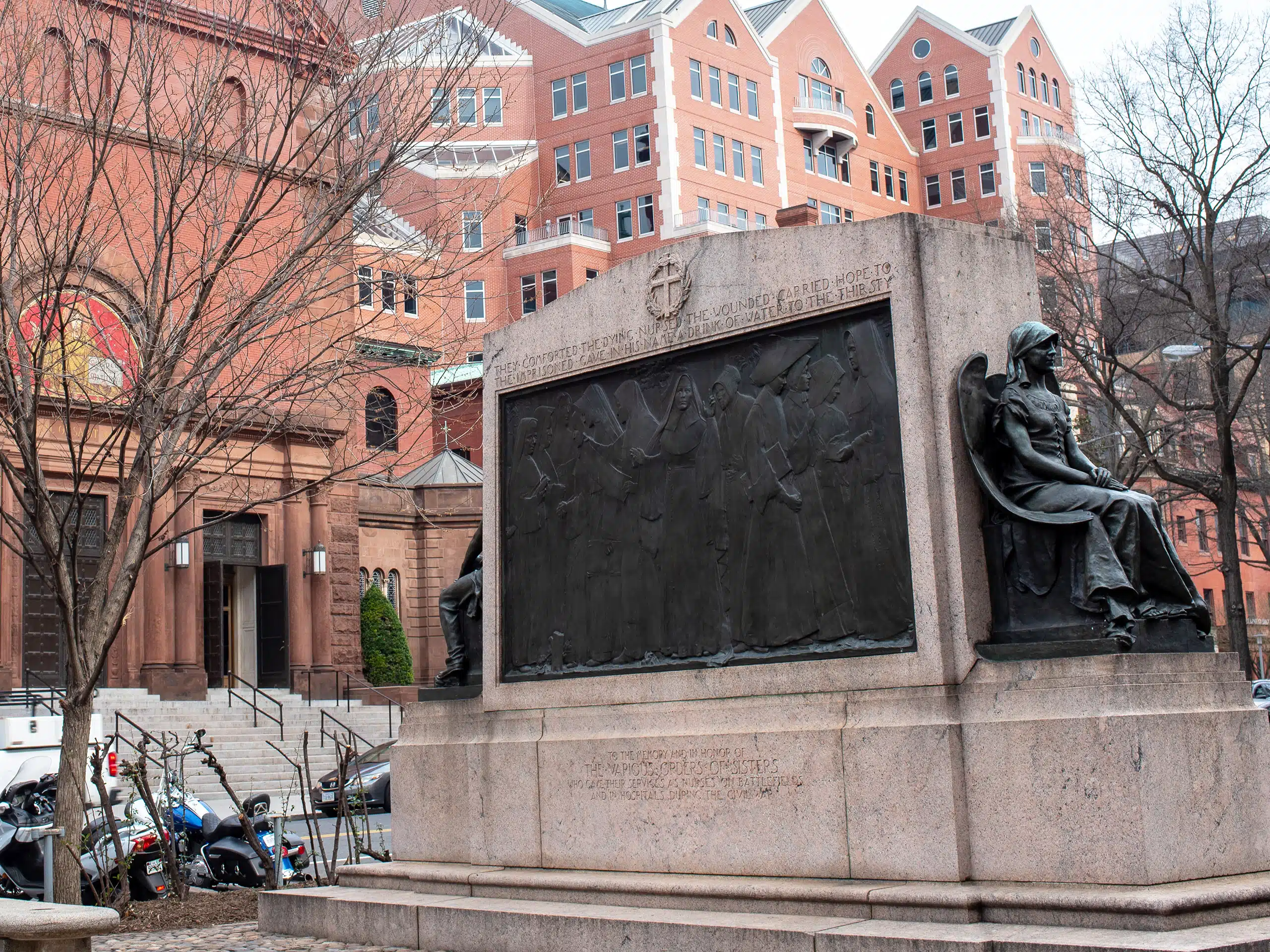
Few Catholic monuments exist today in Washington, but the “Nuns of the Battlefield” monument, in the shadows of the Cathedral of St. Matthew the Apostle, has stood as a symbol of Christian love and patriotism for 100 years.
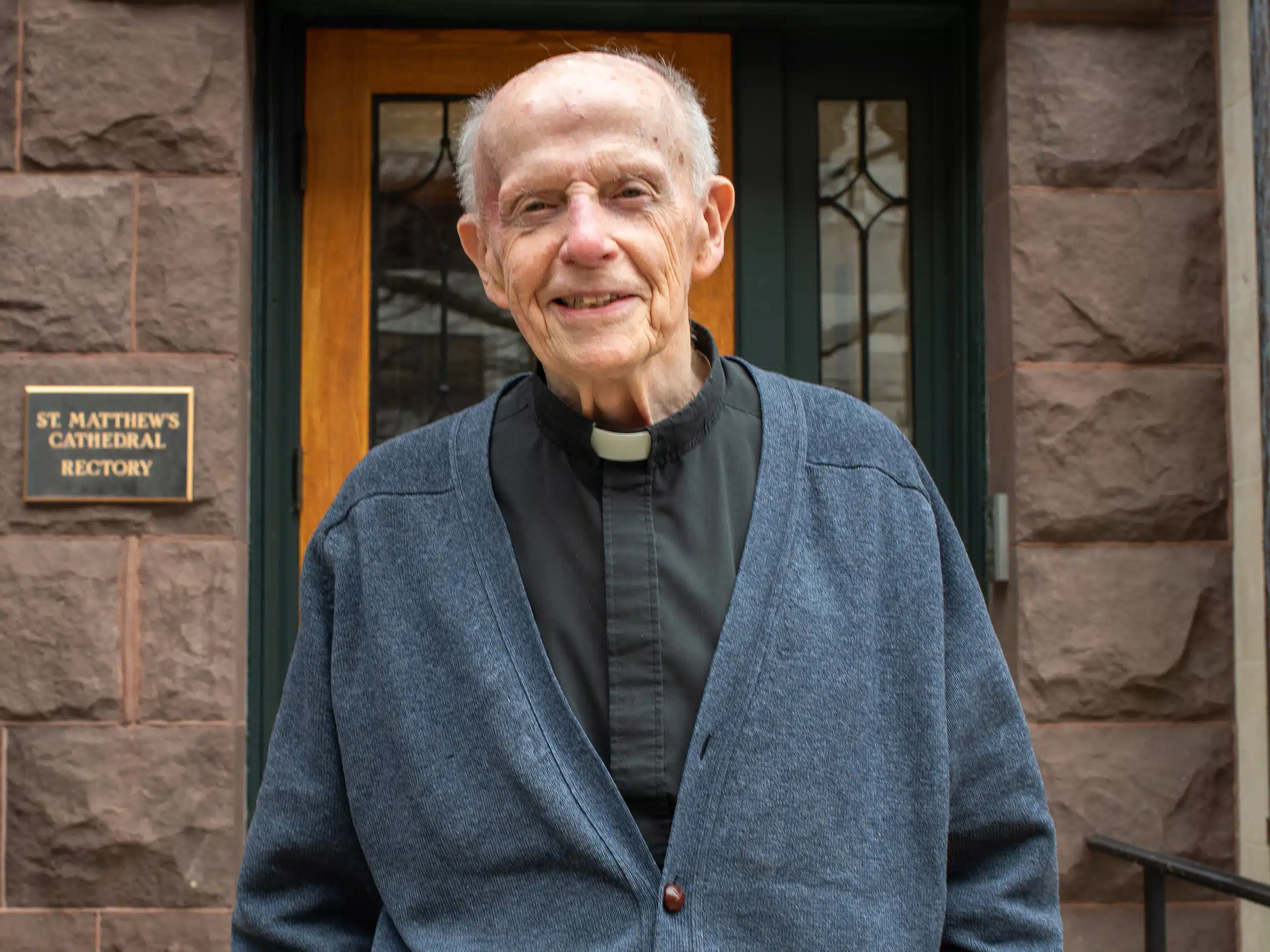
“They probably didn’t stand out as heroines,” said Father John “Jack” Hurley, a Massachusetts-born Irish priest, now retired and in residence at the cathedral. “They were following in their call, as nurses and as Catholics.”
Located in Northwest Washington in front of the cathedral, between Rhode Island Ave. and M St., the monument honors the nuns of different orders who cared for wounded and sick soldiers from both sides during the Civil War.
The focus of the statue is a large bronze panel depicting the life-sized figures of 12 sisters wearing various habits. At each end of the monument are bronze figures. One is an angel of patriotism and the other is a figure of a woman representing the angel of peace. The inscription above the panel reads, “They comforted the dying, nursed the wounded, carried hope to the imprisoned, gave in his name a drink of water to the thirsty.”
The women’s auxiliary branch of the Ancient Order of Hibernians battled the War Department for a decade to have the monument erected. The patriotism of Irish Americans was openly questioned during World War I and publicly honoring them as heroes was a struggle. “Particularly the ones coming recently from Ireland,” said Father Hurley. “They recognized discrimination that broke out in the civil war in Ireland in the 1920s.”
After lengthy debate on the location of the monument, designed by Catholic Irish sculptor Jerome Connor, it was unveiled Sept. 20, 1924. Large crowds are expected for a special Mass Sept. 24 at the cathedral and other celebrations for the 100-year anniversary.
But the “Nuns of the Battlefield,” a small but important part of Catholic American history, is on display every day, on one of Washington’s busy street corners. “It can’t be missed these days,” said Father Hurley. “In spite of a lot of misconceptions of what contributions the church made.”