
Is successful fatherhood an art or a science?
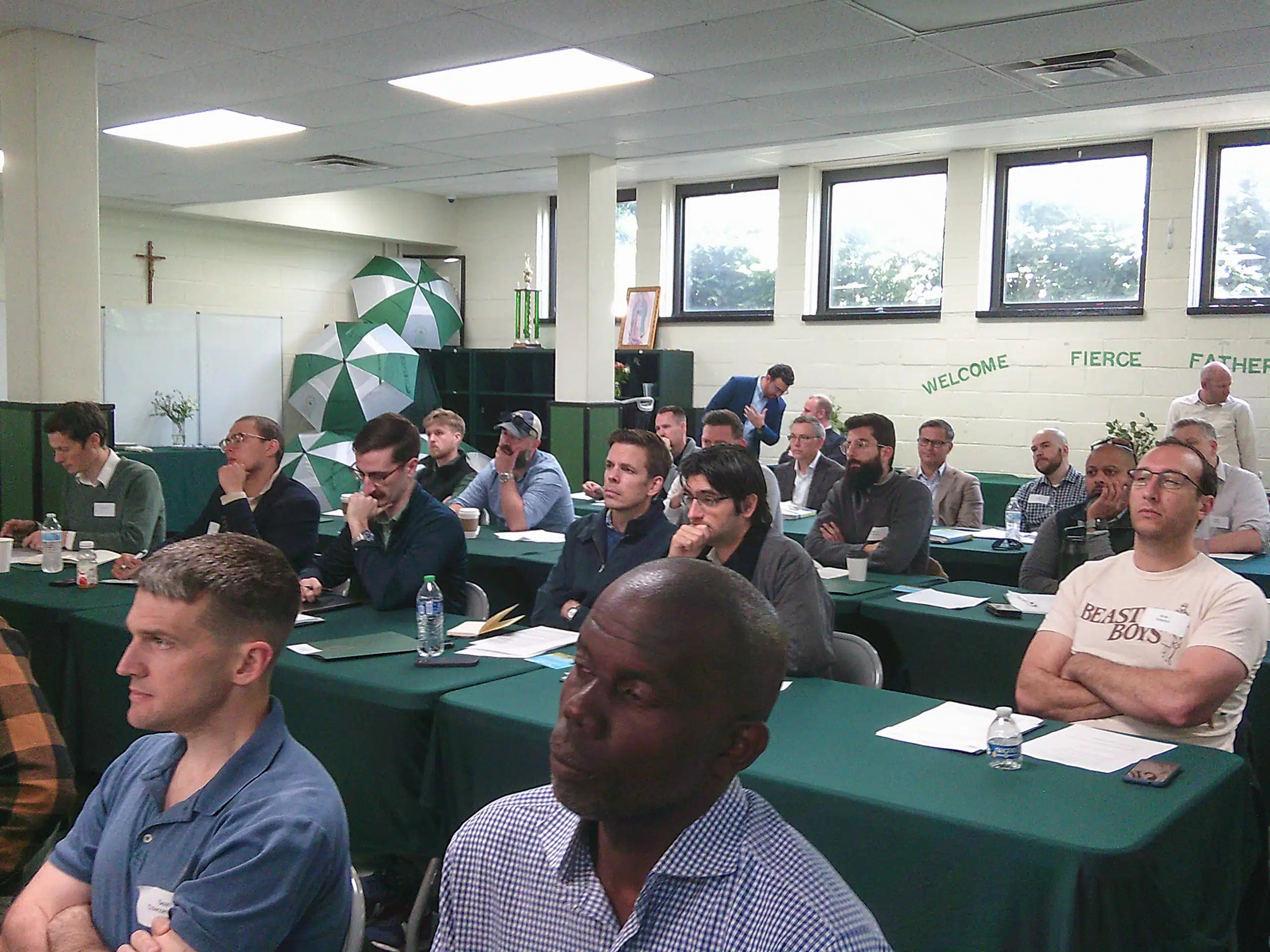
For about 75 current and future dads at the “Fierce Fatherhood” conference at St. Rita School in Alexandria May 11, the answer was a little of both, but also something more. Fatherhood, they agreed, must first and foremost be a vocation.
“My goal is to get my kids to heaven,” said guest speaker Pat Kilner, author and motivational speaker. “The question always is ‘Does what I’m doing (as a dad) get me there?’ ”
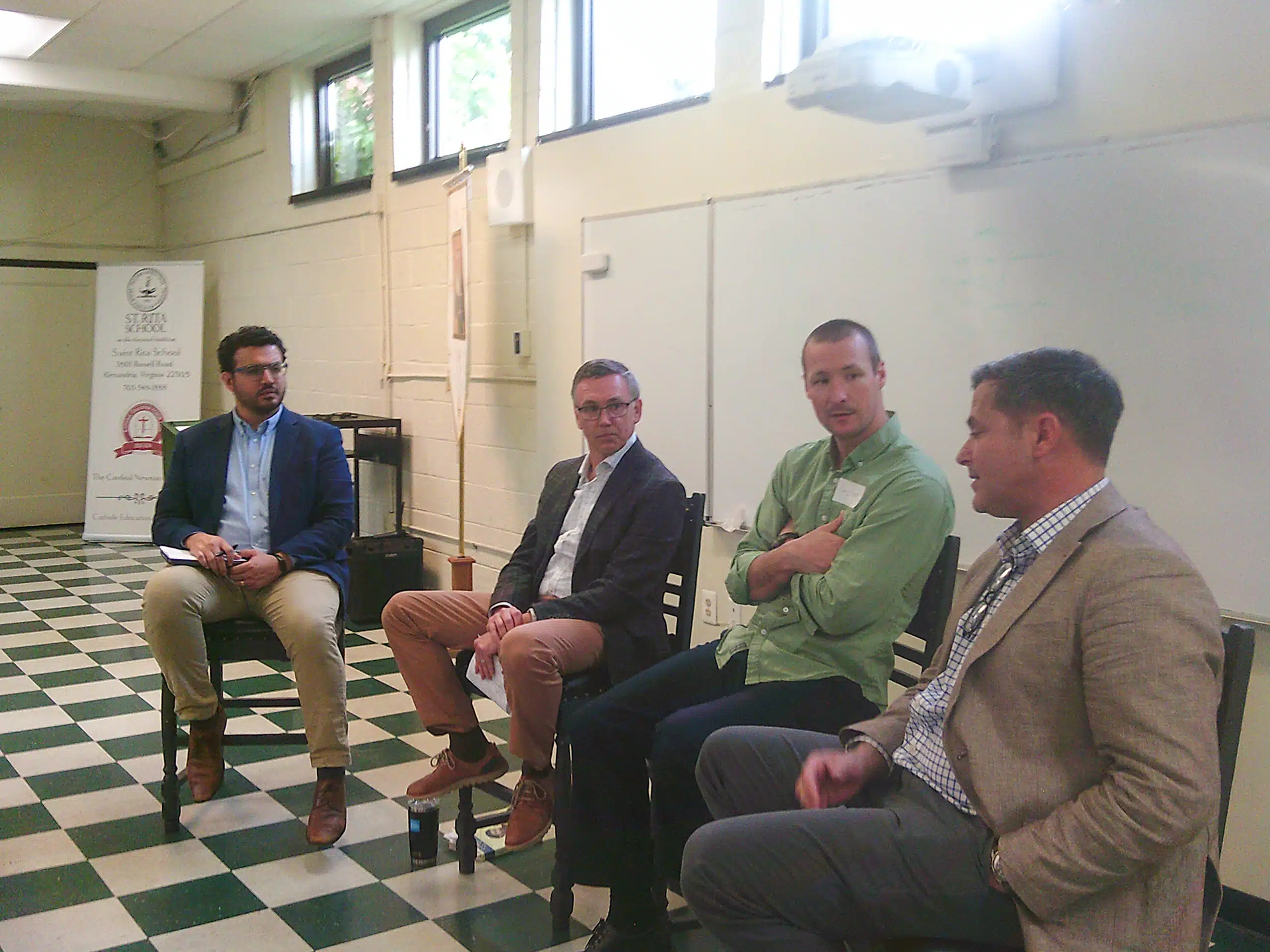
The conference, organized by fathers of school-age children at St. Rita’s, brought together experts and current and future dads to share their experience, strength and hope in what several noted are especially trying times for men leading traditional families.
“We’re living in a post-Christian and post-Catholic environment in this country,” said Father Christopher P. Christensen, pastor and also a guest speaker. “The people who run the show don’t want to reckon with Catholicism, (which is) so much at odds with contemporary culture.”
Speakers suggested several ways that dads can push back.
Timothy P. Carney, columnist for the Washington Examiner and senior fellow at the American Enterprise Institute, urged fathers to resist “safetyism,” the modern notion that children’s play time must be supervised and constantly monitored for signs of “childhood anxiety.”
“What kids need is to be set free,” said Carney, father of six and author of “Family Unfriendly: How Our Culture Made Raising Kids Much Harder Than It Needs to Be.”
He argued for placing kids in mixed age play groups, saying the advantages outweigh the risks of an “awkward” encounter, which society “now calls a ‘trauma.’ ”
Parents, he continued, need to stop seeing a child as an “atomized bundle of rights” who must give permission before parents can plan a play activity.
“The world sees the individual (that way),” Carney said. “(But) we must become counter-cultural.”
Carney also argued against giving children smartphones or other access to social media. “They’re dangerous,” he said, and “you’ll probably regret it if you do.”
Father Christensen suggested that fathers strive to improve their own spiritual development by leading family rosaries, attending weekday Mass and through the daily reading of Scripture.
“(Successful fatherhood) begins with personal holiness,” Father Christensen said. “You can’t give away what you don’t have.”
Dads also must make an effort to initiate important conversations, even unpleasant ones, on a regular basis, the priest added. That way, when the “really important conversation comes along,” it is easier to handle.
Kilner, author of “Find Your Six,” urged the assembled dads to “build a family culture” that is careful to focus not just on children but on their mother. For his family, this includes a husband-and-wife date night once a week and family dinner every day at 6 p.m. where each family member shares details of the day.
He also argued that the Washington area’s emphasis on placing young athletes on elite but time-consuming travel teams is a “massive impediment to family culture.” Travel teams cut into weekends and Mass schedules and reduce parents’ availability to their other children, he noted.
By requiring a year-round commitment, he continued, some teams force players as young as 10 to forego the opportunity to try a second or third sport.
“Especially if you have more than two kids, you’ll have to ignore some of them,” said Kilner, founder and CEO of Kilner Kirk Real Estate in Potomac, Md., and the father of eight. “Think about a different business model.”
After the speakers had finished, conference participants shared parenting practices that have worked for them.
Daniel Ciatti said he makes a point after arriving home from work of checking in with each of his three school-age children. “I establish that I’m home and I’m present,” he said.
Another dad, concerned about the isolation that his wife felt as a stay-at-home mom, invited her to join a social outing he organized for prospective clients. It made her feel that she was a “confidante” in the business side of his life, he said.
With a similar result in mind, the same dad brought his 8-year-old son to a client meeting. Such meetings can work fine, he said, “depending on the client.”
St. Rita’s parishioner Chris Lowe urged fellow fathers to “pursue the good” and not to make “avoiding evil the highest virtue.”
Strive for lofty goals but “don’t get wrapped up in results,” Lowe said. “Just serve, do the hard things correctly (and accept) that you’re going to be plunging the toilet once a week.”
It fell to St. Rita’s dad Tomas Bethencourt, conference organizer and father of four ages 8 and under, to sum up what the program taught him about his vocation.
“You’re never really off the clock as a father,” Bethencourt said. “It’s a gig you learn on the job.”
Willing is a freelancer in McLean.