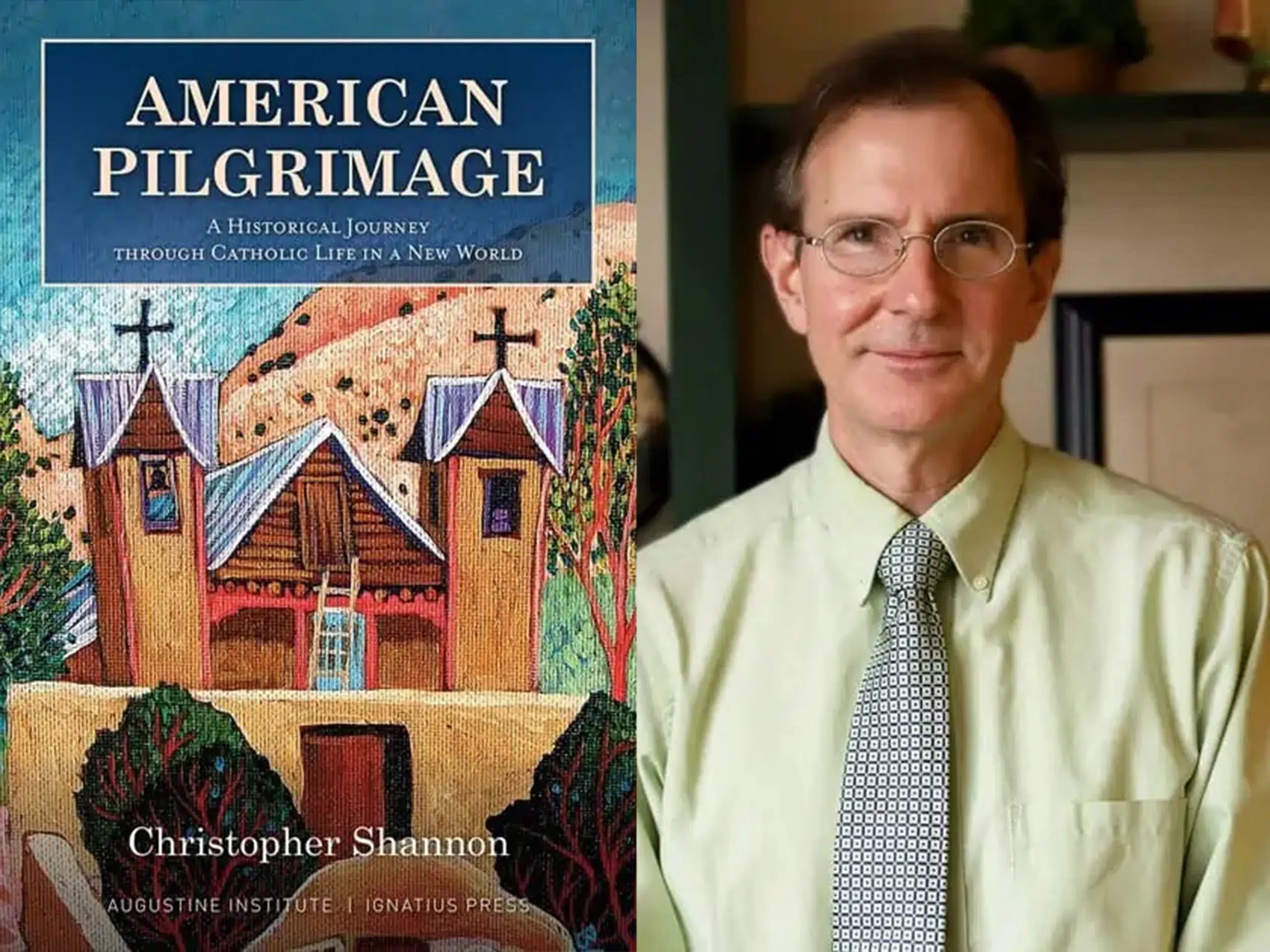
Life is full of challenges, but before you reach for a self-help book, look to the past, says Chris Shannon, a history professor at Christendom College in Front Royal. His new book, “American Pilgrimage,” examines the history of the Catholic Church in the United States. “The church isn’t just some set of teachings that we follow, it’s about being a people — the people of God,” he said. “Every age provides problems, but what we can do in every age is look back to see how our ancestors coped with life. Try to recreate the best of it in our own time.”
Learn about some of the challenges the church faced from within and without throughout the centuries.
Ethnic tensions within the church
In the early years of the United States, Catholics were typically English-speaking Irish Americans. But from the 1870s to the 1920s, millions of immigrants from countries such as Poland and Italy brought their languages and customs into the Catholic Church in the U.S. The newcomers frustrated Irish American efforts to foster a unified church, said Shannon. “The Irish wanted them to be one way — the way the Irish had worked out being Catholic,” he said. “There was a concern that the differences in ethnic diversity were making the church look more foreign and that was only adding to the pre-existing anti-Catholic hostility.”
Established Catholics were turned off by some of the more emotional and publicly expressive devotions such as the Our Lady of Mount Carmel festival held in New York City by southern Italian immigrants. Some clergy thought that the showy displays didn’t translate into regular church attendance or tithing, either.
Dioceses built more churches for the arriving immigrants but cultural divisions complicated matters. “Ethnic groups demanded their own ethnic or ‘national’ parish even when a geographical parish already existed,” wrote Shannon. For example, in South Bend, Ind., the Polish built their own parish church, St. Hedwig, right across the street from St. Patrick Church.
German Catholics, many of whom had been in the country longer, especially chafed under the largely Irish episcopacy. “In 1886, the vicar general of the Archdiocese of Milwaukee traveled to Rome to submit a formal, written protest, known as the ‘Abbelen Memorial,’ requesting that ‘German parishes shall be entirely independent of Irish parishes,’ ” wrote Shannon. Rome did not accept it.
Some Polish Catholics broke away, forming the Polish National Catholic Church. “Even at its peak, the Polish National Catholic Church never attracted more than 5 percent of Poles in America, yet its existence was a constant reminder of the schismatic potentials of ethnicity,” said Shannon.
Anti-Catholic bigotry
Anti-Catholic prejudice flared up throughout the 1800s, sometimes through political movements, such as the nativist Know-Nothing party, and at times violently. One flash point was education. In public schools, teachers read the King James Bible — a translation of the Bible that Catholics opposed. Requests that Catholic students be allowed to leave the classroom during the daily reading were seen as an attack on the Bible.
When the archbishop of Philadelphia successfully negotiated for this concession in 1884, tensions were stoked and an anti-Catholic rally turned violent. Gun battles lasted three days, St. Michael Church and St. Augustine Church were burned down and several people were killed.
Some Catholics believed the solution was to create more parochial schools. But this approach was threatened, too, when a law was passed in Oregon requiring all children to attend public school. The Knights of Columbus, who had become a de facto anti-defamation league, writes Shannon, directed funds to the legal defense team working on the Oregon case and other challenges to Catholic schools around the country. In 1925, the Supreme Court in Pierce v. Society of Sisters overturned the Oregon compulsory education law.
A new suburban paradigm
In the decades following World War II, suburbia grew and flourished. Popular television shows such as “Leave It to Beaver” celebrated suburban living. Many Catholics left their urban enclaves for the suburbs, creating a new dynamic between them and their faith community.
“The Catholic Church, unlike American Protestantism, traditionally understood faith as first communal, then individual; the nearly separate world sustained by the vast infrastructure of the urban parish was a testament to that belief,” wrote Shannon. “The suburbs cut Catholics off from that world and placed them into a social setting where they mixed much more freely with non-Catholics. The sprawl of suburban subdivisions and dependence on the automobile made the walkable parish ghetto impossible.” In some ways, distinctive neighborhood culture was replaced with popular culture.
Shannon believes these and other societal changes still challenge Catholic communities. “Faith without culture is dead and Catholic culture must be rooted in place. For me, the good old days were when people had communities. They recognized their dependence on each other and found strength in mutual dependence,” he said. “This most basic truth is perhaps most difficult to communicate to middle-class, suburban Catholics who have benefited materially from rootless, economic mobility.”
But there’s still hope for modern suburban Catholics if they look for ways to nurture community, said Shannon. “(Urban, ethnic) communities took root in the least likely of places — you’re ripped up from rural Poland and you’re plopped down in Chicago. At first glance that doesn’t look like rich soil for carrying on traditions,” he said. “But they managed.”