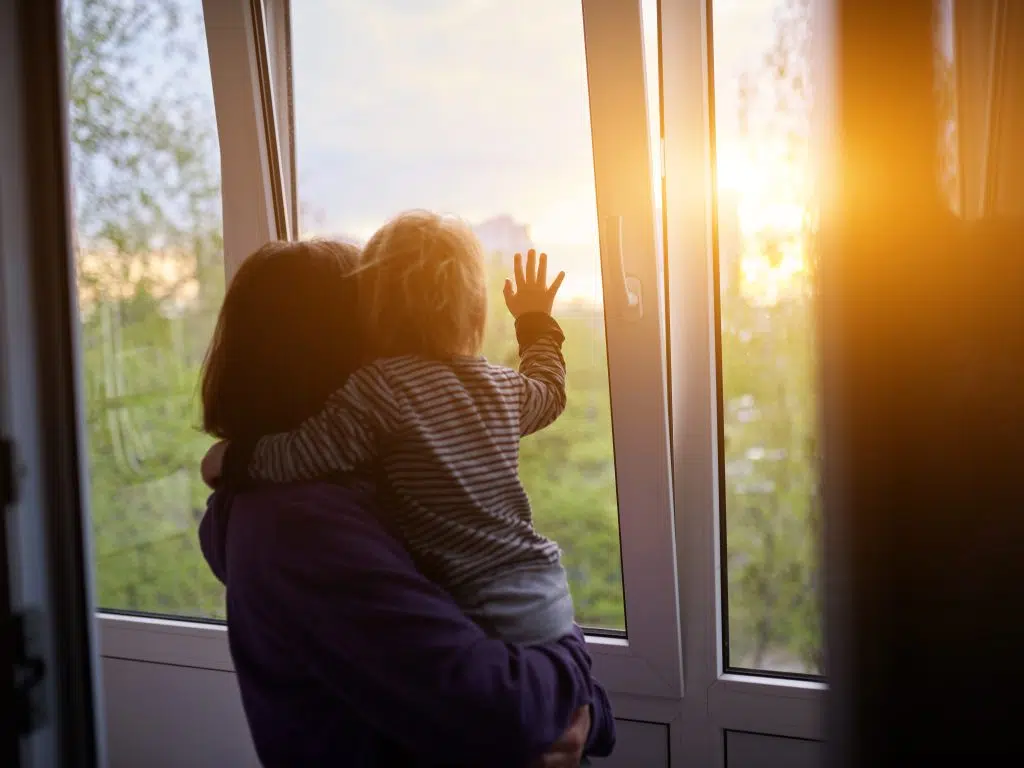
Over the past two years, there have been many opportunities to experience fear and anxiety: a pandemic that brought about changes in structure and routine, loss of life, and uncertainty with jobs and finances, and now a war with worldwide repercussions. Our children have not been immune to the effects of these events. Even before the COVID-19 pandemic, the Centers for Disease Control and Prevention noted that anxiety was on the rise in children and adolescents.
As we shift back to “normal” after the pandemic, children and adolescents are left dealing with the consequences of navigating the high stress of the past two years. Due to social distancing and online learning, many turned even more to social media. While social media allows for some form of connection, it tends to leave children and adolescents feeling more anxious as they try to navigate what are often surface-level relationships and worries about how their online community will judge them. While a certain level of anxiety is developmentally expected, anxiety becomes a concern when it starts affecting our children’s daily functioning.
You may have noticed increased anxiety in your own child or adolescent. Maybe he or she seems to be a bit more easily upset or seems overly tense or withdrawn. Maybe you have noticed changes in eating or sleeping patterns, complaining about school or other activities, more frequent crying, or changes in the way he or she talks about themselves. These behaviors are potential signs of anxiety in children and adolescents.
As parents, it can be distressing to see our children and adolescents experience such strong fears as we wonder how we can best help them. In my work with parents, I always try to remind them that they are the best intervention for their children. The first step we can take if we notice our children experiencing anxiety is to listen and be with them. This may seem too simple, but children and adolescents are too often used to being “talked at.” Asking questions about what is bothering them, about their thoughts and feelings, and what is worrying them allows them space to express fears and concerns. Consequently, those fears and concerns seem less overwhelming as our children experience our attentive presence.
As we listen, it can help to validate their emotions by making empathic statements such as “You’re really scared/worried/etc. because _______.” Statements like this provide connection to children who often feel alone and communicates to them that their experience is important to us. As a dad of five, I have witnessed what happens when I start trying to “fix” the situation that is causing anxiety in my children. They tend to give reasons why my solutions won’t work, or even get more caught up in the very emotions I am trying to alleviate.
When I make space to simply be with them, hold them and say something that acknowledges their emotions such as, “You’re really worried about that” or “That situation with your friend really bothered you,” I have witnessed their tears subside and their bodies visibly relax. I think it is important that we never underestimate the power of presence that we have as parents.
This approach to parenting when your child is suffering anxiety is akin to God’s answer to evil. God did not give a series of answers as to why bad things happen in the world. Ultimately, he gave us himself, sending his Son, Christ, to be with us in our fears and suffering. This love exemplifies the experience of compassion, which means “to suffer with.” Being with and listening to our children, we do what Christ did for us. We enter the pain and suffering of their anxiety to be with them, letting them know they are not alone.
Once we have sat with and listened to our children, we can then provide information, answers, or possible solutions calmly, accurately and in a way that is developmentally appropriate. We can also be upfront if we don’t have an answer, letting them know that you both can find out together.
If you are worried about how your child or adolescent is feeling or acting, don’t hesitate to reach out to your pediatrician or a local mental health provider. If their signs of anxiety are becoming worse, if they start to talk about or engage in self-harm, or talk about suicide, more help is needed. As parents, we may feel alone in dealing with the challenges of parenting.
Neither anxiety in our children, nor seeking help for their needs, indicates a failure on our part as parents. Rather, it is an opportunity to address their wounds. We are the body of Christ, connected to the suffering of those around us, and sharing responsibility for healing those parts of the body that are in great need.
Masson is a licensed professional counselor and director of the IPS Center for Psychological Services, an outpatient mental health clinic affiliated with Divine Mercy University.
Find out more
Among the mental health resources in the Arlington diocese are:
IPS Center for Psychological Services, serving adults with limited availability for children and teens. To set up a confidential phone screening, call 703/418-2111 ext. 1.
Catholic Charities Family Services South Region (Fredericksburg area and south), 703/859-3147; North Region (Springfield area and north), 703/447-9402.
Alpha Omega Clinic, 301/767-1733 ext. 0 for the intake coordinator.