On Easter Tuesday morning, it sleeted.
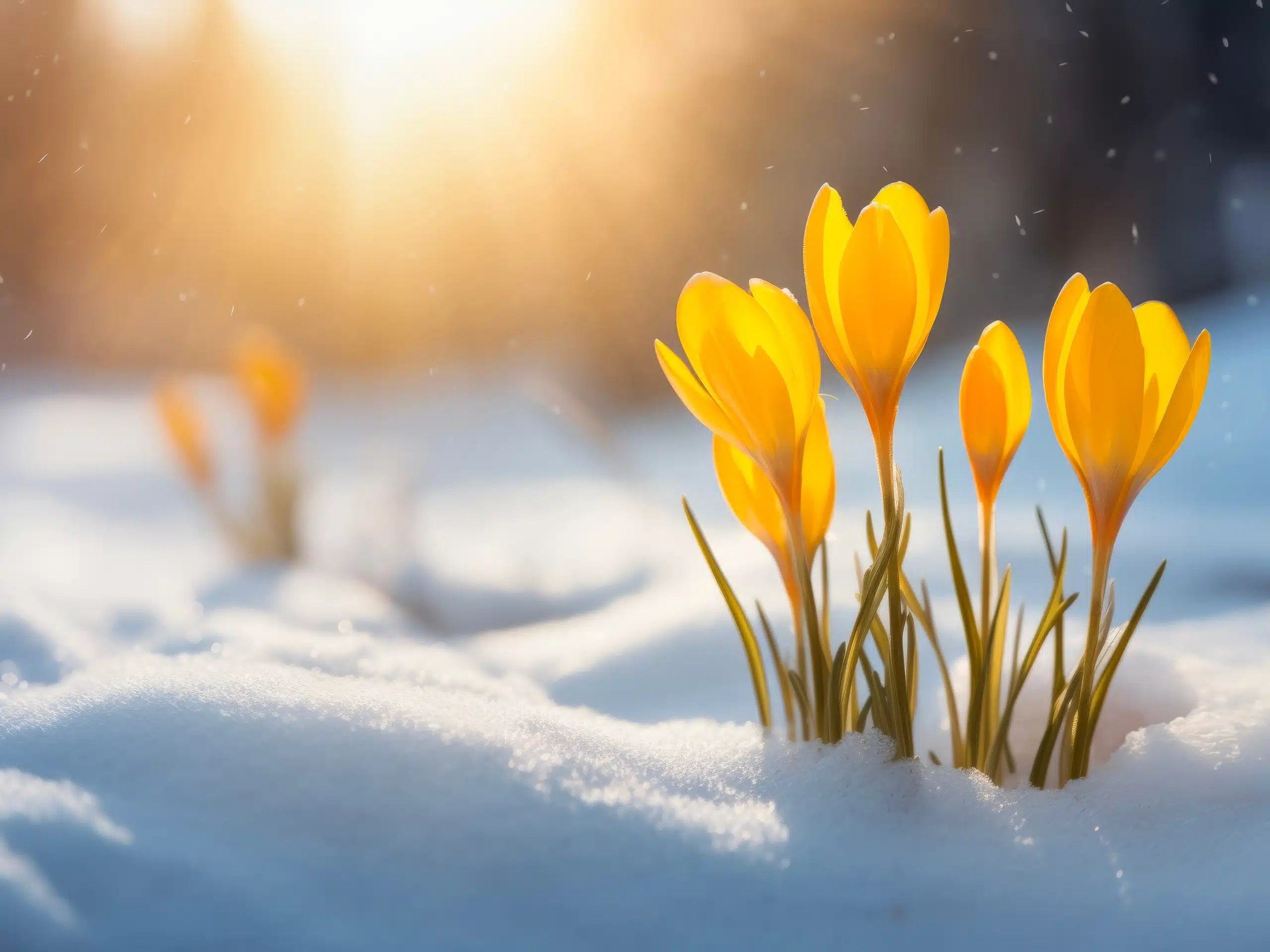
It wasn’t the dramatic, wind-whipped kind of storm that rattles the windows and announces itself with authority, but a softer, almost hesitant sleet — small pellets of ice that bounced lightly across the backyard, tapping against the earth where daffodils are just beginning to bloom. In the front yard, the little blue flowers — arriving unbidden each year, spreading like a memory I didn’t plant but always welcome — were briefly covered by a thin blanket of white.
It was gone in less than half an hour.
By the time I settled back by the kitchen window with my coffee, the sleet had nearly melted entirely into the ground, the blue pushing up again as if nothing had happened, the daffodils still standing, their yellow just beginning to show.
It is still Easter.
Here in New England, Easter does not always arrive with warmth and light and easy alleluias. Sometimes it comes with sleet that startles the morning and disappears just as quickly, leaving behind wet ground and a question: was that winter’s last word, or only a passing interruption?
We want Easter to feel decisive. Victorious. We want the stone rolled away and the light to flood in so completely that there can be no doubt — no lingering cold, no shadow of what came before. But the world around us tells a different story. Spring unfolds slowly here. It hesitates. It advances and retreats. It offers beauty in glimpses and then asks us to wait again.
Perhaps that is why the church gives us a season instead of a single day.
“It is still Easter,” she says, as if she knows how long it takes for the truth to sink in, how slowly our hearts learn to recognize what has been given.
On the morning of the Resurrection, Mary Magdalene stood in a garden and did not recognize Jesus. She saw him, spoke to him, heard his voice — and still thought he was the gardener. In a way, he was. The first gardener of a new creation, standing in the place where death had seemed to have the final word.
She did not know him until he called her by name. Recognition came not in a blaze of glory, but in a moment that was quiet, personal and easily missed if she had turned away too quickly. I think of that as I watch the sleet disappear, and the flowers remain.
Resurrection does not always announce itself the way we expect. It does not always banish the cold in an instant or transform the landscape overnight. Sometimes it looks like daffodils holding their ground while tiny pellets of ice tap against them. Sometimes it looks like blue flowers pushing back through a dusting of white. Sometimes it is there and gone so quickly we wonder if we imagined it at all — until we look again and see that something has changed.
That something is still growing.
We are Easter people, and alleluia is our song. Is it possible that we sing it best not when everything feels bright and certain, but when we choose to believe that the brief return of winter does not undo the work of spring?
The sleet did not last. The flowers did.
And the garden is already being tended by the one, whether we recognize him immediately or not, who makes all things new.
It is still Easter.
Foss, whose website is takeupandread.org, writes from Connecticut.