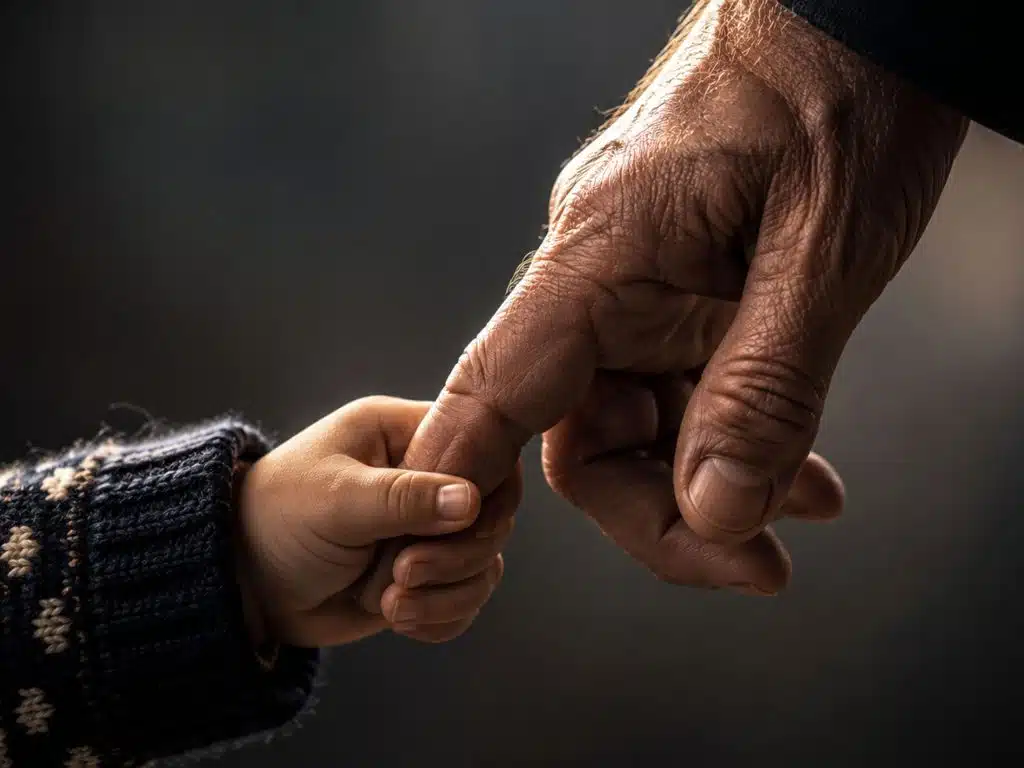
I spent the weekend with my 2-year-old granddaughter. She is utterly delightful and incredibly verbal, and it was a refresher course in fairytales. She knows them all and insists that they run like lovely ribbons through her life.
I remember when happily-ever-after was my narrative. I remember believing that life would unfold in a tidy arc, that the hard parts would resolve and give way to something whole and secure.
But after we’ve lived a good bit of life, we are no longer tempted to believe in fairytales. We know better than to expect the neat resolution, the final scene tied up in a bow. Life does not move that way. It interrupts itself. It wounds in places we didn’t know were exposed.
Life is hard. And then, very often, it is hard again.
And so, the question shifts. It deepens and becomes more honest. Not “How do I live once I am safe again?” but rather, “How do I live when I know, with certainty, that I am not fully safe in this world?”
There are losses that resolve or at least soften the edges. But there are others that do not resolve. They redefine the landscape of your life. A parent dies, and you know you will face that loss again. Relationships fracture. Trust is broken. Work disappears. In these places, the danger does not pass. It becomes part of the terrain.
And still — we are called to live here.
This is where Easter becomes even more important.
The Resurrection of Jesus Christ does not suddenly make the world safe. People still die. Persecution still comes. The apostles themselves will suffer greatly. Resurrection does not remove vulnerability. It transforms how we inhabit it.
Christ rises with wounds still visible. He does not erase them, nor does he conceal them. He invites Thomas to touch them, to see that what was broken is still, in some sense, present. But the wounds do not get the final word. They are no longer evidence of defeat. They are not proof that love failed. They have become something else entirely — places where glory is now revealed.
This is the quiet claim of Easter, and it meets us exactly where we live now, not where we once imagined we would be.
The sad truth is that many of us, after loss, begin to live differently without quite realizing it. We hesitate to invest deeply. We pre-grieve what has not yet been lost. We hold back from joy because we can already feel its ending. Life becomes something we manage carefully rather than something we fully enter.
From the outside, this can look like wisdom. It can resemble maturity or calm acceptance. But over time, something essential diminishes. We are no longer fully alive.
Easter invites us to consider something else.
Please know that Easter will not ask us to pretend that loss did not cost something real and lasting. And it certainly will not promise that nothing more will be taken from us. Instead, it offers a deeper kind of safety: the assurance that we will not be abandoned in what happens, that we will be sustained in what we face and that loss will not have the final word.
And so, the question becomes something different altogether. Can I live fully while knowing I cannot secure the outcome? Can I love what is not guaranteed? Can I allow joy, even when I know it is fragile?
This is not the naiveté of little girl fairytales. It is courage.
The goal is not to return to who we were before we knew how fragile life is. That person did not yet understand the cost of love. The goal is to become someone who knows the cost — and chooses love anyway.
Christ stands before us, risen and still marked, his wounds no longer signs of defeat but of glory. In him, we begin to see that our own wounds, too, need not define the limits of our lives.
Foss, whose website is takeupandread.org, writes from Connecticut.