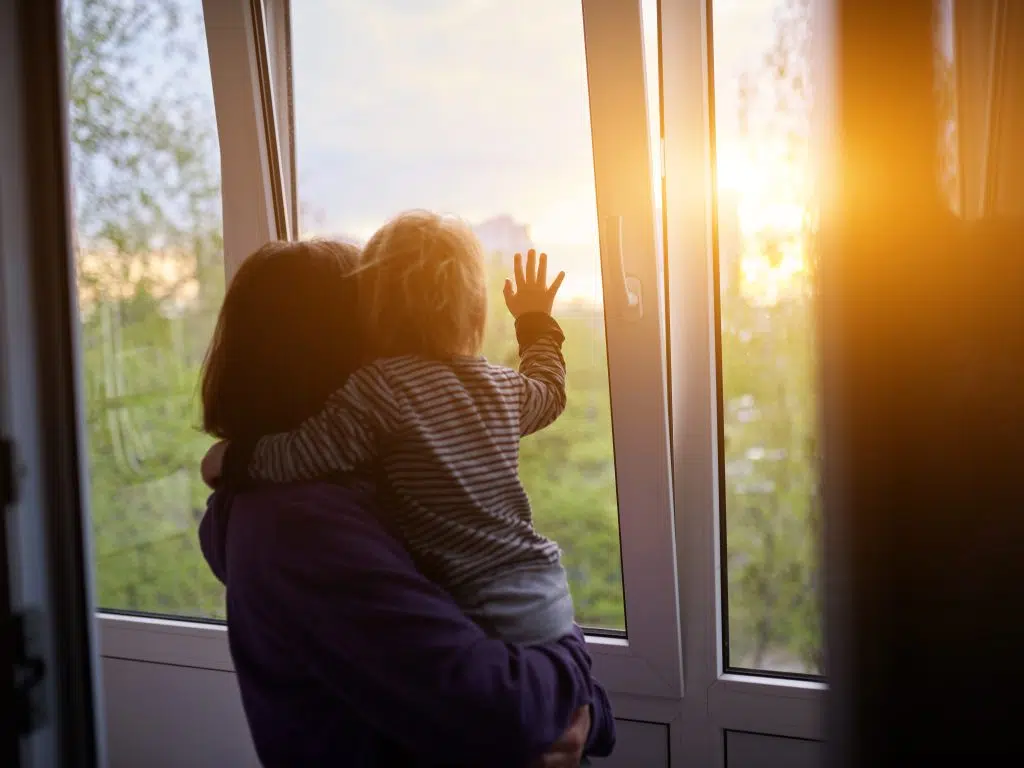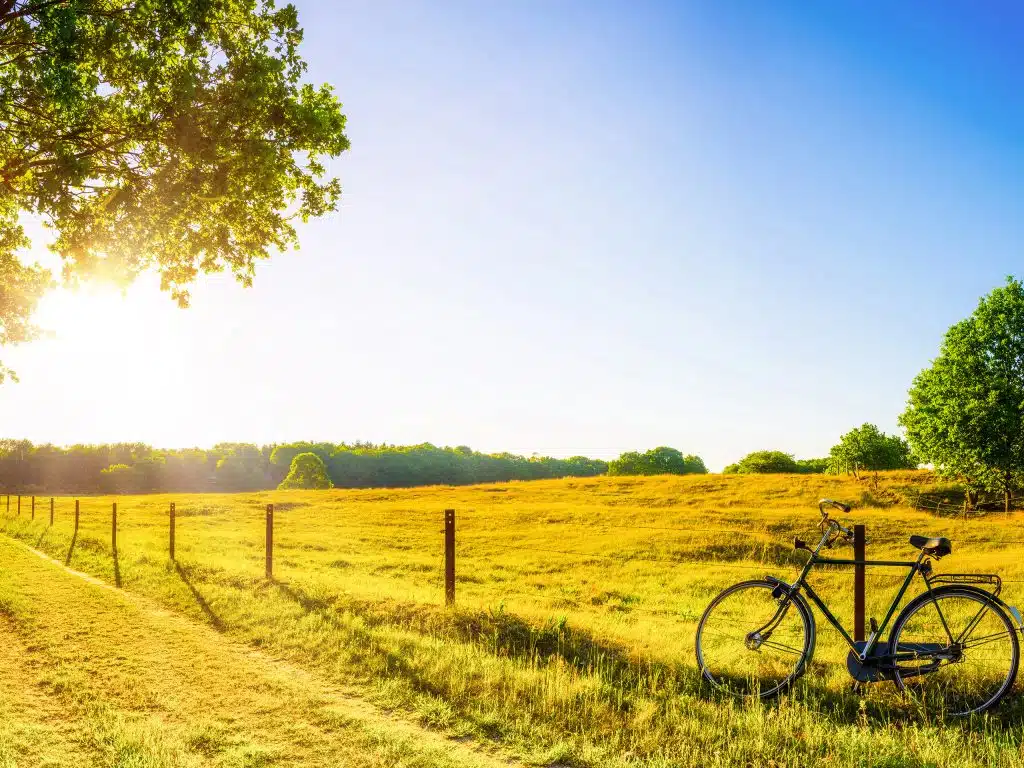
The world seems big and overwhelming.
We certainly were not designed to know as much as we do and absorb as much as we do and feel as much as we do. It’s all too much. There has been too much noise and too much division — and even too much “good” advice. With the change of seasons and the flurry of feasts in late September and early October, I feel a certain pull towards what is very small and very local.
I’m returning to the idea of St. Thérèse and her call to commit to the “little way” of holiness.
St. Thérèse of Lisieux, the young Carmelite who never traveled far from her convent walls, is one of the most beloved saints in the church. She lived an obscure life, with no outward grandeur, no dramatic martyrdom, no sweeping apostolic mission. Yet she is a Doctor of the Church because she taught us something both so simple and so revolutionary: holiness is not found in doing great things, but in doing small things with great love.
In her “Story of a Soul,” she wrote: “Love proves itself by deeds, so how am I to show my love? Great deeds are forbidden me. The only way I can prove my love is by scattering flowers, and these flowers are every little sacrifice, every glance and word, and the doing of the least actions for love.”
That is the essence of the little way.
In our digital world, we are relentlessly confronted with “bigness,” incessantly encouraged to gain muscle. The endless stream of global news, the flood of opinions in our feeds, the pressure to “scale” everything we do — from careers to platforms to even our prayer practices — can leave us dazed, overwhelmed, and paralyzed. We measure worth in numbers: likes, shares, reach, productivity, visibility. And yet, the more information we take in, the less peace we often feel.
Thérèse’s little way offers us a remedy. It reminds us that God’s gaze does not function like an algorithm. He is not impressed by magnitude but moved by love. The Kingdom of God, Jesus tells us, is like a mustard seed — the smallest of seeds that grows into shelter for the birds. Smallness is not insignificance. Smallness is the seedbed of holiness. To scatter the seeds and to notice the need for sacrifices and glances and words, we have to be up close. We have to be quiet and to listen to what is nearby.
The little way doesn’t demand dramatic gestures. It might mean folding laundry with a cheerful attitude rather than one of resentment. It might mean offering patient attention to a child’s story when you’re distracted. It might mean resisting the temptation to fire back an angry comment online, choosing silence or prayer instead. It might mean staying home with your screens put away instead of jostling for a more prominent spot in the madding crowd.
It can mean turning off the noise of the wider world and simply tending to your own neighbor, your parish, your family dinner table. To choose the very local, the very near, the very present can be an act of resistance against the culture of overwhelm.
Living the little way may be exactly what God desires for us in this noisy digital age. Not only because he delights in hidden love, but because we need this discipline for our own mental and emotional health. Our nervous systems were not designed to carry the weight of the world’s conflicts, tragedies, and debates every waking hour. They were designed to live within limits, to love the person right in front of us, to find God in the daily duties of our state in life. They were designed to rest. To breathe. To lock eyes with someone near and understand without words.
It’s a paradox, truly. When we live this way, we discover something astonishing: the small isn’t insignificant after all. Every cup of water given in his name, every quiet act of service, every hidden prayer — God sees it. He treasures it. And in his economy, nothing is wasted.
Smaller may, indeed, be better. It might be exactly what God wants. It might be exactly what we need.
Foss, whose website is takeupandread.org, writes from Connecticut.