By the middle of Lent, the visible signs begin to fade.
The ashes are long washed away. The resolutions we made with such clarity now live quietly in the background of ordinary days. There is no ceremony for this slow fade part of Lent. No marked threshold. And yet, in families, this quiet middle may be the most important part.
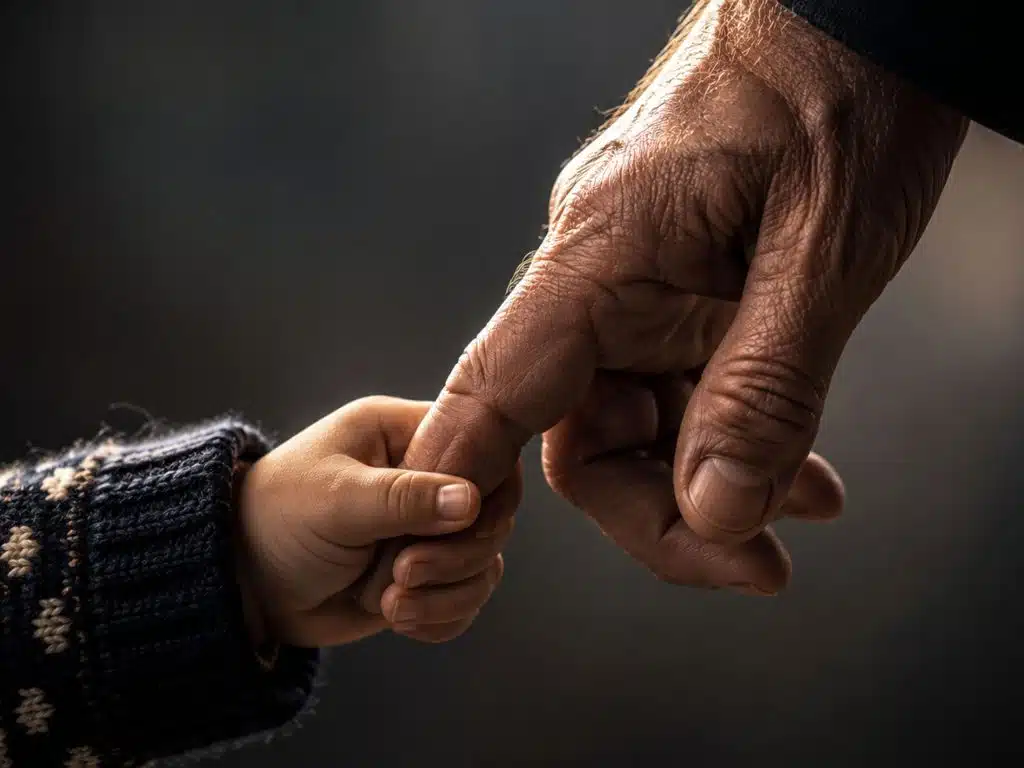
Because children are always watching — not in the way that makes parents self-conscious, but in the way that forms them slowly and permanently. They are learning what faith looks like when it settles into daily life.
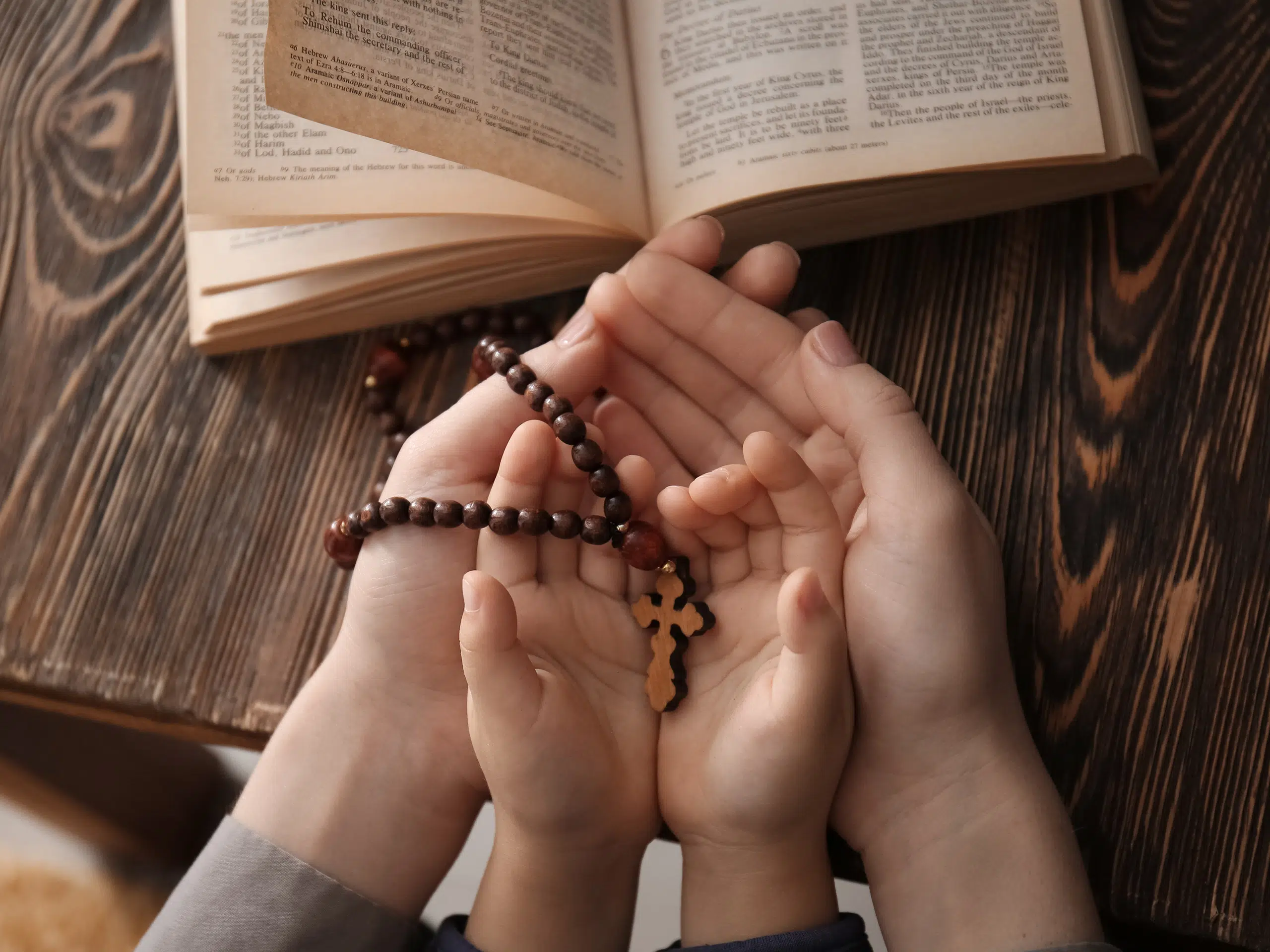
They see whether prayer happens only when it is convenient, or whether it holds its place even on busy mornings. They notice whether fasting makes us gentler or simply more irritable. (How’s that coffee fast going?) They observe whether sacrifice is something we talk about, or something we live.
Most of what forms them will never be announced. It happens when a parent pauses to pray before the household wakes, even though sleep would be easier. It happens when we hold our tongues instead of winning an argument. It happens when we listen patiently to a child’s story when we are tempted to rush toward efficiency. These things do not look dramatic. No one marks them on a calendar. But this is where Lent takes root. This is where we die to self and so unite ourselves with the suffering on the cross.
And we are so not perfect at it.
Fortunately, children do not need perfection to learn faith. In fact, perfection would teach the wrong lesson entirely. They need to see return. They need to see beginning again.
They need to see a parent lose patience — and then apologize.
They need to see someone forget a resolution — and quietly take it up again the next day.
They need to see that faith is not performance, but relationship. Lent is not a checklist of habits, but a returning of one’s heart.
Family life offers endless opportunities for hidden sacrifice. Not the kind we choose once and complete, but the kind we choose over and over. The decision to remain present when we are tired. The willingness to serve when no one notices. The restraint that costs something interiorly.
This is the Lent no one applauds.
And yet it is the Lent that shapes souls.
Over time, these small, nearly unseen acts become part of a child’s understanding of the world. They grow up assuming that prayer belongs in ordinary days. That sacrifice is normal. That love often looks like patience, restraint and quiet fidelity.
They learn that faith is not confined to church buildings or particular seasons but lived in kitchens, cars and hallways.
They learn that love stays. Love messes up and returns and forgives.
This formation happens slowly, almost imperceptibly. There is rarely a moment when a child announces that they understand. But years later, they carry an inner sense of stability. They know, without quite knowing how they know, that faith is something steady.
Lent is teaching them this, even now.
Not because we are doing it perfectly, but because we are doing it at all.
Foss, whose website is takeupandread.org, writes from Connecticut.