One of the most celebrated books about Our Lady is “The Glories of Mary,” by St. Alphonsus Mary Liguori (1696-1787), the founder of the Congregation of the Most Holy Redeemer (Redemptorists) and the patron of confessors and moral theologians.
A treasure trove of all things Marian, this volume offers the insights of St. Alphonsus and many other approved authors concerning doctrines and devotional practices relating to the mother of God.
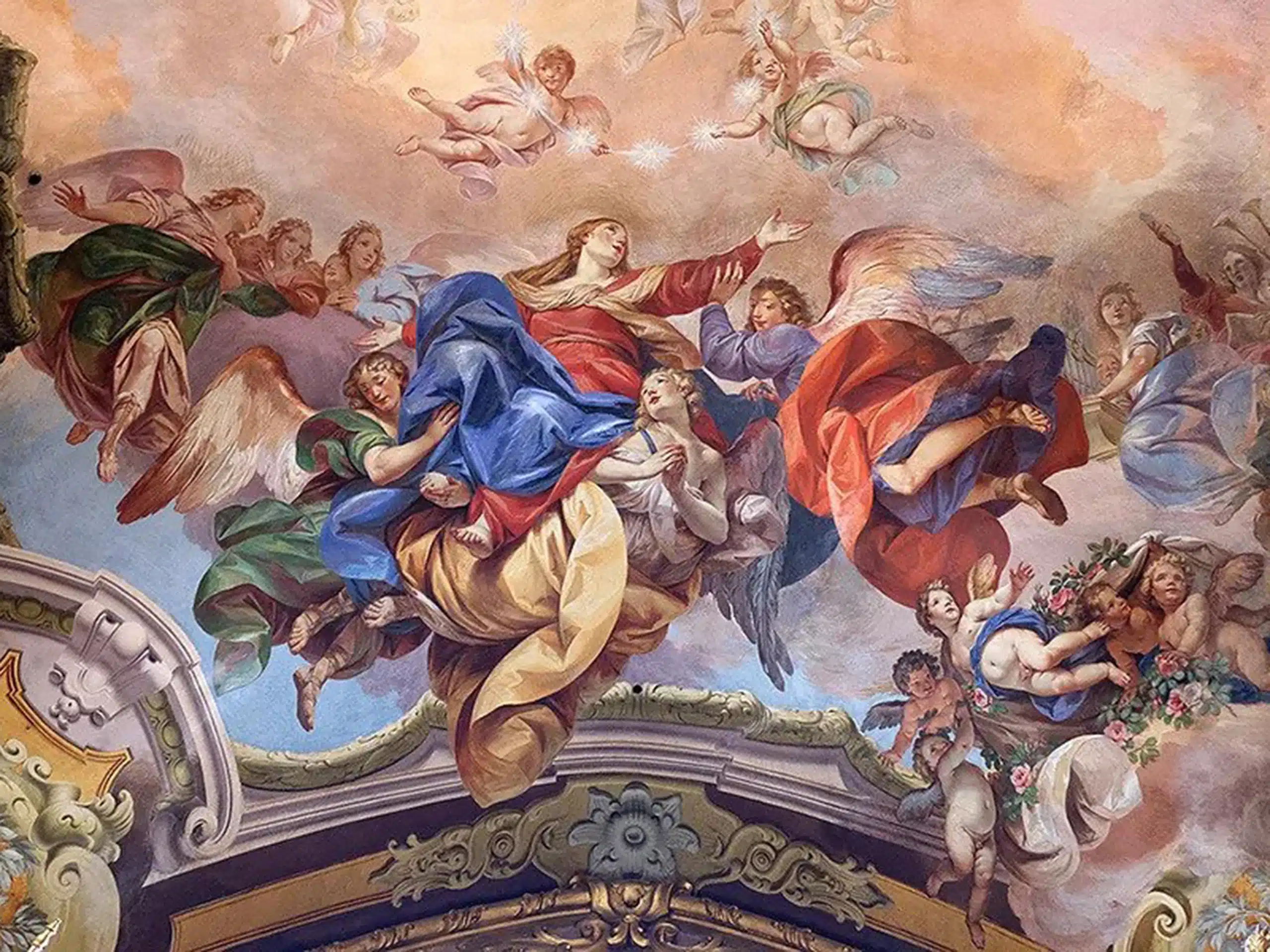
St. Alphonsus, a trusted spiritual guide, addresses the Assumption of Mary body and soul into heaven, which the church especially honors every Aug. 15 — the date of the solemnity bearing the same name. He identifies two chief aspects that we are to recall: Mary’s “happy passage from this world” and “her glorious Assumption.” Hearing this language reminds us of the definition that Pope Venerable Pius XII (1939-1958) used Nov. 1, 1950, in his apostolic constitution “Munificentissimus Deus,” (“The most bountiful God”) to declare the Assumption as a dogma of the church: “that the Immaculate Mother of God, the ever Virgin Mary, having completed the course of her earthly life, was assumed body and soul into heavenly glory.”
St. Alphonsus invites his readers to “rejoice with Mary that God has exalted her to so high a throne in Heaven. Let us also rejoice on our account; for though our Mother is no longer present with us on earth, having ascended in glory to Heaven, yet in affection she is always with us.”
Not only does St. Alphonsus offer the gist of the Assumption, but he also presents an example of how this truth practically impacted someone.
St. Stanislaw Kostka (1550-1568), who hailed from Poland, was a novice in the Society of Jesus. St. Alphonsus relates that this youth “was wholly dedicated to the love of Mary.” On Aug. 1, 1568, Stanislaw heard a sermon in Rome preached by the famous Dutch Jesuit, St. Peter Canisius (1521-1597), that encouraged all the Jesuit novices, in the words of St. Alphonsus, “to live each day as if it was the last of their lives.” The young Stanislaw confided in his companion novices that he was convinced that he would spend the next feast of the Assumption, only a few days later, with Mary in heaven. Filled with an intense desire to do only what God wanted of him, Stanislaw wrote a letter to Our Lady, expressing his love for her and his wish to see her soon. On Aug. 9, the feast of St. Lawrence, he asked this beloved third-century deacon and martyr to intercede for him.
Shortly thereafter, Stanislaw was stricken with a fever. He went to confession and received both the sacraments of the Anointing of the Sick and the Eucharist, the latter for the last time. Clutching his rosary, he told those around him that he had seen Mary. And early on Aug. 15, he breathed his last.
St. Stanislaw did not fear his death, which he foresaw, but instead considered it a necessary step before entering paradise to be with Jesus and his mother for all eternity.
The mystery of the Assumption strengthens us as we proceed along our pilgrimage to the next life. Where Mary is now, we hope to follow. With confident assurance in God’s promise of everlasting happiness, we keep going along the challenging path, calling out to Our Lady for her motherly assistance.
Msgr. Mangan is parochial vicar of several parishes in the Diocese of Sioux Falls, S.D. and previously served on the faculty of Mt. St. Mary’s Seminary in Emmitsburg, Md.