


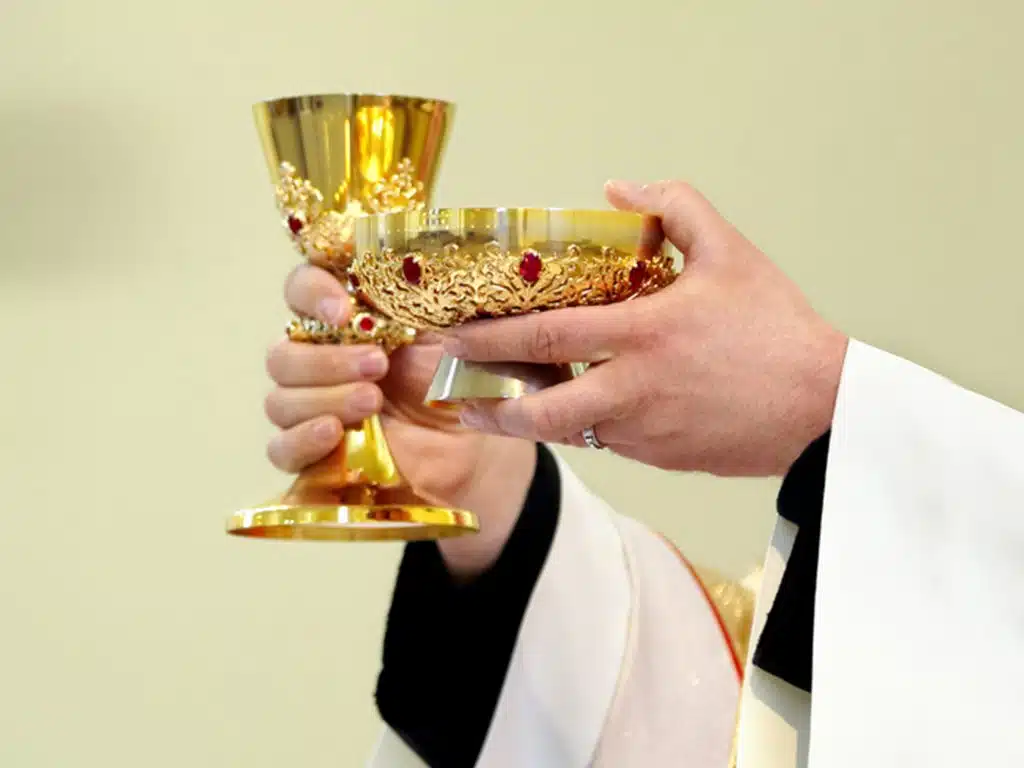
St. Augustine said, “the sacraments are visible signs of an invisible reality.” The church, the body of Christ, is a living reality encompassing a variety of people, including children and adults who are emotionally, physically or mentally challenged. The body of Christ is enriched when we welcome those challenged with disabilities to venture with us through the waters of baptism, the oil of confirmation, the Eucharistic table and the healing of reconciliation. All persons with disabilities have gifts to contribute to the whole church and when they are invited, embraced and welcomed to participate fully in all aspects of parish community life, the body of Christ is more complete.
“The Father’s love for the weakest of his children and the continuous presence of Jesus and evidence of the Holy Spirit give assurance that every person, however limited, is capable of growth in holiness” (National Directory for Catechesis, 49). Despite having disabilities that may impair the ability to understand the teachings of the Catholic Church, they can still have a profound love for Jesus. The National Directory for Catechesis says that children with cognitive disabilities often have an unusual, innate understanding of the sacred and somehow intuitively recognize that Jesus loves them just as they are.
Jesus is our model for inclusion in church — the Gospels of Luke and Matthew record the many ways that Jesus embraced people with disabilities, praised them for the strength of their faith, and called his disciples to take note of how they should be treated and included in church.
The modern church must not only welcome people with disabilities in its community but also seek them out for inclusion in the life of the church.
Teaching the ethereal concepts of the sacraments of the Catholic Church can be difficult under the best circumstances. While it may not be for the faint of heart, teaching is definitely for the strong of faith and spirit, and the blessings are unlimited.
Many children and adults with disabilities can benefit from instruction that is identical to their peers without disabilities or that is modified slightly to consider physical and learning needs. For some children and adults with severe to profound cognitive disabilities, however, it may not be possible to achieve to their peers’ level of readiness for the sacraments. This should not and must not prevent them from receiving the sacraments. Our church law is a gift of the Holy Spirit, intended to be interpreted flexibly for the benefit of all people. We are directed to provide for and freely give the gifts of the sacraments to all those who request them.
If any doubt exists regarding whether or not the sacraments of initiation should be conferred, it is incumbent on the church community to generously share the gifts and graces of the sacraments and anticipate that the family and faith community will provide whatever may be missing. “Disability alone does not disqualify a person from receiving the sacraments. Cases of doubt should be resolved in favor of the right of the baptized person to receive the sacrament” (Guidelines for the Celebration of Sacraments with Persons with Disabilities, 20).
Where to begin? Teach the obvious.
Start by using the typical instructional material and make modifications and provide accommodations based on the needs of the students.
Specifically: Modify/reduce language found in text; use pictures, diagrams, YouTube videos, etc.;
simplify directions and explanations; and reduce work/written requirements and expectations.
If the material still does not meet the needs of the students, use Specialized Instructional Resources. Loyola Press has material specifically designed for those with cognitive limitations.
Emanuel is coordinator for diocesan Special Needs Ministries.
For more info
Contact Nancy J. Emanuel, diocesan coordinator for Special Ministries, at [email protected].
‘Embracing disability’ seminar
“From Inclusion to Belonging: Embracing disability as part of the church,” with Beth Foraker, executive director of the National Catholic Board on Full Inclusion, will be held online Feb. 5, 9-11 a.m.
The event, hosted by diocesan Offices of Catholic Schools and Faith Formation, in collaboration with Bishop O’Connell High School expanded services and Porto Charities, is to encourage parents, educators, pastors and directors of religious education to consider how individuals with disabilities can go from being included to belonging in a parish and its ministries. Bishop Michael F. Burbidge will be the keynote speaker and lead the opening prayer.
Find out more
Call 703/237-1400 or go to bit.ly/InclusionOconnell.


Corpus Christi