



The Passion Play, performed every 10 years since 1634 in Oberammergau, Germany, is one of the more ironic casualties of the global COVID-19 pandemic.
The epic production — a five-hour play in two acts with 2,000 actors and extras — resulted from a bargain made with God in the time of the plague nearly 400 years ago.
In the early 1600s, the Bubonic Plague was ravaging Bavaria. The small, picturesque town of Oberammergau, set on the Ammer River, had escaped the plague until a local man brought it home from a neighboring village. Half the town’s people fell victim to the deadly disease. The story goes that in 1633, the villagers prayed to God. If he spared them, they would perform a play on the Passion of Christ every 10 years. Legend has it that after that, no one in Oberammergau died of the plague.
The Passion Play has been performed every 10 years (with some exceptions) until 2020, when another “plague” brought it to a halt. Delayed two years, the 42nd season took to the stage in 2022. Read about the Passion Play.
The play was the main reason for a recent pilgrimage — with Baltimore Archbishop William E. Lori and Catholic Review Media — to Catholic sites in Austria and Germany. But along the way, in daily Masses and sightseeing, a group of nearly 40 people hit popular tourist destinations and some off-the-beaten-path churches steeped in history.
Vienna, Austria
Hitting the ground running, the group gathered in the city center of Vienna, Austria, at the plaza surrounding St. Stephen Cathedral — Stephansplatz. But the first church visit was just a couple blocks away — St. Peter’s (Peterskirche), a Baroque-style church said to be Vienna’s oldest Christian site dating to the fourth century.
Its storied past includes the legend that Charlemagne built a church there in 792. Another church dated to 1137, but a fire destroyed it in 1631. Leopold I made a promise to rebuild the church as Vienna was being ravaged by the plague in 1679–80. The new church, said to be inspired by St. Peter’s Basilica in Rome, was consecrated to the Holy Trinity in 1733. Nestled in a side street off the busy Graben, must-sees include the oval-shaped interior of the dome, the altarpiece and gilded pulpit, and the side chapels.
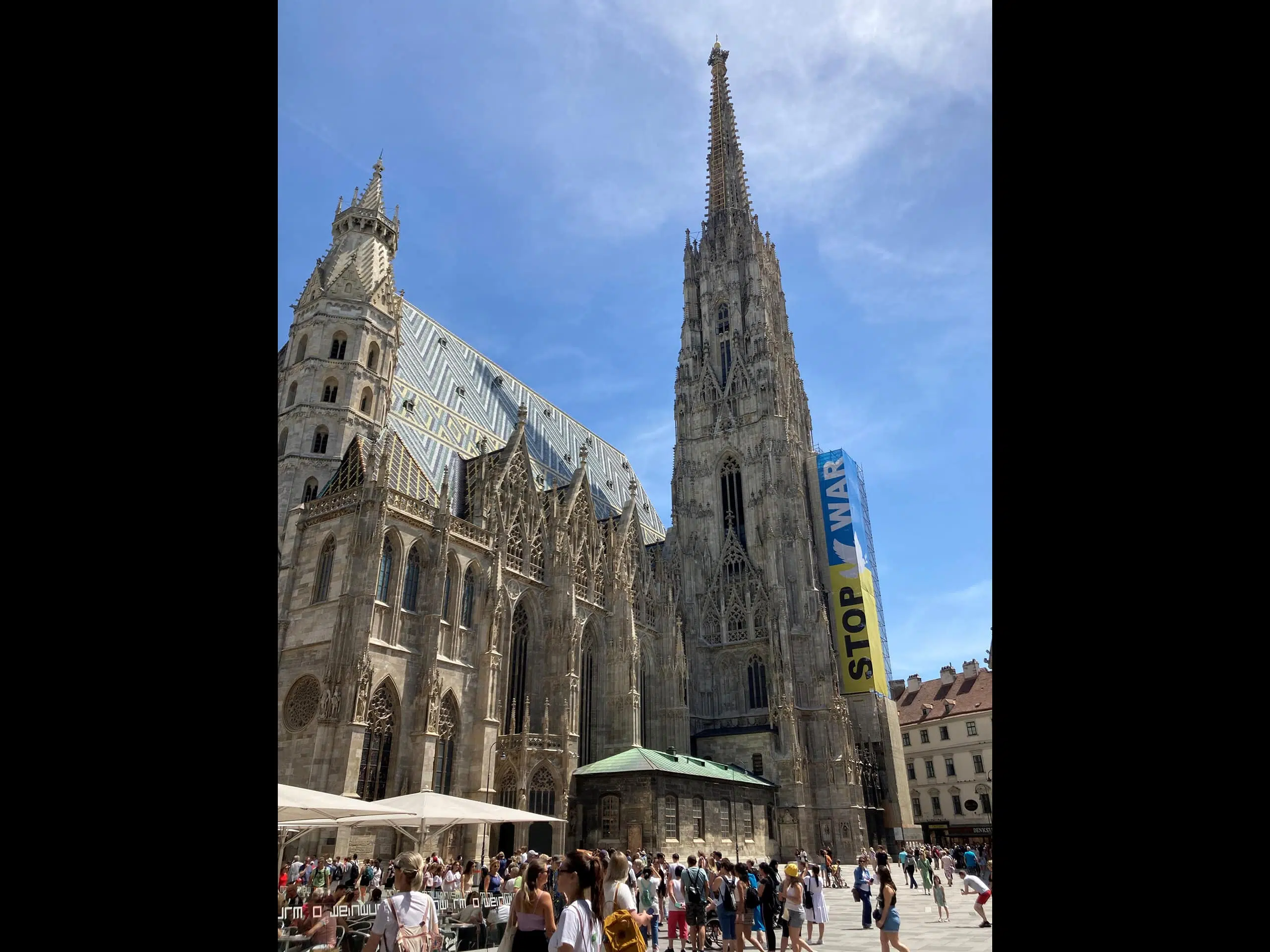
A tour of St. Stephen’s — Stephansdom — followed. Draped with the Ukrainian flag of blue and yellow, the church is one of the tallest in the world. The multi-colored, ornate tile roof is set off by the towers, one taller than the other. The plaza buzzed with tourists, ticket hucksters and natives. If you catch the church bells ringing, all 22 of them, be prepared to stop all conversation and marvel at the rich tone. Look for the mini model of the cathedral outside.
Inside, group visits are well-choreographed. A tour of the catacombs explains the important role the Habsburg family played in Viennese history. More than 70 members of the family — either their bodies, hearts or other organs — are buried in the crypt. A lovely pieta is a focal point of one narrow, cool passage in the dark underground labyrinth. One area visible through an opening in the stone wall reveals piles of skeletons, countless victims of the plague. The guide said it was safe to peer in all these years later.
The Weeping Madonna, or Our Lady of Mariapocs, a Byzantine icon that reportedly wept, is a popular devotional spot in the church. There are also 18 altars and several chapels to explore.
While in this part of Vienna, there are many tourist attractions, including the Opera House, Parliament, Donner Fountain, Hofburg Palace and the Spanish Riding School with the world-famous white Lipizzaner horses.
A short drive away is Schonbrunn Palace, the summer residence of the Hapsburg Emperors. A treasure trove of antiquity, the property’s storied past dates back to the mid-1500s. The yellow color of the immense façade is distinct. Guided indoor tours, no photos please, stop at just some of the 1,441 rooms. Horse-and-carriage rides through the lush gardens are popular.
VIENNA COUNTRYSIDE
Next up is a drive through the lower Austrian countryside to the Basilica of Maria Taferl, a 17th-century shrine dedicated to Our Lady of Sorrows, in Nibelungengau overlooking the Danube. Remains of early Celtic religious activity can be seen outside the church in the picturesque hilltop village.
There are some great stories associated with the site. A pieta inside the church was the gift of a forester who miraculously recovered from a serious illness. Prior to that, a crucifix marked the spot of a miracle where a local shepherd severely injured his legs while trying to chop down a tree. He prayed to the Blessed Mother and his wounds healed.
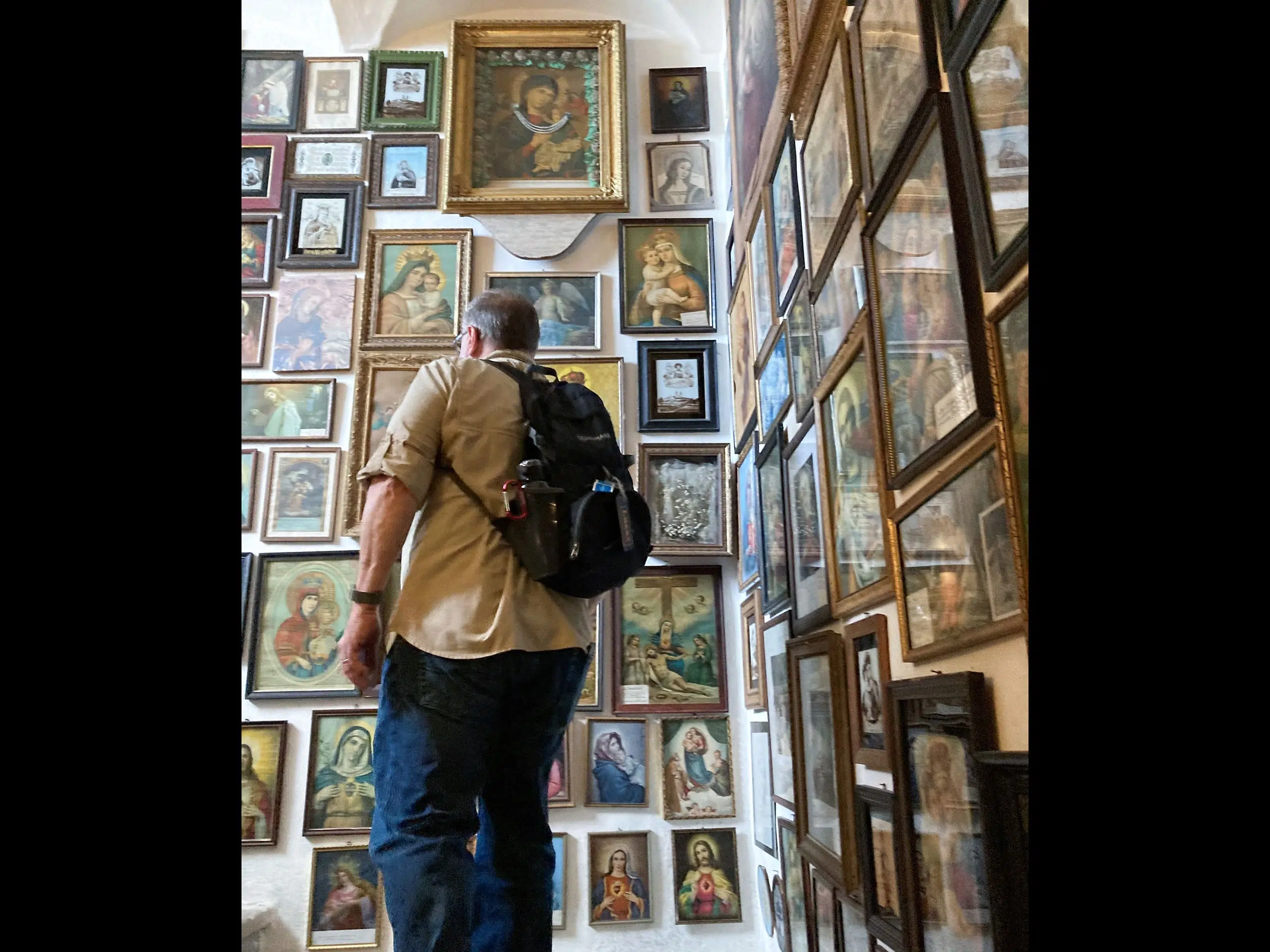
The popular pilgrimage site displays countless framed Marian images left as gifts for healings. There is also a belief that water from the well there helps people with eye ailments.
Not far is the Benedictine Melk Abbey seemingly carved into a rocky hill above the Danube. The abbey, a former castle, was founded at the end of the 11th century. It included a school and a renowned, extensive library. It survived numerous attacks, fires and confiscation by the state. The renovated building that stands now dates to 1702. A gift shop sells apricot liqueur and informative books telling the history of the abbey with gorgeous photos.
With its proximity to the Danube, Melk is the perfect spot to hop a boat for an afternoon cruise to Durnstein. Hillside vineyards, quaint villages, and the blue-and-white church tower of the Durnstein Abbey are some of the highlights.
In 1372, Elsbeth of Kuenring had a chapel dedicated to the Assumption of Mary installed in her castle. About four decades later, she had Augustinian Canons come to open an abbey and the buildings were enlarged. Three centuries later, the church was dedicated to the Assumption. The iconic bell tower dates to 1733 and is visible throughout the valley.
THE ALPS
Destination Heiligenkreuz Monastery, the world’s second-oldest Cistercian monastery and the oldest continuously active monastery. A sign out front calls it the “mystical heart of the Vienna Woods” and the “spiritual centre of the region.” Nine miles west of Vienna, it’s been an institution since 1133 when the 150-year building project began.
The sign identifies the three most serious threats to the building: when the monastery was set on fire by the Turks in 1683; when Emperor Joseph II dissolved several monasteries in 1770; and when the Third Reich planned to build a “motorway directly through the grounds of the monastery” in 1938. It remains home to the monks, who still pray in Gregorian chant, and a theological university and seminary. There’s a lovely restaurant on the grounds that makes use of the herbs and vegetables the monks grow for their own use.
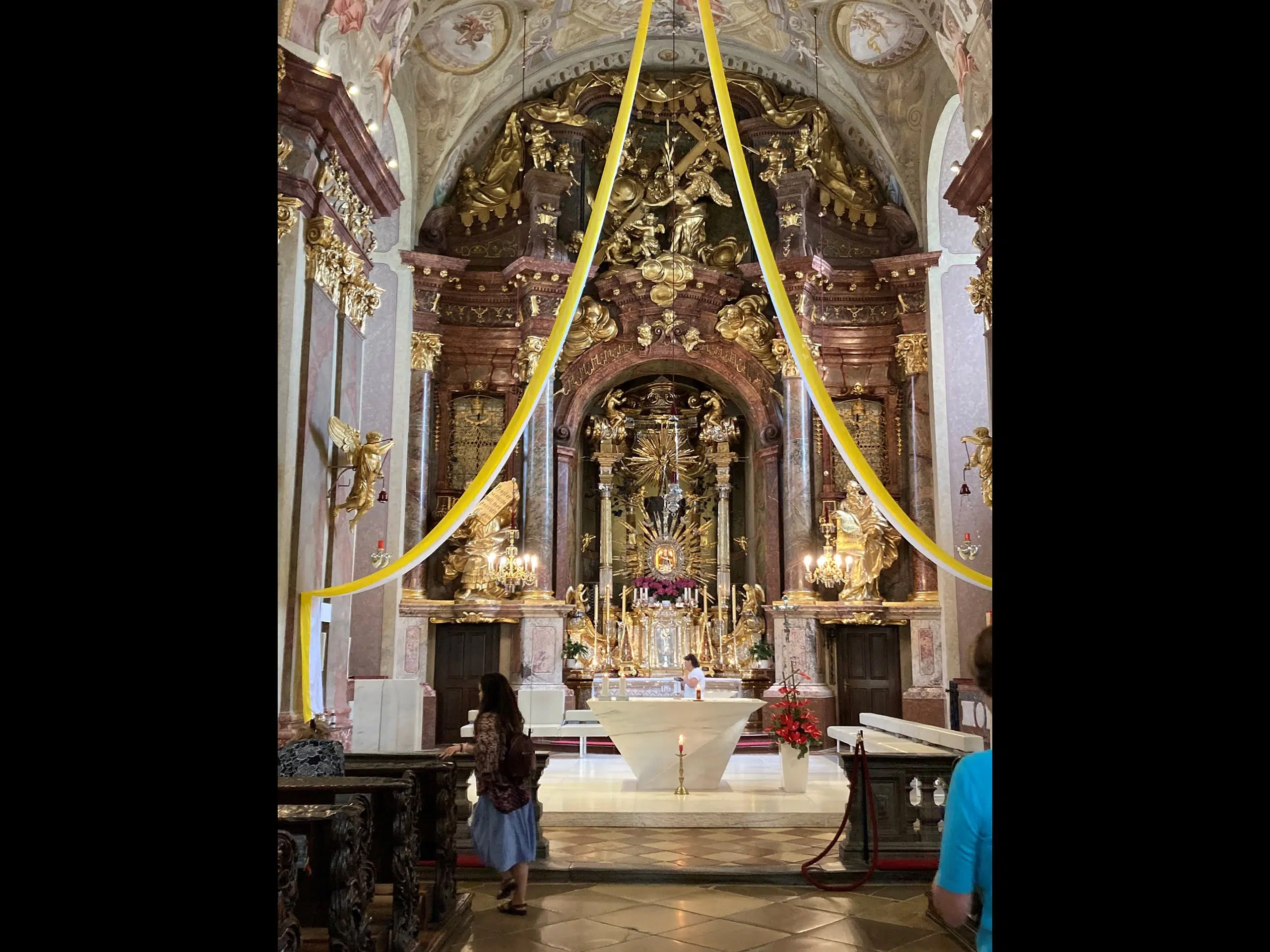
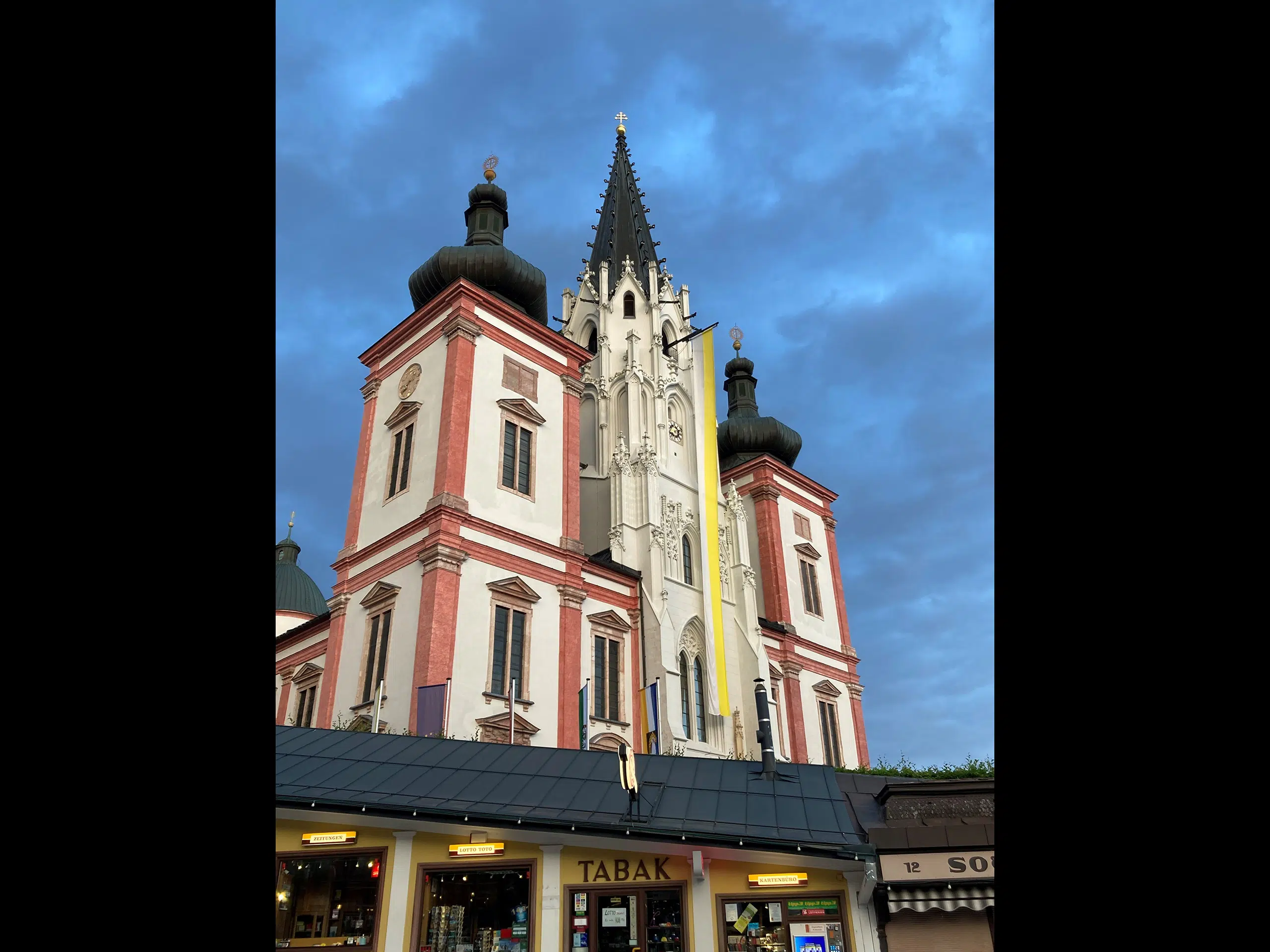
A couple hours away in the north Styrian Alps is the Mariazell Basilica, referred to as one of the most important pilgrimage sites in Austria and one of the most popular shrines in Europe. The attraction is a statue of Mary carved in lime-tree wood that is believed to bring miracles. The image, brought there in 1157, is surrounded by gold and silver, and placed in a chapel behind the altar for veneration. The church, built from 1644 to 1780, and the town went through a lot in the successive centuries. Pope John Paul II visited Mariazell in 1983 and Pope Benedict XVI visited in 2007 to mark the 850th anniversary of the shrine’s founding. The charming hilly town, with its lovely homes, decorative shops and views of the surrounding mountains, also is known for its gingerbread.
SALZBURG
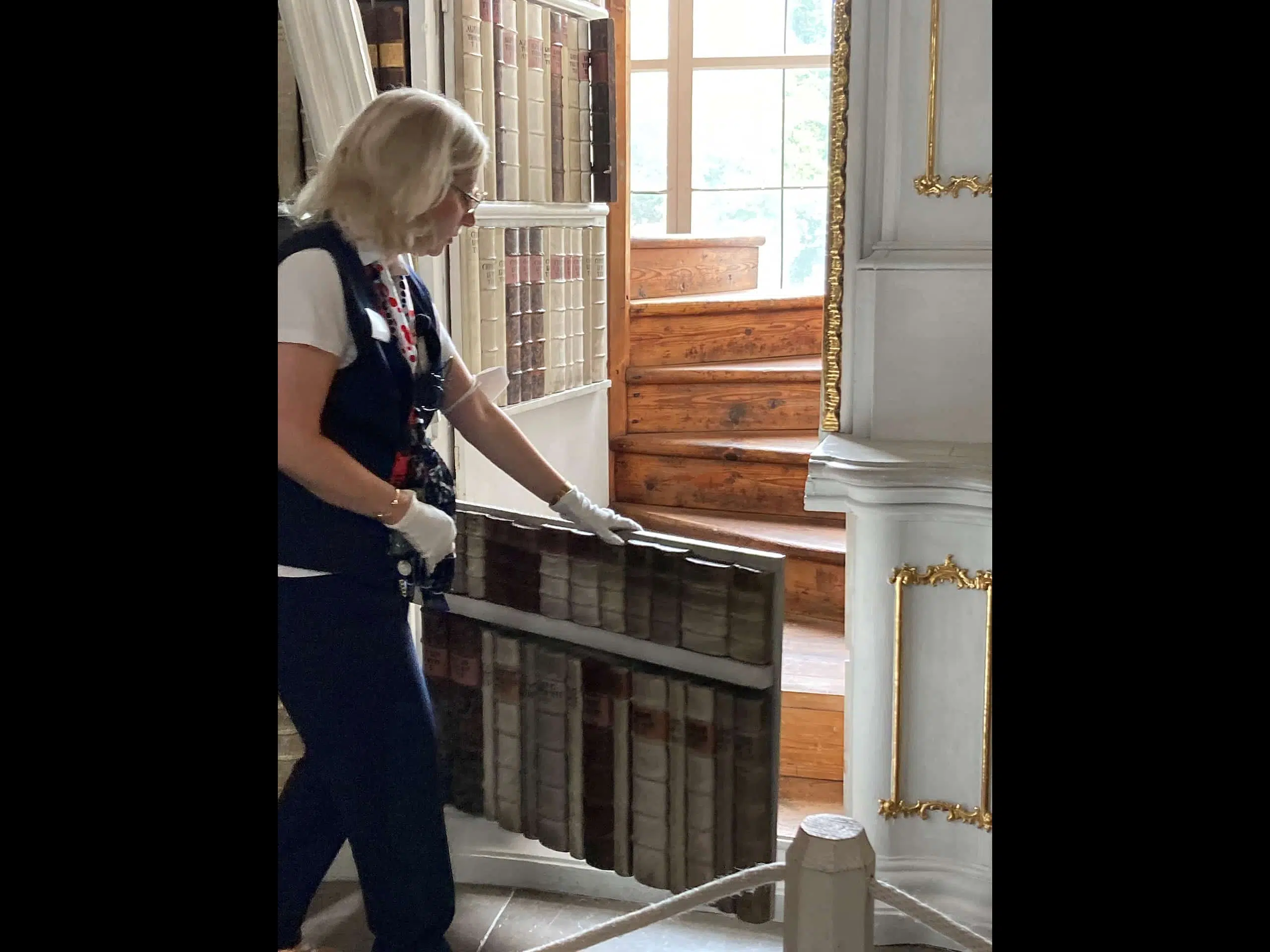
The drive to Salzburg included a stop at Admont Abbey, a Benedictine monastery dedicated to St. Blaise, the patron saint of throat ailments. It boasts the largest monastery library in the world. The beautiful white-and-gold library with 70,000 books is just part of the abbey’s collection of 200,000 volumes.
The guide revealed one of four hidden staircases to the second floor, nestled behind faux books on a shelf-like door. The library is not a museum, but a working library where monks and researchers alike come for books.
The ceiling mosaics are breathtaking. Of note in the middle section are four large statues by Austrian sculptor Joseph Stammel. Made from lion tree wood and covered in bronze, they depict “the four last things” in human life — Death, Judgment Day, Hell and Heaven.
The monastery was founded in 1074. A history of strife included the war with the Turks, the Reformation, a destructive fire in 1865, the economic downfall of the 1930s forcing a sell-off of art, and the Nazis. Today, there are a couple dozen monks there who look after 26 parishes.
Be sure to visit the church, built in 1865 after the fire, with statues of Sts. Benedict and Scholastica on the front, and St. Blaise both atop the western entrance and in a lovely Carrara marble statue above the altar.
SALZBURG HILLS
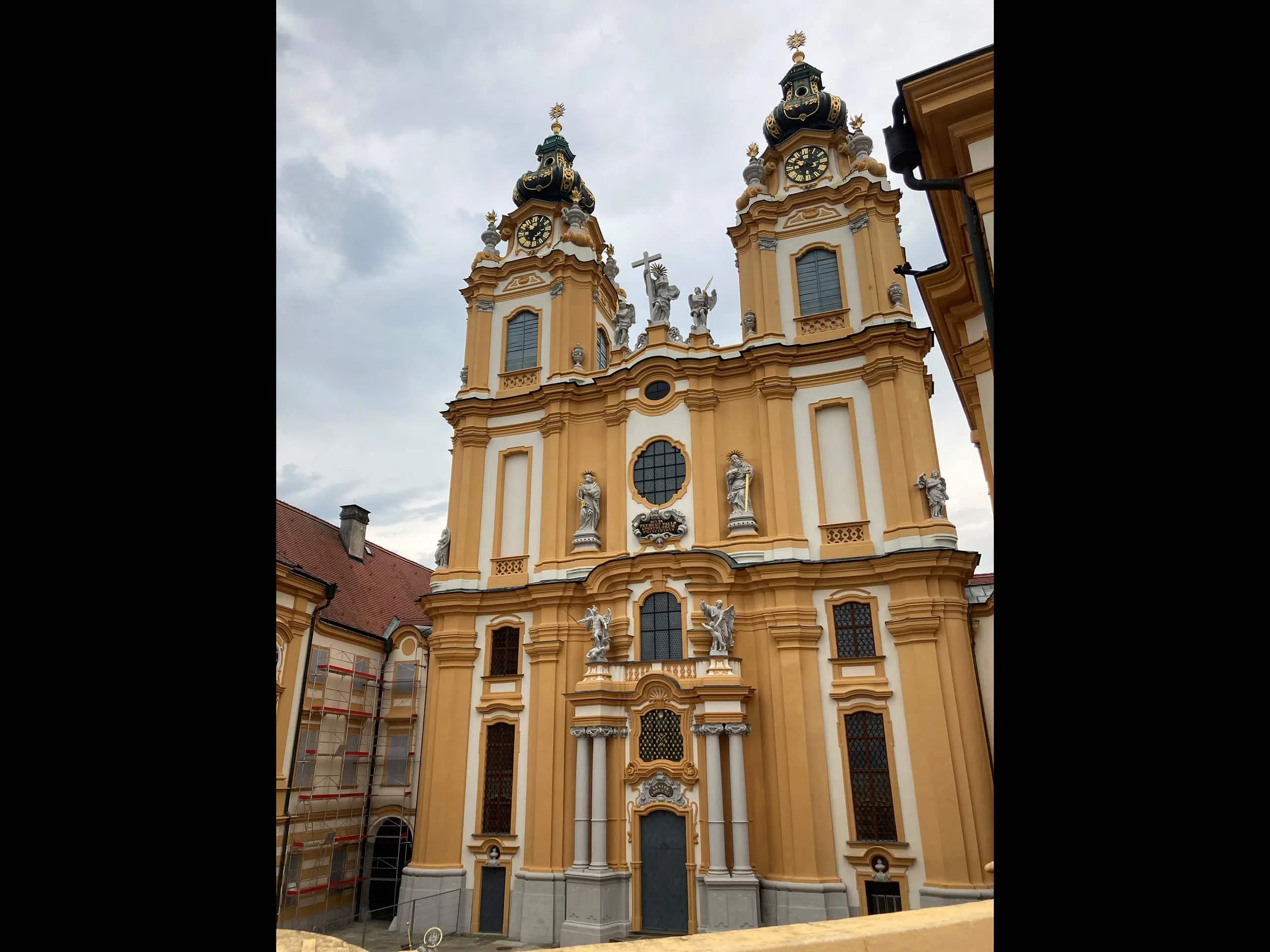
On the northern edge of Salzburg atop a modest hill sits the Shrine of Our Lady of Maria Plain with its yellow-and-white exterior and twin towers. A painting of Mary and Jesus that hangs over the altar is said to have been the only thing that miraculously survived a fire in a bakery in the early 1600s. First a chapel in1652 and then a church in 1674 were built for the painting that became a popular pilgrimage devotional.
Wolfgang Amadeus Mozart wrote the Coronation Mass specifically for a 1779 festival to commemorate the crowning of the painting in 1751 and locals say he performed it there for the first time. He was said to have frequented the church, playing music during Sunday Mass.
SOUND OF MUSIC
Fans of the movie “The Sound of Music” might have Mondsee on their list, in addition to the other spots around Salzburg. The Minor Basilica of St. Michael the Archangel is where the wedding scene of Maria and Capt. Georg von Trapp was filmed. The Mondsee Abbey was founded in 748.
The very elaborate altarpiece in the church is a kind of giant reliquary containing several skeletons behind glass, including Abbott Konrad II, who defended the abbey. Be sure to look for the Altottinger Madonna.
There are so many sights to see in Salzburg, including the Mirabelle Gardens, the FestungsBahn funicular to the Hohensalzburg Fortress with panoramic cityscapes, and the Salzburg Cathedral near the square.
GERMANY
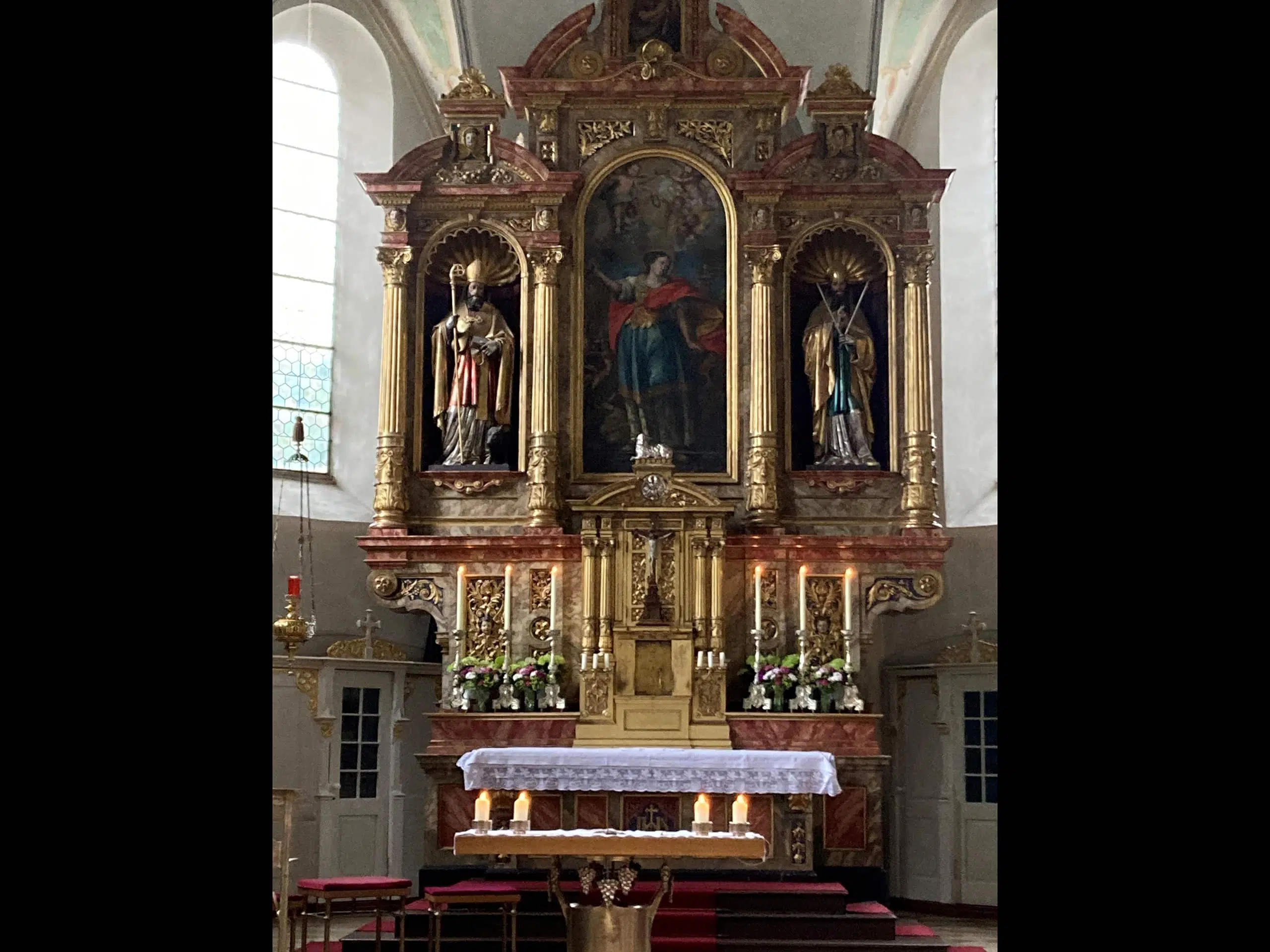
Crossing the Austria-Germany border, and off the beaten path in Frasdorf, is the Baroque-style St. Margaretha Church. The nave dates to the mid-1400s with many additions over the years. The interior is stark in comparison to some overly gilded churches, but an imposing altarpiece puts the focus on the tabernacle. A lovely cemetery surrounds the church and a small Marian chapel nearby.
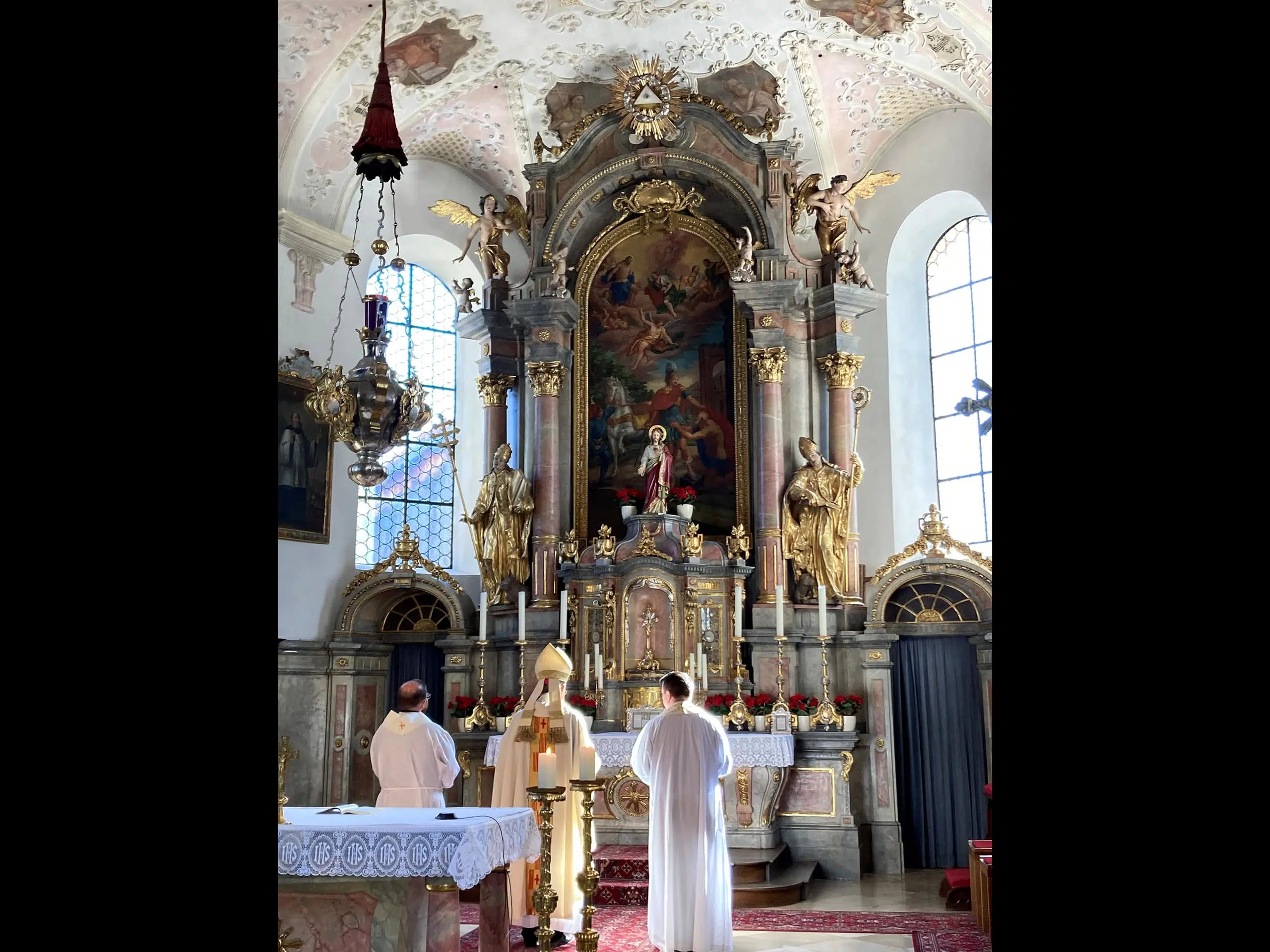
St. Martin Church in Bad Kohlgrub, 5 miles north of Oberammergau, is a perfect spot to visit to avoid the Passion Play crowds. The lovely interior is accented with paintings and statues; you might have to look hard to find St. Martin.
Touring Catholic history in Austria and Germany is a rare opportunity to see the richness of the faith and the vast history of devotion. Pack your guidebook, comfy shoes and this piece to visit some of the highlights of this picturesque region.