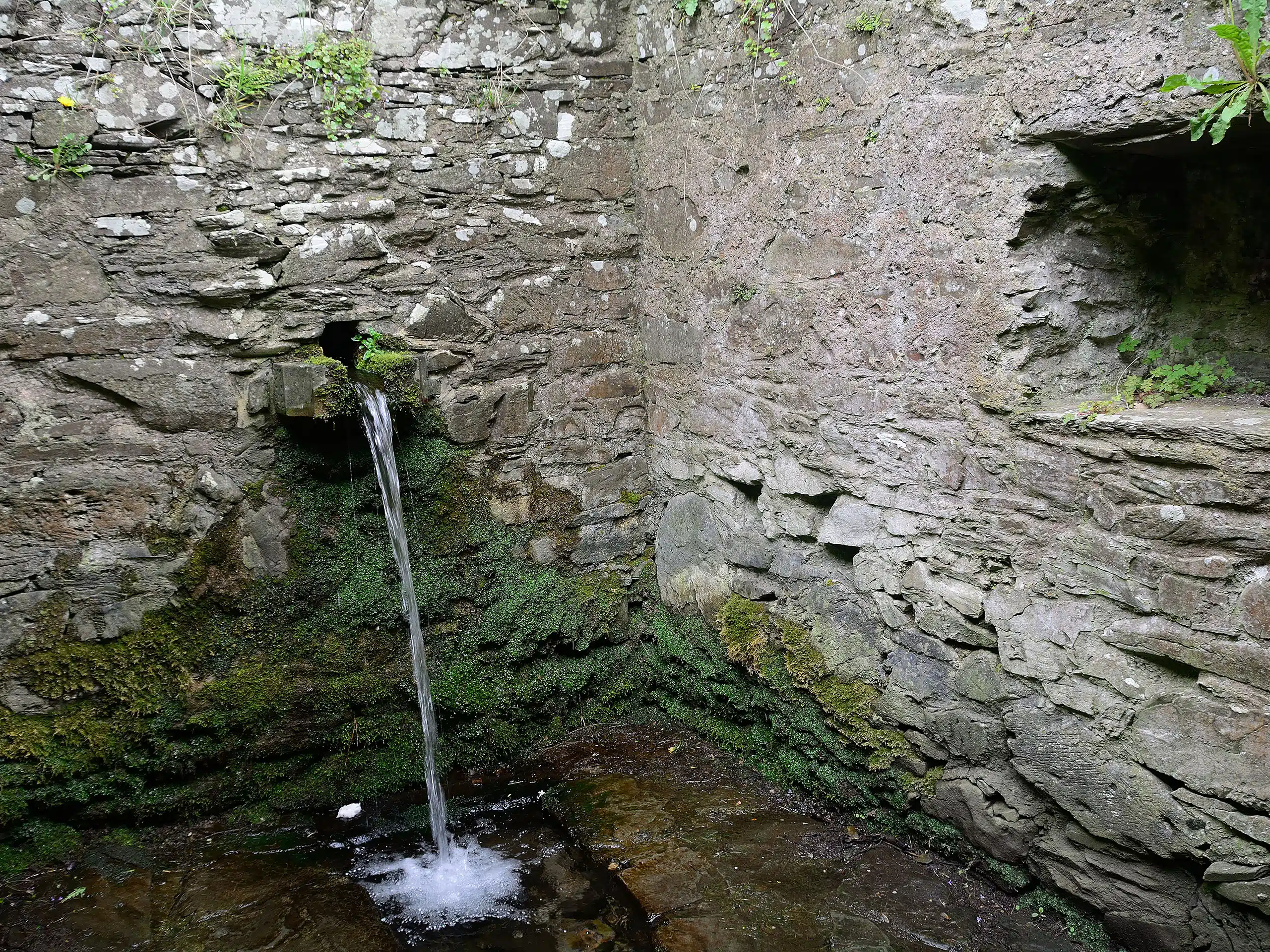
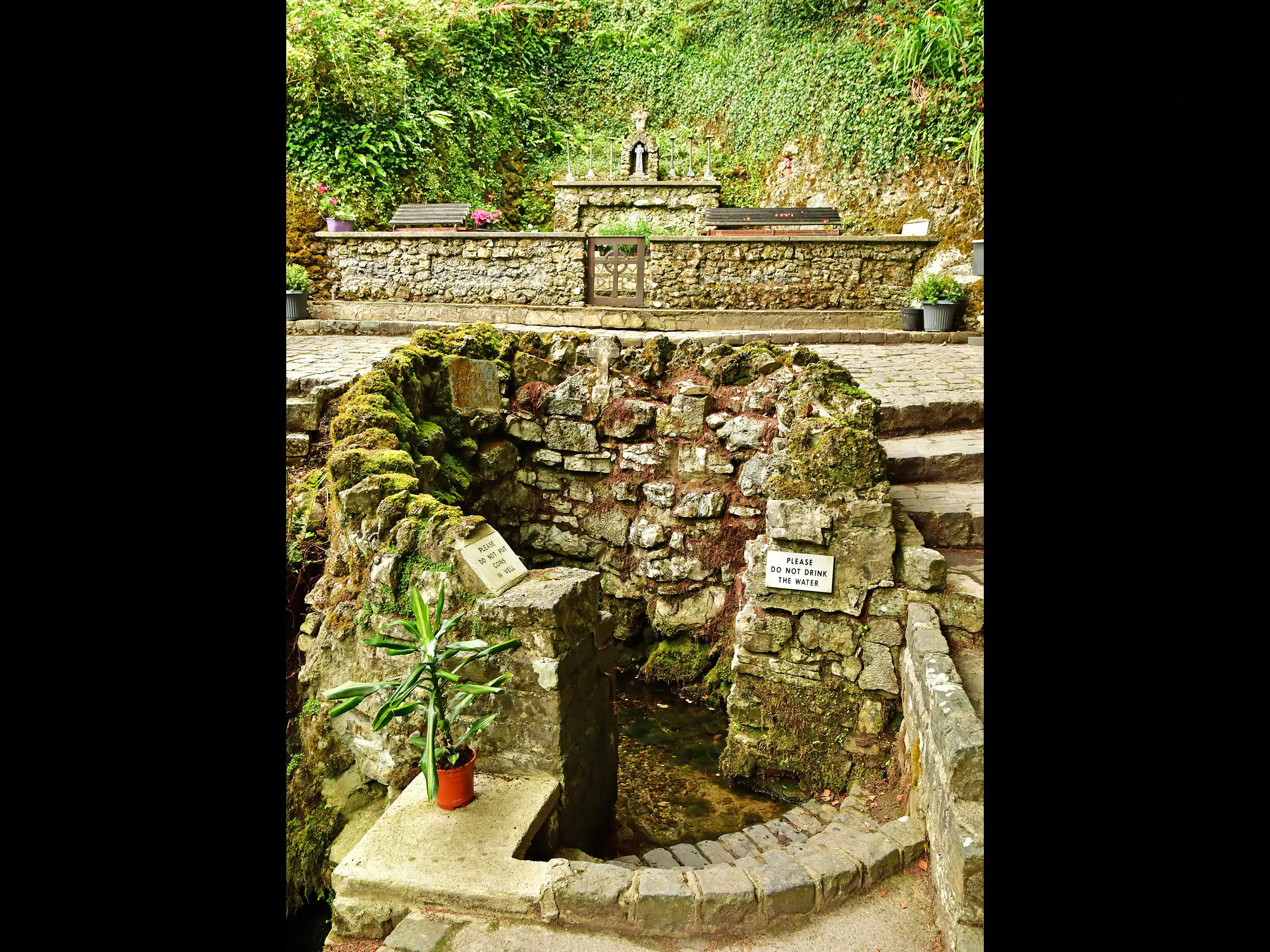
The miraculous origin of the spring at Lourdes in France is well-documented, but in Ireland, there are about 3,000 holy wells, most with the names of forgotten saints, and some with legends of forgotten miracles.
Our faith is based on Scripture and tradition. Tradition is usually taken to mean pronouncements of Rome, but it also includes things that have strengthened faith through the ages. In the Middle Ages, the pope and then the curia established uniform procedures for the work of beatification — but Pope Urban VIII was careful to “grandfather” into sainthood anybody who had been venerated locally for at least a hundred years. Thus, there are hundreds of Irish saints.
According to legend, ancient Celts believed evil spirits lived in some wells, but when the saint blessed the well, the evil departed.
A priest in the fifth century would have known how to bless water. St. Basil the Great composed the ritual for the Solemn Blessing of Water in 377, and to this day in the Eastern Church before a baptism the priest repeatedly commands all evil spirits to depart from the water and asks God to sanctify it by the descent of the Holy Spirit. Catholic rituals had come to Ireland by way of Gaul, which was deeply influenced by the East, in the fifth century and changed very slowly thereafter.
Consider St. Olan’s Well in Aghabulloge, County Cork. The legend is that Olan was minding cows using a stick, and when he stuck it in the ground it became a tree — a tree whose descendants still stand beside his well. Particularly intriguing about this well is that next to it is a standing stone with Ogham script, the closest the ancient Celts came to a written language. What does the Ogham say? “Pray for St. Olan the Egyptian.”
Tradition has it that St. Olan was the confessor of St. Finbarr, who built a monastery and school in the marsh that became the City of Cork. Ogham script, according to some scholars, began to disappear around the fourth century, so St. Olan might well have pre-dated St. Patrick. If he were an Egyptian, he would have been a monk in the stern tradition of the Desert Fathers. In any case, it’s a fair surmise that Olan was a holy ascetic who impressed the local people with his sanctity, or perhaps with his miracles also.
One of many St. Patrick’s wells in Ireland is said to have come into existence when he struck his staff in the ground when a woman brought him a baby on the brink of death, and there was no water nearby with which to baptize. St. Brigid spent the night in Clondalkin on her way from one place to another, and in gratitude she left a well. To this day, school lets students off for half a day to clean up the well for the pilgrimage of Brigid’s feast day.
Modern materialists dismiss miracles and scorn traditions of ancient ones. Ancient traditions die hard, though, and many of the holy wells in Ireland are still venerated, albeit usually by older people now.
Some wells have been known through the centuries for healing particular illnesses, such as eye ailments, headaches, back pain, or mental illness.
Tobar Naomh Aodh (St. Hugh’s Well) is known as a remedy for anemia — and modern science has documented the water’s high iron content. Others renowned for headache relief are proximate to willow trees — source of acetyl salicylic acid, also known as aspirin.
Could not a remedy that today is explained by science earlier have been a gift from God, delivered through an ancient saint?
In the 17th century, Catholics were forbidden to have churches, and there was a price on the head of every priest. By 1840, it was legal to be a Catholic, but there were only 3.6 priests per 10,000 people. It is testimony to profound faith that self-imposed penitential and devotional customs grew up around the wells as the faithful pursued personal holiness and sought divine assistance without the guidance of a pastor.
First came prayers, such as going clockwise around a well on knees or multiple times on foot, while repenting, praying, and seeking healing both spiritual and physical. On feast days, the whole town would gather, and after the prayers would come a “pattern,” or feast. Protestant travel writers found the penitential customs barbaric. Some priests and bishops banned patterns and tried to ban the wells. But even into the 20th century, mothers without money for medicine would give children water from a saint’s well as a remedy.
In most places, families are still the custodians of the wells. As grown children move to the cities, and Ireland becomes more materialistic, however, wells are in danger. Concrete is poured over some that lie in the path of parking lots or housing developments.
There used to be nine holy wells in Dublin, but now there are only three. St. Winifred’s Well, in the middle of the sidewalk in the Temple Bar area of Dublin, is often mistaken for a trash bin. Lady’s Well in Cork, formerly maintained by workers at nearby Murphy’s Brewery, is now neglected and vandalized.
What Cromwell did not destroy, secular modernity just might.
Marshner, a parishioner of Sts. Joachim and Anna Ukrainian Catholic Church in Front Royal, is author of “Monastery and High Cross.”