September 2020
Election Day is November 3. In Forming Consciences for Faithful
Citizenship, faithfulcitizenship.org, we and our brother U.S. bishops noted,
“Unfortunately, politics in our country often can be a contest of powerful
interests, partisan attacks, sound bites, and media hype. The Church calls for
a different kind of political engagement: one shaped by the moral convictions
of well-formed consciences and focused on the dignity of every human being, the
pursuit of the common good, and the protection of the weak and the vulnerable.
… We are called to bring together our principles and our political choices, our
values and our votes, to help build a civilization of truth and love” (no. 14).
To grow in holiness, a question each one of us must answer is:
How will I respond to this call for a different kind of engagement? This
question is key as we approach Election Day, as well as every day before and
after it, as faithful citizens.
In a pre-election letter on voting decisions we issued last year,
we offered three main points:
— Many issues are important.
— Not all issues have equal moral weight.
— Protecting life is paramount.
As bishops responsible for the pastoral care of the faithful in
our two dioceses, we re-offer these points here for your continued prayerful
consideration, as an essential framework not only for the critical voting
decisions that must be made each year but also for the vital prayer and
advocacy that must be done on a constant basis.
Whenever human dignity is at stake for any of our brothers and
sisters in the human family, we must be attentive and engaged. “[R]espect for
the dignity of every person … is the core of Catholic moral and social
teaching” (Faithful Citizenship, no. 10).
Our moral obligation to oppose intrinsically evil acts – which
are “always incompatible with love of God and neighbor” (Faithful Citizenship,
no. 22) – “has a special claim on our consciences and our actions” (no. 37). Of
these, abortion is the “preeminent priority because it directly attacks life
itself, because it takes place within the sanctuary of the family, and because
of the number of lives destroyed” (Faithful Citizenship, Introductory Letter).
Since the 1973 Roe v. Wade decision, there have been more than 61 million
abortions in our country. Other issues of grave moral importance “undercut the
dignity of the human person” (nos. 22, 23). Our priority must be to protect
life to the fullest extent possible.
For more on the principles involved in voting with a well-formed
conscience, we encourage you to read paragraphs 34-37 of Forming Consciences for Faithful Citizenship
(faithfulcitizenship.org). For a side-by-side comparison of what
the two major-party Presidential candidates have said or done on a wide range
of issues of importance to Catholics, visit vacatholic.org. The side-by-side
comparison was compiled jointly by a number of state Catholic conferences,
including the Virginia Catholic Conference.
On November 3, please vote. Every day, please seek and live out
the “different kind of political engagement” that will provide a clear example
to others of the civility and consistent concern for the common good we are all
called to embrace.
Faithfully Yours in Christ,
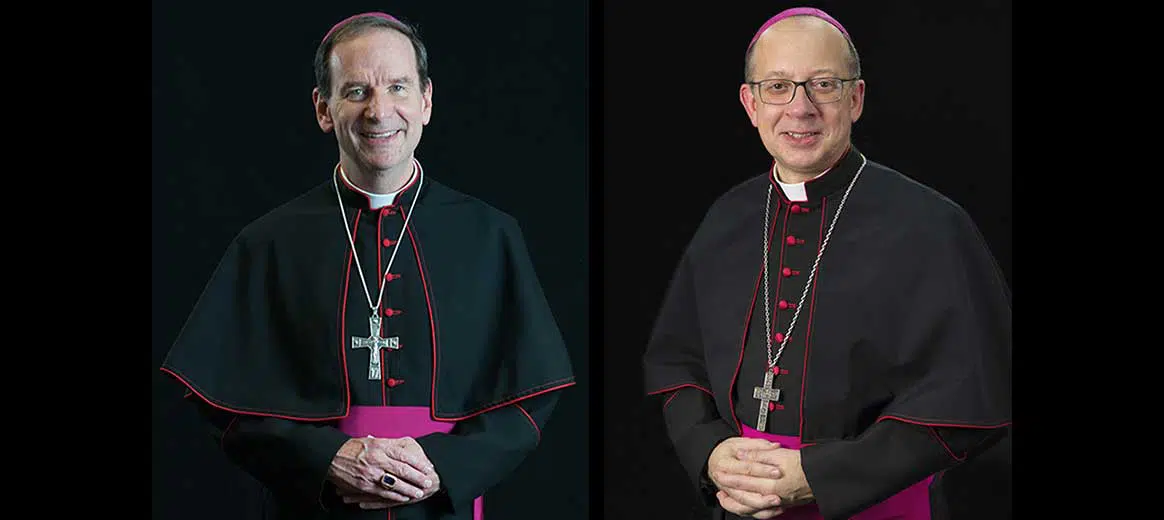
Most Reverend Michael F. Burbidge
Bishop of Arlington
Most Reverend Barry C. Knestout
Bishop of Richmond