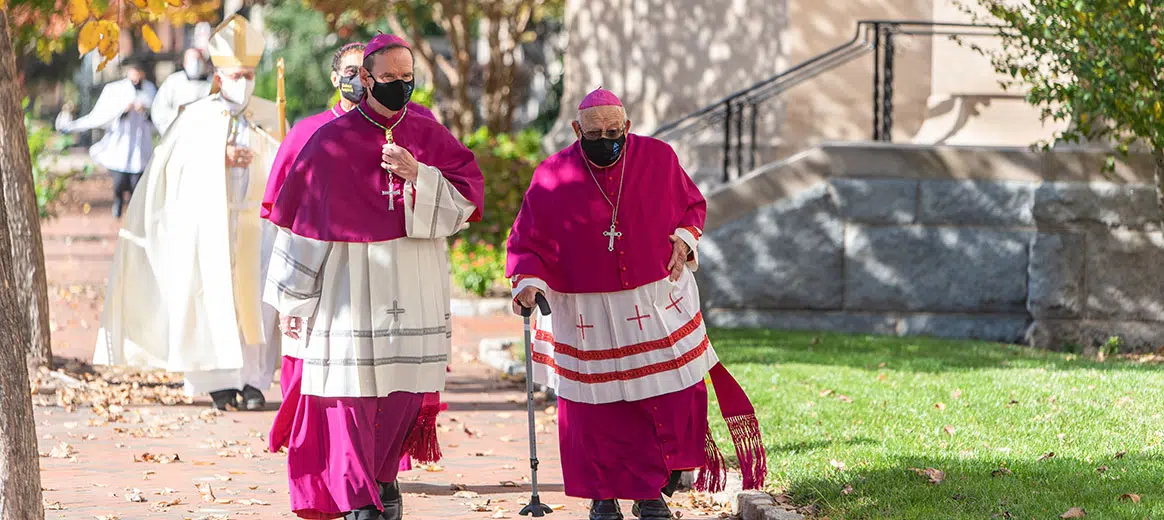
As part of the Diocese of Richmond’s bicentennial year, it celebrated
its first Eucharistic Congress Nov. 6-7. While much of the event was virtual
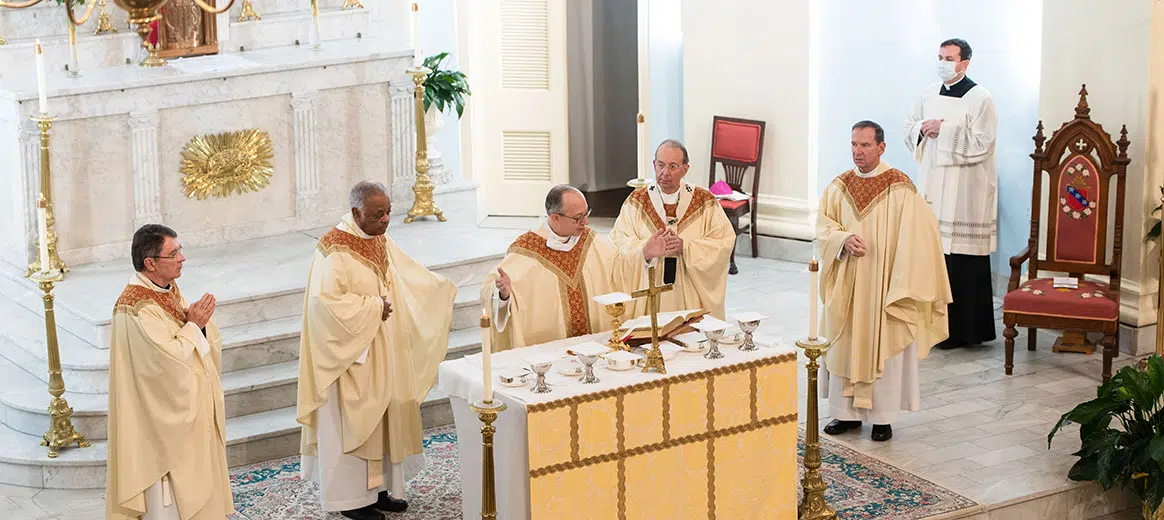
due to COVID-19, a Mass was concelebrated by seven bishops, including Bishop
Michael F. Burbidge, and three archbishops, including Cardinal-designate Wilton
D. Gregory of Washington, William E. Lori of Baltimore and Christophe Pierre,
apostolic nuncio to the United States, Nov. 7 at St. Peter Pro-Cathedral, the
diocese’s first cathedral, which still serves as a parish in downtown Richmond.
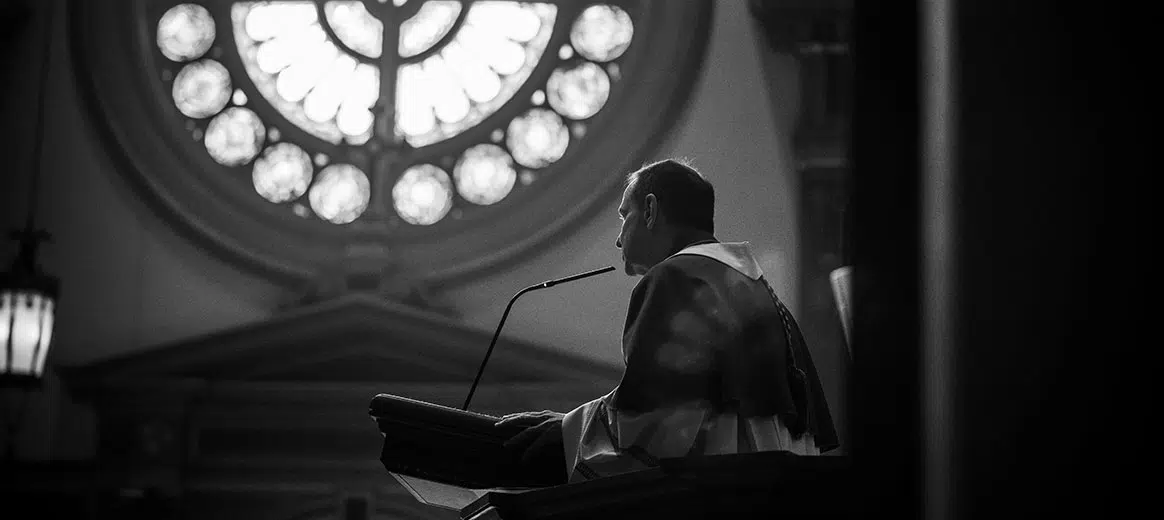
In his homily, Richmond Bishop Barry C. Knestout, reflecting on
Mark 16:15-20, said that the people of the diocese have been carrying out the
great mission on which Jesus sent the apostles.
“The people of the Diocese of Richmond have done this for 200
years — taught the faith, brought unity to a broken world, ministered to the
weak, vulnerable and sick, and have gathered to carry out the faith, hope and
charity to which we are called.”
The bishop emphasized that the Eucharist is a “blessing” and a
“gift from God.”
“We are nourished in the presence and glory of God,” he said. “By
our reception of the Eucharist and by our adoration of the Lord present in his
body and blood, we taste the first fruits of heaven.”
Bishop Knestout expressed gratitude for what the diocese has
accomplished in its history.
“We are deeply, profoundly grateful as we celebrate 200 years of
faith and charity in the Commonwealth of Virginia, that in communion with God
and with one another and in fulfilling the church’s mission we have assisted in
the work of the church to transform our culture and Commonwealth to image more
beautifully, more fully, the Gospel and the love of Christ,” he said.
Representing the Diocese of Arlington, which was a part of the
Diocese of Richmond until its establishment in 1974, were Bishop Emeritus Paul
S. Loverde and Bishop Burbidge, the homilist for the holy hour at the Cathedral
of the Sacred Heart in Richmond.
Noting the challenge the pandemic had presented for the faithful
in being able to receive the Eucharist, Bishop Burbidge said, “Perhaps these
months have reminded us of how easy it is to take the precious gift of the Holy
Eucharist for granted and to lose what St. John Paul II referred to as
‘eucharistic wonder and awe.’ We will always have that wonder and awe when we
receive the gift with devotion.”
In anticipation of the eucharistic procession that was about to
take place outside around the block on which the Cathedral of the Sacred Heart
is located, the bishop told those in attendance and those viewing via
livestream, “We also acknowledge that the celebration occurs at a time when our
nation is experiencing so much turmoil and unrest and witnessing many evils and
injustices. Now, more than ever, it is Jesus we must bring into our streets and
communities in the sure and certain hope that he will heal, renew and unite us.
That is what we will actually do today: carry Jesus in a procession on to our
streets and into a world desperately in need of his great presence and saving
work.”
In his virtual keynote address, “A Eucharistic Vision for Today’s
World” the previous evening, Cardinal-designate Gregory spoke about a
resurgence in eucharistic devotion among Catholics, and noted the
responsibility that comes with it — a commitment to justice and charity,
including “the still unfinished work of eradicating racism in our society — a
topic that has come to the fore in recent months perhaps as never before.”
“One cannot pray before the Blessed Sacrament — the Bread of Life
— and not eventually also recall that all those who dine on the Lord’s generosity
have a responsibility in justice and in charity to respond to the needs of
those who hunger for ordinary bread each day,” he said. “The true
evidence of a proper eucharistic devotional life is a deeper commitment to the
needs of the poor, the forgotten, the ones whom Christ identified as the least
of His sisters and brothers.”