The Old Testament Prophet Isaiah wrote in last weekend’s
first reading, “Then I heard the voice of the Lord saying,
‘Whom shall I send? Who will go for us?’ ‘Here I am,’ I said.
‘Send me!'”
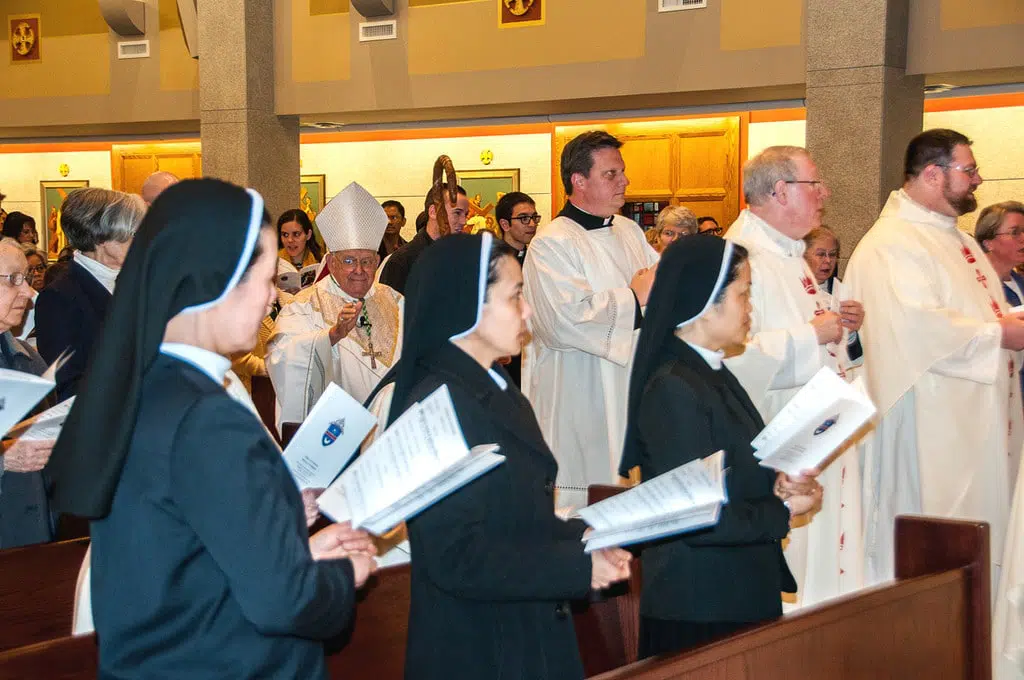
Arlington Bishop Paul S. Loverde expanded on Isaiah’s theme
in his homily during the closing Mass for the Year of
Consecrated Life at the Cathedral of St. Thomas More in
Arlington.
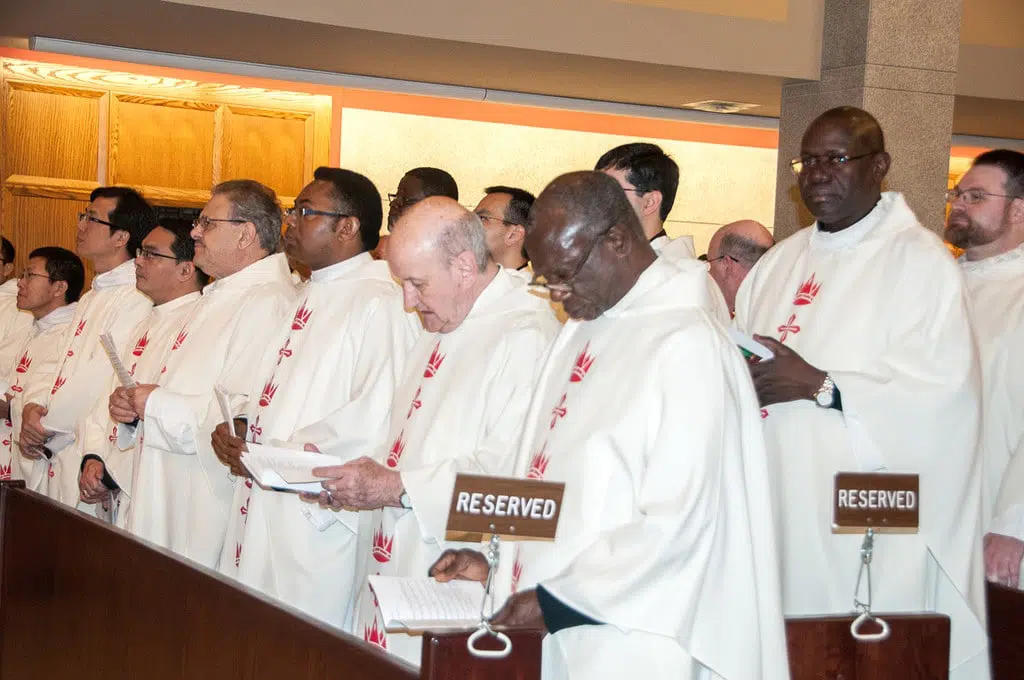
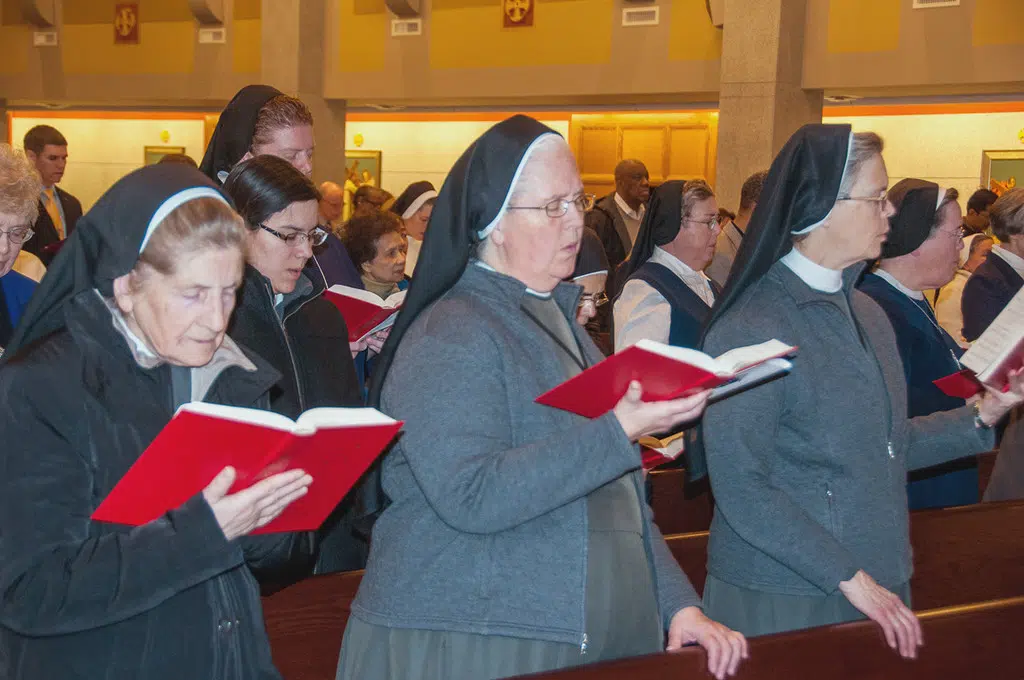
“I have personal admiration for each of you,” Bishop Loverde
told the women and men religious gathered for the Mass. “The
Lord called each of you and you answered, ‘send me.’
“Don’t forget the beauty and wonder of that first call,” the
bishop said. “I thank you for living that ‘yes’ today here in
this diocesan church. You are making this church the home and
school of community.”
The Feb. 6 Mass was sponsored by the Office of Vocations
under the direction of Father Joel D. Jaffe. Sister, Servant
of the Immaculate Heart of Mary Theresa Elizabeth Bauer and
Notre Dame Sister Margaret Ann Schlather served as lectors.
Franciscan Sister of the Eucharist Judith Gebelein read the
prayer of the faithful.
Bishop Loverde said that when Pope Francis announced the
opening of the Year of Consecrated Life, he expected men and
women religious to be in the forefront in responding to the
challenges facing the church in the new millennium “to make
the church the home and the school of communion.”
In particular, he focused on “three clues” found in Sunday’s
Gospel that offered a particular lesson.
The first clue can be found in the fact that St. Peter wasn’t
fishing alone, the bishop said. He was living in community
with others, including James and Andrew.
“We cannot work alone for the Lord,” Bishop Loverde said.
“The catch to be brought in is simply too large for any one
of us. There is strength in numbers, and the community of
consecrated life, if lived well, witnesses to others in the
church and to our deeply wounded culture that fruitful work
is done in communion.
“Today’s Gospel account shows us that the Christian community
works under the direction of a leader, a head. Peter speaks
for the group,” the bishop said. “The most obvious lesson
here is that each of us is called to work in communion with
Peter’s successor, the pope. We are happy to do so.”
Bishop Loverde said that for those who live in a religious
community, “there is another ‘Peter’ with whom our communion
is vital: our superiors. The proximity of our superior is
often more challenging than communion with the pope. We know
this person much more directly and our level of communion
with him or her also affects us more directly.
“In both relationships – with the Holy Father and with our
superiors – communion is vital to the apostolate.”
The final clue, he said, can be found in the abundant catch
that Peter and his fellow fishermen brought into their boats.
“Yes, even one fish, one person, is still one person gained
for Christ,” he said. “But what if we not only work as a
community, but also work to build community even outside our
religious communities so that the catch is greater?
“Pope Francis is asking religious and consecrated men and
women to be ‘professionials’ in community, so while not
neglecting individuals, you are invited to extend the net
widely.”
In today’s “field hospital,” you are more than professionals,
he said. “You are professors of community whose very lives
teach others the art of community.”