Before he had a plan, Father Erik T. Pohlmeier had a road trip to complete.
After being named director of faith formation for the Diocese of Little Rock, Ark., in 2016, Father Pohlmeier (now Bishop of the Diocese of St. Augustine, Fla.) decided that the best way to get a lay of the land was to visit all 120 churches and missions in the diocese, which comprises the entire state.
“So I would ask the pastor, what is your goal for sharing the faith with the people in your parish, and it was remarkable” he said. “Then I would meet with the faith formation people and I would ask them about their goals and not once were they the same.”
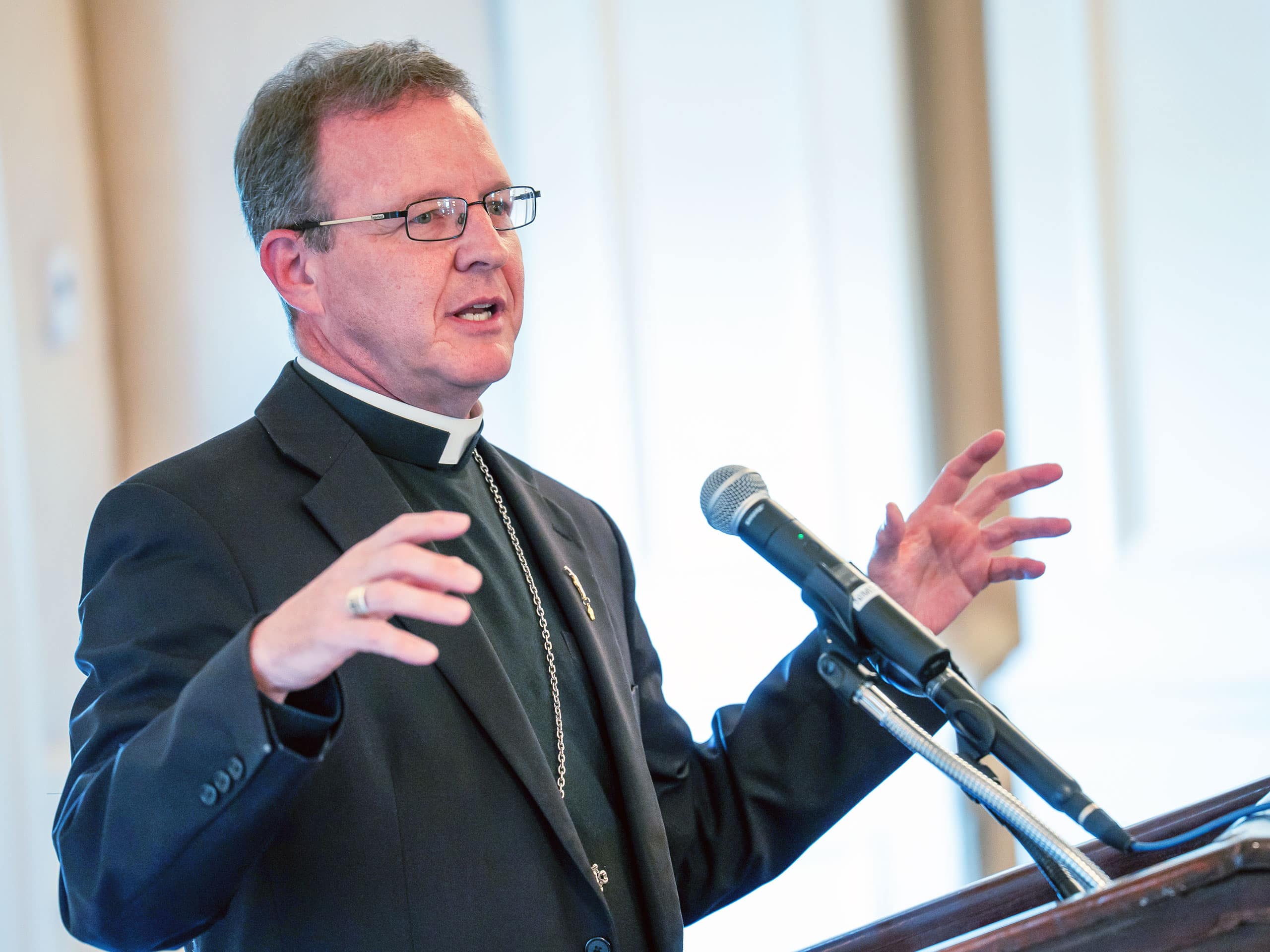
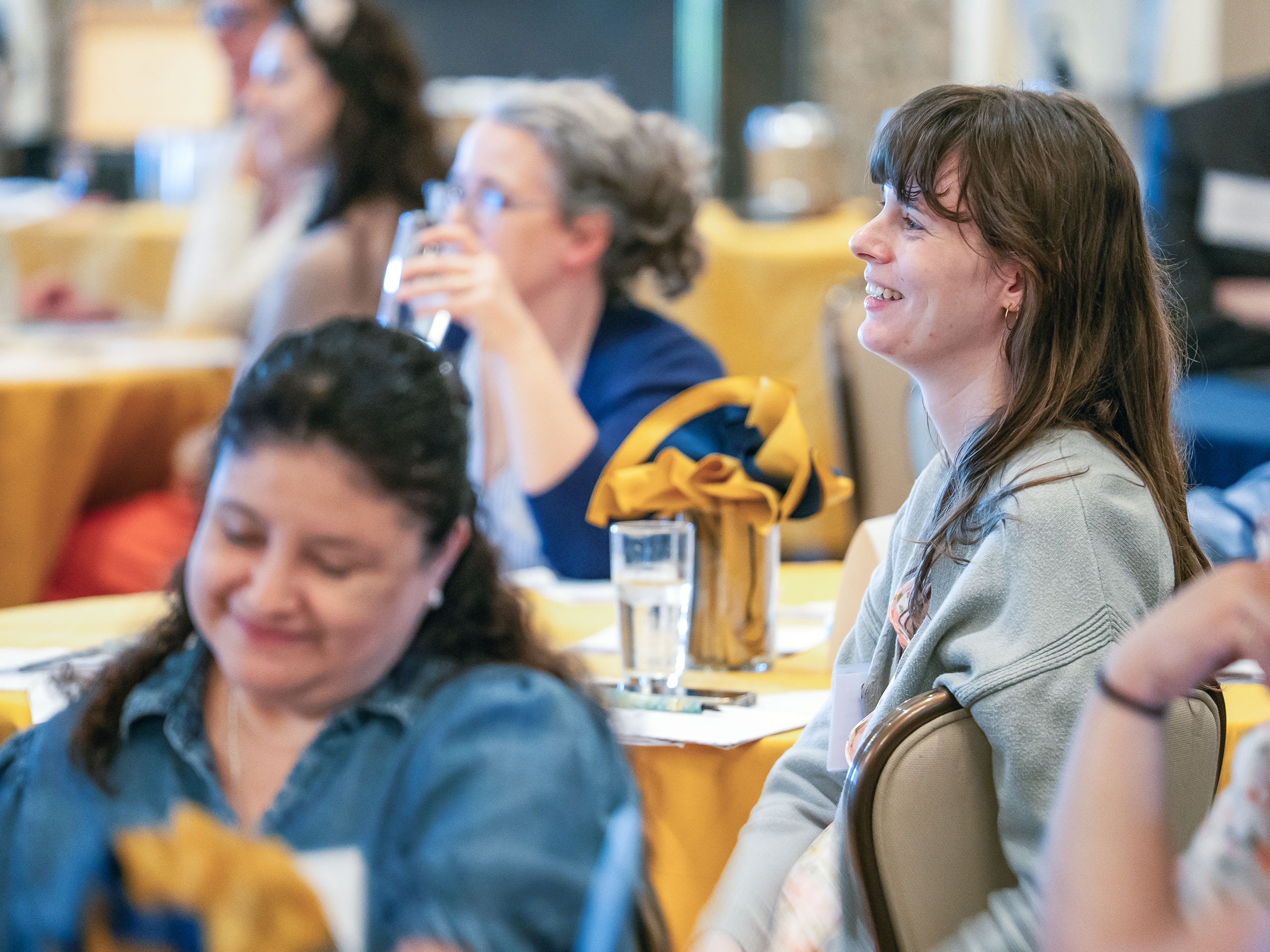
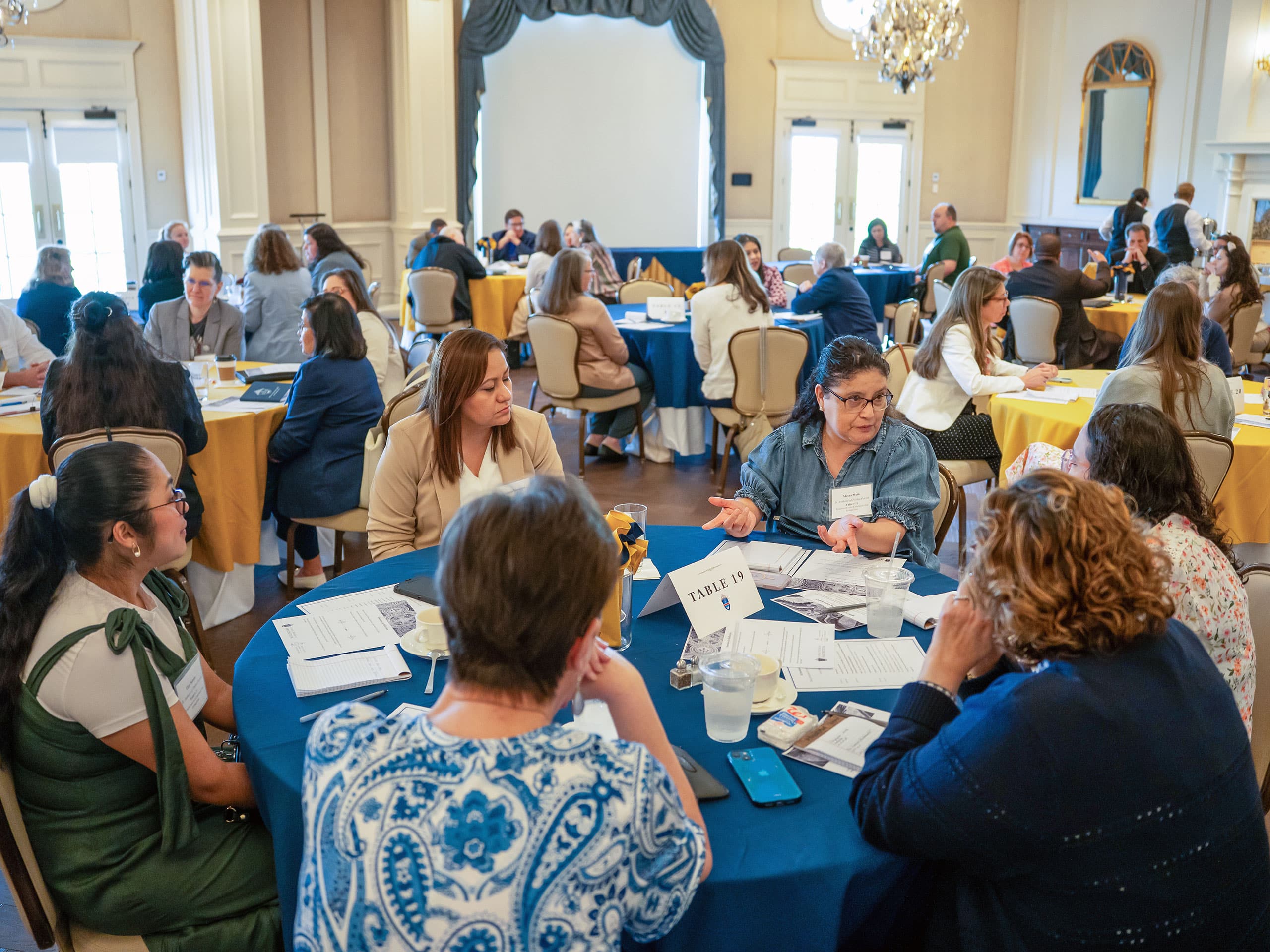
Speaking to diocesan faith formation directors and Christian educators at “The Symposium on a Catechesis that Evangelizes” at the Army Navy Country Club in Arlington April 15, Bishop Pohlmeier said that none of their goals or ideas were bad. But “their good initiatives fizzled out.”
The missing element he discovered was the importance of prioritizing reaching out to those who feel disconnected. “And for most people that started with their own family,” he said. “People would come up to me and tell me, my kids and my grandkids, they don’t go to Mass. I would say, ‘How have you shared your faith with them?’ And the response I would get is, ‘I tell them they should go to Mass.’ ”
The problem is, those who feel disconnected see no reason to attend Mass unless they first know what difference Jesus has made in the life of the person telling them to go, he said.
“Then I started using that question — asking people what Jesus has done in their lives and it was fascinating,” said the bishop. “Almost zero parents have shared their faith with their children to the point that their kids could say, ‘That’s why it matters so much to mom and dad.’ ”
Starting small is the key to reaching the disconnected according to Bishop Pohlmeier, and paying attention to those in our spheres of influence. “This is absolutely gold standard for the personal witness of faith,” he said, while emphasizing the words of Pope Francis in the 2013 apostolic exhortation “Evangelii Gudium” (The Joy of the Gospel).
“Pope Francis described what it means to be saved,” he said. “To be saved is to be set free from sin, sorrow, inner emptiness and loneliness. Every single person is trying to figure out how to navigate sin, sorrow, inner emptiness and loneliness. And they’re not figuring it out. They’re struggling more and more. If we come along and say there is freedom, then our life becomes attractive to people. So we have to figure out the language to say it’s because of Jesus that I have freedom … that is transforming, and when we can articulate it, that’s personal.”
Bishop Pohlmeier’s message rang true with Jamie Hickman, director of faith formation at St. Louis Church in Alexandria. “I don’t need the greatest program, but I need to work with others toward the same goal, which is a personal encounter with the Lord,” he said. “It’s a lifelong experience of letting Christ fill my heart so that when I go and evangelize, it’s really no longer me, but it’s hopefully Christ speaking the words through me.”
Mayra Motta, Spanish coordinator at St. Anthony of Padua Church in Falls Church, agreed. “Life is very hard for many people at our church,” she said. “When you talk to them you really have to share your experience if you want to be close to people who are suffering. I want them to know more about Jesus, but first they have to know what Jesus has done for me.”
Father Daniel J. Mahan, director of the USCCB Institute on the Catechism, who addressed conference attendees in the afternoon session, is convinced that the evangelistic wave that is sweeping the country is reason for hope.
“I’m absolutely encouraged,” he said. “The Holy Spirit is touching the hearts of people who are tremendously dissatisfied with what they find in the world. And that’s because the world makes promises that it can never keep. There’s only one person who makes promises that are absolutely reliable, and that’s the Lord Jesus that we find in our communion with the church. We find in him and in him alone, the path to salvation.”
In his opening comments to participants, Bishop Michael F. Burbidge spoke about the early Christian community being of “one mind and one heart.”
“Imagine the difference that we would make in our church, in our world and in our nation — especially at this time — if that spiritual unity, united in the bond of peace, was reflected in all of us.”
Bishop Pohlmeier, whose brother Keith works as an advertising sales representative for the Catholic Herald, challenged all to consider that when Jesus said, “Seek first the kingdom of God, he was including people you think he shouldn’t.”
“Go from there and avoid the temptation to reach everybody and stay focused one-on-one,” he said. “Then we’re following the model that Jesus gave us, the only model that has ever worked.”