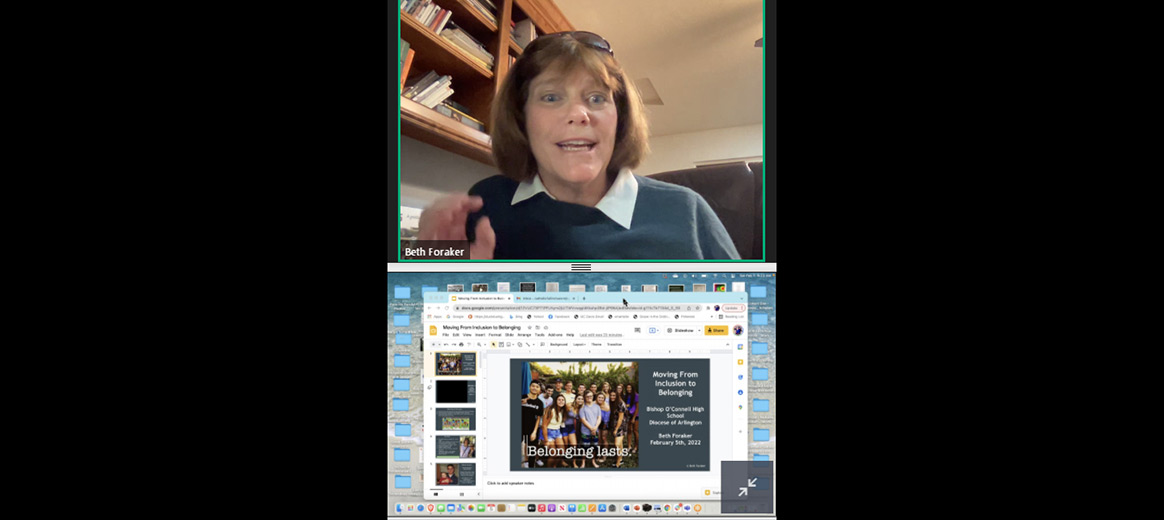
Students with intellectual disabilities need more than to be included in Catholic schools — they need to feel they are welcomed, wanted and truly belong, said Beth Foraker, a longtime educator and parent of a student with Down syndrome.
“Belonging is delight, joy and laughter. That is the level up from just inclusion,” said Foraker, who encouraged diocesan parents, educators and advocates during an online conference Feb. 5, titled “From Inclusion to Belonging: Embracing Disability as Part of the Church.”
Foraker worked for more than 20 years to ensure that her son, Patrick, now 22, could attend Catholic schools in Davis, Calif., with her other children. As a result of her advocacy, he became the first student with Down syndrome in Sacramento diocesan schools to be fully included, she said. In 2015, Foraker founded the National Catholic Board on Full Inclusion, to support other families seeking a Catholic education for children with special needs.
Foraker now co-directs a program at the University of California-Davis School of Education that received a $2.1 million grant from the U.S. Department of Education to create an inclusive, four-year college program for students with intellectual disabilities, called the Supported Education to Elevate Diversity, or SEED, Scholar program. The first group of 10 students began classes last fall.
The conference was sponsored by the diocesan Office of Catholic Schools, Office of Faith Formation, the Expanded Services department at Bishop O’Connell High School in Arlington and Porto Charities, a nonprofit that supports education and jobs for young people with intellectual and developmental disabilities through a grant program in the diocese.
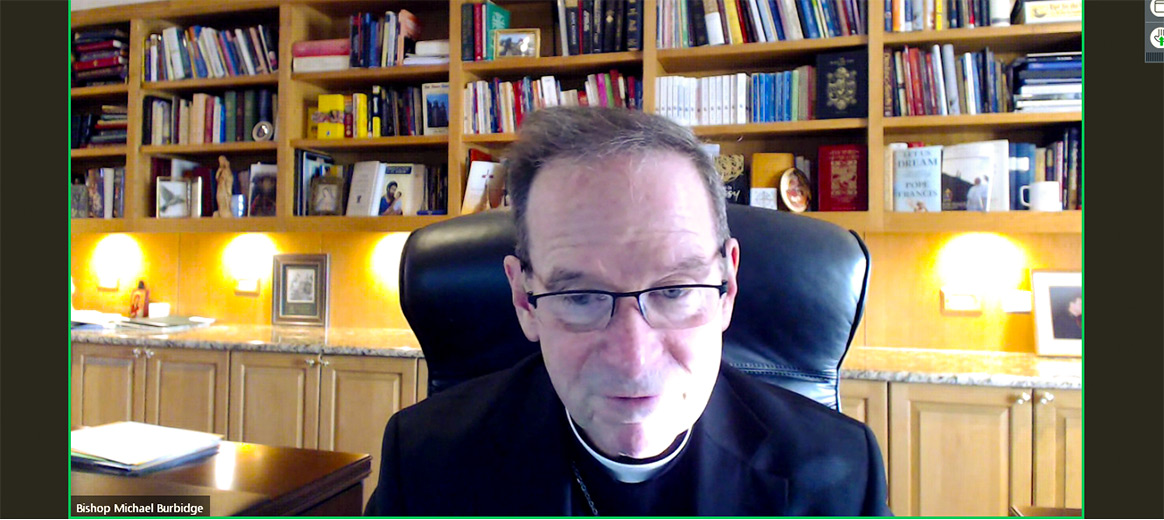
Bishop Michael F. Burbidge began the morning with a prayer and said in opening remarks that his goal is to expand services for students with intellectual disabilities to every school in the diocese. Currently, 12 elementary and all four diocesan high schools have students with intellectual disabilities such as Down syndrome.
“Pray God that one day real soon we will be able to say all of our schools will be doing this great work,” he said.
Bishop Burbidge said the diocese has been working with Porto Charities to help students with intellectual disabilities find jobs after they graduate, and he hopes to create such jobs at the chancery building. “Our chancery should lead by example,” he said.
In January, Bishop Burbidge became episcopal moderator of the National Catholic Partnership on Disability, replacing Archbishop Joseph E. Kurtz of Louisville, Ky. He said he accepted the invitation both as a learning opportunity and “to humbly share the great work going on in our diocese, which is well-known and well-respected for the work that all of you are doing.”
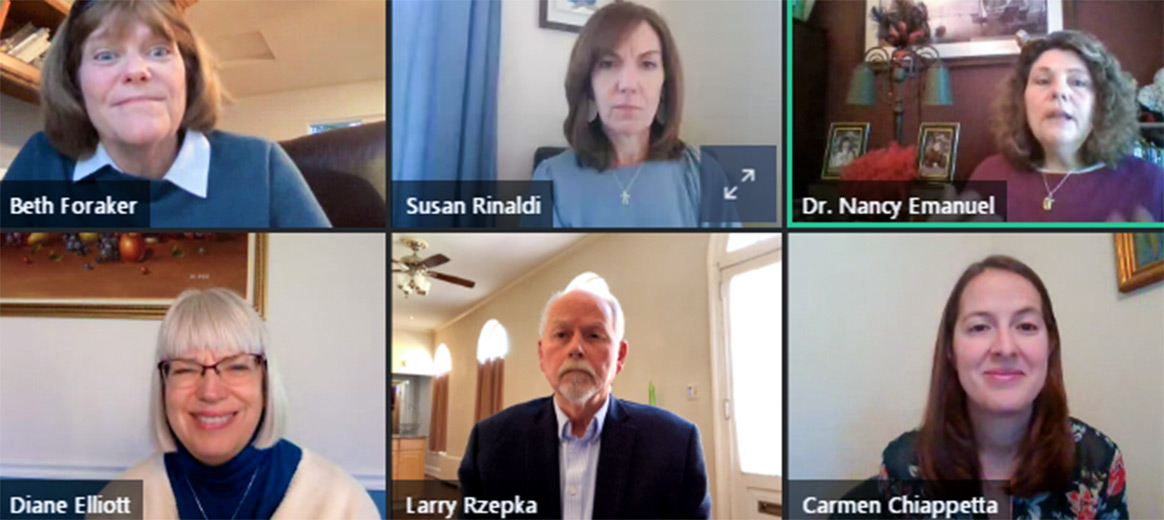
After Foraker’s presentation, a panel responded to questions from attendees. On the panel were Diane Elliott, assistant superintendent for student support services and federal programs; Susan Rinaldi, director of Expanded Services at Bishop O’Connell; Nancy Emanuel, diocesan Coordinator for Special Needs Ministries in the Office of Faith Formation; Larry Rzepka, executive director of Porto Charities; and Carmen Chiappetta, a teacher and parent of a child with Down syndrome.
Elliott said 269 parents and others from across the diocese registered for the conference. “We’re not just talking the talk, we want to walk the walk together with you,” she said, adding that an in-person gathering is planned Nov. 5.