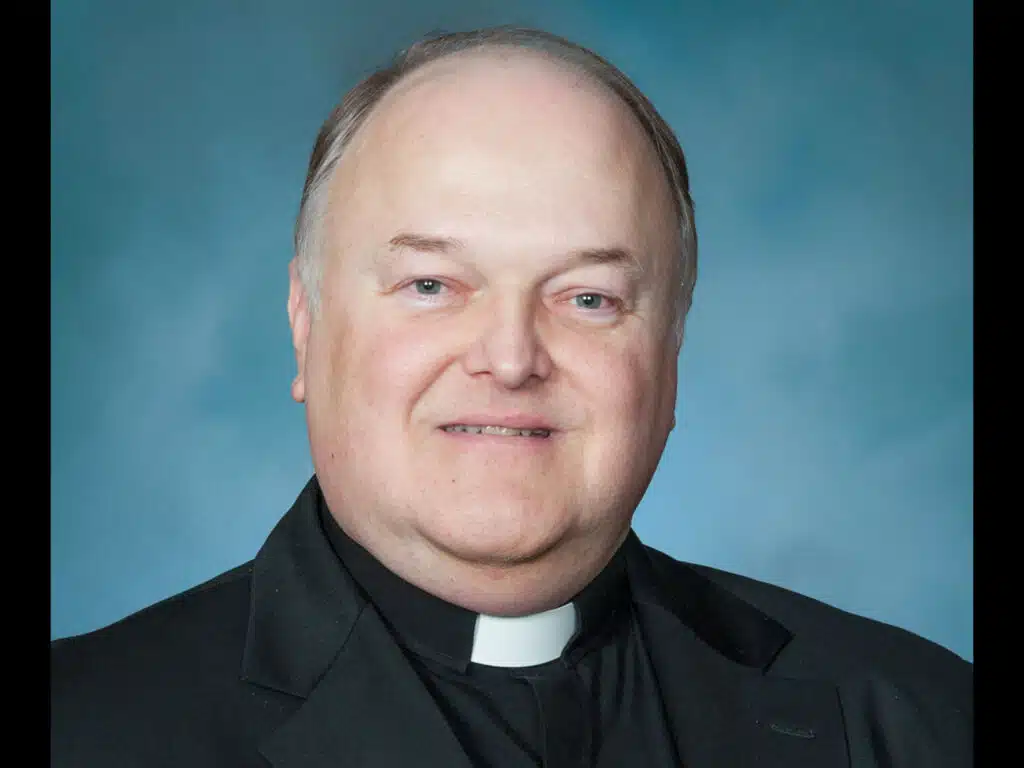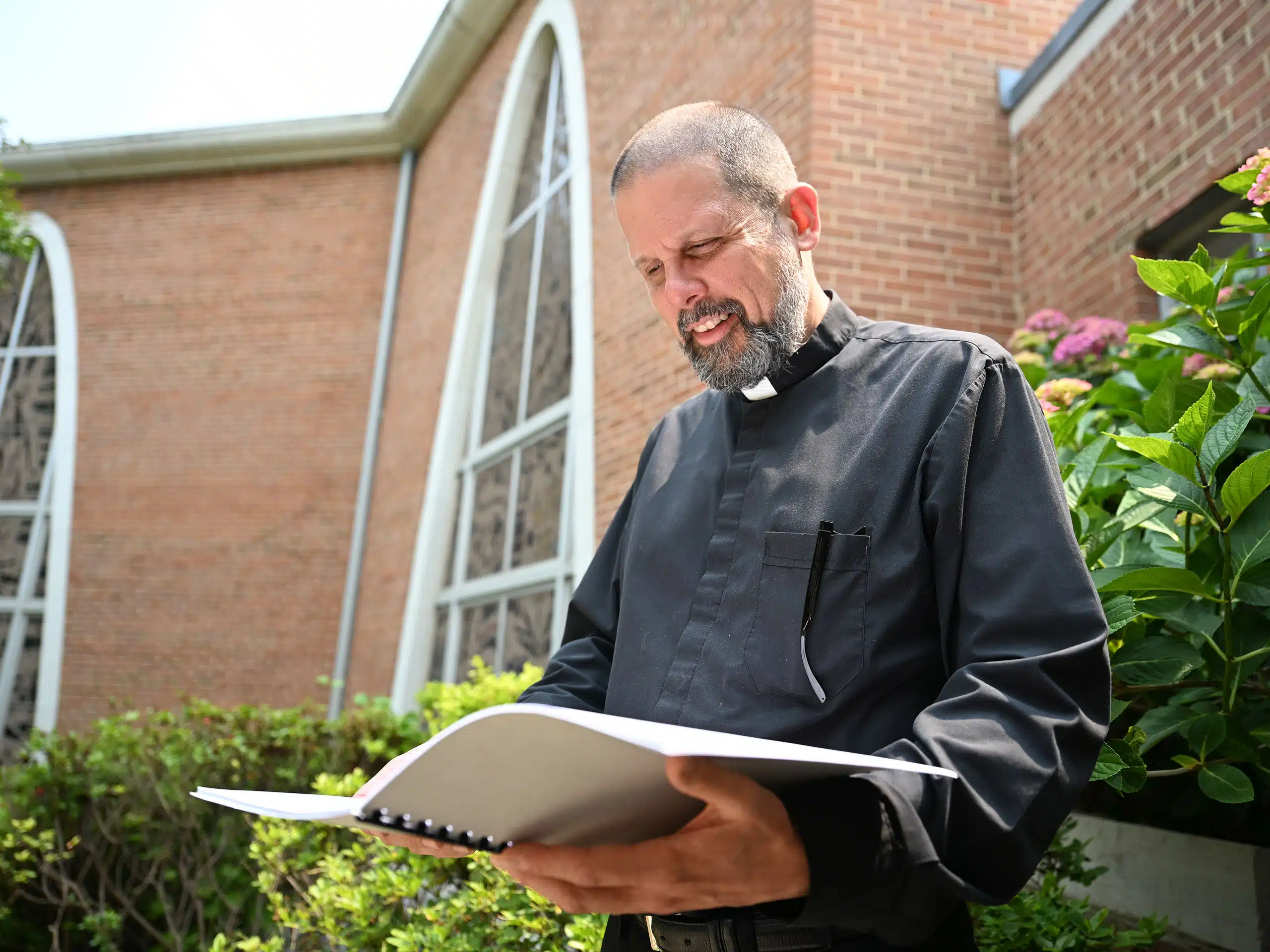
The call to the vocation of a hermit is a rare one, but a call that is very much alive in the Catholic Church. One diocesan priest has accepted the call and will enter the hermitage for continued discernment June 26.
After nearly a quarter-century of ministry in the priesthood, Father Juan A. Puigbó, pastor of St. Leo the Great Church in Fairfax, has been given permission to discern the eremitic vocation, the vocation of a hermit. In a week, he will travel to a small cabin in a rural area of the Arlington diocese where he intends to live the remainder of his life in silence and solitude for the sake of prayer and penance as it is proper of the life of a hermit.
The Catechism of the Catholic Church states that “hermits ‘devote their life to the praise of God and salvation of the world through a stricter separation from the world, the silence of solitude and assiduous prayer and penance’” (CCC 920). Hermits may be male or female. As stated in Code of Canon Law, “A hermit is recognized by law as one dedicated to God in consecrated life if he or she publicly professes in the hands of the diocesan bishop the three evangelical counsels, confirmed by vow or other sacred bond, and observes a proper program of living under his direction” (Can. 603).
When Father Puigbó announced that he would be leaving the parish to discern the vocation of a hermit, he received mixed reactions. One parishioner even asked if he was sane. But for Father Puigbó, entering the hermitage is the answer to a long-awaited call.
“I first discovered the Lord was calling me to be his when I was 14,” he said. Over the years, he not only felt the call to the priesthood, but also a deeper call to the eremitic life. “It’s not that the priesthood is not enough,” he said. “But it is a deeper longing for (God) and to just abide with him.”
Over the years, Father Puigbó discerned the vocation, with the guidance of Bishop Michael F. Burbidge and several priests.
When a person enters the eremitic life, he or she must create a Rule of Life and daily schedule to be approved by the bishop. “The Rule of Life is like the road map for the hermit,” Father Puigbó said.
According to Father Puigbó’s Rule of Life, his day will begin at midnight with four hours of nocturnal prayer, followed by a brief, two-hour nap before he awakes for Morning Prayer. Throughout the morning, he will pray the Liturgy of the Hours, interspersed by a Holy Hour, Lectio Divina — or prayer with sacred Scripture — and daily Mass. After a noon meal — Father Puigbó said he will follow a strict diet — he will study, pray the remainder of the Liturgy of the Hours and do manual labor. The labor differs but Father Puigbó plans to pursue carpentry, crafting crosses and portable tabernacles and altars. Following the period of manual labor, in the summer, he will eat only a light supper. Following Compline, the final prayer of Liturgy of the Hours, he will retire to bed at 8 p.m.
While the prospect of six hours of sleep and one to two meals per day may not sound appealing to some, Father Puigbó said the Rule of Life allows him the freedom to sacrifice in a unique way, allowing for additional penances and mortifications for the intentions of the church and in reparation for sins.
Father Puigbó even built his hermitage over the course of two months, with the help from his father, Pascual, his brother, also named Pascual, and some good friends. He said the cabin will have only the basic necessities, including electricity and running water sourced from a well.
Once he enters the hermitage, Father Puigbó said the cabin will become like a small cloister. “Only the bishop, the confessor, the spiritual director and the formator are allowed to enter the hermitage,” he said. According to his Rule of Life, he plans to send a newsletter out to friends and family several times a year, providing meditations on the spiritual life. His family will also have the opportunity to visit him on the grounds of the hermitage several times a year. “My family — they love God and the church and they have been the first supporters of this vocation,” he said.
Father Puigbó’s parents also helped him with discernment in a unique way. “Ten years ago, my father helped me build a small hermitage at my parents’ property in Haymarket,” he said. “I have been going there every other week for prayer on my day off.”
Because the life of a hermit is hidden, it’s often easy to forget the vital role they play in the church, Father Puigbó said. “We don’t get to see hermits on the street, so it’s maybe more difficult to grasp.”
While it may be natural for his parishioners to grieve change, Father Puigbó offers words of comfort to his flock at St. Leo the Great. He even provided a Q&A on his discernment journey in the June 8 parish bulletin.
“I am a priest of the diocese, so I will stay close and committed to my spiritual family,” he said. “I’m not responding to God’s call in order to avoid people, but in order to bring people with me, to be able to present them to God.”
Find out more
To read Fr. Puigbó’s Q&A on the eremitic life, go to bit.ly/4l5iHiP.