Behind the University of Virginia Rocketry team’s recent strong finish in a global contest are three Catholic students from the Arlington diocese.
The International Rocket Engineering Competition draws top aerospace and engineering students to Midland, Texas, each year to face off in a series of categorical contests.
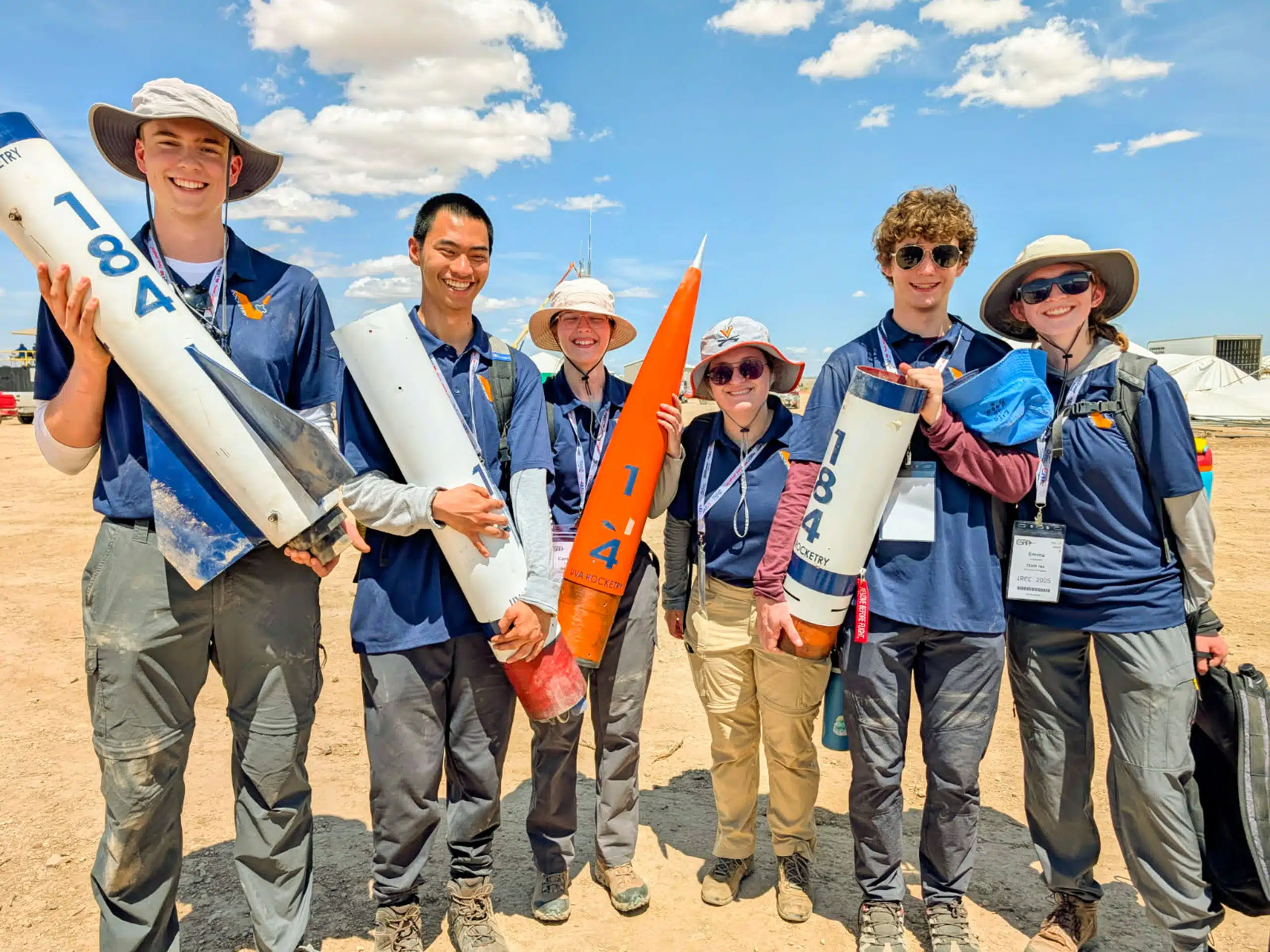
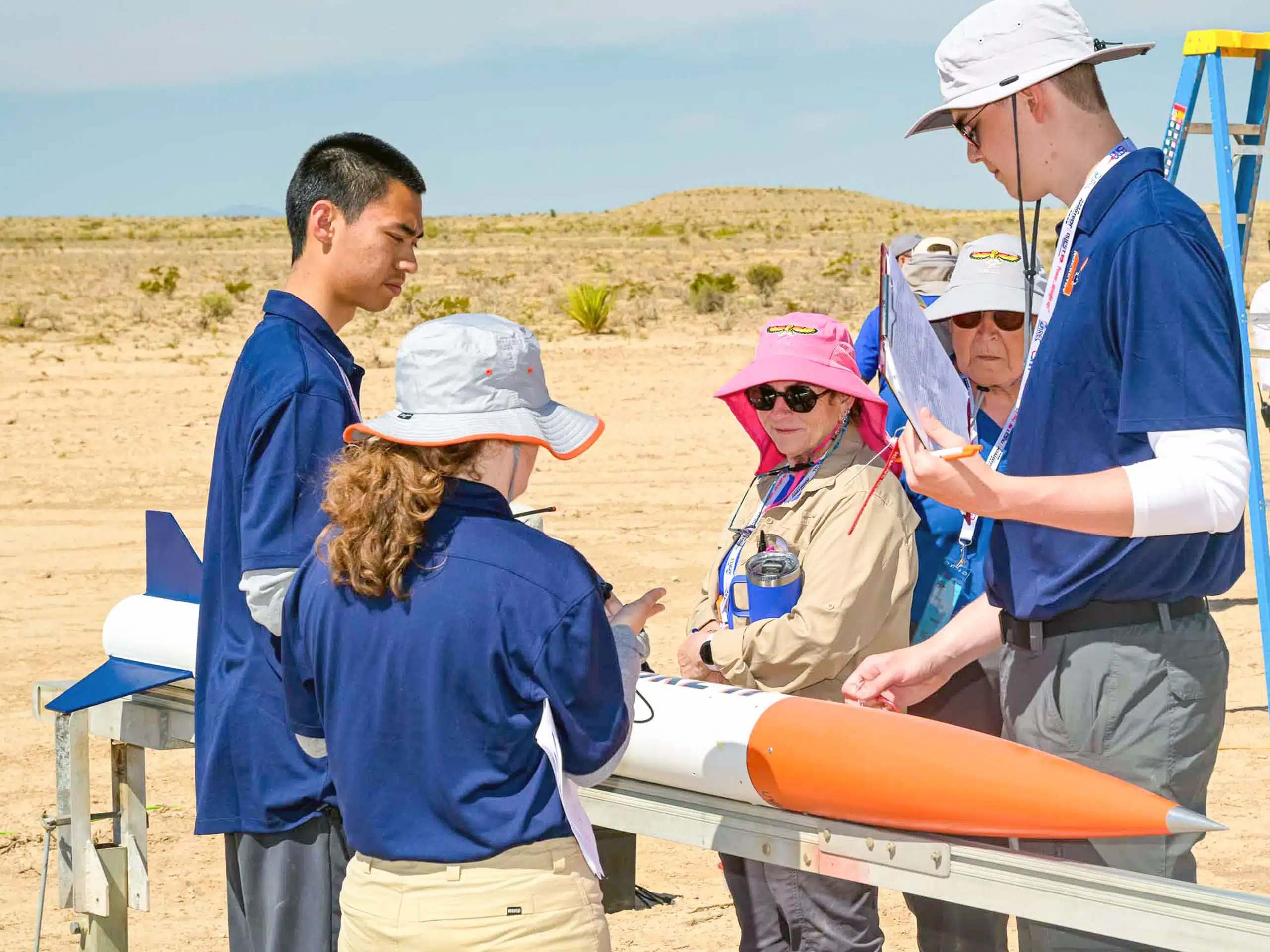
For the Charlottesville-based UVA Rocketry team, Anne Marie Branch, a parishioner of St. Raymond of Peñafort Church in Springfield, is president. Chris Wood, software lead, is a parishioner of St. Andrew the Apostle Church in Clifton, and Bobby Downey, hardware lead, attends St. Leo the Great Church in Fairfax. They helped UVA win first place in the 10K COTS category June 11 and runner up for the New Horizons Trophy, the highest showing for any U.S. team, finishing just behind the University of Sydney team from Australia.
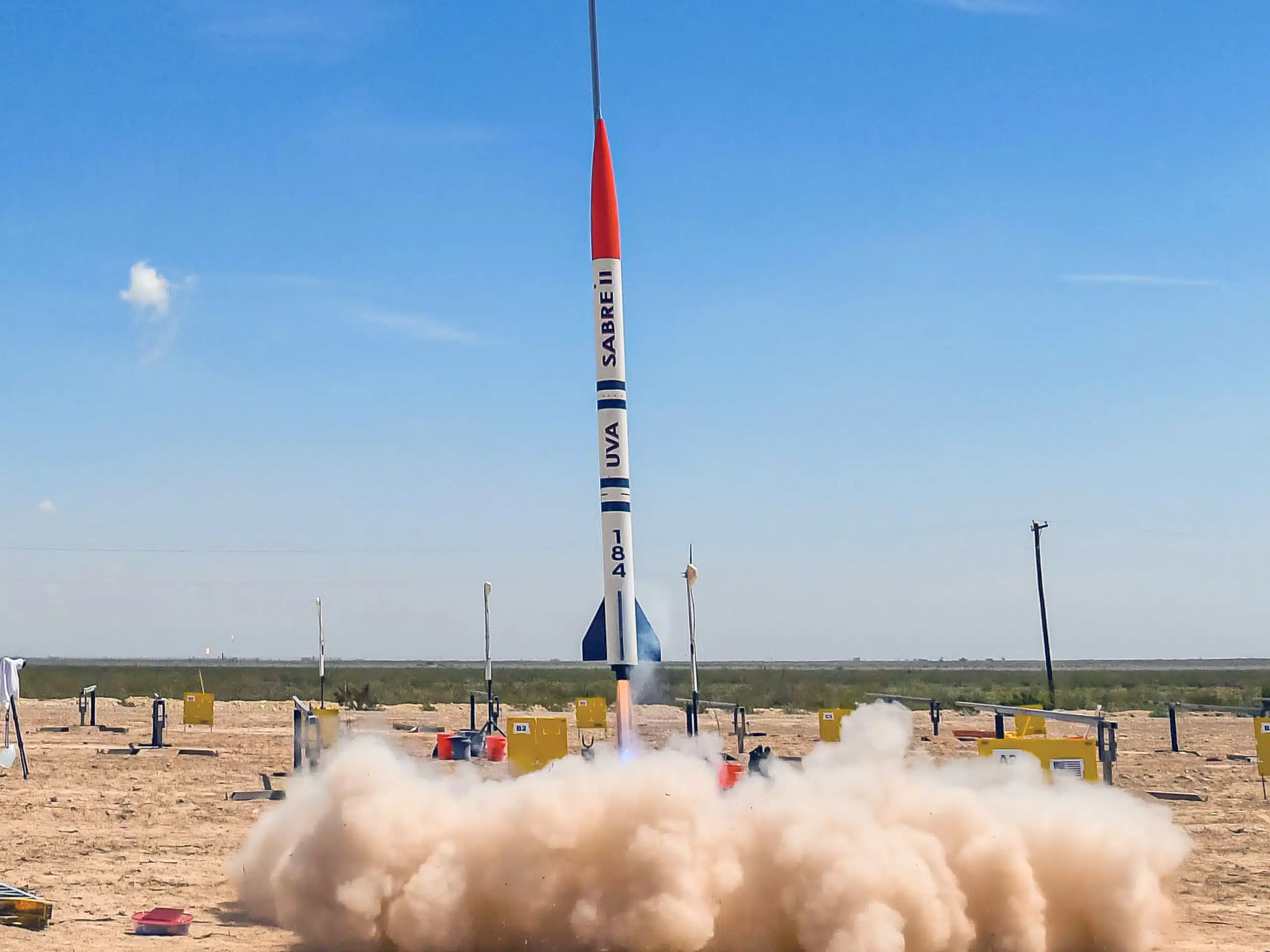
The objective of the 10K COTS category is to launch a rocket using a commercial off-the-shelf motor to an apogee as close to 10,000 feet as possible. UVA’s rocket, Sabre II, reached an altitude of 10,019 feet.
“Nineteen feet off in rocketry, that is essentially nothing,” said Branch. “When we saw that, we knew that we had done so much better than any of us even expected.”
Sabre II — a 10-foot by 6-inch rocket — was the team’s second entry at the competition following its debut in 2024. It featured several improvements from the previous year, including an onboard camera that recorded and livestreamed the launch and a custom flight computer to collect data to use in the development of an air-braking system in the future for precision altitude targeting.
The journey leading up to the competition was not without its challenges. The team faced manufacturing issues and redesigns that led to long hours during the semester. The team was able to get their first subscale launch of the rocket at the beginning of March.
For Branch, her Catholic upbringing and the values it cemented helped shape her perspective on her role.
“For me it’s a lot of looking at my role and seeing a deeper, spiritual aspect, and that, in a way, I am responsible for these people, and I want to help them,” she said. “It’s just been God leading me along this path that has eventually led to me becoming the president of the team.”
For the upcoming school year, UVA Rocketry plans to refine its air-braking system for future apogee prediction, or determining the highest point during flight, as well as to continue developing a hybrid motor to use in competition as early as 2028.
Branch, a senior aerospace engineering student, has been a part of Catholic Hoos, UVA’s Catholic community, and UVA Rocketry since her freshman year. Going into college, she knew she wanted to study aerospace engineering, citing the fact that using technology to explore God’s creation is what got her into it.
Her advice to incoming freshmen is to have support in both faith and shared interests, especially for engineering students. Due to the nature of the field of study, she has relied on her faith almost daily, trying to go to daily Mass during the school year.
“I definitely would not be able to get through any of the engineering difficulties without my faith,” she said. “If I can at least start off with focusing on God I have one good thing already about today.”