Is it real, or is it a scam?
In the midst of countless daily phone calls, texts, and e-mails, people may ask themselves just that question as they navigate apparent alerts from banks, credit card issuers, financial and investment organizations, government and municipal agencies, employers, and more.
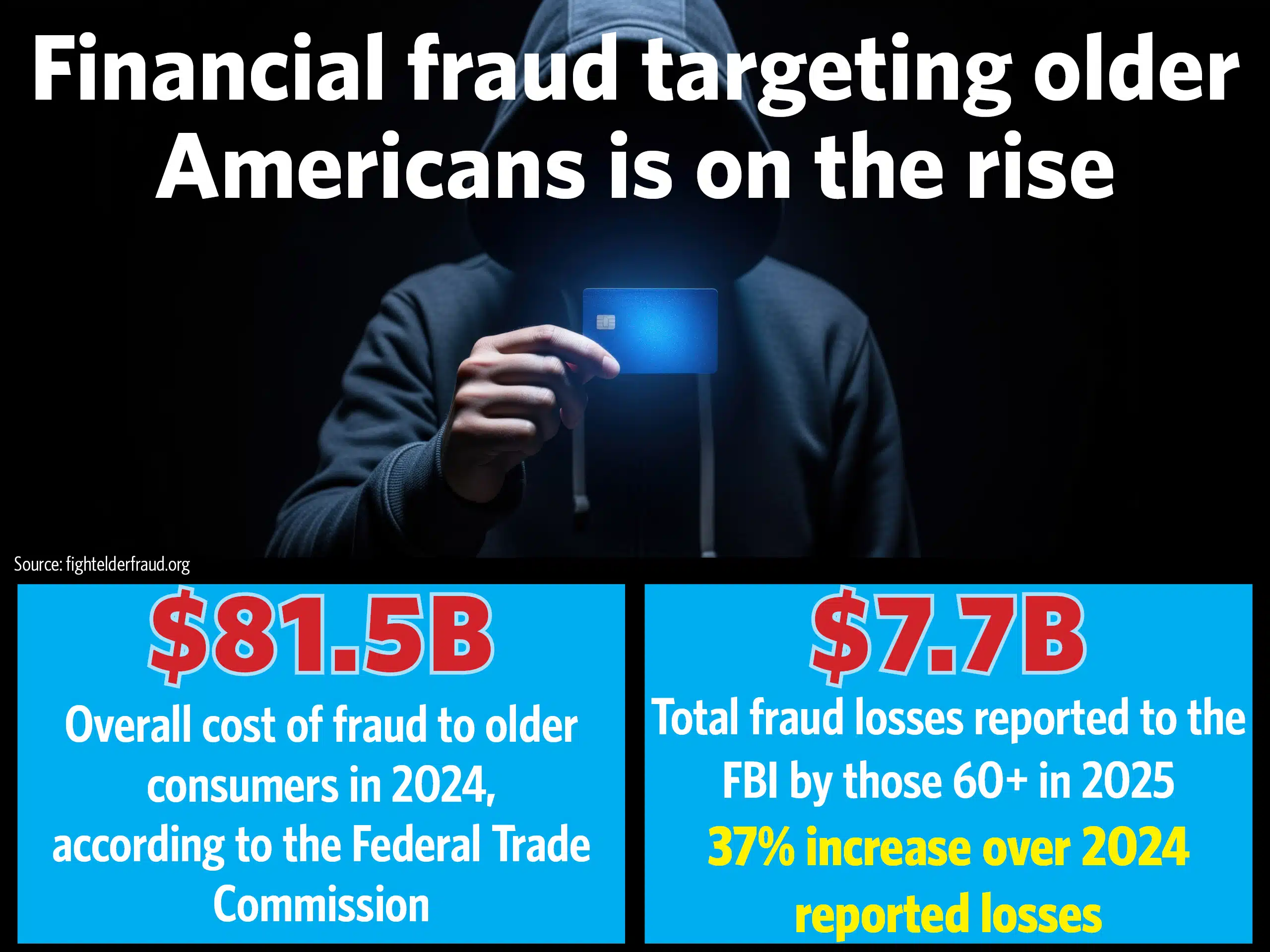
The Federal Trade Commission reported an astounding $3.5 billion in losses to imposter scams during 2025, with losses increasing nearly three times since 2020, and 25% since 2024.
The FBI’s 2025 Internet Crime Report noted phishing/spoofing, extortion and investment schemes were the most frequently reported complaints. Americans over 60 reported approximately $7.7 billion in losses, up 37% from 2024.
What can you do to protect yourself, or an older loved one who may not be as digitally discerning?
“Unfortunately, we have seen a significant number of incidents involving seniors either being successfully scammed, or being almost scammed,” Paul J. Abraham, CEO of PJI Law, with several Virginia locations, told the Catholic Herald.
“We have seen calls from what appeared to be the sheriff’s office, or the IRS, or another government authority, either asking for payment, or threatening jail, if certain action is not taken,” he said. “We have seen scenarios where the individual was called, supposedly by their bank, informing them their account had been hacked, and the caller needed to obtain certain information such as their username and password, so the bank could reset this information.”
“And we have also seen the romance game,” Abraham said, “where they lead the elderly individual to get emotionally attached or even fall in love with a completely made-up person, and use that emotional connection to steal funds.”
Molly Garrett, an attorney with MMG Law in Fairfax, said her practice also encounters fraud issues among its clients.
“Unfortunately, it comes up more regularly than I would like,” she said. “When I work with families, sometimes people are more comfortable talking to me about it than their own family member.”
Both Abraham and Garrett shared tips from their experience to avoid becoming a victim.
“If you get a text message, you immediately think you have to respond, or you have to approve a charge or not approve a charge,” said Garrett. “In that moment, slow down, take a breath and investigate it. Is it coming from your bank? Maybe not respond to the text but contact them directly.”
Abraham agreed.
“If somebody is contacting you for any sort of money or protective information, such as passwords or Social Security numbers, the first thing is slow down, because urgency and speed are the tools of scammers. The more you can slow them down, the better chance you have at not being scammed,” he said. “The people who have either the legal or moral right to ask you for money usually will not do so in a quick e-mail or a phone call and expect you to act.”
Both lawyers counseled the involvement of family members, depending upon the situation, such as putting alerts on bank accounts so that both the owner of the account and a trusted relative are notified.
“Or if they keep a large balance in a day-to-day checking account, maybe move that money somewhere else so they have access to a smaller balance, so if that account is hacked, they lose less,” Garrett said.
“Ensure that you involve other people,” Abraham advised. “Isolation is another one of the scammers’ best friends, whereas communication with family members almost always helps in these situations.”
Revocable living trusts can also allow a senior to remain in control of assets, while having the support of family or others they may appoint.
Verify whom you are dealing with, said both Abraham and Garrett.
“I would never give sensitive information or money to somebody calling me,” Abraham said. “I am very comfortable telling whoever is calling me that I plan to call the official number, whether it’s a bank or whatnot. If I must share information, I would not do it without calling them myself. So, verification is very, very important.”
“When you get an e-mail, check and see who the sender is, if the e-mail address looks weird, don’t respond or click on it,” Garrett stressed. “Or if you get a text message from someone or from one of your banks, saying they’re about to process a purchase you didn’t make, don’t respond, but call the bank. Try and stay abreast of things and have conversations with your kids or your family members about it.”
And don’t judge a victim.
“It’s not a question of their intelligence because they fell for a fraud. This is like a multinational crime ring; they have technology and thousands of people working behind the scenes to take advantage of people,” Garrett said. “It’s not that there was a little bit of a brain slip, or you’re not as sharp as you used to be. That’s not the issue. The issue is, you’re the target of a really sophisticated scam network. I think putting that out on the table makes it easier for people to then talk about it.”
Juanita Balenger, program director for diocesan Catholic Charities’ St. Martin de Porres Senior Center in Alexandria, said her clients are no strangers to fraud, including delinquent E-Z Pass and job offer scams.
“In today’s world, where older adults are smart and savvy about things, the scammers are a step ahead and ready to capitalize on the latest trends and technology, disaster or wise investment with their schemes,” she said. “They are hoping to get seniors in a weak moment with their kindness.”
The center has regular fraud information sessions. Presenters have included City of Alexandria Sheriff Sean Casey and police officers, the Securities and Exchange Commission, the Federal Communications Commission, and the Federal Trade Commission.
“There was an incident with a participant who received a phone scam about paying $30 per month to have their mobile phone fixed,” Balenger said. “This individual paid the $30 and was harassed with text messages. The individual reported it to the Alexandria City Police. We had a volunteer who helped this senior with their phone, so they stopped receiving text messages, and everything was eventually resolved.”
Her advice?
“Whether seniors go to a senior center, live in a retirement community, or live at home, they need to remember that if it sounds too good to be true, it is a scam.”
Heatherington is a freelancer in Alexandria.