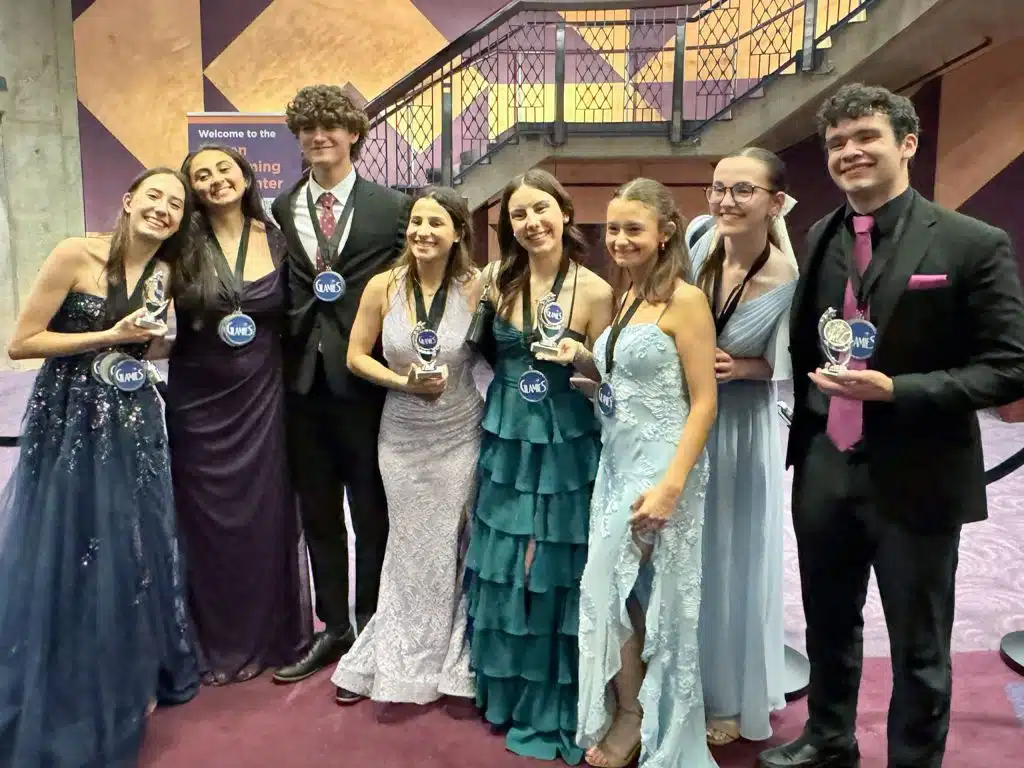
In December, students at St. Thomas More Cathedral School in
Arlington watched their four-cubic-inch satellite, a CubeSat
dubbed STMSat-1, weighing less than three pounds and packed
with a payload of scientific experiments, launched to
rendezvous with the International Space Station (ISS). In
March, the ISS will deploy the CubeSat into orbit to conduct
experiments that will be shared with students around the
world.
Antonio Elias had a distant but important hand in the launch.
His employer, Orbital ATK, transported the CubeSat in their
Cygnus spacecraft, dubbed the SS Deke Slayton II.
Elias has been with Orbital since 1986 and has watched the
private space business grow into a multi-billion dollar
industry, with the two largest players being Orbital and Elon
Musk’s SpaceX.
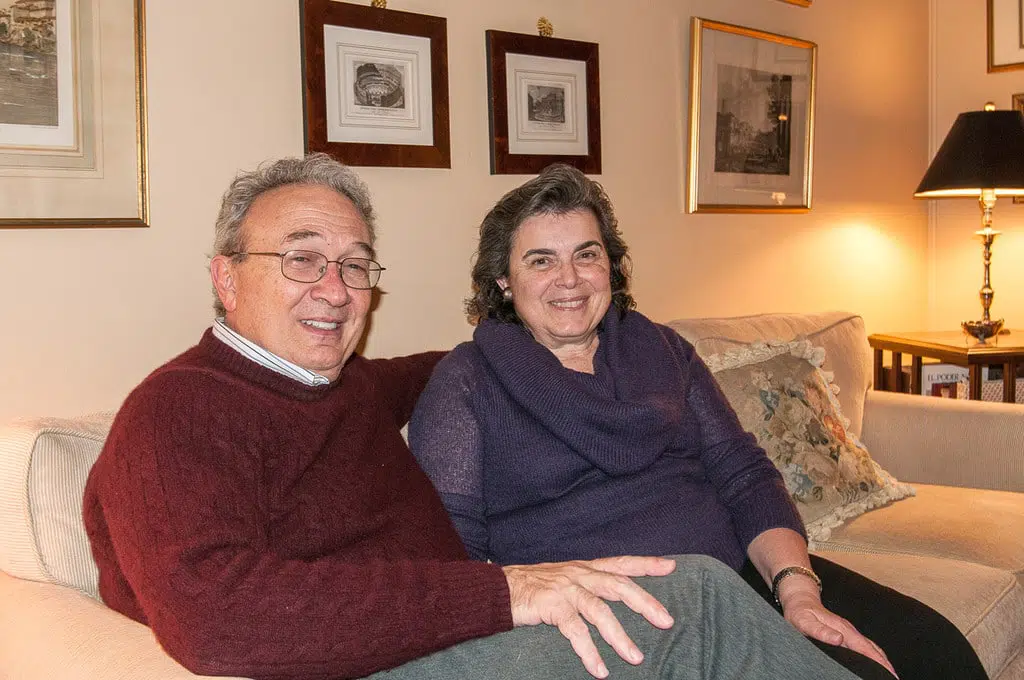
Antonio, and wife, Mirella, have been parishioners of St.
Luke Church in McLean since 1986, and Mirella has taught
religious education there.
A diplomat’s son
Antonio, 66, was born in Galveston, Texas, to a Spanish
diplomat father and mother. In an unusual diplomatic twist,
even though he was born in the United States, he was not a
U.S. citizen, but a citizen of Spain. He was later
naturalized; the official at the ceremony said that he had
never naturalized a person born in the United States before.
After the assignment in Galveston, the family moved to a
diplomatic post in Rio de Janeiro, Brazil, where he received
his first holy Communion. The family moved to other posts
before getting what the family considered a plum assignment
in Rome in 1962, just as Vatican II was starting.
He met Mirella when they were students at the Cervantes
Lyceum in Rome – a middle and high school of about 150
students. He eventually asked her out on a date, and that
developed into a friendship. The lyceum had a fifth year, a
sort of college preparation year. There were two students, he
and Mirella.
“Every day we have a full class reunion,” he laughed.
The two loved Rome.
“Rome has left an indelible mark on us,” she said.
When Antonio and Mirella graduated from the Lyceum, Antonio’s
father wanted him to study engineering in Madrid, which he
did for a while, but he hated it.
At MIT in Boston
Antonio wanted to study in the United States. His father
finally relented, and the young man applied to one school –
the Massachusetts Institute of Technology in Boston.
His acceptance, he insists, was because they didn’t
understand the Italian grading system. The school wasn’t sure
how to classify him as a student, so he started as a
sophomore. After one semester he earned enough credits to be
classified a junior. After another semester, he was
classified as a senior. After three semesters he graduated.
He returned to Rome to visit with Mirella, a long-distance
romance that culminated in marriage in 1972 at St. John
Before the Latin Gate Church in Rome. The couple moved back
to Boston where they raised four children.
Antonio went on to earn master’s and doctorate degrees in
aerospace engineering at MIT. He began teaching and doing
research at Draper Laboratories in Cambridge, Mass., for MIT,
where he worked on the Space Shuttle, eventually becoming an
assistant professor in 1980.
He was shocked when he was up for a tenured position in 1986,
but did not get one. Tenure offers job protection in the
academic world, and when you’re passed over, you’re expected
to leave.
At Orbital Sciences in Fairfax
Antonio had a young family and was getting desperate, when he
received a phone call.
“You don’t know me,” said the caller. “But I know you.”
It was an opening line that got his attention.
The caller was a former student at MIT, Dave Thompson. He and
two friends, Bruce Ferguson and Scott Webster founded Orbital
Sciences in 1982.
“We’re here in Washington, building a rocket,” Thompson said.
Thompson wanted him to join his team as the chief engineer.
The family moved to McLean, even though Mirella did not want
to leave Boston.
At Orbital, he rose through the ranks, from chief engineer to
vice-president of engineering then senior vice-president to
his current position as chief technology officer.
Antonio worked on the Pegasus booster, and led design teams
for Orbital’s APEX and SeaStar satellites and a hypersonic
research vehicle.
Antonio sees no conflict between science and religion. The
faith of the Elias family has always been a primary focus.
Mirella calls the church her second home.
“I don’t know how I would get by, if I was not Catholic,” she
said.
Faith, said Antonio, is the belief in God. Religion, on the
other hand, “is the social manifestation of faith.”
For Antonio, “God is obvious.”
Would Antonio like to visit the ISS? “Of course,” he said
with no hesitation. But it’s an idea that makes Mirella
wince.
But even without an orbital trip in his future, he has no
plans on retiring any time soon.
“I’m having too much fun,” he said.